Most condiment aisles are lined with bottles of salty, brown liquid that carry the name “soy sauce” but deliver little else. The difference between industrial soy sauce and one brewed, fermented, and aged with real ingredients is not subtle — it is the difference between a corrosive ingredient and a layered, mellow finishing sauce that transforms a dish without a harsh bite or an MSG spike. Real quality soy sauce starts with whole soybeans, wheat, salt, and water, and it depends entirely on time, craftsmanship, and the absence of additives.
I’m Mohammad Maruf — the founder and writer behind AirfryerBite. I have spent years analyzing the hardware, fermentation techniques, and label transparency behind soy sauces sold on major platforms, separating the chemically accelerated shortcuts from the truly artisanal brews.
The goal is simple: find the bottle that delivers actual depth, not just salt. I have tested and compared dozens of options to build the definitive guide for the best quality soy sauce.
How To Choose The Best Quality Soy Sauce
Choosing a quality soy sauce means looking past the label and reading the ingredient list. A real soy sauce is made from four ingredients: soybeans, wheat, salt, and water. Anything else — preservatives, caramel color, or added sugars — is a red flag. Understanding the brewing method is the most important step.
Aging Time and Fermentation Method
Traditional brewing (honjozo) relies on a natural fermentation process that takes months or even years. The longer the soy sauce ages, the more complex the umami and the lower the harsh saltiness. Look for phrases like “naturally brewed,” “aged,” or “double brewed.” Avoid “hydrolyzed” or “chemically processed” bottles. A sauce aged over two years will taste noticeably deeper and smoother than one rushed out in weeks.
Ingredients and Additives
A quality soy sauce lists soybeans, wheat, salt, and water — and nothing else. MSG, sodium benzoate, caramel coloring, and high-fructose corn syrup are common in cheap alternatives. For the cleanest flavor, choose certified organic, non-GMO, or unpasteurized (nama) shoyu, which retains natural enzymes that boost the taste profile.
Quick Comparison
On smaller screens, swipe sideways to see the full table.
| Model | Category | Best For | Key Spec | Amazon |
|---|---|---|---|---|
| YAMASAN KYOTO UJI Double Brewed | Double Brewed | Finishing & dipping sauce | 1000 days aged | Amazon |
| JAMMY CHAI First Press | First Press | Versatile everyday premium | 270 days sun dried | Amazon |
| Ohsawa Nama Shoyu | Unpasteurized | Raw & organic cooking | Aged in cedar kegs | Amazon |
| HAKU Smoked Shoyu | Smoked | Grilled & smoky dishes | Mizunara hardwood smoked | Amazon |
| Yamaroku Kiku Bisiho | Double Brewed | Special occasion dipping | 2 years aged in kioke | Amazon |
In-Depth Reviews
1. YAMASAN KYOTO UJI Soy Sauce Double Brewed Vintage 1000 Days Aged
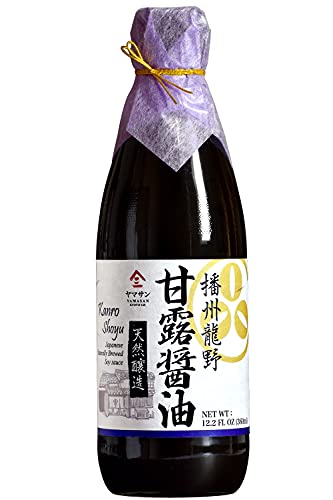
The YAMASAN KYOTO UJI Double Brewed is the pinnacle of what quality soy sauce should be. It is brewed twice, using double the ingredients and three full years of aging to develop a dark, syrupy consistency and an umami depth that industrial sauces cannot replicate. A single drop on eggs or sashimi instantly transforms the dish, delivering richness without a sharp salt sting. The ingredients are pure: soybeans, wheat, salt, and water — no MSG, no caramel color, no shortcuts.
This bottle comes from the Tatsuno region in Japan, a historic brewing area with over 400 years of tradition. The sauce is small-batch, barrel-aged, and made without heavy machinery, relying instead on seasonal changes and the instincts of craftsmen. The 12.2 fluid ounce bottle is small, but the intensity means you need far less per serving. Many buyers report ordering it eight or more times, a clear sign of repeat loyalty.
If you want one bottle that defines the category, this is it. The cost per ounce is higher than grocery store alternatives, but the concentration, flavor complexity, and purity justify the price for anyone seeking an authentic, premium soy sauce experience. It is best used as a finishing or dipping sauce rather than a cooking soy.
Why it’s great
- Extraordinary umami from double brewing and 1000 days aging
- No additives, preservatives, or MSG; naturally rich
- Exceptional as a final drizzle or dipping sauce
Good to know
- 12.2 oz bottle is small; heavy users may order frequently
- Intense flavor requires a lighter hand than standard soy sauce
2. JAMMY CHAI Superior First Press Non-GMO Soy Sauce
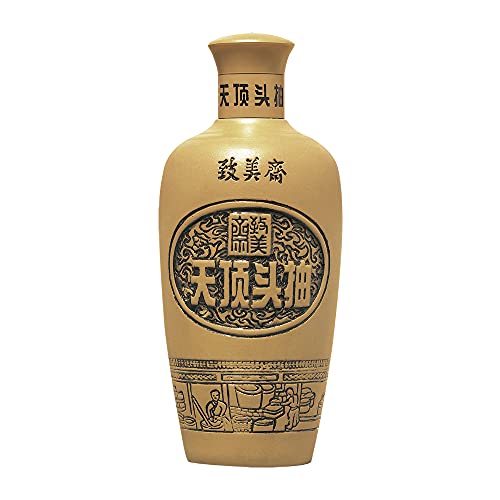
JAMMY CHAI brings a 400-year-old brewing tradition into a modern, gift-worthy bottle. This is a first-press soy sauce, meaning it comes from the first extraction of the fermented mash, which provides the highest concentration of flavor. The beans are non-GMO, and the sauce is sun-dried for 270 days in Guangzhou, giving it a robust and concentrated profile that punches far above its price point.
The 16.9 oz bottle is notably larger than most premium options, and the included purple sand ceramic bottle is designed for display and reuse. Buyers consistently note that a little goes a long way — the intensity is so high that one bottle can last a heavy user over two years. The flavor is clean, savory, and free of any artificial aftertaste, making it suitable for cooking and dipping alike.
This makes it the best entry point for anyone who wants genuine quality soy sauce without jumping directly to the highest-end aged bottles. It delivers complexity and depth at a volume that makes practical sense for everyday use, and the ceramic vessel doubles as kitchen art.
Why it’s great
- First-press extraction offers maximum savory flavor in a larger bottle
- Non-GMO soybeans and natural sun-drying process
- Artisan purple sand ceramic bottle is both practical and beautiful
Good to know
- Slightly higher cost on Amazon compared to local Asian markets
- Very concentrated; easy to overseason if poured without care
3. Ohsawa Nama Shoyu, Organic and Aged in Cedar Kegs

Ohsawa Nama Shoyu is the king of unpasteurized soy sauces. Because it is not heat-treated, the natural enzymes remain alive, resulting in a more complex, mellow, and savory flavor than any pasteurized option. It is crafted in Kamikawa, Japan, using organic soybeans, organic whole wheat, sun-dried sea salt, and mountain spring water. The aging process takes a minimum of 1.5 years inside Akita cedar barrels, adding a soft woody undertone that cannot be replicated in stainless steel tanks.
The 32 oz bottle is the largest in this list, making it the most practical for households that go through soy sauce regularly. The flavor is notably less salty than standard grocery store brands, with an amber color and an aromatic bouquet that works brilliantly on tofu, sushi, udon, or fresh vegetables. It is USDA certified organic and Kosher-certified, adding to its versatility.
One consistent complaint is the packaging — the glass jar has a plastic lid with weak threads that can break during shipping, and some bottles arrive unsealed. A decant into a sturdier bottle is recommended. If you want raw, unpasteurized depth and a large volume, this is your best pick.
Why it’s great
- Unpasteurized (nama) shoyu retains live enzymes for deeper flavor
- Organic and aged 1.5+ years in 150-year-old cedar barrels
- 32 oz bottle offers the best value per ounce in the premium tier
Good to know
- Plastic lid threading is fragile and prone to cracking during transit
- Must be refrigerated after opening to preserve unpasteurized quality
4. HAKU Smoked Shoyu Soy Sauce Aged 2 Years
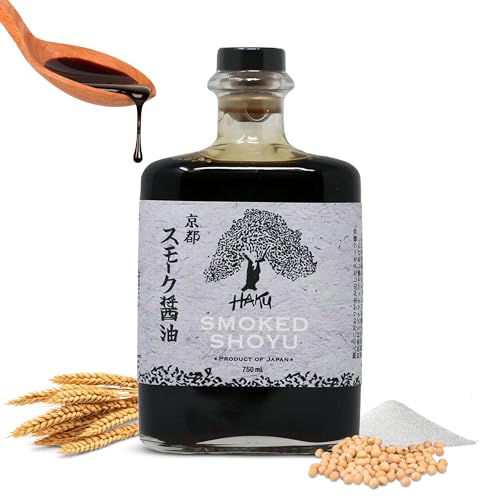
The HAKU Smoked Shoyu breaks away from traditional flavor profiles by adding a cold-smoking step using Mizunara Japanese oak. The result is a soy sauce that tastes like it was finished on a grill — there is a distinct, earthy smokiness layered over the naturally brewed umami. The base sauce itself is made in Kyoto using the ancestral Mushiro Koji process, a 250-year-old method that produces a particularly rich and complex ferment.
This 25.36 oz bottle is ideal for chefs and adventurous home cooks who want to add a grilled aroma to marinades, glazes, and dipping sauces without firing up a grill. It works exceptionally well on salmon sashimi, roasted vegetables, and as a finishing glaze for teriyaki chicken. The consistency is thick and dark, and a conservative pour is recommended because the flavor is potent and salty.
One nuance: this smoked shoyu tastes saltier than traditional soy sauce, which makes it less suitable for those watching sodium intake. The packaging also benefits from extra tape on the cap, as some bottles leak during shipping. If you want a genuinely unique, artisanal soy sauce that delivers a campfire depth, this is hard to beat.
Why it’s great
- Cold-smoked with Mizunara hardwood for a truly unique smoky flavor
- Made in Kyoto using a 250-year-old traditional method
- Thick, concentrated texture perfect for marinades and finishing
Good to know
- Salty profile; not ideal for low-sodium diets
- Cap may leak during shipping without extra tape reinforcement
5. Yamaroku Kiku Bisiho 2 Years Aged Soy Sauce, Double-Brewed
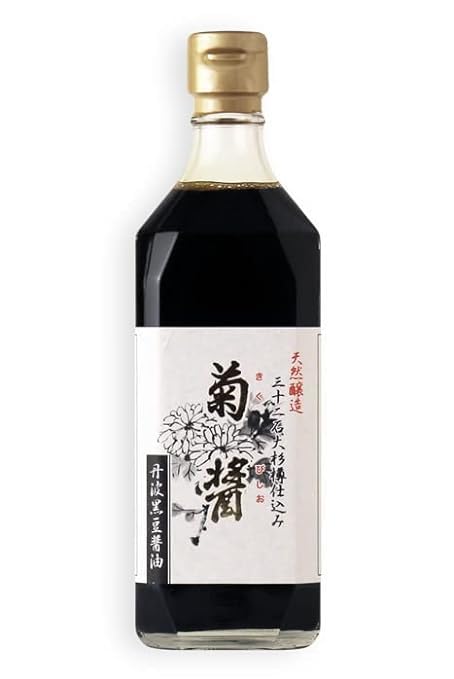
The Yamaroku Kiku Bisiho is a double-brewed (kaeshibushi) soy sauce aged for a full two years in traditional kioke wooden barrels. The double-brewing process means the batch is brewed twice, concentrating the soybean and wheat flavors into a dark, thick sauce with a very smooth, rounded taste. Buyers consistently describe it as having a “mellow throat burn” — a mild warmth that signals real fermentation, not harsh chemicals.
The 18 oz bottle is a favorite among culinary enthusiasts who want to convert everyday dipping into a ritual. It pairs beautifully with sushi, sashimi, grilled fish, and dumplings. Users note that even a light drizzle adds a cohesive, savory dimension that sits in the background without overwhelming the food. The taste is less salty than commercial brands, with a richness that many find addictive.
The main tradeoff is the cost, which is the highest per ounce in this lineup. This is not a bottle for daily frying or braising — it is a finishing sauce for moments when the soy itself is a centerpiece. If you are serious about umami depth and want a Japanese soy sauce made in small batches with authentic barrel-aging, this is the one to stock.
Why it’s great
- Double-brewed in kioke barrels delivers unmatched smoothness and depth
- Less salty than standard brands, letting the soy flavor shine
- Dark, thick consistency ideal for premium dipping and garnish
Good to know
- Highest price per ounce in this guide; best for special use
- Overuse can lead to slight bitterness due to the extreme concentration
FAQ
What is the difference between double brewed and regular soy sauce?
Do I need to refrigerate unpasteurized soy sauce?
How long can I keep an opened bottle of quality soy sauce?
Final Thoughts: The Verdict
For most users, the quality soy sauce winner is the YAMASAN KYOTO UJI Double Brewed because its triple-year aging and pure ingredients deliver a depth and smoothness that nothing else in the price tier matches. If you want a larger, everyday bottle with a beautiful ceramic vessel, grab the JAMMY CHAI First Press. And for an unpasteurized, raw flavor that retains its natural enzymes and organic purity, nothing beats the Ohsawa Nama Shoyu.