Most herbal teas taste like hot water that briefly passed by a plant. The organic category suffers from stale, dusty leaves that offer zero aroma and a flat, lifeless brew — a disappointing experience that drives people right back to sugary drinks. A proper organic herbal tea delivers a fragrant, layered cup that feels like a genuine botanical moment, not a compromise.
I’m Mohammad Maruf — the founder and writer behind AirfryerBite. I’ve scoured third-party lab reports, USDA organic certifications, and thousands of verified customer reviews to separate the fragrant, high-grade harvests from the filler-packed dust that dominates grocery shelves.
This guide cuts through the marketing noise to deliver the five most reliable, fragrant, and genuinely organic herbal teas worth your money. Whether you need a tart berry blend for iced sipping or a soothing lemon balm for deep sleep, the best organic herbal tea is defined by fresh-picked aroma, visible leaf quality, and honest sourcing — all without a trace of caffeine.
How To Choose The Best Organic Herbal Tea
An organic herbal tea is only as good as its harvest and handling. Dried herbs lose potency fast, so freshness indicators — harvest date, package type, and visible leaf size — matter more than the brand logo. Here is exactly what to check before you buy.
Loose Leaf vs. Tea Bags: The Freshness Divide
Whole or cut leaves retain far more volatile aromatic oils than the powdered dust you find in standard tea bags. A quality loose leaf tea will unfurl in hot water, releasing complex fragrance and color. Tea bag fannings, even organic ones, are typically remnants from larger processing runs and degrade within months of packaging. If convenience matters, look for pyramid infusers or fabric sachets that give leaf fragments room to expand — never flat paper bags.
Single-Origin vs. Blended: Where Flavor Comes From
A single-origin organic herbal tea — like pure lemon balm from a single farm or honeybush from a specific South African region — offers a consistent, traceable flavor profile. Blends can be delicious and complex, but cheaper blends often use bulk hibiscus or apple as filler to mask weak primary ingredients. Check the ingredient list: if you see multiple generic fruit pieces listed before the named herb, the flavor likely leans more on filler than on the star ingredient.
Package Barrier and Shelf Life
Light, oxygen, and moisture degrade herbal teas faster than almost any other pantry item. A premium organic herbal tea will come in a triple-layer oxygen diffusion barrier bag (foil-lined mylar is the gold standard) or an opaque tin. Clear plastic bags or flimsy paper pouches signal a short shelf life. Look for packaging that lists a harvest or best-by date — brands serious about freshness always include one.
Quick Comparison
On smaller screens, swipe sideways to see the full table.
| Model | Category | Best For | Key Spec | Amazon |
|---|---|---|---|---|
| Worldwide Botanicals Lemon Balm | Loose Leaf | Evening Stress Relief | 6 oz single-origin cut leaf | Amazon |
| Tealyra Grandma’s Garden | Fruit Blend | Iced Tea & Summer Sipping | 110g multi-berry blend | Amazon |
| Davidson’s Hibiscus Flowers | Loose Leaf | Antioxidant & Vitamin C | 16 oz cut & sift petals | Amazon |
| U.S. Wellness Honeybush | Loose Leaf | Black Tea Alternative | 1 lb oxygen-barrier bag | Amazon |
| Tea Forte Herbal Retreat | Pyramid Bags | Gift / Sampler | 20-count pyramid infusers | Amazon |
In‑Depth Reviews
1. Worldwide Botanicals Organic Lemon Balm Tea

This is a rare single-origin organic herbal tea — 100% pure lemon balm leaves, nothing blended, no filler herbs. The cut is consistent and large enough to see the distinct leaf structure, which signals minimal processing. When steeped for five minutes at 205°F, the liquor turns a pale gold and releases a clean, sweet lemony aroma that is noticeably more vibrant than bagged alternatives. The flavor is smooth and calming, with zero bitterness at any steep time between three and ten minutes.
Customer feedback across over a hundred reviews consistently praises the freshness and the mild sedative effect, with multiple users reporting it helps them wind down within twenty minutes of drinking. The bag contains six ounces of leaf — roughly 85 to 100 servings depending on your preferred strength — which makes the per-cup cost lower than most bagged herbal teas despite the premium organic sourcing. It is also Kosher certified and packaged in a resealable pouch that preserves aroma.
The only trade-off is the bag itself: it is a standard foil pouch without a one-way degassing valve, so oxygen exchange occurs every time you open it. Transferring the leaves to an airtight glass jar after opening will extend the shelf life past the recommended six months. For a pure, single-herb organic experience that works hot or iced, this is the most honest cup you can buy.
Why it’s great
- 100% single-origin lemon balm with no filler herbs or additives
- Large, visible leaf cut retains volatile oils for superior aroma
- Exceptionally smooth flavor — no bitterness even with extended steeping
Good to know
- Foil pouch lacks a degassing valve; transfer to an airtight jar after opening
- Pure lemon balm may be too mild for those who prefer bold berry or hibiscus flavors
2. Tealyra Grandma’s Garden Fruit Blend

If you crave a vibrant, tart, and naturally sweet cup without added sugar or stevia, this fruit-forward blend delivers. The base is hibiscus and elderberries, layered with apple, black currant, blackberries, strawberries, raspberries, and wild strawberry leaves — no artificial flavors, no natural flavors, just dried fruit and herbs. Cold-brewed overnight in a pitcher, it turns a deep ruby red and tastes like unsweetened berry punch with a clean, tangy finish. The pectin from the apple pieces adds a subtle body that mimics the mouthfeel of juice.
The blend is designed for versatility: brew it hot with a teaspoon of honey for a cozy winter cup, or cold-brew two tablespoons per quart of water for a refreshing summer iced tea. Reviews consistently mention the vivid color and the fact that it remains flavorful even after refrigeration for several days. The loose-leaf format means you control the strength, and the absence of any caffeine makes it suitable for all-day or evening drinking.
One trade-off is the relatively small bag size — 110 grams (about 3.88 ounces) — which disappears quickly if you drink multiple cups daily. Also, the blend is not single-origin, so the source farms vary between batches, which can cause slight flavor shifts from one purchase to the next. But for the price per cup, this is the most satisfying fruit-forward organic herbal tea on the market.
Why it’s great
- No added sweeteners or natural flavors — pure dried fruit and herbs only
- Exceptional color and flavor when cold-brewed, with no bitter aftertaste
- Versatile enough for hot tea, iced tea, and party punches
Good to know
- Small bag weight (110g) means frequent repurchases for heavy drinkers
- Batch variations possible since it is a multi-source fruit blend
3. Davidson’s Organics Hibiscus Flowers C/S
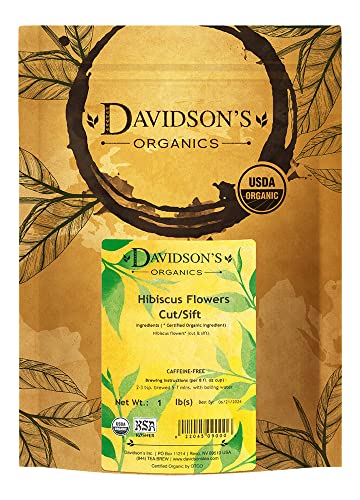
Davidson’s is a third-generation organic tea grower that controls the entire supply chain from its farms in India to your cup, and this hibiscus cut-and-sift product is proof of what vertical integration does for quality. The petals are cut into uniform pieces small enough to fit a standard tea infuser but large enough that you can see the deep red tissue and smell the tart, cranberry-like aroma before the water even touches them. When steeped for five minutes, the liquor turns a saturated ruby red — the visual benchmark for high-antioxidant content. Independent lab data places hibiscus at about 132 μmol of antioxidants per serving, significantly higher than green tea (36 μmol) or even matcha (100 μmol).
The 16-ounce bag is a bulk-buy bargain — expect roughly 150 to 200 servings depending on your preferred strength. Reviews highlight the clean, debris-free nature of the cut, with no stems or dust at the bottom of the bag. It is also naturally high in vitamin C and iron, and some users report mild blood pressure benefits consistent with published research on hibiscus. The flavor is tart and astringent, so a small amount of honey is recommended for most palates, though the pure unsweetened version works well as a palate cleanser between meals.
The only real downside is the lack of resealability in the bag: it is a simple foil pouch with a tear-off top, so you must transfer the petals to an airtight container immediately. Also, hibiscus is naturally high in oxalates, so anyone with a history of kidney stones should consume in moderation. But for pure, unadulterated organic hibiscus at a massive value, this is the most trustworthy option available.
Why it’s great
- Vertically integrated farm-to-cup supply chain ensures consistent organic quality
- Highest antioxidant density among common herbal teas (132 μmol per serving)
- Massive 16 oz bag delivers lowest per-cup cost in this guide
Good to know
- Bag is not resealable — transfer to a jar immediately after opening
- High oxalate content may not be suitable for those prone to kidney stones
4. U.S. Wellness Organic Honeybush Tea

Honeybush is South Africa’s lesser-known cousin of rooibos, and this USDA-certified organic version from U.S. Wellness is the benchmark for the category. The dried needle-like leaves brew into a medium-amber liquor with a naturally sweet, honey-like flavor that requires no added sweetener. What distinguishes honeybush from rooibos is its significantly lower tannin content — this means zero astringency, no dry mouthfeel, and a smooth finish that makes it drinkable even when the cup goes cold. The caffeine-free profile plus the low tannin load makes it especially gentle on sensitive stomachs.
The packaging is a triple-layer oxygen diffusion barrier bag that preserves freshness for two years without degradation, which is rare in the loose-leaf herbal tea space. Customers who miss the taste of black tea but need to avoid caffeine consistently report that this honeybush comes shockingly close to that familiar bold profile, but smoother and without any bitterness. The 1-pound bag (16 ounces) yields over 200 cups, making it one of the most economical organic herbal teas per serving.
The mild flavor profile may underwhelm if you are accustomed to tart hibiscus or strong peppermint. It is a gentle, background tea rather than a flavor-forward statement. Also, the leaves are fine and can slip through larger infuser mesh — a stainless steel tea ball with micro-fine holes or a paper filter works best. But for a daily caffeine-free black tea alternative that the whole family can drink, this is the most versatile option in the lineup.
Why it’s great
- Extremely low tannin content means no bitterness or astringency, even cold
- Triple-layer oxygen barrier bag keeps leaves fresh for up to 2 years
- Naturally sweet honey-like flavor requires zero sweeteners
Good to know
- Fine leaf particles may pass through standard infuser mesh
- Mild flavor profile may be too subtle for those who prefer bold herbal blends
5. Tea Forte Premium Presentation Box Herbal Retreat

Tea Forte occupies the premium end of the organic herbal tea spectrum, and this Herbal Retreat sampler is the most presentable package you can buy without commissioning custom packaging. The box contains twenty individually wrapped pyramid infusers — each made from food-grade nylon mesh that allows whole leaf fragments to expand fully — across five flavor profiles: Apricot Amaretto, Blueberry Merlot, Cherry Cosmo, Kiwi Ginger Lime, and Mojito Marmalade. Every blend is caffeine-free and uses organic whole tea leaves as the base, layered with real fruit pieces and spice.
The pyramid infuser design matters here: unlike flat paper bags that restrict water flow, the 3D pyramid shape allows hot water to circulate around every leaf fragment, extracting a noticeably deeper flavor than comparably priced bagged teas. The flavors are complex and well-balanced — the Kiwi Ginger Lime has a gentle spice warmth without being hot, and the Blueberry Merlot tastes genuinely fruity rather than artificially candied. Multiple reviews from gift recipients and tea party hosts report that the presentation alone elevates the drinking experience, making it suitable for bridal showers, housewarmings, or corporate gifts.
The obvious trade-off is cost per cup — this is the most expensive option in this guide per serving, and the 20-count box is meant more as an experience or gift than a daily driver. Also, the pyramid bags are not compostable (the nylon mesh does not break down in home compost). But if you need a premium organic herbal tea gift that looks as good as it tastes, or you want to sample multiple flavors before committing to a full-size bag, this is the only rational choice.
Why it’s great
- Pyramid infuser bags allow whole leaf fragments to fully unfurl for deeper flavor
- Five distinct, well-balanced flavor profiles in a single box
- Gorgeous presentation box design that doubles as a keepsake
Good to know
- Highest cost per cup — designed for gifting or occasional indulgence
- Nylon pyramid infusers are not home-compostable
FAQ
How long does organic loose-leaf herbal tea stay fresh?
Can I brew organic loose-leaf tea without an infuser?
Why does my organic herbal tea look brown instead of vibrant red?
Final Thoughts: The Verdict
For most users, the best organic herbal tea winner is the Worldwide Botanicals Organic Lemon Balm Tea because it delivers a pure, single-origin leaf with a clean, calming flavor profile that works equally well for daily stress relief and sleep support without any filler herbs. If you want a tart and refreshing fruit-forward option, grab the Tealyra Grandma’s Garden Fruit Blend. And for a bulk-value caffeine-free black tea alternative, nothing beats the U.S. Wellness Organic Honeybush Tea.