The wrong board dulls your best chef’s knife in weeks, harbors bacterial growth in its seams, or warps into a rocking nightmare the first time it gets wet. The right one becomes a cornerstone of your kitchen routine — gentle on steel, beautiful on the counter, and durable enough to hand down to the next generation of cooks in your family.
I’m Mohammad Maruf — the founder and writer behind AirfryerBite. My research into wood cutting boards focuses on the measurable metrics that matter most: grain orientation (edge versus end-grain), board thickness in inches, moisture resistance of specific wood species like maple, walnut, and teak, and the real-world durability of the manufacturing finish straight out of the box.
This guide cuts through the noise to find the best wood cutting boards that balance knife-friendliness with long-term stability, surface area with practical storage, and raw material quality with honest craftsmanship.
How To Choose The Best Wood Cutting Boards
Picking the right cutting board means understanding three core factors: the wood species, the grain orientation, and the physical dimensions. These three elements dictate how the board feels under your knife, how often you need to condition it, and how long it will stay flat on your countertop. Ignore any one of them and you risk buying a board that looks good but performs poorly.
Grain Orientation: Edge-Grain vs. End-Grain
The single biggest performance variable is how the wood fibers are oriented. Edge-grain boards have the long edges of the wood strips facing up. They are less expensive, easier to maintain, and still gentle on knives compared to glass or plastic. End-grain boards have the cut ends of the wood fibers facing up — like a butcher block. The fibers absorb knife impacts rather than resisting them, keeping your blades sharper for longer. End-grain is also more forgiving on your knife and hides cut marks better, but it requires more regular oiling and costs more.
Wood Species: Hardness, Moisture Resistance, and Aesthetics
Maple is the gold standard for cutting boards due to its tight grain, hardness, and non-porous nature. It resists moisture and bacterial absorption well. Walnut is slightly softer, which is even easier on knife edges, and it has a rich dark color that hides stains beautifully. Teak has natural oils that make it highly moisture-resistant, but those same oils can feel slippery and require special care. Bamboo is technically a grass, not a wood, and is incredibly hard — sometimes too hard, as it can dull knives faster than traditional hardwoods. Avoid acacia if you want a board that won’t show every single slice mark; it is durable but soft enough to scar easily.
Thickness, Weight, and Juice Grooves
A board under an inch thick is prone to warping under heavy use or washing. Ideal thickness starts at 1.5 inches for edge-grain boards and 1.75 to 2.25 inches for end-grain blocks. Heavier boards do not slide around on the counter, making them safer for heavy chopping. Juice grooves are essential if you often carve roasted meats or slice juicy fruits — they keep liquid contained on the board rather than dripping onto your counter. Reversible boards give you two surfaces: one for raw proteins and one for produce, reducing cross-contamination risk.
Quick Comparison
On smaller screens, swipe sideways to see the full table.
| Model | Category | Best For | Key Spec | Amazon |
|---|---|---|---|---|
| WoodForChef Maple 20″x16″ | Edge-Grain | Mid-range all-purpose use | 1.5″ thick North American maple | Amazon |
| John Boos CCB 20″x15″ | End-Grain | Professional-grade durability | 2.25″ thick end-grain maple | Amazon |
| BABILONIA Walnut 15.7″x10.2″ | End-Grain | Premium compact prep | 1.7″ thick black walnut | Amazon |
| Yes4All Teak 24″x18″ | End-Grain | Large heavy-duty carving | 1.5″ thick teak with juice groove | Amazon |
| Winco Rubberwood 18″x24″ | Edge-Grain | Oversized counter extension | 1.75″ thick rubberwood | Amazon |
| GAOMON Acacia 24″x18″ | Edge-Grain | Budget large-surface prep | 1.1″ thick acacia with juice groove | Amazon |
| Farberware Bamboo 14″x20″ | Bamboo | Entry-level reversible board | 0.75″ thick bamboo | Amazon |
In‑Depth Reviews
1. WoodForChef Maple Cutting Board 20″x16″

This 20×16-inch edge-grain board from WoodForChef strikes the ideal balance between usable surface area and manageable weight at 12.5 pounds. Made from FSC-certified North American hard maple, the 1.5-inch thickness provides enough heft to stay planted on the counter during heavy chopping sessions. The deep juice groove runs along the perimeter and effectively channels liquid away from the center, keeping your workspace clean when carving roasted chicken or slicing watermelon.
What sets this board apart from others in the same tier is the preseasoning. It arrives coated with a mineral oil and beeswax blend, so you can start chopping immediately. The edge-grain construction is noticeably resistant to scratches compared to softer woods like acacia, and the hard maple surface is kind to knives — significantly better than glass or plastic boards. Reviewers confirm that the board sits perfectly flat out of the box with no rocking or warping, even after months of daily use with regular oiling.
Maintenance is straightforward: hand wash with mild soap, towel dry, and apply mineral oil once a month or whenever the surface looks dry. The dark brown color hides stains well, though it does not come with rubber feet — a minor omission that a few users counter with drawer liner underneath. It is a mid-range investment that delivers premium performance without pushing into professional-tier pricing.
Why it’s great
- Pre-seasoned with mineral oil and beeswax — ready immediately
- Hard maple resists deep scratches and knife scarring
- Deep juice groove effectively contains liquids
Good to know
- No rubber feet on the base for anti-slip grip
- Requires monthly oiling to maintain moisture balance
2. John Boos CCB2015 Maple End-Grain Block 20″x15″

The John Boos CCB series is the benchmark that other end-grain boards are measured against. At 20 inches by 15 inches and 2.25 inches thick, this 21-pound block is immovable on the counter. The end-grain construction means your knife edge slides between the wood fibers rather than cutting across them — knife life is meaningfully extended here compared to any edge-grain or bamboo board. The reversible design gives you two identical cutting surfaces, and the recessed finger grips on each side make it possible to lift and move this heavy block safely.
Quality control concerns appear in some customer reports — a minority of boards arrive with small glue joint separations or surface cracks. However, the majority of users report that with thorough initial oiling (six or more applications of Boos Mystery Oil) and regular board cream maintenance, the board holds up beautifully for years of daily use. The oil finish from the factory is minimal, so do not expect it to be glossy and ready out of the box; this board requires an upfront commitment to seasoning.
American-made since 1887, John Boos boards are used in commercial kitchens for a reason. If you want the gold standard of knife-friendliness and are willing to invest the time in regular conditioning, this board will outlast most other kitchen tools you own. Just be prepared for the initial seasoning ritual and watch for any defects immediately upon arrival so you can exchange if needed.
Why it’s great
- 2.25-inch end-grain construction for maximum knife protection
- Recessed finger grips make handling a 21-pound board manageable
- Reversible design reduces cross-contamination risk
Good to know
- Requires heavy initial oiling (6+ coats) before first use
- Occasional quality control issues reported with glue joints
3. BABILONIA Black Walnut End-Grain Board 15.7″x10.2″
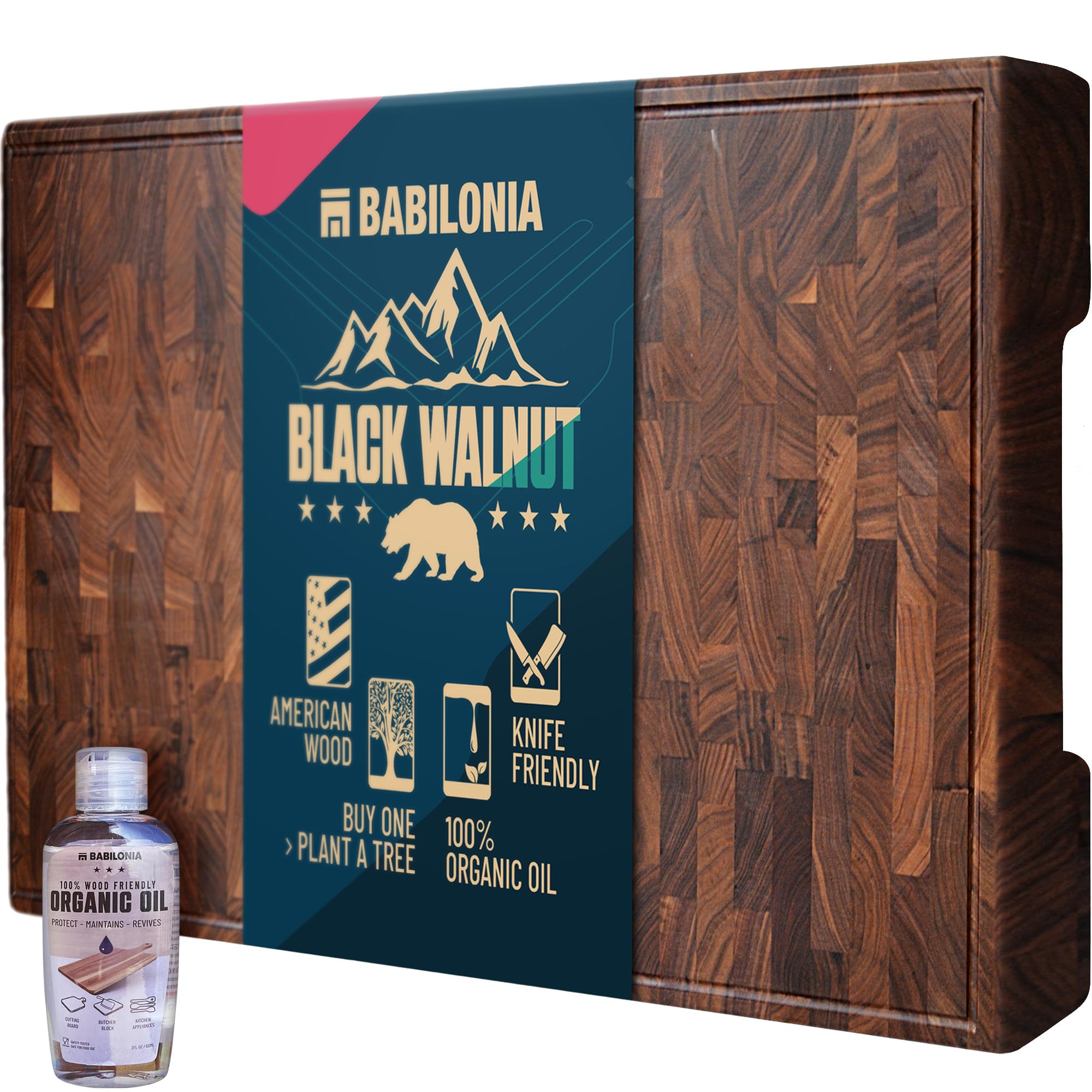
This 15.7×10.2-inch end-grain board from BABILONIA delivers premium walnut construction at a mid-range price point. The 1.7-inch thickness provides excellent stability, and the included mineral oil bottle means you are ready for maintenance from day one. The black walnut wood is naturally antimicrobial and softer than maple, making it exceptionally gentle on knife edges. The rich dark grain hides scratches and stains far better than lighter woods.
This board includes smart design touches that elevate it above basic blocks. A built-in notch with a small metal plate slides out to catch chopped ingredients — a clever feature when transferring onions or herbs to a pan. Rubber feet on the bottom prevent slipping, and the juice groove around the perimeter catches carving liquids. The board arrives pre-oiled and feels buttery smooth out of the box, with no rough spots that require sanding.
A small number of users report splitting after a couple of months despite proper care, though the company has a reputation for responsive customer service and replacements. The 15.7-inch length is shorter than standard full-size boards, so it is better suited for compact kitchens or as a secondary prep board rather than a primary workstation. If you want end-grain luxury without the Boos price tag, this is the board to choose.
Why it’s great
- End-grain walnut is extremely knife-friendly and stain-resistant
- Includes mineral oil, rubber feet, and a slide-out plate for transferring ingredients
- Pre-seasoned and ready to use immediately
Good to know
- Shorter length limits large-scale prep use
- A few reports of splitting after extended use
4. Yes4All End-Grain Teak Board 24″x18″

At 24 inches by 18 inches by 1.5 inches, this teak end-grain board from Yes4All provides a massive work surface that can handle everything from rolling out pizza dough to carving a full Thanksgiving turkey. Teak is naturally high in silica and oils, making it exceptionally resistant to moisture, rot, and warping. The end-grain construction is gentle on knives, and the board weighs 13.9 pounds — heavy enough to stay put but light enough for one person to move around the kitchen.
The built-in juice groove runs along the full perimeter and does a good job of channeling liquids. The integrated handles on the sides are cut deep enough to grip securely. However, the surface finish out of the box can be rough — several users report needing to sand down the juice grooves and edges with a fine scouring pad to achieve a smooth feel. The board also has a noticeable smoky smell from the charring process that takes a few hours to dissipate. Once conditioned with board oil, the end-grain blocks close up and the surface becomes much more pleasant.
Teak requires less frequent oiling than maple or walnut due to its natural oils, but it does not absorb oil as readily. The board is food-safe and pre-oiled from the factory, but it benefits from an initial application of mineral oil. For the price, you get an unusually large end-grain board that would cost double in maple or walnut. It is not perfect out of the box, but with a little preparation it becomes a lifelong kitchen tool.
Why it’s great
- Massive 24×18-inch surface at an end-grain price that is hard to beat
- Teak is naturally moisture-resistant and requires less frequent oiling
- Integrated handles and deep juice groove add practical functionality
Good to know
- Rough surface and juice grooves may need sanding before first use
- Smoky smell from manufacturing requires airing out
5. Winco Rubberwood Cutting Board 18″x24″

The Winco WCB-1824 is a commercial-grade workhorse. At 18 by 24 inches and 1.75 inches thick, it weighs 17.8 pounds and feels like a piece of furniture. Rubberwood is an environmentally friendly hardwood harvested from latex-producing rubber trees; it is dense, heavy, and holds up well against heavy chopping without warping. This board does not have a juice groove, handles, or rubber feet — it is a pure rectangular slab designed for maximum surface area and stability.
Owners report that the board arrives with a light finish that requires immediate oiling. The light tan color shows stains more readily than darker woods, so regular conditioning with mineral oil or beeswax is essential. Some units arrive with minor corner damage from shipping, which is understandable given the weight and dimensions, but the manufacturer offers replacement for significant defects. One reviewer repurposed this board as a heavy-duty garage shelf holding over 150 pounds — a testament to its build quality.
For small kitchens with limited counter space, this board can cover the entire sink to create a temporary work surface. It is also wide enough that two people can prep simultaneously without fighting for elbow room. If you want a no-nonsense, thick, heavy board for serious volume cooking and do not care about aesthetic frills, the Winco delivers exceptional durability for the cost.
Why it’s great
- Massive 18×24-inch surface with a hefty 1.75-inch thickness
- Rubberwood is eco-friendly, dense, and highly durable
- Stays put without rubber feet due to its weight alone
Good to know
- No juice groove, handles, or rubber feet
- Light color stains easily unless oiled regularly
6. GAOMON Acacia Cutting Board 24″x18″

The GAOMON acacia board offers a huge 24×18-inch work surface at a very accessible price point. Acacia is a hardwood with beautiful natural grain variations — each board looks slightly different, which adds character. The 1.1-inch thickness is slimmer than premium boards, making it light enough to move easily and fit over a sink or stovetop as a counter extender. The built-in juice groove helps contain liquids, and the reversible design provides two cutting surfaces for separating raw proteins from produce.
Because acacia is on the softer side compared to maple, it shows cut marks quickly. This is not necessarily a flaw — the softer surface is actually easier on your knife edge — but it means the board will develop a patina of use much faster than a maple board would. The edges have recessed handholds that make lifting the board comfortable, and the 1.1-inch thickness keeps the weight manageable for one person. Some users report that the edges feel slightly coarse or unfinished, which can be smoothed with light sanding.
For budget-conscious buyers who need a massive cutting surface for occasional heavy use, this board delivers. The acacia requires regular oiling to prevent drying and cracking, and it is not meant for the abuse a commercial kitchen would dish out. But as a versatile prep board that can double as a stovetop cover or large charcuterie board for entertaining, the GAOMON is a solid choice that punches above its price tier.
Why it’s great
- Very large 24×18-inch surface that fits over sinks and stovetops
- Acacia is naturally attractive with unique grain patterns
- Juice groove and reversible design add practical versatility
Good to know
- At 1.1 inches, it is thinner and may warp if not dried promptly
- Acacia shows cut marks easily compared to maple
7. Farberware Bamboo Cutting Board 14″x20″
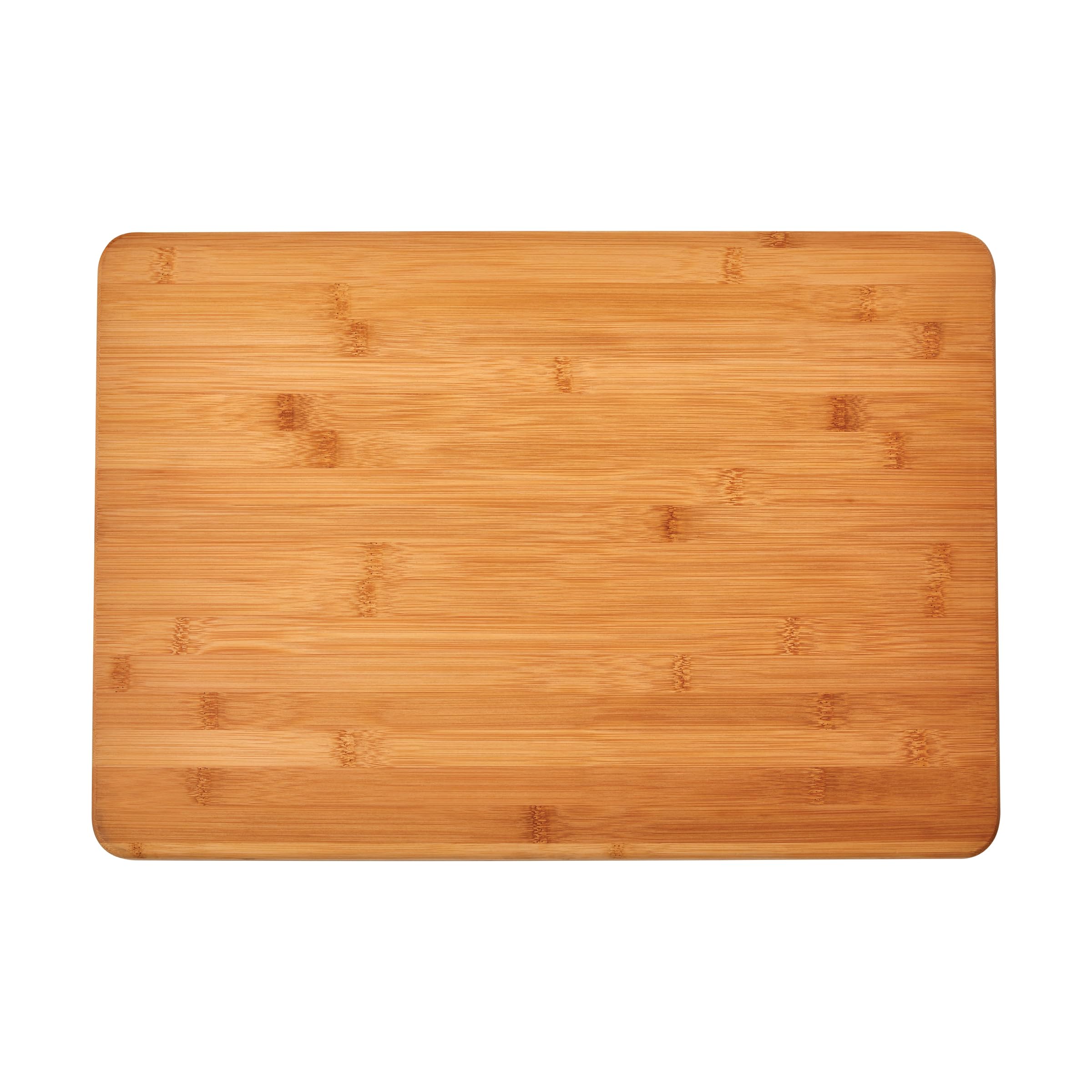
The Farberware 14×20-inch bamboo board is the most affordable entry into the wood cutting board category. At 0.75 inches thick and 4.8 pounds, it is light and easy to store, but the thin profile makes it prone to warping if left wet or stored improperly. Bamboo is technically a grass that is harder than most hardwoods, which means it is durable and resists deep scratches, but it is also tougher on knife edges — your blades will dull faster compared to using maple or walnut boards.
The board is reversible, giving you two surfaces for prep, and the 14×20-inch size is generous enough for everyday chopping without overwhelming small countertops. It lacks a juice groove, so liquids will run off the edges, and there are no rubber feet, so it can slide around on smooth worktops. The bamboo grain is light and uniform, which looks clean but shows stains from beets, berries, or turmeric quite noticeably.
This board is best suited for someone who wants an inexpensive, eco-friendly cutting surface for light-duty prep and also wants the option to use it as a serving board for cheese and charcuterie. It needs hand washing and immediate drying, and regular oiling with mineral oil will help prevent the bamboo from drying out and cracking. For the price, it is a functional starter board, but serious cooks will want to upgrade to a thicker hardwood model for daily heavy use.
Why it’s great
- Very affordable entry point into wood cutting boards
- Bamboo is highly renewable and resistant to deep cuts
- Reversible and large enough for most home prep tasks
Good to know
- Thin at 0.75 inches — prone to warping if not dried immediately
- Hard bamboo surface dulls knives faster than hardwood boards
FAQ
How thick should a wood cutting board be to prevent warping?
How often should I oil my wood cutting board?
Final Thoughts: The Verdict
For most users, the best wood cutting boards winner is the WoodForChef Maple 20″x16″ because it combines the durability of North American hard maple with a preseasoned finish and a practical juice groove — all at a mid-range price that delivers real value. If you want the ultimate knife-friendly surface that will last for decades, grab the John Boos CCB 20″x15″. And for a compact kitchen that needs end-grain luxury without the premium price tag, nothing beats the BABILONIA Black Walnut Board.