Pulling, rolling, and cranking dough into even sheets is the reason many home cooks abandon fresh pasta after one attempt. An electric pasta machine removes that physical bottleneck entirely, replacing repetitive manual labor with a steady, motor-driven roller that lets you focus on the feel of the dough rather than the effort of the crank.
I’m Mohammad Maruf — the founder and writer behind AirfryerBite. I’ve spent years analyzing kitchen hardware specifications, motor torque ratings, and build materials in the pasta-making category to separate machines that deliver consistent, restaurant-grade results from those that jam, overheat, or rust after a handful of batches.
This guide will walk you through the key specs that define a reliable electric machine and help you choose the right tool for your kitchen workflow, whether you’re rolling delicate lasagna sheets or extruding a dozen eggs-worth of fettuccine. I’ve reviewed the top models to help you find the best electric pasta machine for your countertop and budget.
How To Choose The Best Electric Pasta Machine
An electric pasta machine isn’t just a motor bolted to a roller — it’s a system where motor torque, roller width, gear material, and build quality decide whether you get silky sheets or a frustrating tangle of dough. Focus on these four areas before you click buy.
Motor Power and Torque Delivery
Wattage alone doesn’t tell the whole story, but it’s the first filter. Machines with motors rated below 100W can struggle with stiff, low-hydration doughs (like traditional egg pasta at 30-35% hydration) and may slow down or overheat during extended rolling sessions. Look for a motor that maintains steady speed under load — that’s where motor design and gear reduction matter. Machines in the 110W to 150W range, especially those with metal gears instead of plastic, handle batch after batch without strain.
Roller Width and Thickness Adjustability
A wider roller (at least 5.5 inches) lets you create pasta sheets large enough for lasagna boards or wide pappardelle without excessive trimming. The number of thickness settings ranges from 8 to 10 on most quality machines, giving you fine-grained control from paper-thin angel hair dough to thick dumpling wrappers. Machines with clearly marked, positive-click knobs are easier to use when your hands are floury.
Build Materials and Longevity
The roller and cutter materials directly affect dough release, cleaning, and rust resistance. Food-grade 410 or 430 stainless steel is the gold standard — non-reactive, easy to wipe clean, and resistant to corrosion from acidic doughs. Chrome-plated steel or aluminum rollers work well initially but can wear or chip over time. Avoid machines with plastic roller housings if you plan to make pasta weekly, as the plastic can warp or crack under repeated thermal cycling.
Ease of Cleaning and Maintenance
Pasta machines have nooks and crevices where dried dough accumulates. Look for models where the cutter assembly and roller housing detach without tools. Stainless steel surfaces allow you to scrape dough off with a dry brush rather than water — moisture near the gearbox is a common failure point. Some machines are labeled dishwasher-safe, but hand-washing the roller assembly extends the life of the bearings and cutting edges significantly.
Quick Comparison
On smaller screens, swipe sideways to see the full table.
| Model | Category | Best For | Key Spec | Amazon |
|---|---|---|---|---|
| NEWTRY (3-Blade) | Premium | Versatile home cooks | 19.3 lb | 3 blade types | Amazon |
| MARCATO Pastadrive | Premium | Il Maestro della Pasta | 110W motor | 10 settings | Amazon |
| Imperia Electric SP150 | Premium | Heirloom-quality build | Alloy steel | 6 discs | Amazon |
| Newhai 2-Blade | Mid-Range | Quiet operation | 135W motor | 430 SS | Amazon |
| NEWTRY (2-Blade) | Mid-Range | Value stainless build | 17.6 lb | 410 SS rollers | Amazon |
| GVODE 3-in-1 | Entry-Level | Hands-free convenience | 700W max | 8 thicknesses | Amazon |
| Philips HR2494/00 | Accessory Kit | Expanding shape variety | 4 discs | 0.61 kg | Amazon |
In‑Depth Reviews
1. NEWTRY Electric Pasta Maker (3-Blade Type)

The NEWTRY 3-blade model bridges the gap between home affordability and commercial-grade heft. The 410 stainless steel body and rollers resist rust and acidic dough reactions, while the 19.3-pound weight keeps the machine planted during vigorous rolling. Three blade types — 2.5mm round, 4mm flat, and 9mm wide noodle — cover the most common pasta styles without needing to buy additional discs. The output rate of 11 pounds per hour means you can produce enough pasta for a dinner party in under 20 minutes of active work.
Setup is straightforward: clamp the machine to your counter, select your thickness setting (1-4mm range across the numbered gears), and feed the dough sheet through. The upgraded knob design eliminates the snap-style adjustment that can break under pressure, replacing it with a rotational mechanism that switches between pressing and cutting modes. Some users report that the initial run-through picks up a slight residue from the factory — passing a scrap piece of dough through the rollers before your real batch handles that easily.
Customer feedback highlights strong after-sale support when issues like power switch faults arise, with replacement units offered promptly. The motor runs at a single speed, and a few owners note it can overheat during extended sessions — working in shorter bursts of 5-7 sheets prevents this. For the price point, the combination of all-stainless construction, three cutting options, and solid torque makes this the most balanced electric pasta machine on the list.
Why it’s great
- Full stainless steel construction resists rust and stands up to heavy use
- Three blade types give you spaghetti, fettuccine, and wide noodles out of the box
- Strong 19.3-pound frame stays stable without vibration during rolling
Good to know
- Single speed runs fast — requires practice to feed dough smoothly
- Some units develop power switch issues after several months of use
2. MARCATO Pastadrive 110W Electric Pasta Machine

MARCATO’s Pastadrive is a 110W motor drive designed to attach to the classic Atlas and Ampia manual machines, converting them into electric rollers without losing the hand-crank control. The chrome steel body and aluminum rollers follow the same precision tolerances that made the Atlas a professional staple, now with a motor that delivers even sheet thickness from setting 1 (thickest) all the way to setting 10 (paper-thin). The motor drive frees up both hands — one to guide the dough into the rollers and one to catch the sheet as it emerges.
Noise is the most common compromise: the motor runs audibly louder than integrated machines, which matters if you’re rolling pasta early in the morning or late at night. A few units shipped with wrong voltage specifications, though Amazon’s return process solved those cases. Once you have the correct 110V 60Hz motor, the performance is consistent, producing sheets that hold together through multiple thinning passes without tearing.
For users who already own a Marcato or Ampia manual machine, this motor drive is an upgrade that transforms the experience without replacing your existing tool. It also works with the Marga Mulino for grain milling. The motor clamps on securely and detaches in seconds, letting you switch back to manual cranking if the power goes out or you want finer control on delicate doughs. If noise level is a primary concern, consider the Newhai below; if build precision and Italian engineering matter more, this is the stronger choice.
Why it’s great
- Attaches to existing Marcato Atlas/Ampia machines — no need for a whole new unit
- 10 precision thickness settings from thick pasta sheets to translucent layers
- Chrome steel and aluminum build is durable and corrosion-resistant
Good to know
- Motor is noticeably louder than integrated machines
- Some buyers received 220V European versions instead of the correct 110V model
3. Imperia Electric Version of SP150

Imperia’s electric version of the SP150 is the machine you buy when you want one pasta roller for the rest of your life. The alloy steel construction, including steel gears rather than nylon or plastic, handles dense semolina doughs without flexing or skipping. Six cutting discs (spaghetti, fettuccine, tagliatelle, and specialty shapes) come included, and the motor drive is integrated directly into the body rather than added as a clip-on attachment. The 3.45-kilogram weight feels solid without being immovable — you can store it in a cabinet and pull it out for pasta Sundays.
Assembly is intuitive even without a manual, according to refurbished-unit buyers. The electric motor frees up both hands, which matters most when rolling at thin settings (setting 1 through 6) where a single sheet can stretch over a meter long — you need one hand to feed and one to catch. Owners report that the machine produces smooth, even sheets with zero tearing after a short learning curve.
Cleaning is straightforward with the included plastic brush; avoid water near the gearbox area. The main drawbacks are that the SP150 is not dishwasher-safe, and the motor unit is permanently attached to the roller mechanism rather than detachable. If you prefer a modular setup or need dishwasher-safe components, the Newhai 2-blade might serve you better. For pure durability and classic Italian pasta-making heritage, the Imperia SP150 stands as the reference standard.
Why it’s great
- Alloy steel gears and body deliver heirloom-level durability
- Six cutting discs cover nearly every pasta shape you’d want at home
- Integrated motor design is solid — no wobble or attachment slippage
Good to know
- Not dishwasher-safe — cleaning requires a dry brush approach
- Motor is permanently attached, limiting repair flexibility
4. Newhai Electric Family Pasta Maker (2-Blade)
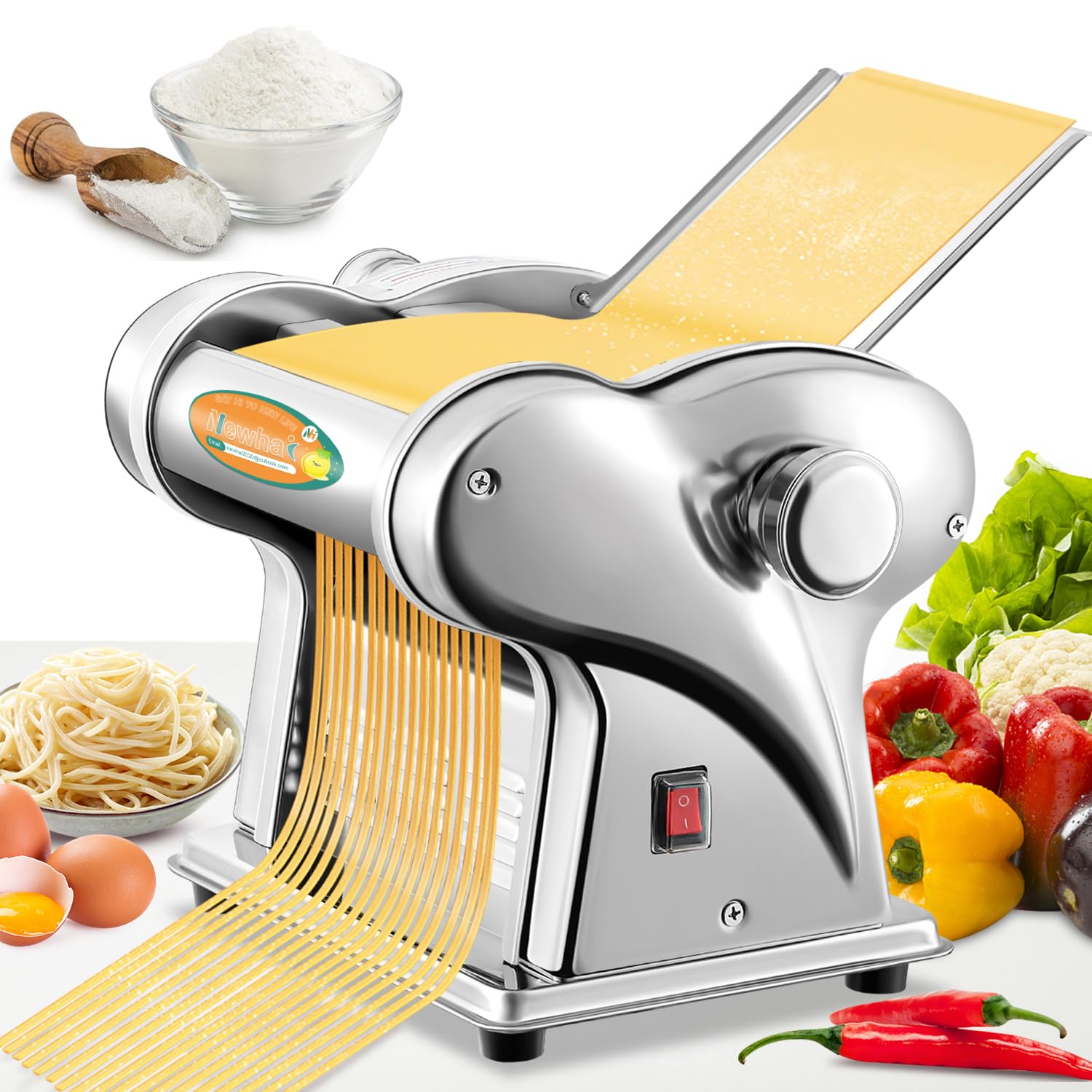
The Newhai 2-blade pasta maker operates at a noticeably lower noise level than most competitors in this price bracket — the 135W motor hums rather than whirs, making it suitable for early-morning pasta sessions or apartments with thin walls. The 430 stainless steel body and rollers resist rust, and the adjustable thickness knob clicks through eight settings from 0.5mm to 3mm, with the thinner end reserved for dumpling wrappers and wontons. The machine switches between pressing and cutting modes with a single knob turn, eliminating the need to swap attachments mid-session.
Dough sheet width measures 5.5 inches, which is standard for home-scale pasta making and sufficient for lasagna sheets after trimming. The included cutting blades produce 1.5mm round noodles and 4mm flat noodles — enough variety for spaghetti and fettuccine, but you won’t get wide pappardelle or angel hair without buying additional discs. Some users report that the factory grease on the rollers requires a thorough initial cleaning (running scrap dough through 5-6 times) before the machine stops staining fresh dough dark.
Customer experiences split on long-term reliability: several owners report smooth operation after months of weekly use, while a smaller number experienced motor overheating after extended rolling. Running 4-5 sheets then letting the motor cool for a few minutes is a good habit. The machine is dishwasher-safe per the manufacturer, but hand-washing the roller assembly preserves the cutting edges longer. If quiet operation and stainless hygiene are your priorities, the Newhai delivers well for the investment.
Why it’s great
- 135W motor runs significantly quieter than competing electric machines
- 430 stainless steel rollers and body resist rust and are food-safe
- One-knob switch between pressing and cutting modes simplifies workflow
Good to know
- Factory grease requires several cleaning passes before first use
- Motor can overheat during extended continuous rolling sessions
5. NEWTRY Electric Pasta Maker (2-Blade Type)

The NEWTRY 2-blade model shares the same 410 stainless steel body and roller design as its 3-blade sibling but trims the blade selection to 1.5mm round and 4mm flat noodles. This makes it a more focused tool for households that primarily cook spaghetti and fettuccine rather than experimenting with wide egg noodles or lasagna sheets. The machine outputs 11 pounds of pasta per hour, and the 5.5-inch roller width accommodates standard dough sheets without excessive trimming.
Build quality is identical to the pricier version: heavy-gauge steel that won’t rock during rolling, upgraded twist knobs that replace snap-style adjusters, and a thickness range from 1mm to 4mm across the numbered gears. The single-speed motor runs fast — some users compare it to a professional pasta extruder pace — which means you need to feed dough steadily to avoid folds and overlaps. Passing a test piece of dough through the rollers to remove any protective coating is recommended before your first batch.
The main reliability concern echoes the 3-blade model: a subset of owners report motor or power switch failure within six months, though the company’s customer service team has a track record of replacing defective units. The machine is dishwasher-safe, though hand-cleaning the gears extends its service life. If you prefer a quieter motor or need more blade variety, the upgrade to the 3-blade version or the Newhai model is worth considering. For a stainless steel machine at a lower entry point, the NEWTRY 2-blade offers strong value.
Why it’s great
- Full 410 stainless steel construction at a budget-friendly price point
- 11 lb/hour output handles family-sized batches efficiently
- Upgraded knob design is more durable than snap-style alternatives
Good to know
- Single-speed motor runs fast, requiring attentive dough feeding
- Some units experience motor or switch failure within the first year
6. GVODE Electric Pasta Maker 3-in-1
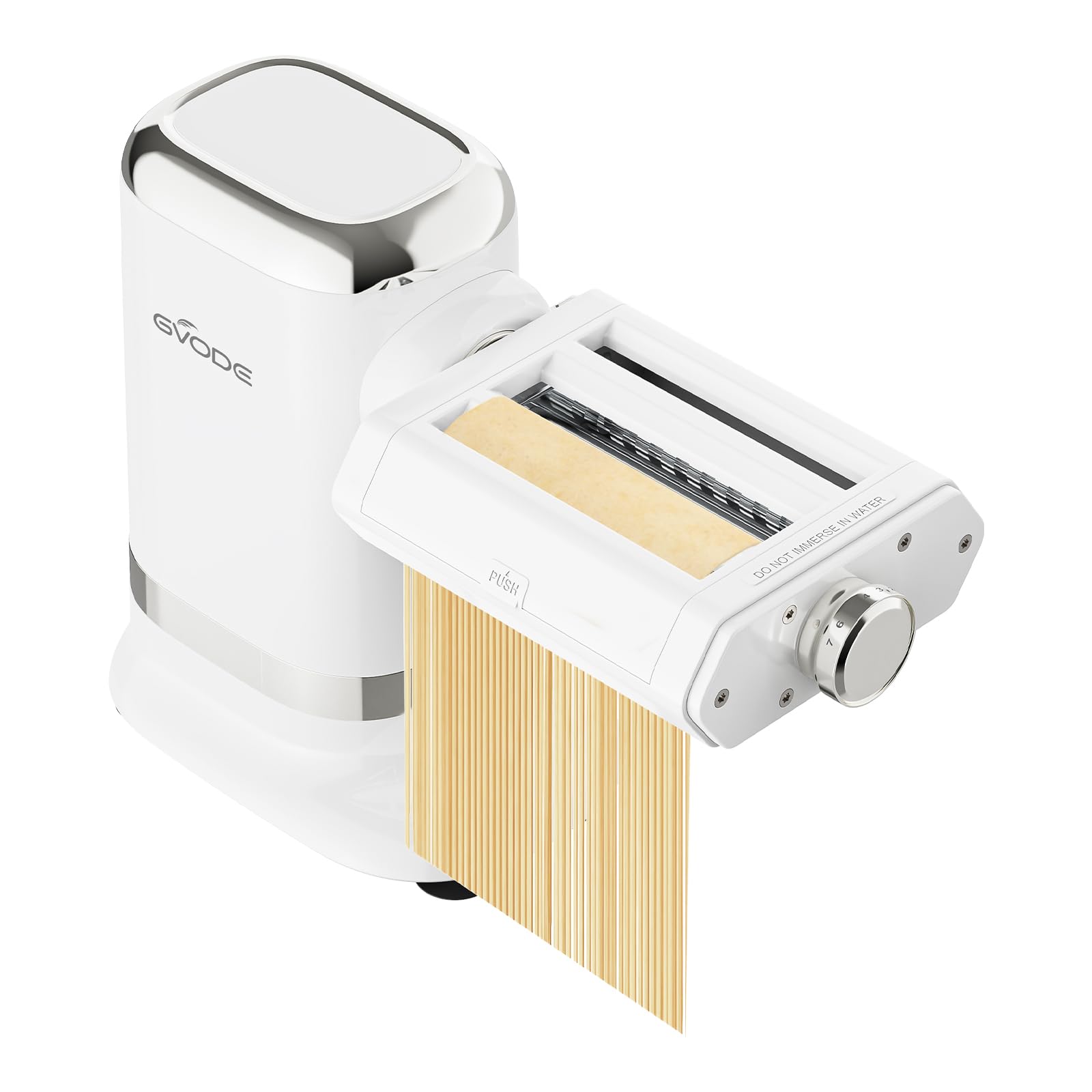
The GVODE 3-in-1 takes a different approach from the roller-and-cutter machines above — it attaches to your KitchenAid stand mixer’s power hub, using the mixer’s motor to drive the pasta rollers and cutters. The drive unit itself is rated with a 700W max motor, but the actual torque delivery depends on your stand mixer’s power. The set includes a sheet roller, a fettuccine cutter, and a spaghetti cutter, with eight adjustable thickness settings ranging from 0.4mm to 2mm. This lets you dial in everything from delicate capellini dough to thick lasagna sheets.
Assembly is quick: attach the drive unit to the mixer’s hub, lock on the roller or cutter attachment, and feed the dough through. The motorized drive frees up both hands, which makes it easier to handle longer dough sheets without them folding over themselves. Users who make egg noodles report that the machine cuts through multiple batches in less than 20 minutes without jamming. The aluminum roller construction gives good heat transfer and even dough compression.
The primary drawback is speed control — even the lowest setting runs fast, which can make dough handling tricky for beginners. One user noted the motor spun too quickly and received a refund as good customer service. The machine is not dishwasher-safe, and cleaning requires the included brush to remove dried dough from the cutters. If you already own a KitchenAid stand mixer and want to avoid taking up extra counter space with a standalone pasta machine, the GVODE 3-in-1 is a convenient, space-saving choice.
Why it’s great
- Attaches to KitchenAid stand mixers — no extra counter footprint needed
- Eight thickness settings give precise control over dough sheet thickness
- Rolls and cuts multiple batches quickly, ideal for large family meals
Good to know
- Lowest speed still runs fast, requiring careful dough feeding
- Not dishwasher-safe — cleaning requires the included brush
7. Philips Avance Pasta Maker Shape Kit (HR2494/00)
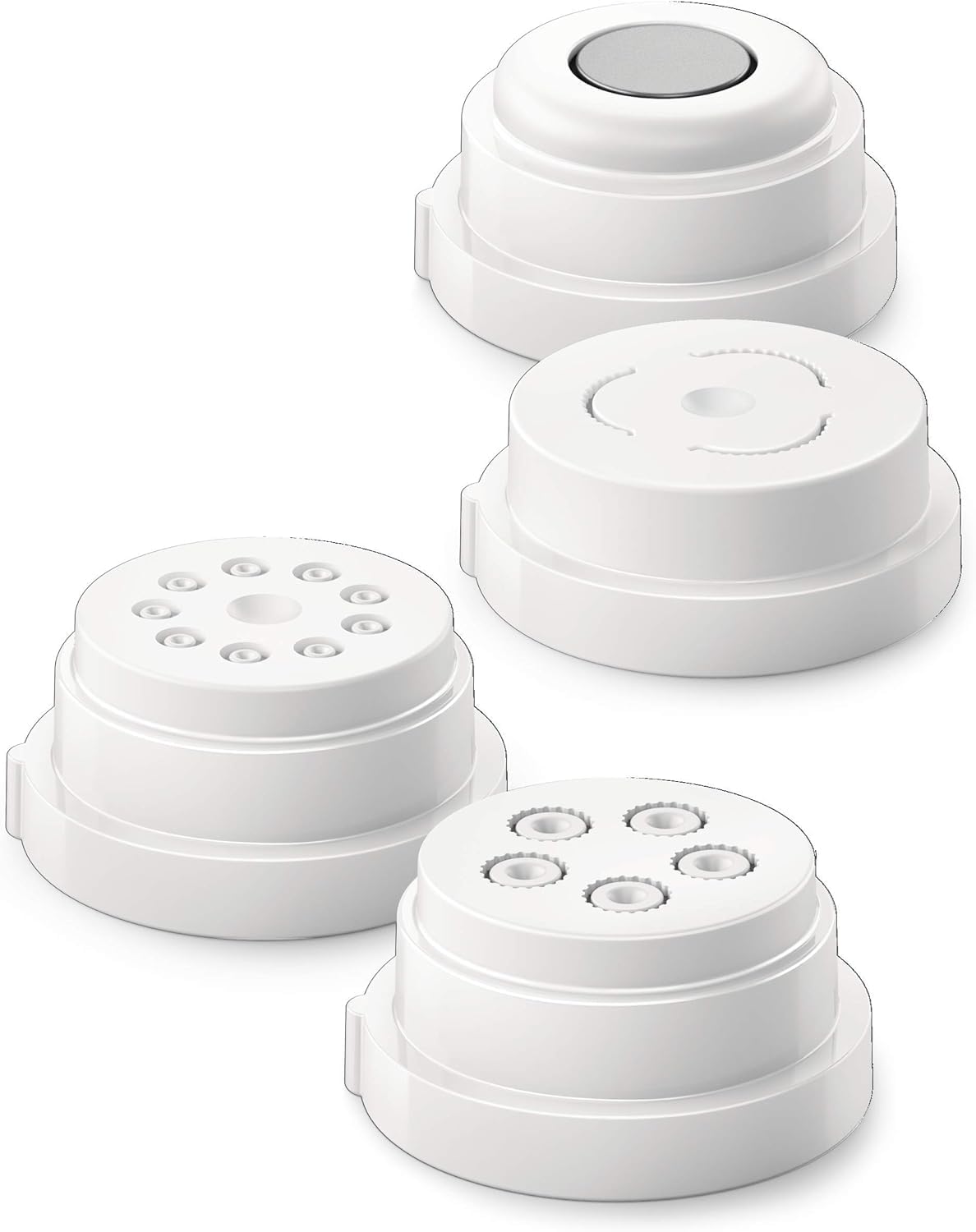
The Philips HR2494/00 is not a standalone pasta machine — it’s a four-disc shape kit specifically designed for the Philips Avance pasta makers (models HR2357 and HR2375). It adds shells, paccheri, rigatoni, and macaroni to your existing machine’s shape capabilities, expanding your pasta variety beyond standard spaghetti and fettuccine. Each disc features precisely machined extrusion holes that produce consistent shapes batch after batch, and the disks are crafted from thick plastic that withstands extrusion pressure without warping.
Setup is simple: swap out your current shaping disc, load the dough into the machine, and let the auger push it through. The shells and paccheri shapes require a bit of manual trimming after extrusion because the dough needs to be separated at the right moment to form the shell cup — the included cutting tool helps with this. Rigatoni and macaroni are more forgiving and extrude cleanly with minimal guesswork.
Owners praise the quality of the shapes produced, noting that the rigatoni and macaroni look store-bought in consistency. The main limitation is that the kit only works with the full-size Avance models, not the compact versions (HR2370, HR2371, HR2372). If you own a compatible Philips machine, this kit is an affordable way to triple your shape variety. If you’re buying your first electric pasta machine and want tubular shapes out of the box, consider an extrusion-style machine instead.
Why it’s great
- Adds four distinct tubular pasta shapes to compatible Philips machines
- Extrusion holes produce consistent, smooth shapes batch after batch
- Dishwasher-safe discs make cleanup simple
Good to know
- Only compatible with Philips Avance HR2357 and HR2375 — not compact models
- Shells and paccheri require manual trimming and shaping practice
FAQ
Can an electric pasta machine handle gluten-free dough?
What thickness setting should I use for lasagna sheets?
How often should I clean the roller and cutter assembly?
Final Thoughts: The Verdict
For most users, the best electric pasta machine winner is the NEWTRY 3-Blade because it combines a heavy-duty stainless steel build, three blade types for versatility, and a motor that powers through batch after batch without the premium markup of Italian imports. If you want whisper-quiet operation and already appreciate the feel of a low-hum motor, grab the Newhai 2-Blade. And for the baker who wants heirloom quality and six cutting discs ready out of the box, nothing beats the Imperia Electric SP150.