That block of five identical stamped blades sitting on your counter? You reach for the same one every time and ignore the rest. A single well-chosen kitchen knife outperforms an entire set because one blade profile, one steel composition, and one handle geometry engineered for your dominant cutting tasks beats a dozen compromise blades every shift. The difference between frustrated push-cutting through a tomato and a single smooth draw-through slice is not skill — it is edge geometry, steel hardness at the correct HRC, and distal taper that shifts the balance point into your palm.
I’m Mohammad Maruf — the founder and writer behind AirfryerBite. I have spent years analyzing blade steel metallurgy, handle ergonomics, and edge retention testing data across hundreds of single-knife models to separate marketing claims from measurable cutting performance.
Whether you need a nimble 5-inch utility blade for vegetable work or a 7-inch forged Santoku that doubles as a chef knife, finding the right single kitchen knife comes down to construction type, steel grade, and handle comfort — not the number of blades in a box.
How To Choose The Best Single Kitchen Knife
A single kitchen knife is a targeted tool, not a compromise. The wrong choice means fighting the blade during every dice, mince, and slice. The right choice turns prep work from a chore into a fluid motion. Three factors separate a knife you will reach for daily from one that collects dust in the drawer.
Steel Composition and Hardness Rating
The steel determines how long the edge stays sharp and how easily it takes a new edge. High-carbon stainless steel (common in German knives like the WÜSTHOF Classic series) offers corrosion resistance and a durable edge at 56–58 HRC. Japanese VG10 core steel hits 60–62 HRC, holding a razor edge significantly longer but requiring a ceramic honing rod or water stone for sharpening because the harder steel is more brittle under lateral stress. Alloy steel like ATS-34 sits between the two — fine grain structure for sharpening ease with enough hardness for daily commercial use. For a single knife that does everything, aim for 58–60 HRC unless you are comfortable maintaining a harder edge.
Blade Profile and Length
Profile dictates what the knife does well. A Santoku profile (7-inch blade with a sheep’s foot curve and granton edge) excels at rock-chopping, slicing, and dicing with minimal sticking — the fluted edge reduces friction on wet ingredients like onions and tomatoes. A utility profile (4 to 6 inches) is narrower and more pointed, ideal for trimming meat, slicing cheese, and detail work where a full chef knife feels clumsy. A 5-inch blade bridges both worlds: compact enough for paring tasks yet long enough for moderate slicing. If you prep vegetables daily, a 7-inch Santoku is the single-knife winner. If you trim proteins and slice small produce, a 5-inch utility blade offers more control.
Construction: Forged vs Stamped and Handle Build
Forged knives are cut from a single billet of steel, heated, and hammered into shape, producing a blade with a thicker spine near the bolster that tapers to a thin edge. This distal taper improves balance and edge strength. Stamped knives are laser-cut from a rolled sheet of steel, then heat-treated — they are lighter, thinner, and more affordable but lack the forward weight distribution that makes a forged blade feel planted during a chop. Full-tang construction (steel runs the entire length of the handle) prevents the blade from loosening over time and adds counterbalance. Handles made from walnut, polypropylene, or Delrin with triple rivets resist moisture and won’t crack under temperature changes in a busy kitchen.
Quick Comparison
On smaller screens, swipe sideways to see the full table.
| Model | Category | Best For | Key Spec | Amazon |
|---|---|---|---|---|
| WÜSTHOF Classic 7″ Santoku | Premium Forged | All-purpose daily prep | High-carbon stainless, 58 HRC | Amazon |
| KAWAHIRO VG10 Santoku | Premium Japanese | Razor-edge vegetable work | VG10 core, 60-62 HRC | Amazon |
| Mercer Culinary Renaissance Santoku | Mid-Range Forged | Value-forged performance | High-carbon German steel, forged | Amazon |
| HENCKELS Classic 6″ Utility | Premium Forged | Dishwasher-safe utility cutting | Forged, 6-inch blade | Amazon |
| Victorinox Swiss Classic 7″ Santoku | Mid-Range Stamped | Budget-friendly Santoku work | High-carbon stainless, fluted edge | Amazon |
| DRGSKL ATS-34 Utility Knife | Budget Forged | Compact precision slicing | ATS-34 steel, 5-inch blade | Amazon |
| WÜSTHOF Gourmet 4″ Utility | Entry-Level Stamped | Dishwasher-safe small tasks | High-carbon stainless, stamped | Amazon |
In‑Depth Reviews
1. WÜSTHOF Classic 7″ Santoku Knife

The WÜSTHOF Classic 7″ Santoku represents the benchmark for a forged single kitchen knife that serves as a daily workhorse. Precision forged from a single block of high-carbon stainless steel and tempered to 58 HRC, the PEtec edge yields a blade that starts 20 percent sharper than previous generations. The full-tang, triple-riveted composite handle provides a secure grip even with wet hands, and the full bolster includes a finger guard for safe rock-chopping. Owner reports confirm this knife holds a usable edge for weeks of daily prep with only occasional steeling — far less maintenance than the harder Japanese alloys require.
The hollow-edge Santoku profile reduces sticking on ingredients like cucumber, squash, and cooked meats. At 7 inches, the blade is long enough for slicing through a large head of cabbage yet agile enough for dicing shallots. The weight distribution is bias toward the blade, giving the knife a planted feel during continuous chopping. It is hand-wash only, a requirement that preserves the edge and prevents handle degradation. With a limited lifetime warranty from a Solingen-based manufacturer with seven generations of knife-making history, this is the single knife that eliminates the need for a block entirely.
Users consistently describe this as the knife they reach for every meal, with multiple reviewers noting it remains sharp after two years of regular use. The higher initial investment is offset by edge longevity and the absence of replacement costs — a single forged knife that handles 90 percent of kitchen tasks without needing a set. For any cook who wants one blade that does everything from mincing garlic to slicing flank steak, this is the definitive choice.
Why it’s great
- Forged full-tang construction provides exceptional balance and edge retention.
- PEtec edge stays sharper longer than standard German stainless blades.
- Lifetime warranty from a heritage Solingen manufacturer.
Good to know
- Hand-wash only — dishwasher exposure damages the edge and handle.
- Premium price point reflects forged craftsmanship and brand reputation.
2. KAWAHIRO Japanese VG10 Santoku Chef Knife
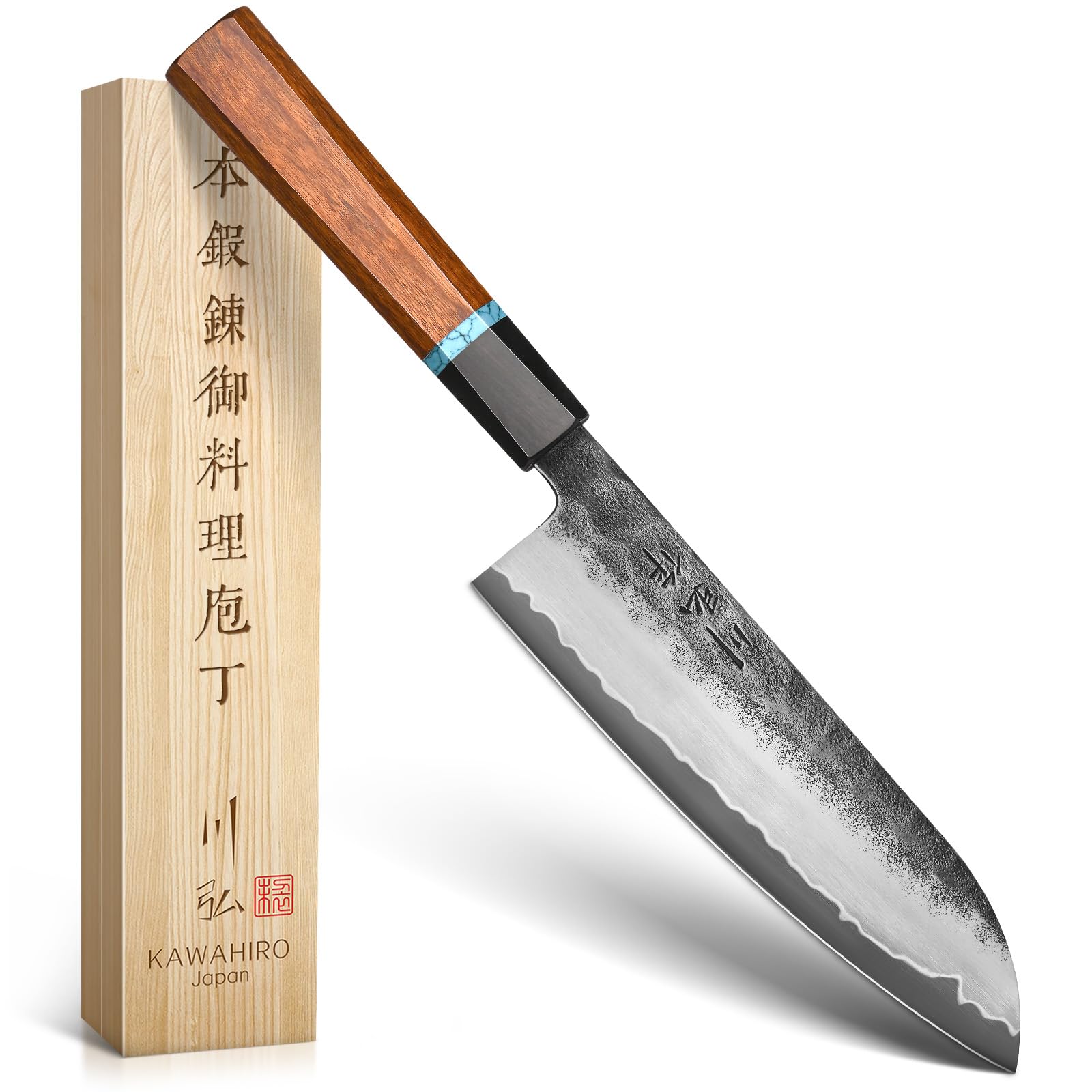
The KAWAHIRO 7″ Santoku brings Japanese VG10 core steel with a 60–62 HRC hardness rating to the single-knife market, delivering an edge that glides through tomato skin without compression and through raw potato without resistance. The hand-forged distal taper shifts from 3.5mm at the heel to 0.09mm near the tip, reducing cutting resistance during push cuts and transferring the balance point closer to the handle for fatigue-free prep. The octagonal Ebony, Turquoise, and Ruby wood handle provides 360-degree grip stability — particularly valuable when your hands are slick with oil or moisture.
At only 0.4 pounds, this knife feels markedly lighter than German forged options while maintaining enough forward mass for controlled chopping. The three-layer steel construction sandwiches the VG10 core between softer stainless layers, a cladding technique that adds toughness to the hard core. Owners report the knife arrives shaving sharp and holds that edge for six months with weekly use before needing a touch-up on a 5000-grit water stone. The Santoku profile with plain edge and slight belly suits vegetable-heavy prep, though several testers note the hard core can chip under lateral stress when twisting the blade in dense squash — use a straight draw cut instead.
The included wooden gift box with certificate of authenticity and wipe cloth makes this a strong gift candidate, but the real value is the cutting experience. For cooks who prioritize the thinnest, hardest edge and are willing to maintain it with proper sharpening tools, the KAWAHIRO offers Japanese knife performance at a price well below the Takamura or Shun equivalents. The hand-wash requirement is non-negotiable — dishwasher heat and detergent will oxidize the carbon-rich VG10 core.
Why it’s great
- VG10 core at 60-62 HRC delivers exceptional edge retention and sharpness.
- Distal taper reduces cutting resistance and shifts balance for less wrist strain.
- Octagonal wood handle provides grip stability in wet conditions.
Good to know
- Hard core can chip if twisted or used on bones — avoid lateral torque.
- Requires water stone sharpening; standard pull-through sharpeners may damage the edge.
3. Mercer Culinary Renaissance 7″ Santoku Knife

The Mercer Culinary Renaissance series delivers a fully forged, high-carbon German steel blade with a Santoku profile at a price that typically buys stamped construction. The 7-inch blade measures 0.100 inches thick at the spine, providing enough heft for stable chopping while the granton edge (the dimpled surface) reduces food adhesion during repetitive slicing. The handle uses a Santoprene and Delrin composite with three heavy-duty rivets through the full tang — a build that resists moisture absorption and thermal expansion better than wood handles at this price tier.
Multiple users with professional culinary training reported that this Santoku matches the sharpness and ergonomics of German knives costing triple the price. The blade takes a refined edge on a 2000-grit water stone and retains it through three months of weekly meal prep. The unrounded spine is a common critique — when choking up on the blade for detail work, the 90-degree spine edge can press into the index finger during long cutting sessions. A quick pass with fine sandpaper on the spine eliminates this issue and turns the knife into a comfortable all-day tool.
Mercer-built knives are standard equipment in many culinary school kitchens for good reason: they perform at a professional level without the price premium of heritage brands. The hand-wash rule is strict — the steel will develop surface staining if left wet, though it does not affect cutting performance. For home cooks who want a forged blade that feels like a WÜSTHOF or Zwilling but costs significantly less, the Renaissance is the single knife that delivers 90 percent of the performance at half the cost.
Why it’s great
- Fully forged from high-carbon German steel at a mid-range price point.
- Triple-riveted full-tang handle resists moisture and thermal wear.
- Granton edge reduces sticking on wet ingredients.
Good to know
- Spine is not rounded — may cause discomfort during choked-up grip without modification.
- Hand-wash only to prevent surface oxidation.
4. HENCKELS Classic 6″ Utility Knife

The HENCKELS Classic 6-inch utility knife is the rare forged-blade option that the manufacturer explicitly lists as dishwasher safe, a major convenience for cooks who prefer not to hand-dry after every use. The satin-finished, stain-resistant stainless steel blade is forged — not stamped — and the PEtec sharpening process delivers a factory edge that remains sharp across dozens of cutting sessions. The fully forged construction provides a seamless transition from blade to handle, eliminating the food trap gap that collects debris on lesser utility knives.
At 6 inches, this blade sits at the sweet spot between a 4-inch utility and an 8-inch chef knife. It slices through medium-sized fruits, trims chicken thighs, and cuts hard cheese without the blade flexing. The lightweight 1.6-ounce design reduces wrist fatigue during prolonged trimming tasks, though some users note that the lighter weight reduces the blade’s ability to power through dense squash or thick carrot rounds — those tasks are better handled by a heavier Santoku. The polypropylene handle resists heat and impact, maintaining its shape even after repeated dishwasher cycles.
Multiple reviewers with decades of HENCKELS ownership confirm that the German-engineered blades maintain consistent quality across production runs. The 6-inch utility format makes this a strong single-knife choice for cooks who primarily trim proteins and slice soft-to-medium produce and want the convenience of machine washing. The edge does require honing more frequently than the forged Santoku options — approximately once a week with a steel rod held at 20 degrees — but the 45-degree sharpening angle makes it easy to maintain without specialized equipment.
Why it’s great
- Dishwasher-safe forged construction for easy cleanup.
- Stain-resistant satin blade holds a sharp factory edge.
- Lightweight at 1.6 ounces reduces fatigue during trimming tasks.
Good to know
- Light blade lacks mass for dense vegetables like butternut squash.
- Requires weekly honing to maintain peak sharpness.
5. Victorinox Swiss Classic 7″ Santoku Knife
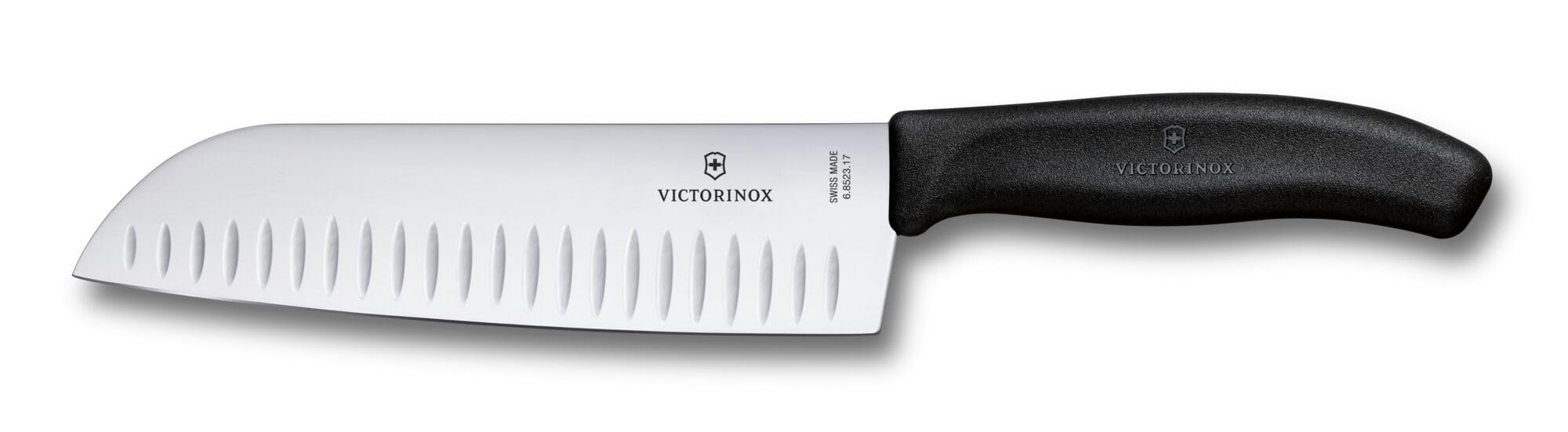
The Victorinox Swiss Classic 7-inch Santoku is the stamped-blade benchmark that proves you do not need forging to get a sharp, functional single kitchen knife. The high-carbon stainless steel blade is laser-cut from rolled sheet steel, heat-treated, and finished with a fluted granton edge that reduces friction and food adhesion during vegetable slicing. At 1.6 ounces, it is significantly lighter than forged alternatives, making it ideal for cooks with smaller hands or those who prefer a delicate, nimble blade for precise work rather than heavy chopping.
The ergonomic handle uses Victorinox’s proprietary polypropylene blend with a textured grip pattern that stays secure even when wet. Multiple users reported the knife arrived exceptionally sharp out of the box and maintained its edge for three to four full cooking sessions before requiring a light strop. The thin blade geometry — approximately 0.05 inches at the spine — allows it to glide through raw potatoes, onions, and bell peppers with minimal resistance, but the same thinness means the blade flexes under pressure and can nick if twisted against hard ingredients like pineapple core or butternut squash.
The Swiss-made construction carries dishwasher-safe certification, though repeated machine washing will degrade the edge faster than hand washing. The handle is the most polarizing feature: some users find the lightweight plastic lacking the heft needed for confident grip, while others appreciate the reduced fatigue during long prep sessions. For the budget-conscious cook who wants a razor-sharp Santoku that performs on soft-to-medium produce and can be tossed in the dishwasher, the Victorinox delivers 85 percent of the performance of forged options at a fraction of the cost.
Why it’s great
- Exceptionally sharp out of box with good edge retention for a stamped blade.
- Fluted granton edge reduces sticking on wet produce.
- Dishwasher-safe and very lightweight for fatigue-free prep.
Good to know
- Thin blade can flex and nick on dense ingredients like squash or pineapple.
- Plastic handle feels lightweight and lacks the heft some users prefer.
6. DRGSKL ATS-34 Utility Knife
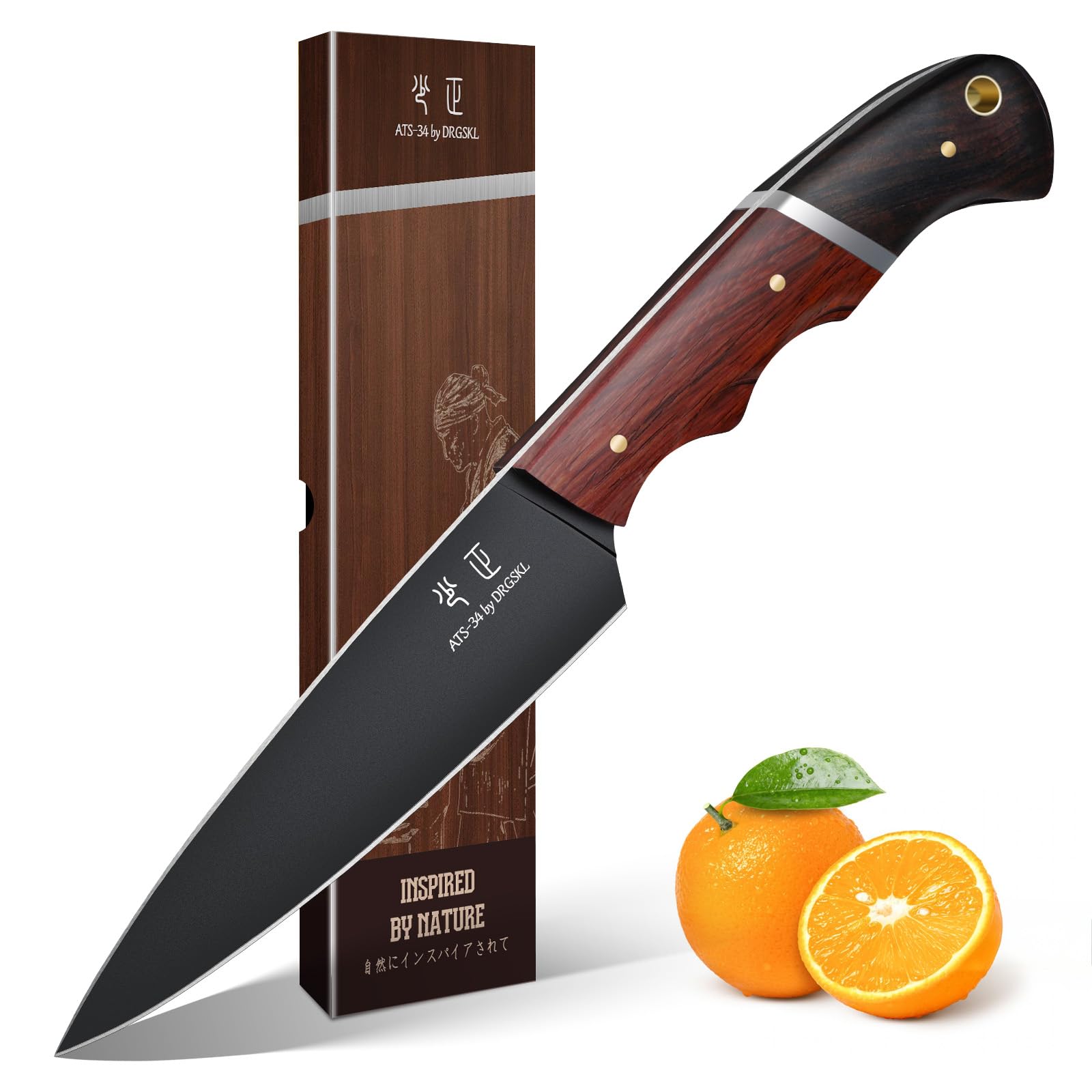
The DRGSKL 5-inch utility knife brings ATS-34 steel — a high-carbon alloy steel known for its fine grain structure and hardness in the 58–60 HRC range — to the budget-friendly tier, a material typically found in knives costing more than double. Forged using traditional Japanese wet-grinding techniques (Mizukensaku), the blade achieves a polished edge that one user described as a “vegetable laser.” The Dual-Tech Black Shield coating layers a silver-tone finish under black titanium plating, producing a matte surface that resists food adhesion and cleans easily with a quick hand wash.
The walnut handle is hand-polished with a sculpted finger groove that provides a secure, non-slip grip. The full-tang construction with a metal spacer adds balance, and the 5-inch blade is short enough for detail work like coring strawberries or deveining shrimp yet long enough to slice a medium tomato or avocado. Owners with larger hands noted the handle accommodates a full grip comfortably, though the lighter overall weight (under 4 ounces) means the knife lacks the forward mass to power through dense root vegetables — it excels at precision slicing, not heavy chopping.
The presentation packaging includes a felt-lined box, making this a ready-to-gift option for housewarmings or weddings. The knife is hand-wash only — the walnut handle and titanium coating require gentle care to prevent dulling and surface wear. For cooks who want a compact, razor-sharp utility blade made from premium ATS-34 steel with an eye-catching aesthetic, the DRGSKL punches well above its tier in build quality and cutting performance.
Why it’s great
- ATS-34 high-carbon steel offers hardness and fine grain for lasting sharpness.
- Compact 5-inch blade ideal for detailed trimming and produce work.
- Walnut handle with finger groove provides secure, comfortable grip.
Good to know
- Light weight lacks mass for heavy chopping tasks.
- Hand-wash only — walnut handle and titanium coating require careful maintenance.
7. WÜSTHOF Gourmet 4″ Utility Knife

The WÜSTHOF Gourmet 4-inch utility knife is the entry point into German knife craftsmanship for cooks who want the Solingen brand name without the forged-classic price. This is a laser-cut stamped blade from high-carbon stainless steel, precision-ground to a plain edge that arrives very sharp and cuts well out of the box. At 4 inches, it is a dedicated small-task tool — peeling, coring, trimming, and slicing soft fruits and small vegetables — not a general-purpose blade.
The polypropylene handle is heat and impact resistant and, critically, the Gourmet series is dishwasher safe. This makes it a practical choice for users who prioritize ease of maintenance and do not want to hand-dry after every use. The thin, flexible blade is ideal for slicing strawberries, trimming green beans, or cutting cheese without compressing the product, but it lacks the rigidity needed for tasks that require downward pressure, such as cutting through a thick carrot or an apple core. Multiple users reported that the edge dulls faster than the forged Classic line — expect to hone weekly and sharpen monthly with regular use.
The 4-inch format is niche: it does not replace a Santoku or chef knife, and it is not a substitute for a paring knife. It fills the gap for cooks who already own a larger blade and need a compact, dishwasher-safe utility for quick small tasks. For a standalone single kitchen knife, the Gourmet 4-inch works best as a secondary blade rather than a primary tool. The limited lifetime warranty and heritage-brand reliability offer peace of mind, but the stamped construction and shorter edge life make this a budget-friendly entry point rather than a long-term workhorse.
Why it’s great
- Dishwasher-safe for convenient cleanup.
- WÜSTHOF heritage brand with limited lifetime warranty.
- Thin, flexible blade ideal for soft fruit and cheese.
Good to know
- Edge dulls faster than forged Classic line — requires frequent maintenance.
- 4-inch length limits utility to small tasks; not a primary cooking blade.
FAQ
Is a forged single kitchen knife really better than a stamped one?
What blade length should I choose for a single kitchen knife?
Can I sharpen a 60+ HRC Japanese knife with a pull-through sharpener?
Final Thoughts: The Verdict
For most users, the single kitchen knife winner is the WÜSTHOF Classic 7″ Santoku because its forged full-tang construction, 58 HRC edge, and lifetime warranty deliver daily cutting performance without the maintenance demands of harder Japanese steel. If you want a razor-thin VG10 edge that glides through vegetables with minimal effort, grab the KAWAHIRO VG10 Santoku. And for budget-conscious cooks who still want a fully forged blade, nothing beats the value of the Mercer Culinary Renaissance 7″ Santoku.