The search for a matcha that actually tastes good in a latte or iced drink—without turning bitter or clumpy—often leads to frustration. Many powders labeled “matcha” are dull, astringent, or simply not designed to dissolve smoothly into milk.
I’m Mohammad Maruf — the founder and writer behind AirfryerBite. I’ve spent months analyzing dozens of matcha brands, comparing their sourcing regions, harvest times, grind fineness, and organic certifications to understand what separates a drinkable daily matcha from a disappointingly bitter one.
This guide focuses on the specific qualities that matter when you plan to whisk, shake, or froth your matcha into a beverage. If you are ready to find the best matcha for drinks, you’ve come to the right place.
How To Choose The Best Matcha For Drinks
Not all matcha powders are created equal when it comes to mixing into hot or cold liquids. The key differentiators are grade, harvest timing, grind quality, and certification. Ignoring these leads to a gritty, bitter, or flat-tasting beverage.
Grade Matters: Ceremonial vs. Culinary
Ceremonial grade matcha uses the youngest, most tender shade-grown leaves, typically from the first harvest. This produces a naturally sweet, umami-rich flavor profile with minimal astringency—ideal for drinking straight or in a latte. Culinary grade is often from later harvests, more robust in flavor, and designed to stand out when mixed with other ingredients, but it can taste bitter when consumed on its own. For pure drink enjoyment, prioritize ceremonial grade.
Harvest Season and Shade-Growing
First harvest matcha, or “first flush,” delivers a smoother, sweeter, and less astringent cup compared to second harvest or generic blends. The leaves are shade-grown for weeks before harvest, boosting chlorophyll and L-theanine levels. This amino acid is responsible for the creamy, savory umami flavor and also counteracts the caffeine jitters, providing calm, sustained energy.
Stone Grinding and Texture
Traditional stone milling preserves the delicate flavor and results in an ultra-fine powder. A finer powder dissolves more easily into liquid without clumping, which is critical for a smooth mouthfeel in iced drinks or lattes. Avoid matcha that feels coarse or has been blade-ground, as it tends to settle out of solution or produce a chalky texture.
Organic Certification and Sourcing
Because you consume the entire leaf, purity is paramount. Look for USDA Organic, JAS (Japanese Agricultural Standard), or ECO JAS certification to ensure no synthetic pesticides or fertilizers were used. Sourcing from renowned regions like Uji, Kyoto, or Shizuoka, Japan, is a strong indicator of traditional processing and high quality.
Quick Comparison
On smaller screens, swipe sideways to see the full table.
| Model | Category | Best For | Key Spec | Amazon |
|---|---|---|---|---|
| Jade Leaf Organic Culinary Grade | Culinary Standard | Daily lattes & baking | 100g resealable pouch | Amazon |
| Ocha & Co. Shizuoka Organic Ceremonial | Premium Ceremonial | Pure drinking & lattes | 100g, Gokou cultivar | Amazon |
| Matcha Moon Pure Zen Ceremonial | Ceremonial Grade | Authentic tea ceremony | 30g tin, first harvest | Amazon |
| DoMatcha Organic Summer Harvest | Latte Grade | Versatile everyday drink | 2.82 oz tin | Amazon |
| The Republic of Tea Organic Full-Leaf | Entry-Level | Value-conscious buyers | 1.5 oz tin, 30 cups | Amazon |
In‑Depth Reviews
1. Ocha & Co. Shizuoka Organic Matcha – Ceremonial Grade
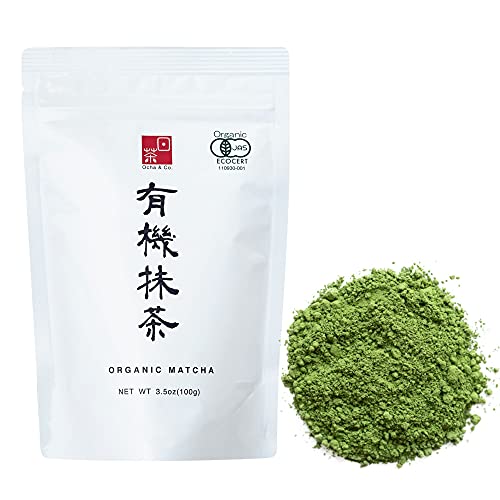
This Shizuoka-sourced ceremonial grade matcha uses the rare Gokou cultivar, known for its deep umami and natural sweetness. The leaves are traditionally stone-milled, producing an ultra-fine powder that dissolves smoothly into hot water or milk without clumping. The vibrant green color is a reliable indicator of its high chlorophyll content and careful processing.
Customers consistently praise its lack of bitterness and the calm, sustained energy it provides—a direct result of the high L-theanine levels preserved through shade-growing. The 100g resealable package yields approximately 50 servings, making it a strong value for a premium ceremonial product. It works equally well in traditional usucha preparation or as the base for a creamy latte.
One note for sensitive users: the caffeine content is notably higher than typical culinary blends, so start with a smaller serving if you are caffeine-sensitive. The flavor profile is naturally sweet and smooth, with subtle notes of toasted nori that complement plant-based milks beautifully.
Why it’s great
- True ceremonial grade from the Gokou cultivar for unmatched smoothness
- Traditionally stone-milled for a fine, clump-free powder
- JAS organic certified for purity and sustainable sourcing
Good to know
- Higher caffeine content may require dosage adjustment for some users
- Premium pricing reflects the small-batch sourcing and certification
2. Jade Leaf Matcha Organic Culinary Grade Matcha Powder

Jade Leaf’s culinary grade matcha is the workhorse of this list, offering a massive 100g resealable pouch that yields approximately 50 lattes or up to 100 traditional usucha servings. The powder is sourced from Uji and Kagoshima, Japan, and carries USDA organic certification. While it is labeled culinary grade, its flavor profile is rich and drinkable, making it a favorite among daily latte drinkers who want quality without the ceremonial price tag.
Reviewers repeatedly note that it beats Starbucks Teavana matcha in taste and texture, with no bitterness or clumping issues. The L-theanine and caffeine content per serving is roughly one quarter of a standard coffee, providing calm, jitter-free energy. It mixes well with both hot and cold liquids, though some users recommend a frother or whisk for best results in cold preparations.
The only trade-off is that it is not as naturally sweet as first-harvest ceremonial grades, so those who prefer unsweetened drinks may notice a slightly more robust, grassy flavor. This actually makes it excellent for blending with honey, vanilla, or flavored syrups without losing the matcha character.
Why it’s great
- Excellent per-serving cost for high-volume daily use
- Smooth, no-clump texture that works well in hot and cold drinks
- USDA organic and sourced from top Japanese regions
Good to know
- Less naturally sweet than first-harvest ceremonial grades
- Culinary label means it is best paired with milk or sweetener
3. Matcha Moon Pure Zen Ceremonial Grade Matcha Powder
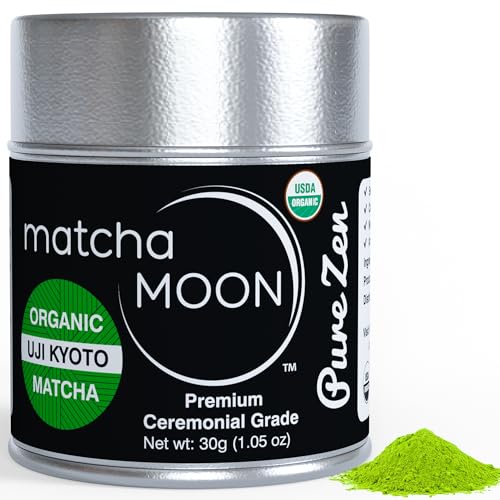
Matcha Moon delivers a true first-harvest ceremonial experience sourced directly from Uji, Kyoto—the historic birthplace of premium Japanese matcha. The 30g tin preserves the powder’s vibrant green color and delicate aroma. The flavor is naturally sweet and buttery, with a velvety mouthfeel that makes it a joy to drink straight or as a latte without any sweetener.
Customers report that this matcha creates consistent microfoam when whisked, indicating a fine, high-quality grind. The USDA organic certification provides peace of mind for purity. It is important to note the smaller tin size—30g disappears quickly if you make multiple drinks daily, so this is better suited for those who prioritize an occasional premium experience over bulk quantity.
The lack of astringency even with high powder-to-water ratios is a hallmark of true first-harvest ceremonial grade. Some users find the price steep for the quantity, but the sensory quality and smooth finish justify the investment for matcha enthusiasts who drink it neat.
Why it’s great
- Naturally sweet and buttery flavor, no bitterness at all
- USDA organic and sourced from Uji, Kyoto, the premium region
- Creates excellent microfoam when whisked for lattes
Good to know
- 30g tin is small; not the most economical for daily heavy use
- Premium price per gram compared to larger pouches
4. DoMatcha Organic Summer Harvest Matcha Powder

DoMatcha is a long-established brand in the organic matcha space, and their Summer Harvest blend is designed as a versatile “latte grade” option. It is sourced from Japan and packed in a sturdy 2.82 oz tin that keeps the product fresh. The flavor is creamy and rich, with a smooth mouthfeel that works well when whisked into hot milk or shaken with cold water.
The powder is vibrant green and mixes without clumping, though some users note that it falls out of solution faster than ceremonial grades when served cold. This is typical for a second-harvest or summer-harvest product, which has slightly larger particle size than first-flush ceremonial powders.
The summer harvest character gives it a more pronounced grassy, slightly pungent flavor that some find invigorating. It is less naturally sweet than first-harvest options, making it a better candidate for sweetened lattes or smoothies. The organic certification adds confidence for regular consumption.
Why it’s great
- Consistently high quality from a well-established brand
- Creamy, rich flavor ideal for lattes and smoothies
- Sturdy tin packaging preserves freshness well
Good to know
- Summer harvest is less sweet and more grassy than first flush
- May settle out of solution faster in cold drinks
5. The Republic of Tea Organic Full-Leaf Japanese Matcha Green Tea Powder
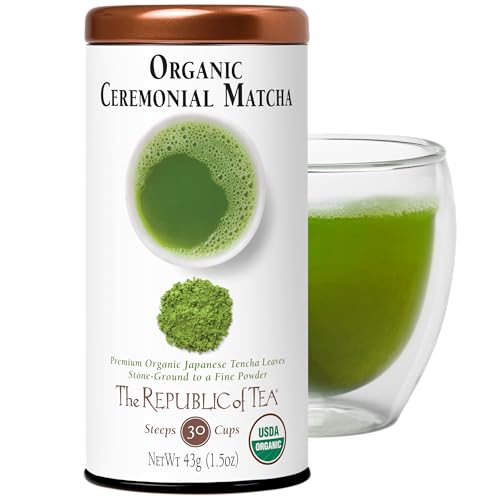
This offering from Republic of Tea provides an accessible entry point into matcha drinking. The 1.5 oz tin is small, but the powder is genuinely stone-ground from organic Japanese tencha leaves. It steeps 30 cups, making it a reasonable option for those who want to test matcha without committing to a larger quantity. The flavor is described as smooth with a vegetal sweetness and no astringency.
Customers appreciate the bright green color and the fact that it blends easily with nut milks. Some note that while the taste is authentic, the price per ounce is comparatively high for the amount you receive. This is a trade-off for the convenience of a small, low-commitment tin. The caffeine content is less than half that of coffee, suitable for a morning or afternoon pick-me-up.
It is worth noting that this is not labeled as ceremonial grade; it uses full-leaf matcha, which can produce a slightly more textured feel in the mouth compared to the ultra-fine grind of premium ceremonial powders. Still, it satisfies the core need for a smooth, non-bitter drinkable matcha at a budget-friendly entry point.
Why it’s great
- Stone-ground from organic Japanese leaves for smooth taste
- Low commitment with only 30 servings per tin
- No astringency, blends easily with nut milks
Good to know
- Higher per-ounce cost compared to larger bags
- Not a true ceremonial grade grind, slightly more texture
FAQ
What is the difference between ceremonial and culinary grade matcha for drinks?
Can I use culinary grade matcha for a latte?
Why does my matcha clump when I mix it with water or milk?
How should I store my matcha to keep it fresh for drinks?
Final Thoughts: The Verdict
For most users, the best matcha for drinks winner is the Ocha & Co. Shizuoka Organic Matcha because it combines true ceremonial grade quality from a rare, flavorful cultivar with excellent value in a 100g package. If you want a budget-friendly daily workhorse for lattes, grab the Jade Leaf Organic Culinary Grade. And for the purest, sweetest ceremonial experience in small batches, nothing beats the Matcha Moon Pure Zen.