That first pull of a dark, syrupy espresso shot can make or break your morning, but standard supermarket beans often leave you with a bitter, acidic cup that punishes your stomach and tastes mediocre. The problem intensifies when you factor in pesticide residues and vague sourcing claims, turning a daily ritual into a guessing game.
I’m Mohammad Maruf — the founder and writer behind AirfryerBite. My buying guides are built on cross-referencing dozens of lab-test reports, third-party certification databases, and verified customer feedback to isolate the organic espresso beans that actually deliver on both flavor and purity.
This guide focuses exclusively on certified-organic, whole-bean options that produce real crema and balanced body under pressure, cutting through marketing hype to show you the best organic espresso beans for a clean, full-flavored shot.
How To Choose The Best Organic Espresso Beans
Selecting organic espresso beans is not just about the “organic” label on the bag. The pressure and temperature of an espresso machine amplify every defect — bitterness, acidity, staleness — so you need beans with specific roast depth, traceable purity testing, and a grind-friendly density that locks into a puck without channeling.
Roast Level and Crema Potential
Dark roasts are the standard for espresso because the extended roasting process drives out excess moisture, increases oil migration to the surface, and degrades chlorogenic acids that cause sourness. Look for beans labeled “Dark Roast” or “Espresso Roast” — these produce the caramelized sugars and thick mouthfeel that form stable crema under 9 bars of pressure. Light or medium roasts often lack the structural integrity to resist channeling and yield a thin, pale crema.
Purity Testing Beyond USDA Organic
USDA Organic certification guarantees no synthetic pesticides or GMOs, but it does not test for mold, mycotoxins, or heavy metals — common issues in improperly stored green beans. Top-tier organic espresso brands add third-party lab screenings for aflatoxins, ochratoxins, and pesticides. This extra testing is critical for espresso because fine grinding increases surface area, meaning any contaminants present become more concentrated in your shot.
Whole Bean vs. Pre-Ground for Espresso
Whole beans retain volatile aromatic oils up to two weeks longer than pre-ground coffee. For espresso, grind fineness must be dialed in to match your machine’s pressure profile — a pre-ground bag forces a one-size-fits-all particle size that rarely hits the optimal 25-30 second extraction window. Always buy whole bean organic espresso and invest in a capable burr grinder.
Quick Comparison
On smaller screens, swipe sideways to see the full table.
| Model | Category | Best For | Key Spec | Amazon |
|---|---|---|---|---|
| Lifeboost Organic Espresso Whole Bean | Premium Espresso | Rich crema & low acid | 12 oz, dark roast, 400+ toxin test | Amazon |
| Lifeboost Dark Organic Coffee Beans | Premium Low-Acid | Smooth body & stomach comfort | 12 oz, dark roast, low acid tested | Amazon |
| Tiny Footprint Coffee – Nicaragua Segovia | Mid-Range Ground | Carbon negative & bold flavor | 16 oz, ground, dark roast, Fair Trade | Amazon |
| Fresh Roasted Coffee – Ethiopian Yirgacheffe | Mid-Range Whole Bean | Bright acidity & clean finish | 12 oz, light roast, mold/pesticide tested | Amazon |
In‑Depth Reviews
1. Lifeboost Organic Espresso Whole Bean Coffee

This bag is purpose-roasted for espresso extraction, hitting a dark roast level that pushes oils to the surface for dense, hazelnut-colored crema. The single-origin Nicaraguan beans are shade-grown at high elevation, which slows cherry maturation and concentrates sugars — exactly what you need for a shot that finishes sweet rather than ashy. Third-party testing for over 400 toxins, including mycotoxins and heavy metals, adds a layer of safety that standard organic certification alone does not cover.
In the portafilter, the beans grind to a fine consistency without excessive fines, allowing a 25-second pull at 9 bars to yield a syrupy body with low perceived acidity. The “naturally low-acid” claim holds up: drinkers with GERD or general stomach sensitivity report significantly less discomfort compared to typical dark roasts. The 12-ounce bag is on the smaller side for heavy use, but the purity focus and dialed-in roast profile justify the premium positioning.
Customer feedback consistently highlights the smooth finish and absence of bitterness, even when pulled slightly long. The beans arrive fresh-roasted with a roast date printed on the bag — an essential detail for espresso, since staleness kills crema formation faster than any other variable. For the organic espresso buyer who values verified lab safety and a balanced, full-bodied shot, this is the most complete option on the shelf.
Why it’s great
- Third-party tested for 400+ toxins and mycotoxins
- Naturally low acid with rich crema output
- Single origin, shade-grown, and high-altitude
Good to know
- 12-ounce bag is smaller than many competitors
- Premium price point may not suit daily bulk brewers
2. Lifeboost Dark Organic Coffee Beans
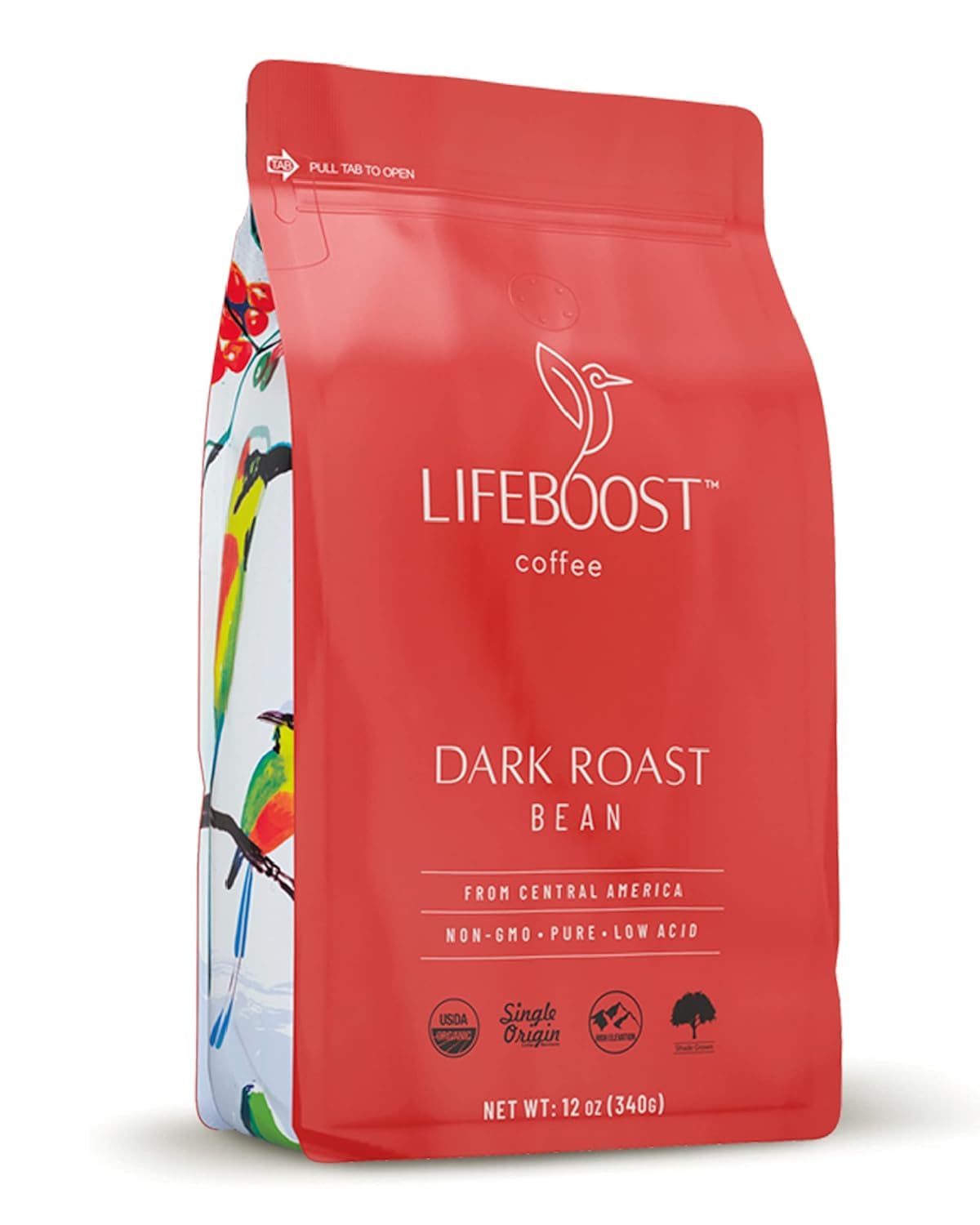
Although not branded explicitly as “espresso,” this dark roast whole bean from Lifeboost shares the same single-origin Central American sourcing and low-acid processing as the espresso-specific version. The roast level reaches deep enough to mute harsh acids while preserving a classic, nutty body that translates well through a pressurized portafilter basket. Third-party mycotoxin and pesticide screening is identical to the espresso line, so purity standards remain high.
When ground fine and tamped evenly, this bean produces a thick, dark crema with low bitterness — a strong match for milk-based drinks like lattes and cortados where the coffee flavor needs to cut through steamed milk without turning sour. Users with acid reflux or sensitive teeth consistently report that this is one of the few dark roasts they can drink without pain, thanks to the reduced chlorogenic acid content achieved by the extended roast curve.
The 12-ounce bag and the premium cost place it in the same tier as the espresso-specific product, but the flavor profile leans slightly more toward smooth, low-acid drinkability rather than the bright, complex notes some espresso purists chase. If your priority is a clean, gentle organic bean that still delivers espresso-grade mouthfeel and you do not need the official “espresso” label on the bag, this is a direct alternative.
Why it’s great
- Exceptionally low acid — safe for GERD and sensitive stomachs
- Certified organic and third-party tested for heavy metals
- Produces smooth, nutty dark roast flavor with manageable bitterness
Good to know
- Not labeled as espresso roast — may require grind dialing
- Single origin may vary slightly between harvests
3. Tiny Footprint Coffee – Nicaragua Segovia

Tiny Footprint’s Nicaragua Segovia is a dark roast ground coffee with USDA Organic and Fair Trade certifications, and it carries the unique distinction of being carbon negative — for every pound sold, proceeds fund reforestation in Ecuador’s Mindo Cloud Forest. The flavor profile leans toward bold, chocolatey notes with hints of apricot and spice, delivering a sultry mouthfeel that works in espresso machines with pressurized baskets.
The pre-ground format is a double-edged sword for espresso. The grind is fairly fine, but multiple customer reports note it can be “almost powdery,” which increases the risk of over-extraction and channeling in non-pressurized machines. In a pressurized porta-filter or a super-automatic espresso machine, however, the consistency is just fine and produces a decent crema layer. If you own a manual machine with a naked portafilter, this bag will fight you — the particle distribution is not uniform enough for precision dialing.
At 16 ounces, it offers more volume per dollar than the 12-ounce premium bags, and the rich, low-bitter taste pleases drinkers who prioritize environmental impact and ethical sourcing above micro-adjustable grind control. Best suited for casual espresso drinkers who want organic, bold flavor without investing in a separate grinder setup, the Tiny Footprint delivers a guilt-free cup with a cause.
Why it’s great
- Carbon negative with reforestation funding
- Bold, chocolatey dark roast with low bitterness
- Fair Trade and USDA Organic certified
Good to know
- Pre-ground — too fine for non-pressurized portafilters
- Not tested for mycotoxins or heavy metals
4. Fresh Roasted Coffee – Organic Ethiopian Yirgacheffe
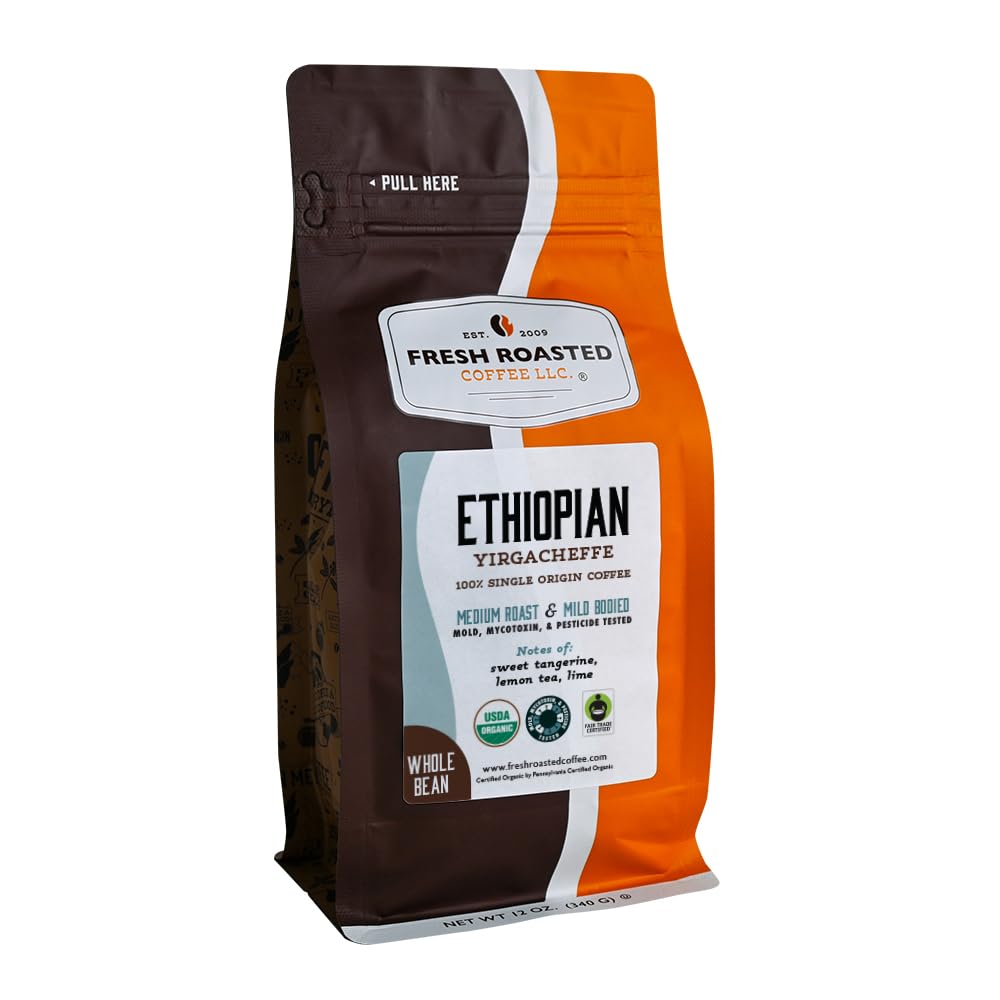
This Ethiopian Yirgacheffe is a light roast whole bean that breaks the “espresso = dark roast” convention. Its flavor profile features bright tangerine, lime, and a lemon tea finish — a stark contrast to the chocolate-and-nut profiles typical of Central American beans. The coffee is USDA Organic and third-party tested for mold, mycotoxins, and pesticides, placing it in the same purity-conscious tier as the Lifeboost offerings.
Pulling a light roast as espresso is inherently tricky: lower oil migration means thinner crema, and the high acidity can taste sour if the extraction runs too short. That said, experienced baristas who grind fine, use a pre-infusion stage, and pull a 30+ second shot can unlock a surprisingly clean, tea-like single-origin espresso with a silky mouthfeel. The bean is also versatile — it performs well in Aeropress, pour-over, and drip, making it a flexible addition to a kitchen with multiple brew methods.
The 12-ounce bag and the roast date transparency are solid, though some customers have noted the roast can arrive less fresh if the order timing is unlucky. For the organic espresso buyer who wants a bright, fruit-forward shot that challenges the typical dark-roast orthodoxy — and who has the grind control to manage a light roast — this is an intriguing option. It is not a crema monster, but it rewards patience with complexity.
Why it’s great
- Third-party tested for mold, mycotoxins, and pesticides
- Bright, citrussy flavor profile unusual for espresso
- Versatile across multiple brew methods
Good to know
- Light roast produces thin crema in standard machines
- Requires precise grind and extended extraction time
FAQ
Can I use light roast organic beans for espresso?
Why does mycotoxin testing matter for espresso beans specifically?
Final Thoughts: The Verdict
For most users, the best organic espresso beans winner is the Lifeboost Organic Espresso Whole Bean Coffee because it combines a dark roast purpose-built for crema production with comprehensive third-party toxin testing and naturally low acidity that works for sensitive stomachs. If you want a smooth, stomach-friendly dark roast that doubles well in lattes, grab the Lifeboost Dark Organic Coffee Beans. And for a budget-friendly, carbon-negative dark roast that works in pressurized machines without needing a grinder, nothing beats the Tiny Footprint Coffee – Nicaragua Segovia.