The anxiety of drinking straight from the tap isn’t about taste—it’s about trust. You need a system that doesn’t just filter but actively strips heavy metals, chlorine, PFAS, and VOCs while ideally keeping the beneficial minerals your body needs. This guide breaks down real hardware, not marketing fluff.
I’m Mohammad Maruf — the founder and writer behind AirfryerBite. I’ve spent years analyzing filtration media, RO membrane pore sizes, flow rates in gallons per day, and certification standards like NSF/ANSI 58 to separate high-performance units from overpriced plastic.
Whether you need a point-of-use under-sink unit or whole-house coverage, this analysis of the best water purification system focuses on measurable contaminant reduction, real-world flow rates, filter longevity, and total dissolved solids (TDS) performance you can actually verify.
How To Choose The Best Water Purification System
The market is flooded with claims of “pure water,” but the hardware tells the real story. Your decision should hinge on four specific variables: certification rigor, filtration stage count, membrane type, and flow rate in relation to your household demand. Ignore marketing and focus on the measurable specs.
Certification: Why NSF/ANSI 58 Is Non-Negotiable
Any reverse osmosis system worth its salt is independently tested against NSF/ANSI 58. This standard verifies that the system reduces specific contaminants—like lead, arsenic, fluoride, and nitrates—to safe levels. If a unit only claims “tested by SGS” without listing an actual NSF standard number, you have no guarantee it works. Systems carrying NSF 58, 42, 53, and 372 (lead-free component compliance) give you legally defensible performance data.
Filtration Stages vs. Membrane Quality
More stages do not automatically mean better water. A 5-stage system with a low-quality 75 GPD membrane can still outperform an 11-stage unit using a 400 GPD membrane if the latter lacks proper pre-filtration. What matters is the RO membrane’s pore size—ideally 0.0001 microns (0.1 nanometers)—which blocks dissolved solids, heavy metals, and bacteria. The supporting stages (sediment, carbon block, post-carbon, alkaline) handle chlorine, taste, and pH balance. Count stages, yes, but verify the membrane specification first.
Pure-to-Drain Ratio: The Hidden Waste Factor
Traditional RO systems waste 3–4 gallons of water for every gallon they produce. Modern tankless systems with a 2:1 or 3:1 pure-to-drain ratio drastically reduce wastewater. That 3:1 ratio means you get three gallons of clean water for every one gallon of reject water—a 300% efficiency improvement over older units. If you are on a well or pay for water, this spec directly impacts your monthly bill and environmental footprint.
Tankless vs. Tank-Based: Freshness vs. Storage
Tank-based RO units store water in a pressurized tank, which can stagnate and develop bacterial growth if not used regularly. Tankless systems produce water on demand, eliminating standing water and saving under-sink space. The trade-off is flow rate: a standard tank system delivers 2–3 gallons per minute (GPM) on demand, while a tankless 400 GPD unit delivers roughly 0.27 GPM—fine for a glass or a coffee pot, but slow for filling large pots. If instant high flow at the kitchen sink is non-negotiable, a tank system may still be the better call.
Quick Comparison
On smaller screens, swipe sideways to see the full table.
| Model | Category | Best For | Key Spec | Amazon |
|---|---|---|---|---|
| Waterdrop X12 | Tankless RO | High-speed filtration with alkaline minerals | 1200 GPD, 11-stage, smart faucet | Amazon |
| SimPure T1-400UV | Tankless RO+UV | UV sterilization and near-zero TDS | 400 GPD, 1.5:1 ratio, NSF 58 tested | Amazon |
| Waterdrop G5P500A | Tankless RO | Alkaline mineral pH+ with compact footprint | 500 GPD, 2:1 ratio, 8-stage | Amazon |
| Brondell Coral UC300 | Under Sink Carbon Block | Three-stage filtration with designer faucet | 12-month life, 600-gallon capacity | Amazon |
| Aquasana AQ-MF-1 | Faucet/Under Sink | DIY installation, mineral retention | Reduces 78 contaminants, NSF certified | Amazon |
| Aquasure Whole House Bundle | Whole House + Softener + RO | Comprehensive home water treatment | 72,000 grains, 75 GPD RO | Amazon |
| Aquasana Rhino EQ-1000 | Whole House Carbon/KDF | High-capacity whole-house chlorine reduction | 1M gallon capacity, 10-year life | Amazon |
| Kind Water E-3000 | Salt-Free Whole House | Scale prevention without brine discharge | 15 GPM flow, NSF certified parts | Amazon |
| iSpring WF150K | Whole House Central Filter | Up to 10-year filter life, minimal maintenance | Digital smart valve, auto-backwash | Amazon |
In‑Depth Reviews
1. Waterdrop X12 Alkaline Mineral Reverse Osmosis System
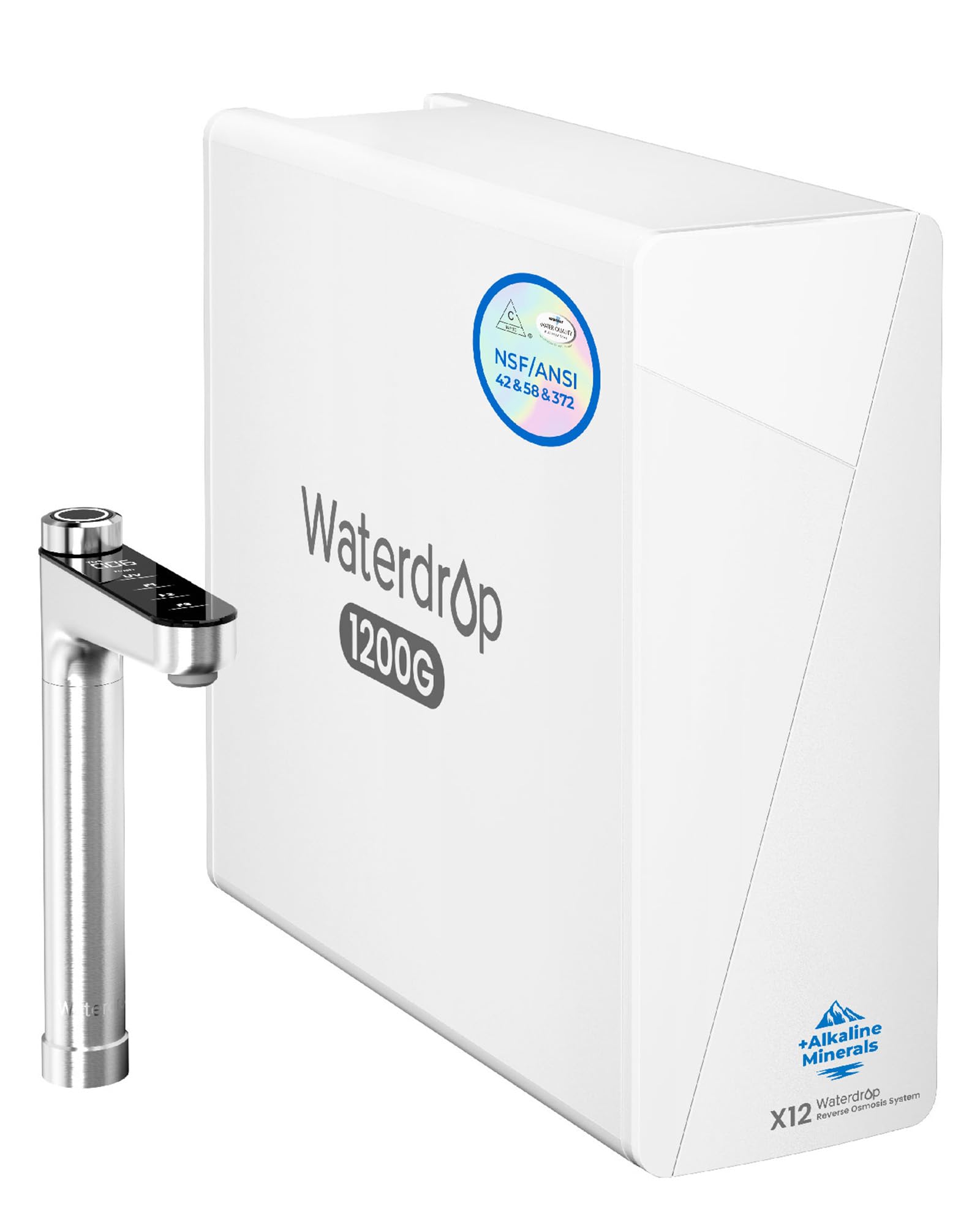
This is not a casual under-sink filter—the Waterdrop X12 is a tankless RO system packing 1200 gallons per day of throughput. That flow rate is enough to fill a 6-ounce cup in about 2 seconds, making it the fastest unit in this comparison. It achieves this with an 11-stage filtration train capped by an alkaline remineralization stage that targets a pH of 7.5±, which matters if you prefer mineralized water over flat RO water. The 0.0001-micron membrane is composed of 16 layers, and the system carries IAPMO R&T certification against NSF/ANSI 42 and 58, plus tested by SGS for TDS, PFOA, PFOS, chlorine, fluoride, and lead reduction.
The smart digital faucet includes a quantitative water output function, a TDS readout, and filter life indicators. The 3:1 pure-to-drain ratio means for every gallon of wastewater, you get three gallons of clean water—a 300% efficiency improvement over older RO units. The RO filters themselves are rated for up to 24 months before replacement, and the compact housing fits easily under standard sinks without a storage tank. Users report tap water starting at 400 PPM dropping to 50–80 PPM after remineralization, and the unit includes energy-saving and regular operation modes.
Installation takes about 45 minutes for a moderately handy user, though the system does require a dedicated power outlet under the sink. The smart display can show slightly elevated TDS readings after the F1A alkaline filter, which is normal—the mineral stage adds calcium and magnesium back into the water. One minor complaint is the faucet base can feel slightly wobbly on thin countertops, and the pump noise is audible but not distracting.
Why it’s great
- Industry-leading 1200 GPD flow rate eliminates waiting
- 11-stage filtration with verified NSF 58 certification
- Smart faucet display for real-time TDS and filter life tracking
- 3:1 pure-to-drain ratio significantly reduces water waste
Good to know
- Requires a 110V power outlet under the sink
- Alkaline filter can raise TDS display, which may confuse first-time users
- Faucet base can feel loose on thick granite countertops
2. SimPure T1-400UV Tankless Reverse Osmosis System

The SimPure T1-400UV delivers what many RO systems promise but few achieve: near-zero TDS output consistently under 25 PPM, often hitting 0–14 PPM from a 270 PPM city water source. It’s tested by SGS against NSF/ANSI 58, and the integrated UV stage adds an extra layer of biological protection by automatically activating when water flows. The 8-stage filtration process includes a sediment filter, carbon block, 0.0001-micron RO membrane, post-carbon, and a UV lamp that operates based on flow pressure, killing bacteria and viruses without chemical additives.
The tankless design saves roughly 70% of under-sink space compared to traditional tank-based units. With a 400 GPD output, it fills a 6-ounce cup in about 10 seconds—slower than the Waterdrop X12 but perfectly adequate for daily drinking and cooking. The 1.5:1 pure-to-drain ratio is solid for its class, producing 1.5 gallons of clean water for every gallon of reject water. Users report that the unit requires a 1–2 minute flush after periods of inactivity to clear the line of standing water, which is standard for tankless RO designs.
Installation is straightforward for anyone comfortable with basic plumbing, with quick-connect fittings and a complete kit included. After 1.5 years of use, some users experienced a control board failure that SimPure replaced at no cost—indicating strong customer support. The UV bulb lasts about 12 months and is replaceable. The primary caveat is that if you want alkaline mineralized water with a pH boost, you’ll need the T1-400ALK variant instead, as this model focuses strictly on low TDS without remineralization.
Why it’s great
- Consistently delivers 0–14 PPM TDS from 200–300 PPM tap water
- Integrated UV sterilization for bacteria and virus reduction
- SGS tested against NSF/ANSI 58 with documented performance
- Affordable replacement filter costs compared to premium competitors
Good to know
- Requires a 1–2 minute flush after idle periods to get fresh water
- No alkaline remineralization stage—flat RO taste only
- UV bulb needs annual replacement for continued biological protection
3. Waterdrop G5P500A Alkaline Mineral pH+ Reverse Osmosis System
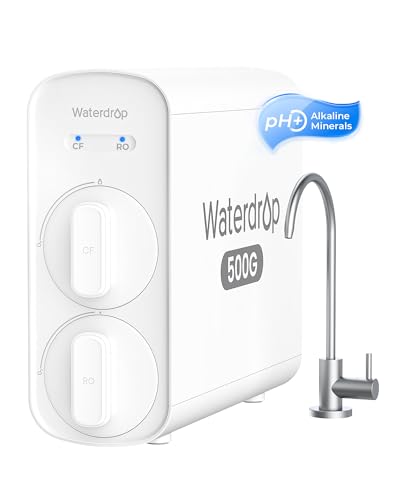
The Waterdrop G5P500A is essentially a more affordable sibling of the X12, sharing the same tankless DNA and alkaline remineralization philosophy but at a more accessible price point. It uses an 8-stage filtration process with a 0.0001-micron RO membrane and a dedicated alkaline mineral cartridge that adds calcium, magnesium, sodium, and potassium back into the water. The 500 GPD flow rate fills a 6-ounce cup in about 8 seconds, which is competitive for a mid-range tankless unit. The 2:1 pure-to-drain ratio means you get two gallons of clean water for every gallon of waste, which is 400% better than older 1:4 systems.
The system includes the Waterdrop XT connection, allowing you to hook it up to ice makers or refrigerator water dispensers seamlessly. Installation is DIY-friendly with John Guest push-fit fittings, and the tankless design frees up about 70% of under-sink space. The smart faucet displays TDS readings and filter life, though some users have reported that the TDS display can get stuck at a fixed number (like 15–18 PPM) even when the actual water quality varies, which diminishes trust in that specific feature. Customer support from Waterdrop has been responsive, with reports of quick resolution of issues.
One important note: the alkaline filter will cause the output TDS to read higher than standard RO water because it adds dissolved minerals. This is normal and desirable if you prefer mineralized water, but it can be confusing if you are targeting near-zero TDS. The first carbon filter needs replacement every 6 months, while the RO and alkaline filters last up to 24 months. The system requires a dedicated power outlet and a drilled hole in the countertop for the faucet—if you have a granite or quartz countertop, you will need a drill with a diamond hole saw.
Why it’s great
- 2:1 pure-to-drain ratio significantly reduces water waste
- Alkaline mineralization adds beneficial calcium and magnesium
- Connects to refrigerator ice makers and water dispensers
- Quick 8-second fill time for a 6-ounce cup
Good to know
- Smart faucet TDS display can be inaccurate after months of use
- Requires a power outlet under the sink and a drilled countertop hole
- Alkaline filter raises TDS reading, which may confuse new users
4. Brondell Coral UC300 Under Sink Water Filtration System
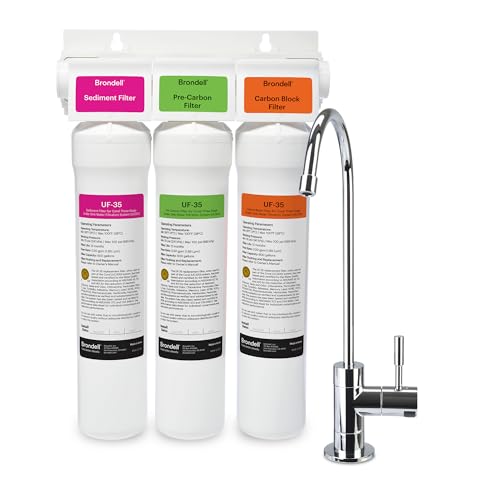
The Brondell Coral UC300 is a three-stage carbon block filtration system, not an RO unit, which makes it fundamentally different from the tankless systems above. It targets chlorine, lead, cysts, and sediment while leaving beneficial minerals like calcium and magnesium intact—exactly the right approach if your tap water already has low TDS and you just want to remove chemical taste and heavy metals. The three stages are a sediment filter, a pre-carbon filter, and a carbon block filter, each with a double O-ring seal to prevent leaks. The system is Gold Seal-certified by the Water Quality Association and meets NSF/ANSI standards 42, 53, and 372 for lead-free components.
The standout feature is the Twist & Seal filter change system—you simply twist the old cartridge and snap in a new one without tools or messy leaks. Filters last 12 months or 600 gallons, which is excellent longevity for a non-RO system. The included designer chrome faucet has an integrated LED indicator that changes color to remind you when to replace filters. Installation uses standard 3/8-inch compression fittings and does not require a power outlet, making it usable in any kitchen cabinet without electrical work.
The trade-off for skipping RO technology is that this system does not reduce TDS, fluoride, nitrates, or dissolved metals below the ionic level. If your water source has high TDS—above 200 PPM—you will still taste the dissolved solids. Users consistently praise the water taste improvement and the elegant faucet design, but the lack of TDS reduction means it is not a solution for well water with heavy mineral content. The 600-gallon capacity before needing a new filter set is reasonable for a household of two, but larger families will need to plan for mid-year replacements.
Why it’s great
- Gold Seal certified with documented NSF/ANSI 42, 53, 372 compliance
- Tool-free Twist & Seal filter changes with 12-month lifespan
- No electricity required—works on standard water pressure
- Designer chrome faucet with integrated LED filter change indicator
Good to know
- Does not reduce TDS, fluoride, or nitrates—not an RO system
- 600-gallon capacity may require mid-year changes for large households
- Double O-ring seals are effective but need periodic inspection for leaks
5. Aquasana Water Filter for Sink Faucet (AQ-MF-1)

Aquasana’s Claryum Direct Connect system is a carbon block filter that installs directly on your cold water line under the sink, feeding your existing faucet through a diverter valve. It removes up to 99% of 78 contaminants including lead, PFAS (PFOA and PFOS), mercury, asbestos, herbicides, pesticides, and pharmaceuticals, while retaining naturally occurring calcium, magnesium, and potassium. This is a critical distinction: unlike RO, this system does not reduce TDS, so you keep the mineral profile that makes water taste “alive” rather than flat.
The unit measures 3.7 x 3.46 x 17.83 inches—it’s a tall cylinder that requires at least 3 inches of clearance above for filter changes. Installation is DIY-friendly using the included dual port adapter for 3/8-inch hoses, and you do not need to drill a hole for a separate faucet. Each filter lasts 6 months and replaces more than 6,250 plastic water bottles over its lifespan. NSF certification covers the contaminant reduction claims, which is critical for trust. The system comes with a 1-year limited warranty and a 90-day satisfaction guarantee, though the plastic adapter has been reported to fail after a couple of months in some units—tightening carefully or using thread tape can mitigate this.
Users report that water becomes odorless and tastes significantly better, with an excellent flow rate since there is no storage tank or pump restriction. The biggest challenge is installation alignment: the hanging template uses round screw holes that require precise positioning, and horizontal mounting can sometimes lead to leaks if the O-rings are not perfectly seated. Running the water for 15 minutes after installation clears the carbon fines. Overall, it is a solid entry-level system for renters or anyone who wants contaminant reduction without losing minerals or dealing with a separate faucet.
Why it’s great
- Retains beneficial minerals while removing 78 contaminants
- PFAS-certified with documented NSF compliance
- No separate faucet needed—works with your existing sink spout
- Environmentally friendly—each filter offsets thousands of plastic bottles
Good to know
- Plastic adapter can cause leaks if not installed with proper torque
- Large filter cylinder requires precise under-sink clearance measurements
- Does not reduce TDS or remove fluoride or nitrates
6. Aquasure Whole House Water Filtration Bundle with Water Softener & RO

This is a complete home water treatment bundle combining a whole-house water softener, a 4-stage reverse osmosis drinking water system, and a dual-purpose sediment/GAC pre-filter. The softener is rated for 72,000 grains of hardness removal, suitable for homes with up to 1–6 bathrooms depending on your water hardness level. It uses ion exchange resin and an automatic digital metered control head with a backlit display that schedules regeneration based on actual water usage rather than a fixed timer—saving salt and water. The RO system is a standard 75 GPD unit with a 4-stage process that feeds a dedicated faucet at the kitchen sink.
The pre-filter stage uses a triple-purpose sediment/GAC/zinc filter to remove chlorine, VOCs, odors, soil, silt, sand, rust, and sediment. This pre-treatment is critical because it protects the softener and RO membrane from fouling, extending their lifespan. The digital control head is fully programmable with auto-flush intervals, and the system automatically regenerates and backwashes without manual intervention. The entire setup is designed for DIY installation with clear video guides, though the RO feed water adapter may need to be sourced separately if the included one does not fit your plumbing.
User reports confirm that after a week of use, water feels noticeably soft and silky, and the RO output measures around 16 PPM TDS. One-year updates show no issues beyond adding salt to the brine tank. Professional installation cost estimates range around – for a 5-hour job with two plumbers, which is an important budget consideration. The system includes a 5-year extended manufacturer warranty when activated online within 60 days, plus lifetime U.S.-based tech support. The fiberglass-lined polyethylene tank is corrosion-resistant and pre-filled with premium-grade resin, so you do not need to handle loose resin beads.
Why it’s great
- All-in-one solution: softener, sediment pre-filter, and RO drinking water
- Digital metered control head saves salt by regenerating on demand
- 5-year extended warranty and lifetime tech support from U.S.-based team
- Proven 16 PPM RO output with consistent user reports over 1+ years
Good to know
- Requires separate purchase of 80–100 lbs of salt and potential plumbing adapter
- Professional installation costs can add substantially to the total investment
- RO system uses a tank-based design with 75 GPD—slower than tankless units
7. Aquasana Whole House Water Filter System Rhino EQ-1000
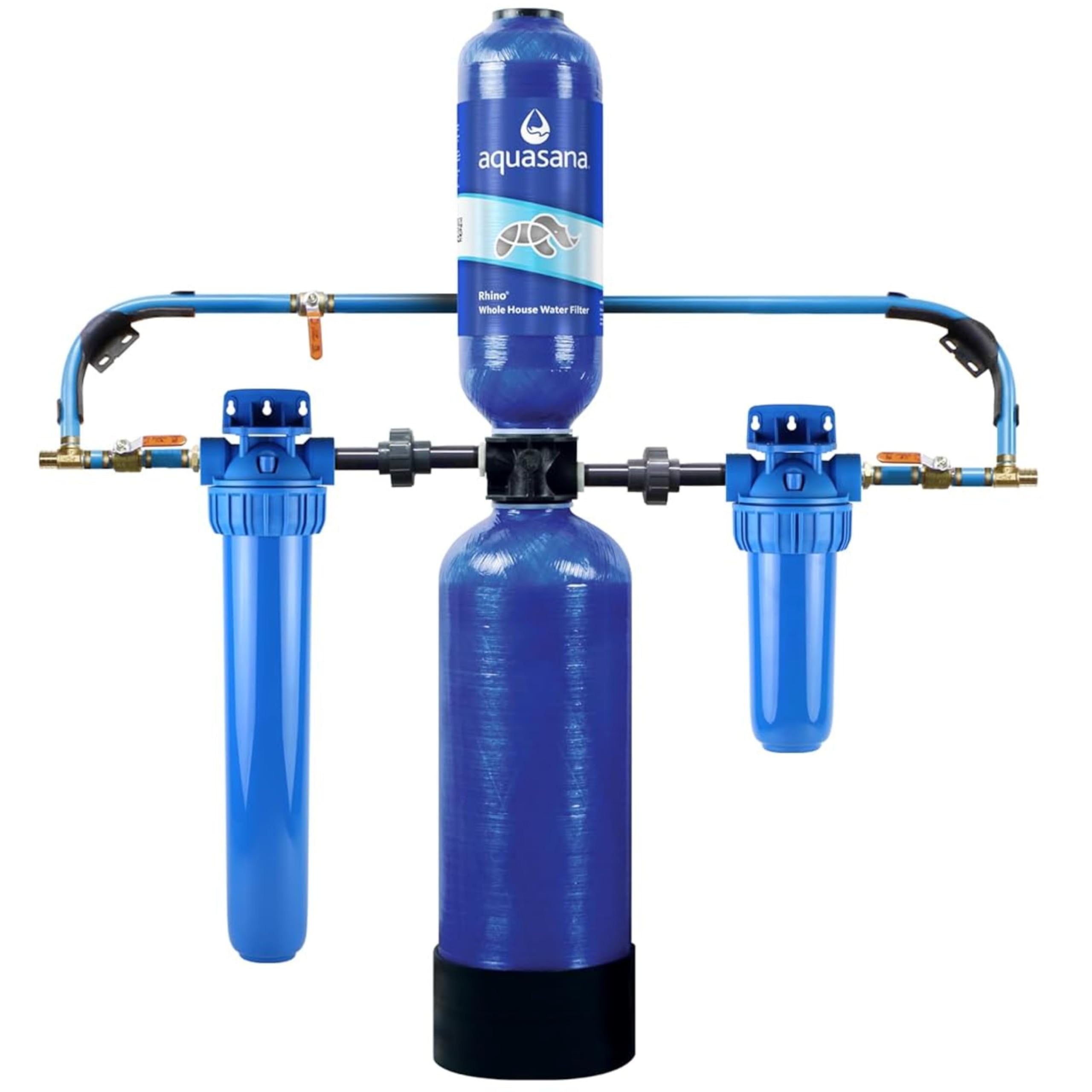
The Aquasana Rhino EQ-1000 is a whole-house filtration system built around activated carbon and copper-zinc KDF media. It is rated for 1,000,000 gallons or up to 10 years of service—whichever comes first—making it one of the highest-capacity point-of-entry filters on the consumer market. The system reduces 97% of chlorine and targets sediment, VOCs, pesticides, herbicides, and heavy metals while leaving healthy minerals intact. It does not lower TDS, so it complements a separate RO system at the kitchen sink if you want mineral-free drinking water.
The installation kit includes the filter tank, a 20-inch pre-filter, a post-filter, brass fittings for 1-inch or 3/4-inch pipes, bend supports, and shut-off valves. The system uses a newly improved divider valve for high flow rates with no noticeable pressure drop. Maintenance is minimal: replace the pre- and post-filters every 2 months, and the main tank media lasts a decade with no draining or backwashing required. The unit is manually operated—no electricity needed—making it a passive solution for chlorine and sediment across all taps.
User feedback consistently reports elimination of chlorine taste and odor from every tap, including showerheads and ice makers. The water tastes comparable to bottled purified water, and laundry no longer has a chemical smell. However, the brass fittings have non-standard threads that can leak if over-tightened—extra PTFE tape resolves this. Some users experienced leaks from the filter tank immediately after installation, and Aquasana refused support because the unit was not purchased through their direct channel. This is a critical purchasing consideration: buy directly from Aquasana or an authorized dealer to preserve warranty rights. For well water, pairing with a UV light system is recommended if bacteria is a concern.
Why it’s great
- 1 million gallon capacity—10-year media life without replacement
- Reduces 97% of chlorine with no detectable pressure drop
- No electricity, backwashing, or drain line required
- Effective for whole-house taste and odor improvement on city water
Good to know
- Brass fittings have non-standard threads that may leak—use thread tape
- Manufacturer warranty support limited to direct purchases only
- Does not reduce TDS, fluoride, or nitrates—needs separate RO for that
8. Kind Water Systems E-3000 Whole House Salt-Free Water Softener & Filter
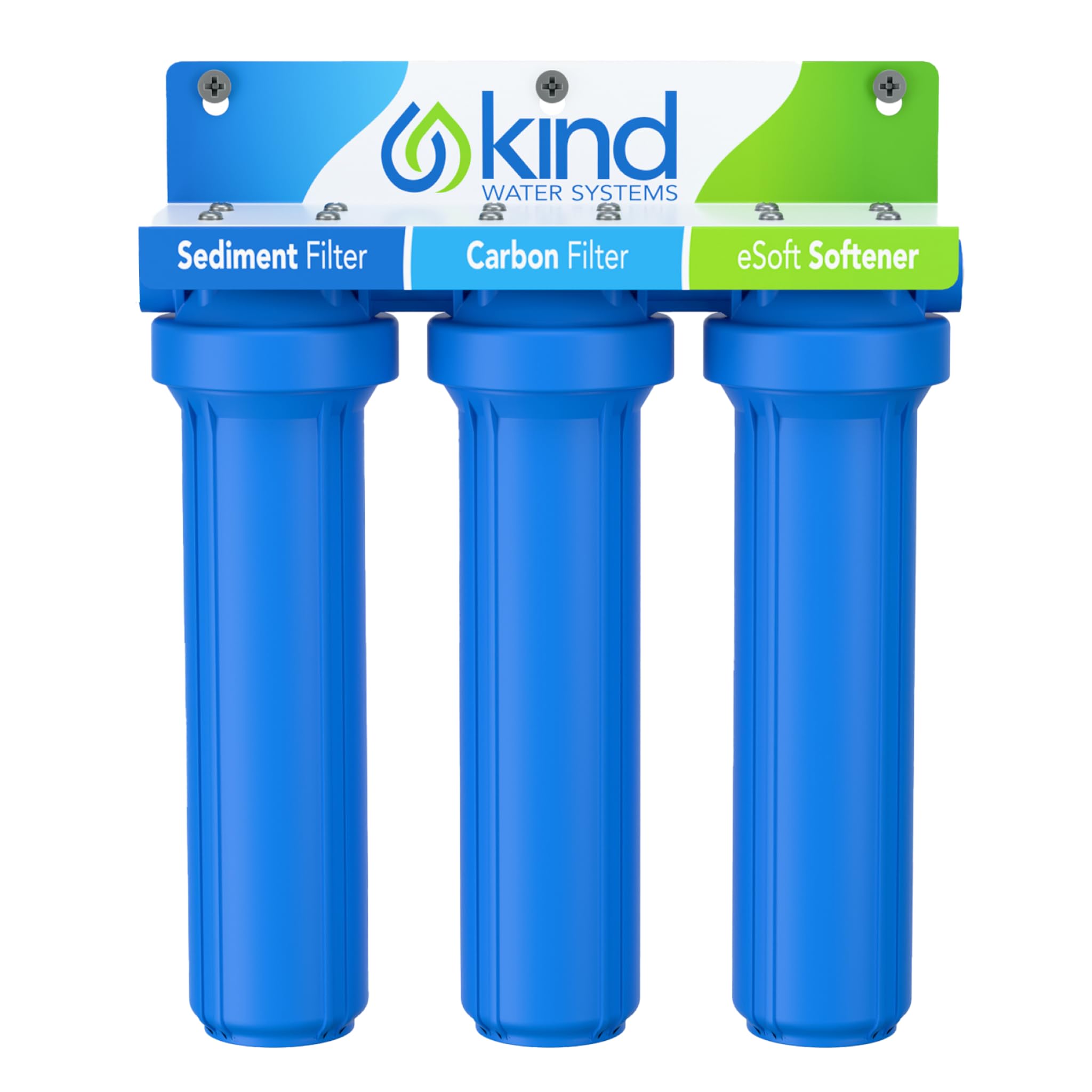
The Kind Water E-3000 is a salt-free water conditioner and carbon filter combined into a single whole-house system. It targets up to 95% of sediment and over 155 chemical contaminants including chlorine, chloramine, VOCs, and pesticides, while preventing and reducing hard water scale through a template-assisted crystallization (TAC) process. The key difference from a traditional salt-based softener is that it does not remove calcium and magnesium—it converts them into microscopic crystal particles that cannot stick to pipes or fixtures. This means you get scale protection without brine discharge, wastewater, electricity, or the need to buy bags of salt.
The system uses a coconut-shell carbon block for chemical reduction and a 4.5 x 20-inch pleated 5-micron sediment filter as the pre-stage. The carbon block targets chlorine and chloramine more effectively than granular activated carbon, and the coconut shell source is a renewable material. The unit is designed specifically for city water—it will not soften well water with high iron content. Installation requires a plumber if you are not comfortable with PEX connections, and the O-rings should be lubricated during assembly to prevent leaks. The plastic manifold on some units has raised durability concerns, but the system includes NSF-certified components and a 120-day satisfaction guarantee.
Users report that tap water tastes better than bottled water after installation, with no chlorine smell or taste. The scale prevention effect is real but subtle—hard water buildup slows down rather than stops entirely, and some users note a noticeable water pressure drop, especially on upper floors. One user reported that they could not brush their teeth before installation due to terrible-tasting water, and within a day the improvement was dramatic. For those who want the health benefits of retained minerals and are philosophically opposed to chemical brine discharge, this is a clean, maintenance-light solution. Just be realistic: it conditions water, it does not soften it to the silky feel of salt-based systems.
Why it’s great
- Salt-free technology eliminates brine discharge, salt purchases, and electrical hookup
- Retains healthy calcium and magnesium while preventing scale
- Coconut-shell carbon block targets over 155 contaminants including chloramine
- Low maintenance—only periodic pre-filter changes required
Good to know
- Not effective for well water with high iron—city water only
- Water pressure drop is noticeable, especially in multi-story homes
- Scale reduction is partial—does not produce the same silky feel as salt softeners
9. iSpring WF150K Whole House Central Water Filtration System

The iSpring WF150K is a whole-house central water filtration system with a patented filtration media formula that is automatically backflushed and regenerated by a digital smart control valve. It is designed to last up to 10 years in homes with 2–3 bathrooms or 5 years in homes with 4–5 bathrooms. The system removes chlorine, lead, heavy metals, pesticides, herbicides, VOCs, and other contaminants, and it is lab-tested to meet NSF/ANSI 42 and 53 standards. The media tank measures 10 inches in diameter and 54 inches tall, with a total system height of 63.5 inches including the control head.
The digital smart valve features a simple, intuitive screen that lets you customize auto-flush intervals based on your incoming water quality and household usage. Once programmed, the system automatically performs backwashing and regeneration cycles without any manual intervention—no draining, no replacing of filter cartridges, no backwashing. The inlet/outlet hoses, drain hose, and all necessary hardware are included in the box. Users have reported that the system eliminates bad taste and water discoloration from city water within the first week, reducing the need for bottled water and essentially paying for itself within three years.
Installation is straightforward for someone comfortable with basic plumbing, but the sheer height and weight of the tank (about 130 pounds when filled) require a dedicated floor space and potentially a second person for positioning. One common installation hiccup is initial low water pressure in service mode due to air in the media bed; the fix is to bypass the unit, fill the house lines, then place the unit in service and force a regeneration cycle once or twice. Customer service from iSpring is frequently praised—one user reported receiving support and a replacement part on a late Friday evening within hours. The 10-year extended manufacturer warranty requires online activation within 60 days of purchase.
Why it’s great
- Up to 10-year media lifespan with automated backwashing—no manual filter changes
- Digital smart valve with programmable auto-flush intervals
- Tested to NSF/ANSI 42 and 53 for documented contaminant reduction
- Excellent customer support with same-day response on replacement parts
Good to know
- Very large and heavy—requires dedicated floor space and may need two people to install
- Initial setup may require pressure adjustments to clear air from the media bed
- Annual media replacement not required, but pre-filters still need periodic attention
FAQ
How do I know if I need reverse osmosis vs. a simple carbon filter?
What does a 2:1 pure-to-drain ratio actually mean for my water bill?
Why does my tankless RO faucet display a TDS reading higher than zero with an alkaline filter?
Can I install a whole-house water filter myself, or do I need a plumber?
Final Thoughts: The Verdict
For most users, the best water purification system winner is the SimPure T1-400UV because it delivers certified near-zero TDS water with integrated UV sterilization at a price that undercuts premium competitors while maintaining solid customer support and affordable filter replacements. If you want the highest possible flow rate with alkaline remineralization and a smart faucet, grab the Waterdrop X12. And for whole-house coverage that eliminates chlorine and sediment from every tap without electricity or backwashing, nothing beats the Aquasana Rhino EQ-1000.