Basil is a notoriously finicky herb—it demands soil that drains fast yet stays consistently moist, all while packing enough organic matter to fuel rapid leaf production. One wrong bag of dense, waterlogged mix and you get yellow lower leaves, stunted growth, or root rot within two weeks.
I’m Mohammad Maruf — the founder and writer behind AirfryerBite. I’ve spent years analyzing soil composition data, customer feedback, and organic certification standards to identify the precise potting blends that give basil the structural support and nutrient profile it craves.
After combing through lab-level specs, user reports, and ingredient lists, I’ve focused this guide on the very best options available today. Here is my analysis of the soil for basil that actually delivers healthy, aromatic plants every season.
How To Choose The Best Soil For Basil
The difference between a bushy basil plant and a scraggly, yellowing one often comes down to two things: soil texture and nutrient composition. Basil cannot tolerate compacted, clay-heavy mixes that hold water for days. It also needs a steady supply of nitrogen to push out those fragrant leaves. Here are the critical factors to weigh before buying.
Texture and Drainage
Basil roots need oxygen as much as they need water. A quality mix contains perlite, pumice, or coarse sand to create air pockets. If you squeeze a handful of moist soil and it stays in a tight, muddy ball, it is too dense. Look for a loose, crumbly structure that allows excess water to drain within seconds, not minutes.
Organic Matter and Nutrient Load
Basil is a heavy feeder. Blends that include compost, worm castings, kelp meal, or alfalfa meal deliver the slow-release nitrogen that fuels lush foliage. Avoid soils that rely solely on synthetic fertilizers—they can burn tender basil roots and leave the plant vulnerable after the initial nutrient flush fades.
pH and Mycorrhizal Additives
Basil prefers a slightly acidic to neutral pH range between 6.0 and 7.0. Many premium mixes include garden lime to buffer the pH. Also look for mycorrhizal fungi (endo and ecto varieties) that form a symbiotic relationship with basil roots, improving water and nutrient uptake by up to 40% in container environments.
Quick Comparison
On smaller screens, swipe sideways to see the full table.
| Model | Category | Best For | Key Spec | Amazon |
|---|---|---|---|---|
| Coast of Maine Bar Harbor Blend | Premium Organic | Heavy feeders, large pots, continuous harvest | 16 QT with lobster shell meal | Amazon |
| Espoma Organic Potting Mix | Premium Bio-Enhanced | Container basil needing mycorrhizal boost | 8 QT with Myco-Tone blend | Amazon |
| Perfect Plants Indoor Soil | Mid-Range All-Purpose | Small pots, basil seedlings, mixed indoor herbs | 4 QT with coco coir and perlite | Amazon |
| Jiffy Seed Starting Mix | Lightweight Seed Starter | Germinating basil seeds, rooting cuttings | 10 QT with vermiculite | Amazon |
| Back to the Roots Worm Castings | Soil Amendment | Boosting existing mixes, top-dressing pots | 5 lb granules, pure vermicompost | Amazon |
In‑Depth Reviews
1. Coast of Maine Bar Harbor Blend Potting Soil
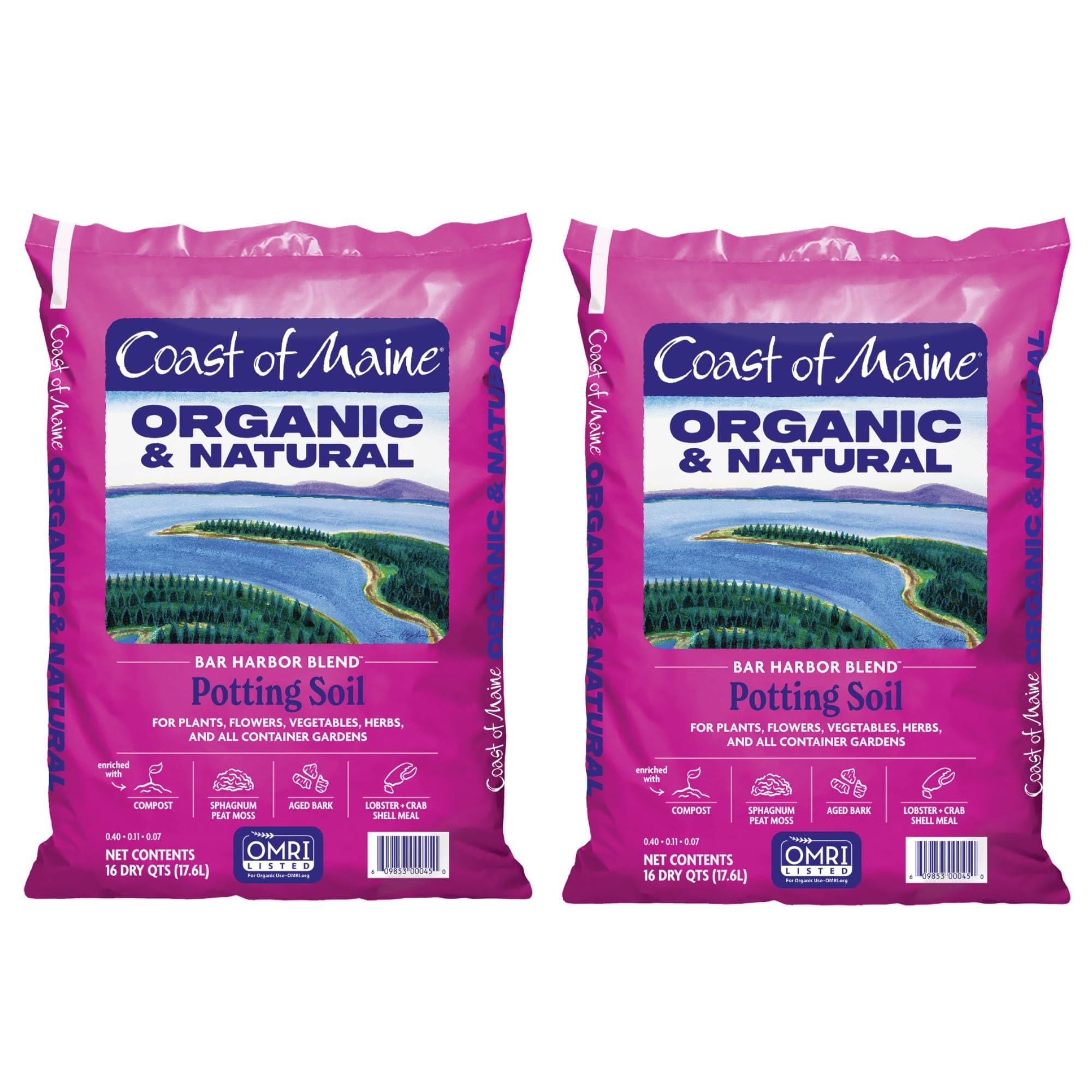
This 16-quart bag delivers a dark, loamy texture that feels like naturally fertile ground, not processed filler. The blend combines sphagnum peat moss, compost, perlite, and a signature dose of lobster and crab shell meal that provides a slow-release calcium and chitin boost—both of which basil roots love for strong cell wall development. At 4.8 stars from over 540 ratings, user feedback consistently highlights vigorous top growth and deep green leaf color within two weeks of transplanting.
The perlite content is generous enough to prevent compaction even through multiple watering cycles, yet the compost retains just enough moisture that basil in terracotta pots does not dry out by midday. Users report that tomatoes and peppers also thrive, but basil specifically responds to the marine-sourced nitrogen with noticeably thicker stems and larger leaves than bagged generic mixes deliver.
One common observation is that the bag arrives slightly moist—this is intentional to keep the compost microbiology alive. Some find they need to add a handful of extra perlite for very compact containers, but for standard 8-to-10-inch pots the mix works perfectly straight out of the bag. The volume is generous enough to fill four medium pots or one large window box, making it the most cost-effective premium option per quart.
Why it’s great
- Lobster and crab shell meal provides unique calcium and nitrogen source
- Loose, crumbly texture with excellent perlite distribution
- Large 16-quart size covers multiple pots
Good to know
- Bag is heavier than standard peat-based mixes
- May need extra perlite for very small containers
2. Espoma Organic Potting Soil Mix

Espoma is one of the most recognized names in organic soil, and this 8-quart pack of two bags brings their signature Myco-Tone technology—a proprietary blend of endo and ecto mycorrhizal fungi that colonizes basil root systems within days of transplanting. The base ingredients include sphagnum peat moss, humus, perlite, earthworm castings, alfalfa meal, and kelp meal, creating a complete nutrient profile that supports continuous leaf production without additional fertilizer for at least four to six weeks.
The texture is noticeably lighter than standard potting soils, which is ideal for basil because it allows the fine root hairs to spread unhindered. Users specifically mention that this mix does not develop the hard crust on the top layer that some peat-heavy blends form after repeated watering. The alfalfa meal provides a gentle nitrogen release that basil metabolizes efficiently, leading to that dark green leaf color that indicates healthy chlorophyll levels.
Some customers note that the soil can arrive very dry, requiring thorough pre-moistening before potting. Once hydrated, however, it absorbs water evenly without channeling. The two-bag pack gives you 16 total quarts, which is enough for a substantial container garden. For dedicated basil growers who want biological root support from day one, this is the most scientifically formulated option on the list.
Why it’s great
- Myco-Tone mycorrhizae dramatically improve root nutrient uptake
- Alfalfa and kelp meal provide balanced organic nitrogen
- Two-bag pack offers flexibility for staggered planting
Good to know
- Can arrive very dry; pre-moisten before use
- More expensive per quart than bulk mixes
3. Perfect Plants Indoor Plant Soil

This 4-quart bag from Perfect Plants uses a mix of pine bark, coco coir, perlite, sand, and garden lime to create a lightweight but structurally stable medium. Coco coir is a standout ingredient for basil because it absorbs water far more efficiently than peat moss and rehydrates quickly even after the soil surface dries out. The sand component adds weight to the pots, preventing top-heavy basil plants from tipping over as they grow tall.
Customer reviews frequently praise this soil for being completely free of fungus gnats—a common issue with cheaper brands that use uncomposted bark. Multiple users with sensitive plants like aglaonema and ivy report that basil and other herbs stay healthy without any pest outbreaks. The drainage is notably fast, so basil in plastic nursery pots will need slightly more frequent watering, but the risk of root rot drops dramatically.
The 4-quart size is ideal for anyone growing a single basil plant or maintaining a small windowsill herb garden. It is not the most economical option per quart, but the quality control and bug-free guarantee make it a reliable choice for indoor growers who cannot risk an infestation spreading to other houseplants. The resealable bag also keeps unused soil fresh for months.
Why it’s great
- Coco coir base ensures fast rehydration
- Consistently rated as gnat-free by users
- Sand adds pot stability for tall basil stems
Good to know
- Small bag fills only one 8-inch pot
- Requires more frequent watering in plastic pots
4. Jiffy Natural & Organic Seed Starting Soil Mix

Jiffy’s seed starting mix is a classic formula consisting solely of sphagnum peat moss, vermiculite, and lime. With no compost or large bark chunks, this is the finest-textured option, making it perfect for the delicate root systems of germinating basil seeds. The vermiculite content can absorb three to four times its volume in water, creating a consistent moisture environment that prevents the tiny seeds from drying out during the critical first week of sprouting.
Because this mix contains no added nutrients, basil seedlings will need supplemental feeding once the first true leaves appear. Users consistently report germination rates above 90% when using this mix in seed trays or peat pots. The 10-quart bag goes a long way—enough to start several dozen basil seedlings or fill multiple 4-inch starter pots. The lime ensures the pH stays in the optimal 6.0 to 6.5 range for basil germination.
One important note: this is not a complete potting soil for mature basil. When used alone in larger pots, it compacts over time and lacks the structural support that perlite provides. The best strategy is to use this for starting seeds, then transplant into a richer mix like the Coast of Maine or Espoma once the seedlings have two sets of true leaves. For the germination phase, however, this is the most reliable option available.
Why it’s great
- Ultra-fine texture ideal for tiny basil seeds
- Vermiculite holds moisture without waterlogging
- Excellent value at 10 quarts for seed starting
Good to know
- No nutrients—requires early fertilization
- Not suitable as a standalone mix for mature basil
5. Back to the Roots Organic Worm Castings

Worm castings are not a standalone potting soil, but they are the single most effective amendment you can add to any basil mix. This 5-pound bag from Back to the Roots contains pure vermicompost that is rich in beneficial microbes, humic acids, and slow-release nutrients. When blended into a base soil at a ratio of roughly one part castings to four parts mix, basil responds with accelerated root branching and darker foliage within days.
Users consistently note that this product has no foul odor—a common concern with manure-based amendments. The granules are dark, crumbly, and mix easily into both chunky and fine-textured soils. For basil in particular, the castings provide a steady supply of micronutrients like zinc and manganese that are often missing from peat-based blends. Many growers use this as a top dressing, sprinkling a thin layer on the soil surface every three to four weeks to replenish nutrients without disturbing the roots.
The 5-pound bag is compact but stretches further than you might expect: a single pound can amend roughly 10 quarts of potting mix. Some find the price per pound higher than bulk worm castings from garden centers, but the quality control and the absence of weed seeds or pathogens make it a safer choice for indoor basil. If your current soil feels lifeless or your basil is looking pale, this is the fastest way to restore vigor without switching to a synthetic fertilizer.
Why it’s great
- Adds diverse micronutrients missing in peat-based mixes
- No odor, easy to mix or use as top dressing
- Beneficial microbes improve soil health long-term
Good to know
- Not a complete soil—must be blended with base mix
- More expensive per pound than bulk alternatives
FAQ
Can I use regular garden soil for basil in pots?
How often should I repot basil with fresh soil?
Does pH matter differently for sweet basil vs Thai basil?
Final Thoughts: The Verdict
For most users, the soil for basil winner is the Coast of Maine Bar Harbor Blend because its lobster shell meal, compost, and perlite create the ideal balance of nutrition, drainage, and texture that basil demands. If you want a mycorrhizae-enhanced mix that gives roots a biological advantage from day one, grab the Espoma Organic Potting Mix. And for starting basil from seed, nothing beats the consistent moisture control of the Jiffy Seed Starting Mix.