That metallic tang or earthy aftertaste from your tap isn’t just unpleasant — it’s the calling card of sediment, heavy metals, and high mineral content typical in well water. Standard carbon pitchers designed for municipal chlorine removal simply lack the filtration depth to handle the unique contaminant cocktail found in private wells.
I’m Mohammad Maruf — the founder and writer behind AirfryerBite. I’ve spent the last two years analyzing water filtration specs, NSF certifications, and real-world performance data to identify which pitcher systems can actually stand up to the high TDS levels, iron, sulfur, and sediment that define well water challenges.
After combing through customer experiences, certification documents, and contaminant reduction data, I’ve narrowed the field to the seven strongest contenders for the best pitcher filter for well water. Each review focuses on the specific specs that matter when your source is a private well, not a municipal treatment plant.
How To Choose The Best Pitcher Filter For Well Water
Choosing a pitcher for well water is a fundamentally different decision than picking one for city water. Municipal water is treated and dosed with chlorine; well water is raw, carrying sediment, iron, manganese, sulfates, and sometimes nitrates or bacteria. You cannot rely on a simple activated carbon block alone — the filter must physically block smaller particles and target heavy metals.
Focus on Pore Size and Filtration Technology
The most critical spec for well water is the filter’s pore size. Standard carbon block filters (around 5–10 microns) will reduce chlorine taste but let sediment, rust, and microbial cysts pass through. Look for systems using 0.5-micron carbon blocks or better yet, 0.01-micron ultra-filtration (UF) membranes. A UF membrane physically blocks bacteria, protozoa, and fine sediment while retaining beneficial minerals — making it ideal for untreated well water.
Prioritize NSF/ANSI 53 and 58 Certifications
NSF/ANSI 42 covers aesthetic chlorine taste — useless for evaluating well water performance. You need certification under NSF/ANSI 53 (cyst reduction, heavy metal reduction) or NSF/ANSI 58 (reverse osmosis). For well water with known iron or manganese issues, look for filters with specific third-party testing against those contaminants. Gravity systems with ceramic pre-filters often work well for high-sediment wells because the ceramic shell can be scrubbed clean and reused.
Consider Filter Life and Total Capacity
Hard well water with high TDS (total dissolved solids) will clog filters faster than soft municipal water. A filter rated for 200 gallons of city water might last only 100 gallons on well water. Gravity systems with large 6000-gallon total capacity per pair of filters offer better long-term value. Electric systems with self-cleaning cycles (like reverse osmosis countertop units) prolong filter life by automatically flushing accumulated solids.
Material Quality Matters
Well water often has a low pH (acidic), which can leach chemicals from low-grade plastics. Opt for pitchers made from Tritan (medical-grade copolyester), stainless steel, or BPA/BPS-free high-density plastics. Stainless steel gravity systems are particularly well-suited for acidic well water because they resist corrosion and won’t impart plastic taste. Check the lower chamber material — that’s where filtered water sits, and it must be non-leaching.
Quick Comparison
On smaller screens, swipe sideways to see the full table.
| Model | Category | Best For | Key Spec | Amazon |
|---|---|---|---|---|
| Clearly Filtered Pitcher | Premium Pitcher | Top contaminant coverage (365+) | 0.5-micron Affinity Filtration | Amazon |
| Purewell 2.25G Gravity | Gravity Stainless | High-sediment well water | 0.01-micron UF membrane | Amazon |
| Waterdrop ED01W Electric | Electric Pitcher | Instant dispensing + 200-gal life | 0.5-micron carbon block | Amazon |
| DREO RO Countertop | Reverse Osmosis | Ultimate contaminant removal | 7-in-1 RO + TDS monitor | Amazon |
| Culligan MaxClear 2.25G | Gravity Stainless | Ceramic pre-filtration | Carbon + ceramic filter | Amazon |
| Brita UltraMax Dispenser | Dispenser | High-volume family use | 27-cup / 40-gal per filter | Amazon |
| Brita Metro Pitcher | Compact Pitcher | Dorm / small fridge | 6-cup / 2-month filter life | Amazon |
In‑Depth Reviews
1. Clearly Filtered Filtered Water Pitcher
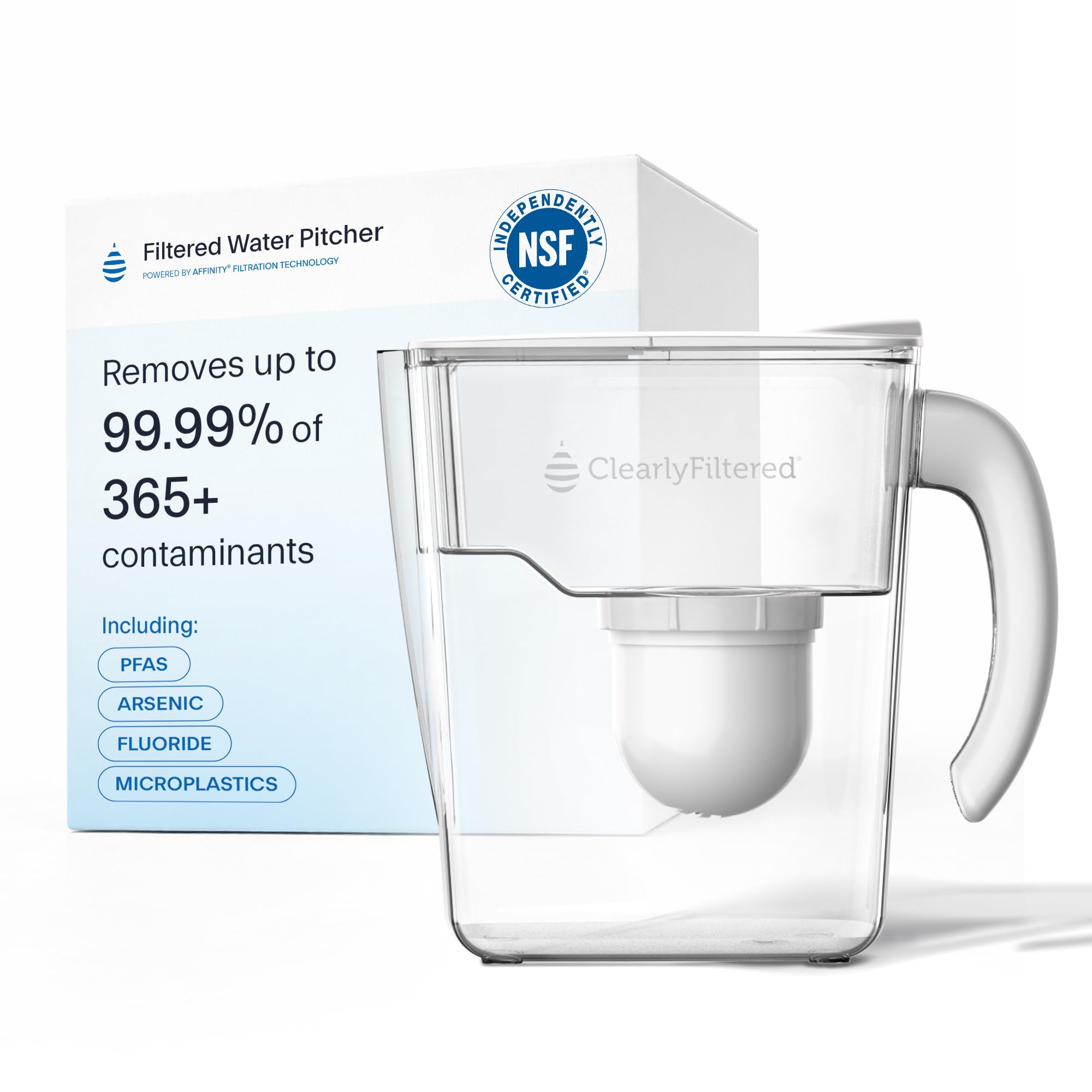
The Clearly Filtered pitcher stands apart because its Affinity Filtration Technology uses ionic binding to capture contaminants while preserving beneficial minerals — a critical advantage for well water where you want to remove iron but keep calcium and magnesium. With third-party testing targeting over 365 contaminants (including fluoride, lead, PFAS, and microplastics) and NSF certification to Standards 42 and 372, its 0.5-micron carbon block provides the densest contaminant coverage of any standard pitcher on this list.
The 80 fl oz (10 cup) capacity is family-sized without being refrigerator-unfriendly, and the spill-resistant dam and ergonomic handle make daily use practical. Each filter handles 100 gallons (roughly 4 months on well water), and the medical-grade Tritan plastic is fully BPA and BPS-free — important when well water’s low pH could otherwise accelerate plastic leaching from lesser-grade materials.
Customer reports confirm exceptional fluoride and chlorine removal, with one independent test showing zero detectable fluoride after filtration from a 0.71 PPM starting level. A minority of users on very hard well water reported some black growth in the pitcher after extended use, suggesting that regular cleaning (every 2 weeks) is non-negotiable when filtering untreated well water with high biological load.
Why it’s great
- Removes 365+ contaminants — best-in-class coverage for heavy metals, PFAS, and microplastics
- Medical-grade Tritan plastic resists leaching even with acidic well water
- NSF certified to 42 and 372, with independent lab data available for all claims
Good to know
- Filter life drops on high-sediment well water — expect shorter than the 100-gallon rating
- Premium upfront cost relative to standard Brita-style pitchers
2. Purewell 2.25G Gravity Water Filter System

The Purewell system is a gravity-fed stainless steel unit that uses a 0.01-micron hollow fiber UF membrane — twenty times finer than the 0.2-micron filters found in many Berkey-style competitors. For well water with fine sediment, rust particles, and organic matter, this pore size physically blocks bacteria and protozoa while retaining dissolved minerals, making it a strong choice when you don’t want demineralized water like RO produces.
With a total capacity of 2.25 gallons and a pair of filters rated for up to 6000 gallons combined (or roughly 6 months per pair on well water), this system offers the lowest long-term filter cost per gallon. The transparent water level window lets you monitor the lower chamber without lifting the lid — a practical touch when you’re filling multiple times per day. No electricity required, so it works during power outages or for off-grid well setups.
Customer feedback consistently praises the chlorine reduction and overall taste improvement, with several well water users reporting the sediment cloudiness disappears entirely. The stainless steel body is resistant to the acidic corrosion that can affect plastic pitchers. Note that this system does not lower TDS, so it is not designed for heavy metal removal — it excels at physical filtration and chlorine reduction.
Why it’s great
- 0.01-micron UF membrane blocks bacteria and fine sediment from well water
- 6000-gallon total filter capacity — lowest per-gallon operating cost
- Stainless steel construction resists corrosion from acidic well water
Good to know
- Does not lower TDS or remove heavy metals — pairs with a separate RO for comprehensive protection
- Filters displace water, so actual usable volume is slightly under 2.25 gallons
3. Waterdrop ED01W Electric Water Filter Pitcher
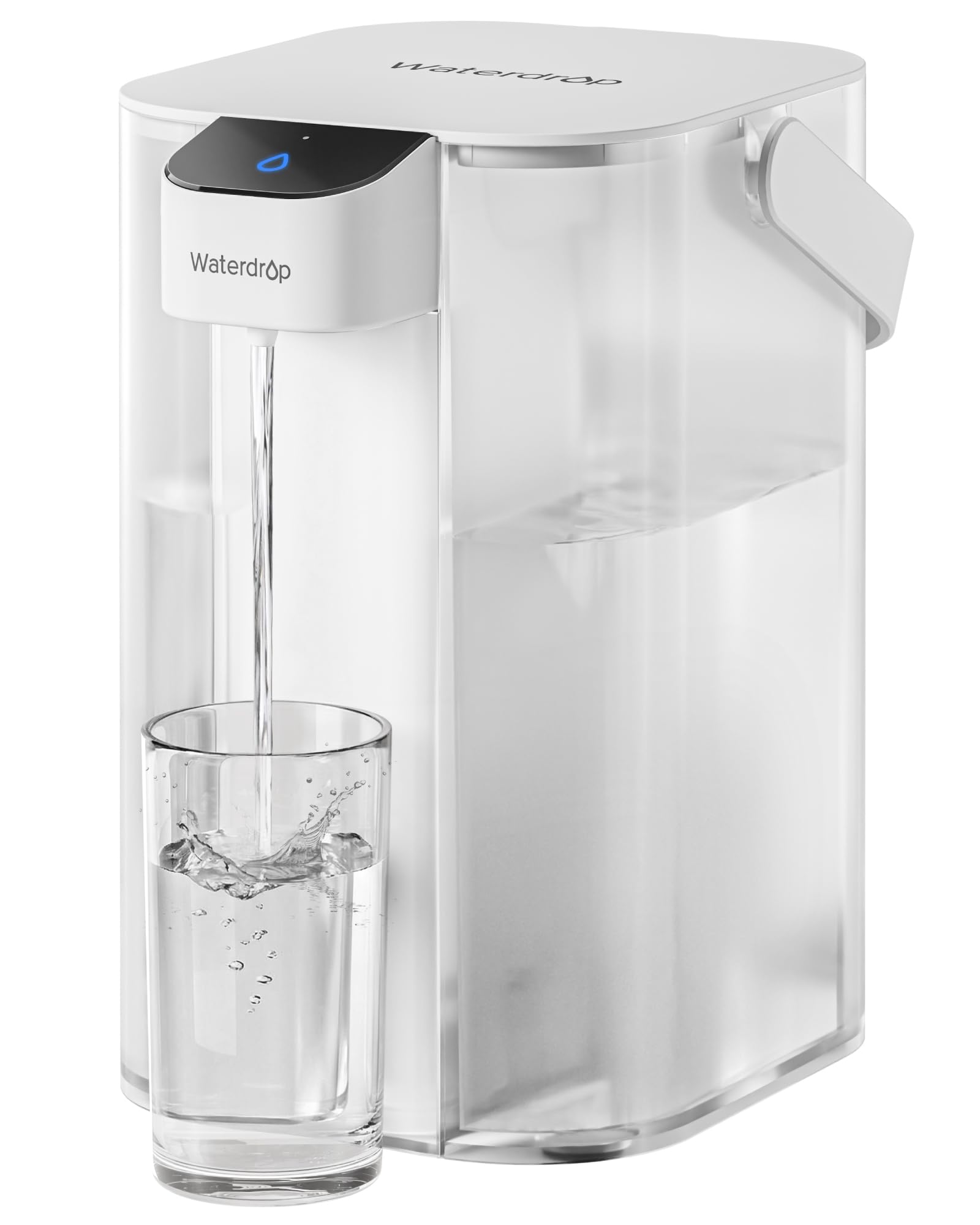
Unlike gravity-fed competitors, the Waterdrop ED01W uses a built-in rechargeable battery to dispense water in about one second via a touch button — no waiting for gravity to do the work. The 0.5-micron carbon block is NSF/ANSI certified under Standards 42, 53, 401, and 372 to reduce 45+ contaminants including lead, chlorine, mercury, microplastics, and benzene, with third-party confirmation for PFOA and PFOS reduction. This certification breadth makes it a solid entry-level option for well water with known heavy metal content.
The 200-gallon filter lifespan is notably longer than the standard 40-gallon Brita filters, and the 30-day standby battery life means you charge it about once a month. The electric pump provides a steady stream of filtered water, which is convenient when filling multiple glasses or a cooking pot. The unit is compact — 12.5 by 12.2 by 7.8 inches — and sits on the counter without requiring refrigerator space.
Reviews from well water users report effective removal of strong chlorine and sulfur odors, and several customers use it in RVs where well water quality varies widely. A small number of users reported initial leaks that resolved after the filter seated properly, and the water stream is noticeably slower than a tap. Note that this system does not lower TDS, so if your well water has very high dissolved solids, you will still taste the mineral profile.
Why it’s great
- Electric one-touch dispensing delivers filtered water in about a second
- 200-gallon filter lasts significantly longer than standard pitcher filters
- NSF certified under 42, 53, 401, and 372 for broad contaminant reduction
Good to know
- Does not reduce TDS — mineral taste remains if well water has high dissolved solids
- Electric pump has a slow stream compared to gravity systems with larger reservoirs
4. DREO Reverse Osmosis Water Filter Countertop
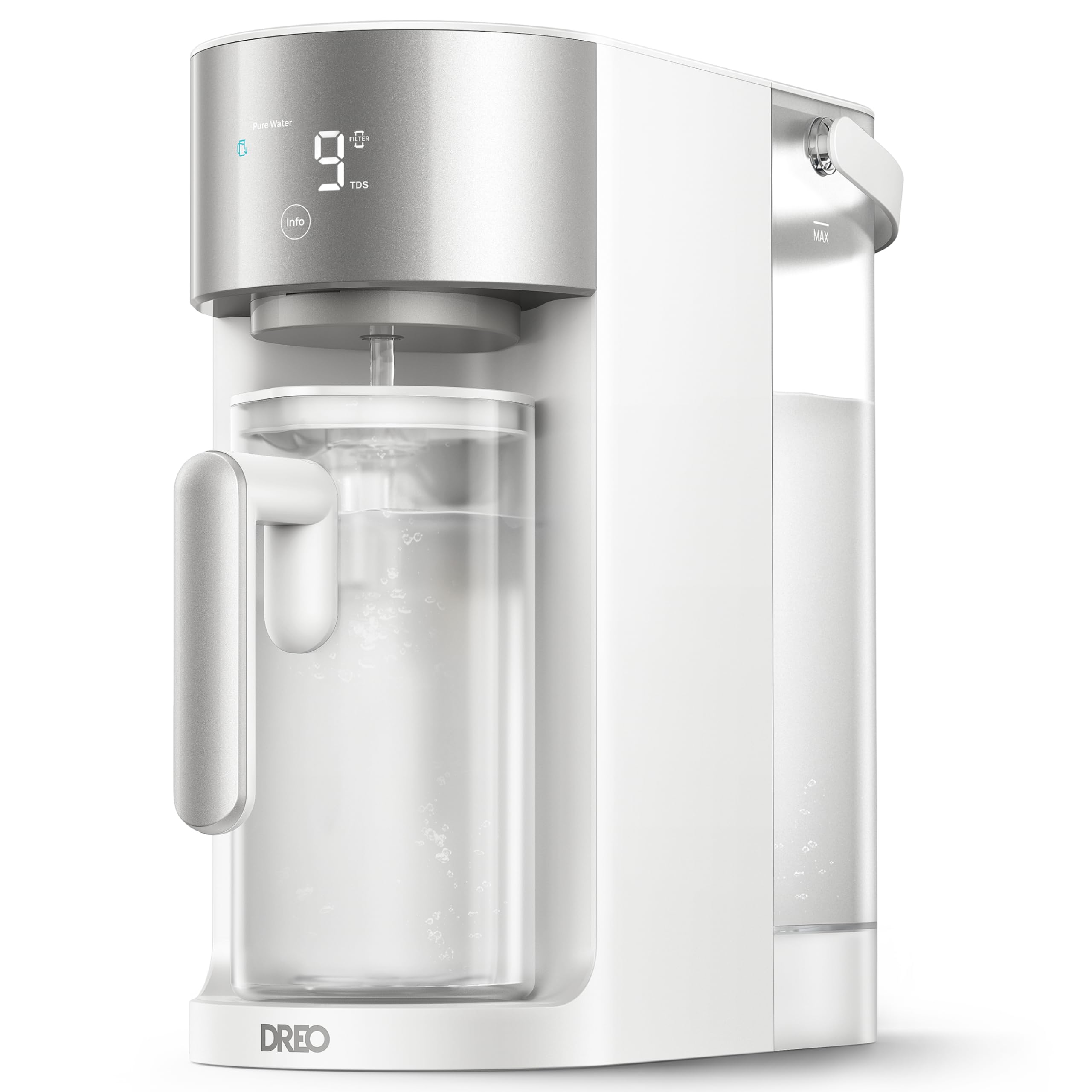
When your well water has sky-high TDS — readings above 500 PPM — a standard carbon pitcher won’t cut it. The DREO RO system uses a 7-in-1 reverse osmosis membrane that reduces over 1000 impurities including PFOA, PFOS, chlorine, fluoride, and heavy metals with 99.99% efficiency. SGS tested per NSF/ANSI 58 standards, this is the only system on this list that actively reduces TDS, delivering filtered water typically in the 12–22 PPM range from raw water in the 375–450 PPM range.
The 3:1 pure-to-drain ratio is efficient for a countertop RO, producing three cups of clean water for every cup of waste water — significantly better than under-sink RO systems that often run at 1:1 or worse. The auto-fill sensor refills the 1.1-liter pitcher automatically, and the self-cleaning system flushes internal tubes to prevent biofouling, which is particularly important when well water contains trace bacteria or organic matter. Installation is truly plug-and-play — no plumbing required beyond a standard electrical outlet.
Well water users report dramatic improvements: TDS dropping from 400+ to below 20, water that feels softer and tastes completely neutral, and no lime scale buildup in their kettles. The downsides are the slower filtration rate (RO is inherently slower than gravity) and the fact that the system requires periodic manual backflush cycles. At this technology level, it is the closest you can get to bottled water quality from a countertop unit without installing under-sink plumbing.
Why it’s great
- RO membrane reduces TDS from 400+ PPM to under 20 — true water purification
- Auto-fill and self-cleaning system minimizes maintenance on well water
- 3:1 pure-to-drain ratio is efficient for a countertop RO unit
Good to know
- Slower filtration — cannot supply water as fast as a gravity dispenser
- Requires periodic manual dump/refill to run the backflush cycle
5. Culligan MaxClear 2.25 Gallon Gravity Water Filter System
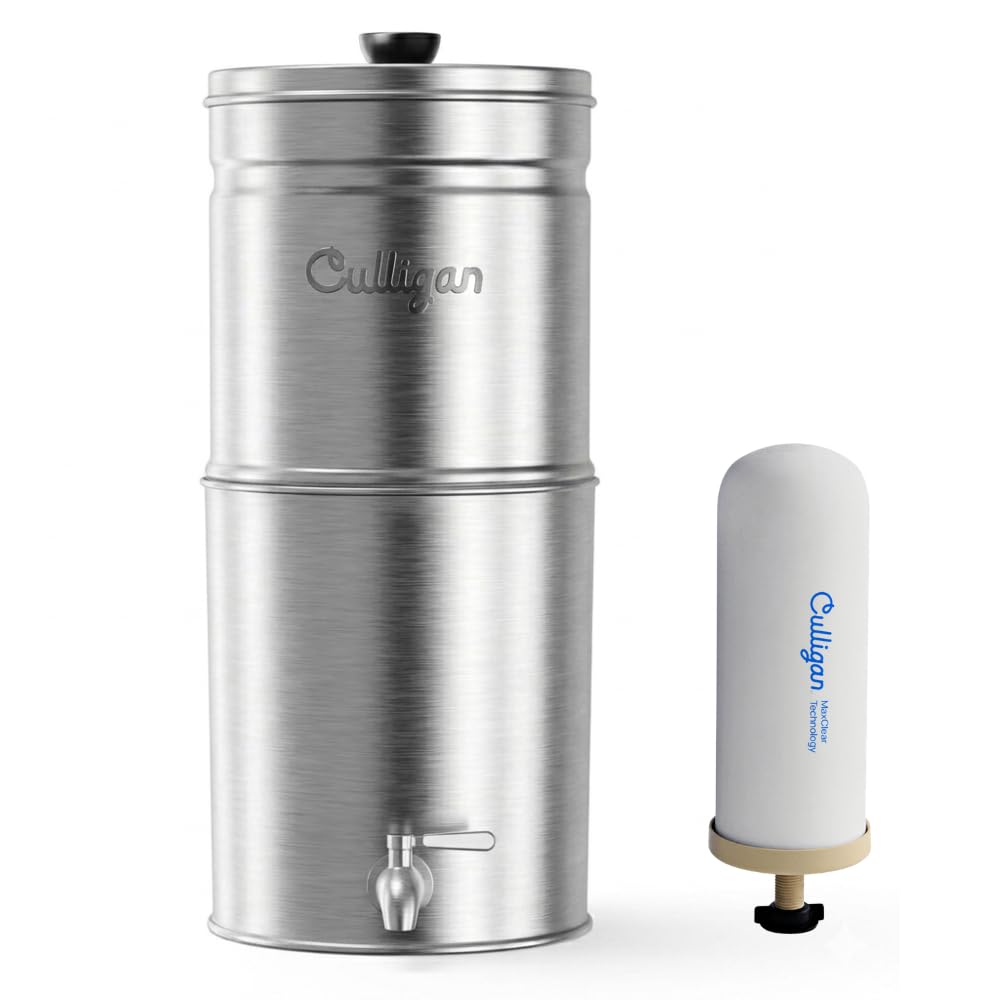
The Culligan MaxClear brings a dual-stage ceramic and carbon filtration approach to the gravity-fed category. The ceramic outer shell physically blocks sediment, rust, and microbial cysts down to a smaller effective pore size than standard carbon blocks, while the inner carbon core reduces chlorine, taste, and odor. This is the only gravity system on the list certified under NSF/ANSI 42 to reduce microplastics, lead, and total PFAS, with compatibility to accept Berkey Black filters if you want to upgrade the media later.
The brushed stainless steel body with a transparent water level window is designed for countertop use and nests to under 12 inches tall for storage. The 2.25-gallon capacity is realistic for 1–3 people; most households will refill once per day. The ceramic filter is cleanable — scrubbing the outer surface restores flow rate when sediment buildup slows filtration — which extends the usable lifespan considerably on dirty well water.
Well water users praise the dramatic taste improvement and the removal of the chalky mineral deposit that often accompanies hard well water. A significant caveat emerged from testing: one user measured a TDS increase from 151 PPM to 267 PPM after filtration, which the manufacturer confirms is possible because ceramic filters can leach mineral particulates when new. Priming the filter with at least a full batch before drinking is essential to rinse away initial fines. The system is not designed to lower TDS and may slightly raise it during the break-in period.
Why it’s great
- Ceramic outer shell blocks sediment and cysts — ideal for high-sediment well water
- Compatible with Berky Black and other standard gravity filter cartridges
- Stainless steel build with nesting storage for smaller countertop footprint
Good to know
- Can temporarily raise TDS during filter break-in due to ceramic particulate shedding
- Not certified for heavy metal removal — pairs with a separate RO for comprehensive well water protection
6. Brita UltraMax Large Water Dispenser
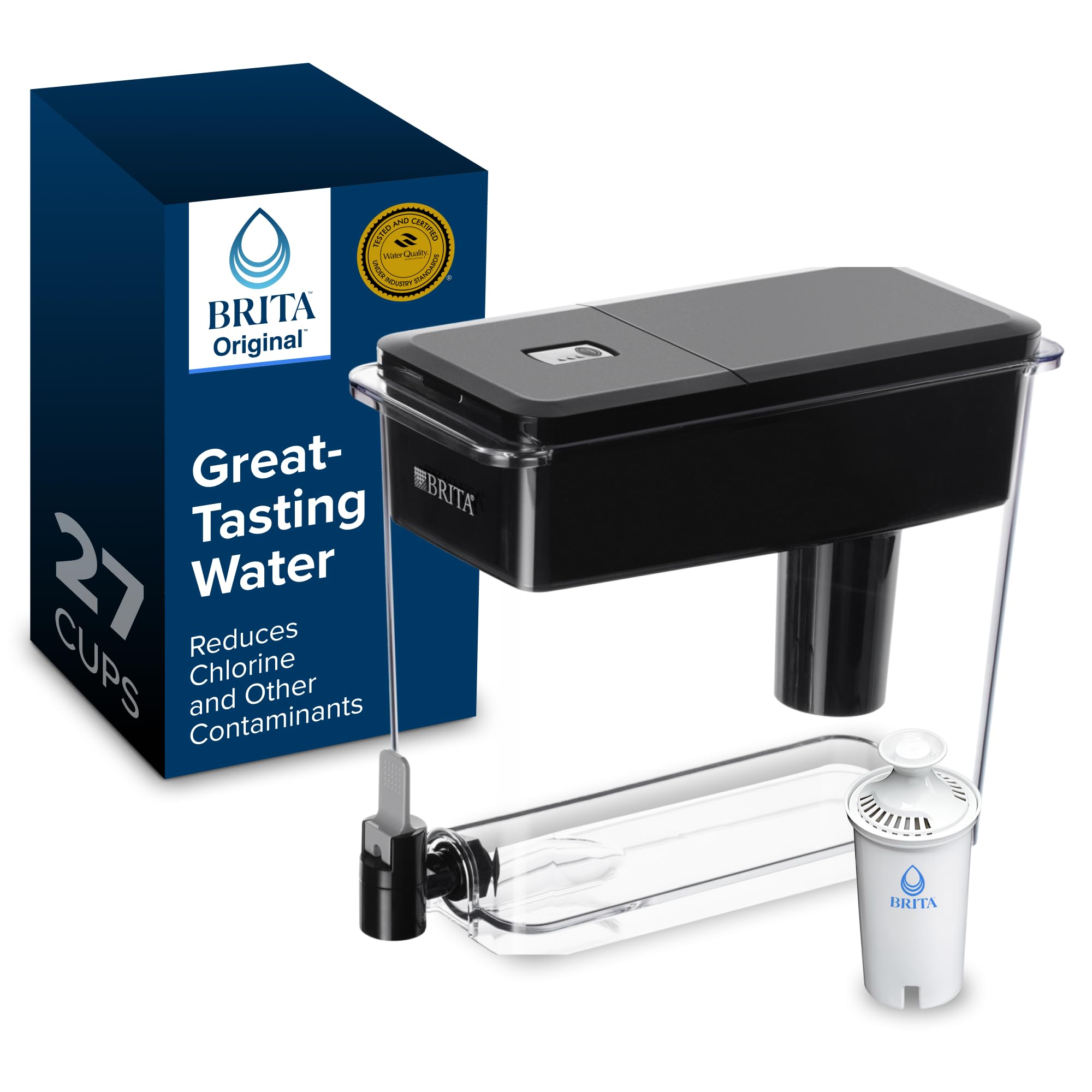
The Brita UltraMax is a 27-cup water dispenser (not a pitcher) that uses Brita’s standard carbon block filter to reduce chlorine taste, copper, cadmium, and mercury. While Brita filters are the most widely available and affordable replacement option — each filter costs around a few dollars and lasts 40 gallons — this system is best understood as a high-volume chlorine and heavy metal reducer, not a true well water purifier. It will improve taste and reduce some metals, but it will not remove sediment, bacteria, or high levels of dissolved solids.
The spigot design allows dispensing water while new water is still filtering, which is useful for high-traffic kitchens. The easy-locking lid and sticker filter indicator are basic but functional. The dimensions (18 by 5.67 by 10.47 inches) fit on most refrigerator shelves, and the precision-pour spigot reduces drips. This is the best option on the list if your well water is relatively good already and you mainly want to polish the taste by removing chlorine and trace copper.
Customer reviews consistently mention that the water tastes “clean and fresh” after filtration, and the 27-cup capacity means less frequent refilling for a family of four. Several long-term users reported that the dispenser lasted 10–15 years with regular cleaning. However, multiple reviews also noted that the lid sensor can be finicky and that unfiltered water can bypass the filter if the seal is not perfect — a known design quirk that Brita addressed in newer runs. For well water with known sediment or iron issues, this system alone will not provide adequate protection.
Why it’s great
- 27-cup capacity — largest volume on this list for less frequent refilling
- Standard Brita filters are widely available and cost-effective to replace
- Spigot allows dispensing during filtration, unlike pitcher designs
Good to know
- Standard carbon block does not remove sediment, iron, or bacteria from well water
- Lid sensor can malfunction — check seal regularly to prevent unfiltered water bypass
7. Brita Metro Water Filter Pitcher

The Brita Metro is a compact 6-cup pitcher designed for low-volume users — college dorms, small fridges, or single-person households. Its standard Brita carbon block filter reduces chlorine taste, copper, cadmium, and mercury, with each filter lasting about 2 months or 40 gallons. Like the UltraMax, this is a taste-and-odor polishing system, not a thorough well water purification solution.
The small footprint (4.82 by 10.04 by 10.1 inches) fits in tight refrigerator spaces, and the easy-fill locking lid helps prevent spills when pouring from a heavy tap. The lightweight design (under 1.4 pounds) makes it easy to carry to a sink — a real advantage if your well water source is in a basement or utility room rather than the kitchen. It comes in several colors including a pinkish-beige that users report is not a true pink.
For well water that is already of decent quality but has that typical chlorine or earthy off-taste, the Metro will improve the drinking experience. Users who switched from larger Brita models noted that the smaller capacity requires more frequent refills — something to consider if you drink more than 48 ounces of water daily. For well water with sediment, iron, or high TDS, this pitcher is under-equipped. It is best viewed as a low-cost, low-commitment starting point to see if filtration alone improves your water, before investing in a more capable gravity or RO system.
Why it’s great
- Smallest footprint — fits in narrow fridge spaces and college dorm refrigerators
- Lightweight and easy to carry to a separate well water tap
- Lowest entry cost — a useful trial to determine if carbon filtration addresses your taste concerns
Good to know
- 6-cup capacity requires multiple refills per day for regular hydration
- Standard carbon filter does not remove sediment, iron, or high TDS — only taste and some heavy metals
FAQ
Will a standard Brita pitcher remove iron from my well water?
Why does my filtered water TDS increase after using a ceramic gravity filter?
How often should I change the filter when using a pitcher for well water?
Can a pitcher filter handle sulfur smell (rotten egg odor) in well water?
Final Thoughts: The Verdict
For most users, the best pitcher filter for well water winner is the Clearly Filtered Pitcher because its 0.5-micron Affinity Filtration targets over 365 contaminants including lead, PFAS, and fluoride — the broadest contaminant coverage available in a standard pitcher format. If your well water has very high sediment load (visible cloudiness or grit), the Purewell 2.25G Gravity System with its 0.01-micron UF membrane is the better choice for physical filtration. And for those dealing with TDS readings above 300 PPM who want truly purified water, nothing beats the DREO Reverse Osmosis Countertop for its ability to drop TDS below 20 PPM while automatically self-cleaning.