The most effective approach pairs live cultures with prebiotic fiber that feeds those beneficial bacteria once they reach your colon. A true probiotic and fiber supplement delivers this synergy in one dose, addressing both the bacterial workforce and the fuel it needs to thrive.
I’m Mohammad Maruf — the founder and writer behind AirfryerBite. I’ve spent years analyzing supplement formulations, dissecting CFU counts, strain diversity, and delivery technology to identify which gut health products actually survive digestion and colonize effectively.
After reviewing dozens of options and thousands of verified customer reports, I’ve narrowed the field to the five most effective models that combine probiotics with prebiotic fiber or enzymes in one capsule, powder, or tablet. This article breaks down the best probiotic and fiber supplement choices for different digestive needs and budgets.
How To Choose The Best Probiotic And Fiber Supplement
Not all probiotic-fiber combos are created equal. The difference between a supplement that transforms your digestion and one that passes through without effect comes down to five key variables: CFU potency, strain diversity, delivery technology, prebiotic source, and third-party testing.
CFU Potency and Survivability
Colony-forming units (CFUs) measure the number of live microorganisms per dose. For a general-purpose probiotic-fiber supplement, 50 billion CFU or higher is the sweet spot — enough to ensure enough strains survive stomach acid to colonize the gut. Look for acid-resistant capsules or delayed-release technology (DRcaps) that protect the bacteria until they reach the intestines.
Strain Diversity vs. Single-Strain Focus
A multi-strain formula with 8–10 species like Lactobacillus and Bifidobacterium covers a wider range of digestive functions — gas, bloating, constipation, and immune modulation. Single-strain formulas work for targeted issues (e.g., Lactobacillus reuteri for colic), but a diverse blend paired with prebiotic fiber provides broader systemic support.
Prebiotic Fiber Integration
Prebiotics like organic acacia fiber, inulin, or Sunfiber feed the probiotics once they colonize. A supplement that combines both in one capsule eliminates the hassle of taking two separate products. For those with IBS, a low-FODMAP prebiotic fiber (like Sunfiber GI) is critical to avoid triggering symptoms.
Third-Party Testing and Manufacturing Standards
Always verify that the supplement is third-party tested for purity, potency, and heavy metals. cGMP-certified U.S. manufacturing facilities are a baseline. Avoid products with magnesium stearate, rice flour fillers, or artificial binders — these reduce bioavailability and can irritate sensitive stomachs.
Quick Comparison
On smaller screens, swipe sideways to see the full table.
| Model | Category | Best For | Key Spec | Amazon |
|---|---|---|---|---|
| Physician’s Choice 60B (84ct) | Multi-Strain | Long-term gut health maintenance | 60 Billion CFU, 10 strains, organic prebiotics | Amazon |
| Tomorrow’s Nutrition Sunfiber GI | Powder Blend | Sensitive stomachs and low-FODMAP | 5g prebiotic fiber + 8B probiotics per serving | Amazon |
| Swanson Prebiotic + Probiotic | Daily Capsule | Gentle daily digestive balance | 500 Million CFU, prebiotic fiber blend | Amazon |
| Physician’s Choice 60B (30ct) | Multi-Strain | First-time probiotic users | 60 Billion CFU, 10 strains, organic prebiotics | Amazon |
| 3-in-1 Probiotic + Enzymes + Prebiotic | Delayed-Release | Post-meal digestion and GLP-1 support | 50B CFU, 10 strains, digestive enzymes, DRcaps | Amazon |
In‑Depth Reviews
1. Physician’s Choice Probiotics 60 Billion CFU (84ct)

This 84-count bottle delivers 60 billion CFU per capsule across 10 diverse strains — including Lactobacillus acidophilus, Bifidobacterium lactis, and Lactobacillus plantarum — with organic prebiotic fiber built into the same capsule. The acid-resistant shell ensures the bacteria survive the stomach’s acidic environment and reach the colon intact. Users report consistent relief from bloating within one week and full regularity within one month, with many staying on this formula for years.
The formula is third-party tested for purity and potency, manufactured in a cGMP-certified U.S. facility, and requires no refrigeration — making it a practical choice for travel or daily desk use. The 84-count supply lasts roughly 12 weeks at one capsule per day, or six weeks at two capsules for heavier meals or post-travel gut reset. Veteran users note that stopping the supplement causes gut irritability and irregularity to return within one to two weeks, which speaks to the product’s genuine colonization effect.
Customer feedback highlights its effectiveness for slow digestion, occasional constipation, and post-antibiotic recovery. The one downside reported by long-term users is the price for daily use, though the 84-count format reduces the per-dose cost significantly compared to the 30-count option. For anyone looking for a long-term gut health partner with proven strain diversity and prebiotic support, this is the most complete option on the list.
Why it’s great
- 60 billion CFU with 10 strains and organic prebiotics in one capsule
- Acid-resistant capsules survive stomach acid for effective colonization
- No refrigeration needed; shelf-stable for 12+ months
- Third-party tested for purity and potency
Good to know
- Higher upfront cost for the 84-count bottle
- Requires consistent daily use to maintain results
- Some users report needing two capsules after heavy meals
2. Probiotics with Digestive Enzymes and Prebiotic (3-in-1)

What sets this formula apart is the integration of 50 billion CFU probiotics, a prebiotic blend, and a digestive enzyme complex (including Papain and Bromelain) into a single delayed-release capsule. The DRcaps technology dissolves only in the intestines, bypassing stomach acid entirely — a critical design choice for users with high stomach acidity or those taking acid-reducing medications. Users transitioning from GLP-1 medications report that this single pill replaced multiple supplements and resolved heartburn, sulfur burps, and constipation.
This supplement is free from magnesium stearate, rice flour, GMOs, soy, and artificial fillers, making it one of the cleanest formulations among the five. The 50 billion CFU count is slightly lower than the Physician’s Choice options, but the addition of digestive enzymes (Papain and Bromelain) provides active protein breakdown support that probiotics alone cannot offer. The capsules are shelf-stable and do not require refrigeration, though storing them in a cool, dry place is recommended for maximum potency through the expiration date.
Family users have kept this in their rotation for over three years, noting fast relief from post-meal bloating and a noticeable lightness after eating. The one limitation: the 3-in-1 format means you cannot adjust enzyme dosage independently of probiotics, which matters for users who want enzyme-only support on heavy protein days. For those who value convenience and want a complete digestive solution in one morning pill, this is a strong mid-range contender.
Why it’s great
- Delayed-release DRcaps protect probiotics from stomach acid
- Includes digestive enzymes (Papain, Bromelain) for protein breakdown
- Free from fillers, magnesium stearate, and GMOs
- Resolved GLP-1 side effects for many users
Good to know
- 50B CFU is lower than the 60B options in this list
- Capsule size may be large for some users to swallow
- Enzyme dosage is fixed and cannot be customized
3. Tomorrow’s Nutrition Sunfiber GI Prebiotic Fiber & Probiotics
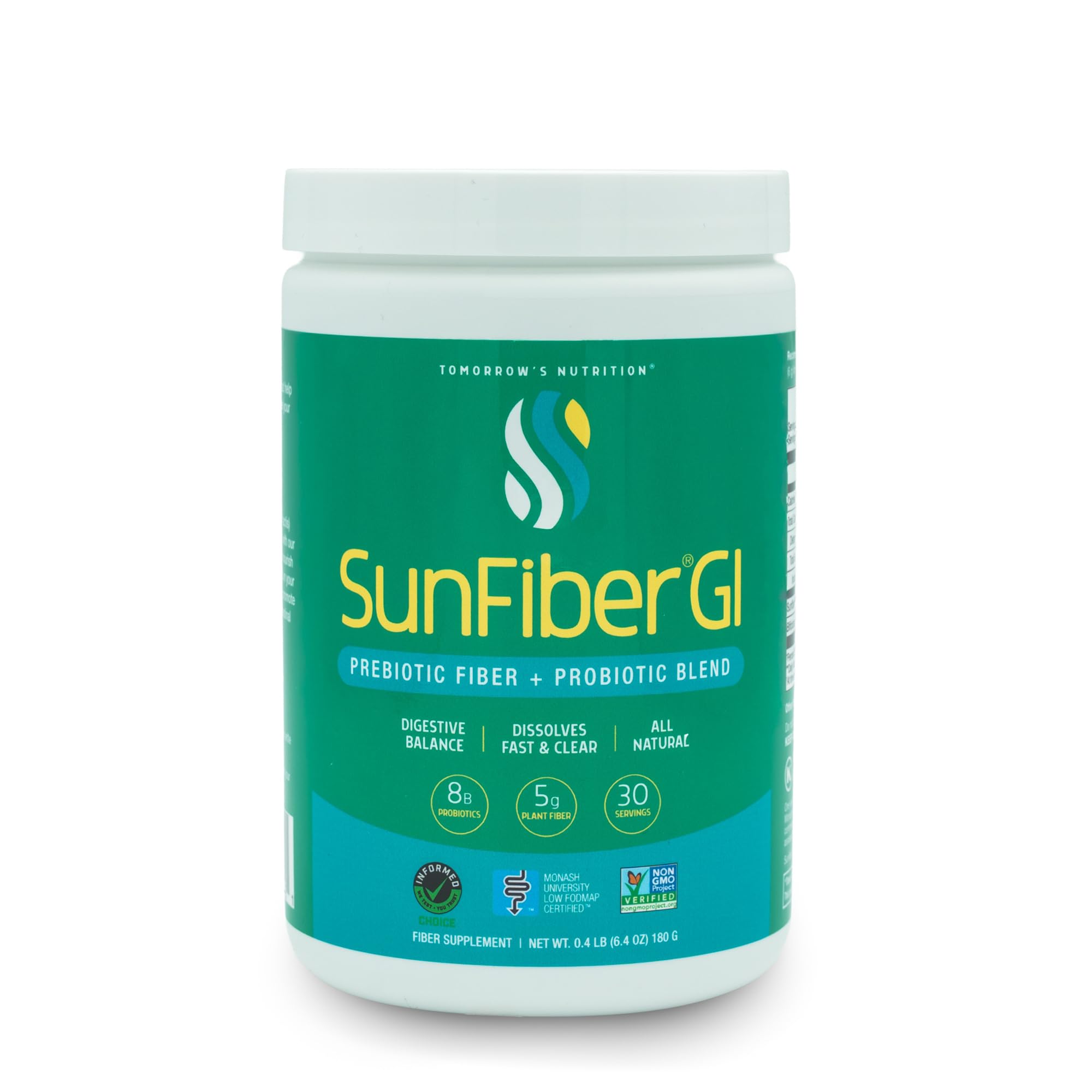
This powder-based supplement delivers 5 grams of prebiotic fiber and 8 billion CFU of probiotics per serving, all in a low-FODMAP formulation that dissolves completely in water without taste or grittiness. The product uses Sunfiber, a partially hydrolyzed guar gum that ferments slowly in the colon, reducing the gas and bloating that traditional inulin or psyllium-based fiber can trigger in sensitive individuals. Nutritionists recommend this format for IBS patients or anyone who reacts poorly to typical fiber supplements.
The powder mixes into coffee, smoothies, or plain water with minimal clumping — a texture advantage over chalkier fiber powders like Metamucil. The 30-day supply comes in a resealable container that travels well, and users report that it keeps them regular even when routine changes disrupt their diet. The 8 billion CFU count is notably lower than capsule-based competitors (which hit 50–60 billion), but the fiber content is substantially higher at 5 grams per serving, making this a better choice for those whose primary goal is fiber intake rather than high-potency probiotic colonization.
Customer reviews highlight its ability to maintain regularity during travel and its gentle effect on digestion without triggering IBS flare-ups. The slower delivery speed reported by some users (one month for the first shipment) is a logistical quirk rather than a product quality issue. For anyone with a sensitive stomach who needs fiber first and probiotics second, this is the optimal format.
Why it’s great
- Low-FODMAP prebiotic fiber safe for IBS and sensitive stomachs
- Dissolves completely with no taste or grittiness
- 5g fiber per serving supports regularity effectively
- Travel-friendly resealable container
Good to know
- Only 8 billion CFU probiotics per serving
- Powder format requires mixing, not a quick capsule
- Some users report slower initial shipping
4. Physician’s Choice Probiotics 60 Billion CFU (30ct)

This 30-count version shares the exact same formulation as the 84-count best overall pick — 60 billion CFU, 10 strains, and organic prebiotics — but in a smaller bottle that makes it the most affordable entry point for new users. The acid-resistant capsules are identical, and the third-party testing standards remain the same. Users who have taken both sizes confirm no difference in effectiveness across the two packages.
The smaller supply means a higher per-dose cost compared to the 84-count, but it also means you can test the product’s effect on your digestion for a full month without committing to a larger investment. Customer reviews mirror the longer-term data: reduced bloating within one week, improved regularity within one month, and no stomach upset or gas from the capsule itself. Veteran users who have been on this formula for over eight years attest to its reliability for maintaining gut health.
The main trade-off is that the 30-count supply requires more frequent repurchasing, which can disrupt consistency if you forget to reorder. For first-time probiotic users or those with a limited budget who want to experience the 60-billion CFU formula before upgrading to the bulk size, this is the smartest starting point.
Why it’s great
- Same 60B CFU and 10-strain formula as the premium size
- Lowest upfront investment to test effectiveness
- No refrigeration needed; shelf-stable
- Proven results over 8+ years of user data
Good to know
- Higher per-dose cost than the 84-count bottle
- Requires frequent reordering for long-term use
- Not ideal for users who want 12-week supply in one purchase
5. Swanson Prebiotic + Probiotic Fiber (2 Pack, 60ct)
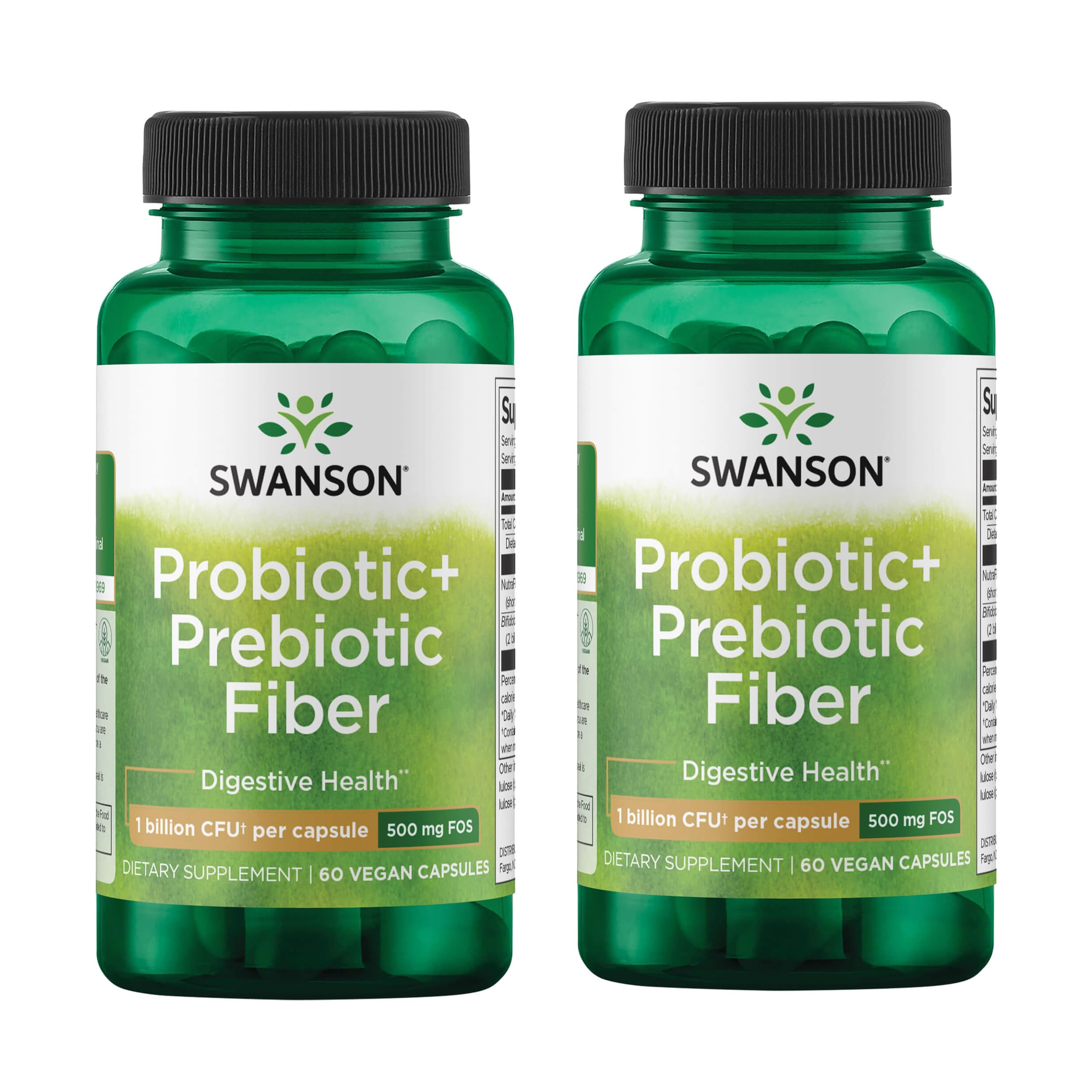
Swanson’s offering takes a different approach with a lower-potency 500 million CFU per capsule, paired with a prebiotic fiber blend designed for gentle, non-disruptive daily support. This is not a high-CFU colonization formula — it is a maintenance supplement for users who already have decent gut health and simply want to support regularity and immune function without overwhelming their system. The 60-capsule bottle with a two-pack format provides a 60-day supply at two capsules per day.
Users with ulcers or IBD report that this formula is uniquely gentle on the stomach lining, reducing bloating within one day and improving digestion without causing cramping. The prebiotic fiber component enhances the probiotic’s effectiveness by feeding the existing gut bacteria, which is why some users found this more effective than standalone yogurt or fermented foods. The capsules are easy to swallow and have no aftertaste, according to customer reviews.
The 500 million CFU count is dramatically lower than the 60 billion options elsewhere, which means this supplement is not designed for users with severe dysbiosis, post-antibiotic recovery, or chronic digestive issues. For those with mild bloating or general digestive maintenance — and who want a budget-friendly two-pack that lasts two months — Swanson delivers reliable, science-backed quality from a brand with over 50 years in the supplement industry.
Why it’s great
- Gentle enough for ulcers and IBD without causing pain
- Two-pack provides 60-day supply at a accessible per-dose cost
- Easy-to-swallow capsules with no aftertaste
- Third-party tested from a trusted 50-year-old brand
Good to know
- Only 500 million CFU — low potency for serious gut issues
- Not designed for high-potency colonization needs
- Requires 2 capsules daily, not a single-dose convenience
FAQ
Can I take a probiotic and fiber supplement on an empty stomach?
Is 60 billion CFU too much for a beginner?
How long does it take for a probiotic and fiber supplement to work?
Do I need to refrigerate a probiotic-fiber supplement?
Can I take a probiotic-fiber supplement with other medications?
Final Thoughts: The Verdict
For most users, the best probiotic and fiber supplement winner is the Physician’s Choice 60 Billion CFU 84ct because it combines the highest CFU count with 10 diverse strains and organic prebiotics in a shelf-stable, acid-resistant capsule that survives digestion. If you need a low-FODMAP option for a sensitive stomach, grab the Tomorrow’s Nutrition Sunfiber GI. And for those on GLP-1 medications who want digestive enzymes built into their probiotic dose, nothing beats the 3-in-1 Probiotic with Digestive Enzymes.