The golden syrup sitting in most pantry cabinets is often heat-treated, filtered of its beneficial pollen, and sourced from flowers sprayed with synthetic pesticides. A true organic honey delivers a flavor profile tied directly to its floral origin — eucalyptus, wildflower, or manuka — along with the live enzymes and antioxidants that processing destroys.
I’m Mohammad Maruf — the founder and writer behind AirfryerBite. My analysis of the organic honey market focuses on verifying USDA certification claims, measuring MGO potency where relevant, and identifying which producers maintain raw and unfiltered integrity from hive to jar.
This guide breaks down five standout bottles based on purity testing, source transparency, and verified customer feedback to help you confidently select the best organic honey for your kitchen.
How To Choose The Best Organic Honey
The organic honey aisle is crowded with bottles that look similar but vary enormously in purity, source transparency, and processing method. Before you buy, you need to understand three factors that separate a genuinely superior product from a mass-produced sweetener.
Raw, Unfiltered, and Unheated — What the Labels Actually Mean
Many commercial honeys are pasteurized at high temperatures to delay crystallization and kill yeast, but this process destroys natural enzymes, antioxidants, and pollen. A raw and unfiltered organic honey retains all of these compounds, giving it a more complex flavor and greater potential health benefits. Look for explicit language on the jar stating that the honey has not been heated above hive temperature (roughly 95°F to 105°F) and has not been fine-filtered.
Source Origin and Floral Variety
Where the bees forage directly determines the taste of the honey. Brazilian eucalyptus honey tends to be darker and more robust. New Zealand manuka carries a distinct earthy, caramel-like note. Canadian wildflower yields a lighter, more delicate sweetness. When a producer lists a single country of origin and a specific floral source, you are getting a single-origin product with a predictable flavor profile rather than a generic blend.
Certification and Third-Party Testing
USDA Organic certification ensures the honey was produced without synthetic pesticides, antibiotics, or GMO crops within the bees’ foraging range. For manuka honey, an MGO (methylglyoxal) rating provides a measurable guarantee of antibacterial potency. Always verify that the certification logo is printed directly on the label and cross-reference it with the USDA Organic database or the certifying body’s website.
Quick Comparison
On smaller screens, swipe sideways to see the full table.
| Model | Category | Best For | Key Spec | Amazon |
|---|---|---|---|---|
| Nature Nate’s Organic | Mid-Range | Everyday sweetener in a squeeze bottle | 32 oz squeeze bottle with purity guarantee | Amazon |
| Gold Fern Manuka | Premium | Immune support and unique manuka flavor | MGO 100+ certified manuka honey | Amazon |
| Bee Harmony Brazilian | Value | Budget-friendly raw honey in a glass jar | 12 oz glass jar, product of Brazil | Amazon |
| Oneroot Canadian Wildflower | Premium | Thick creamed texture for spreading | 17.6 oz creamed wildflower honey | Amazon |
| Y.S. Eco Bee Farms Raw | Value | Bulk supply of pure unfiltered honey | 3-pack of 22 oz jars (66 oz total) | Amazon |
In‑Depth Reviews
1. Nature Nate’s Organic 100% Pure, Raw & Unfiltered Honey
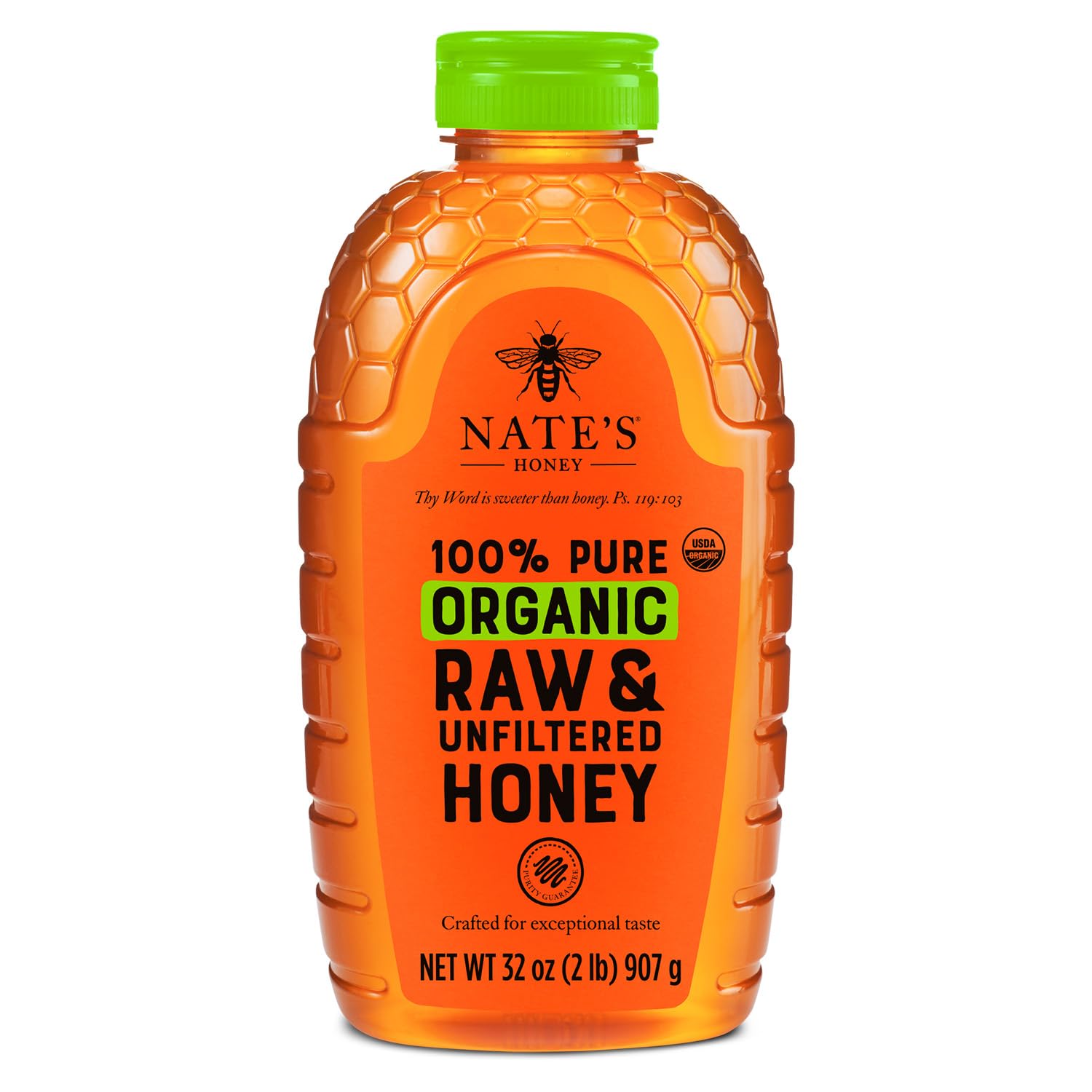
The 32-ounce squeeze bottle from Nature Nate’s strikes the ideal balance between quality and convenience. It carries USDA Organic certification and is explicitly labeled raw and unfiltered, meaning the natural pollen and enzymes remain intact. The honey has a medium-amber color and a smooth, pourable consistency that works equally well over oatmeal, stirred into tea, or used in baking recipes that call for a liquid sweetener.
Customer feedback consistently praises the flavor as pure and reminiscent of honey straight from the hive. The squeeze bottle design with a flip-top cap is a practical advantage over glass jars — it minimizes sticky drips and makes portion control effortless. Multiple verified buyers note that the honey resists rapid crystallization better than some competitors, staying fluid at room temperature for longer.
One minor consideration is that the bottle’s wide mouth can become messy if the cap is not wiped clean after each use, though this is typical for most squeeze-style containers. At roughly half the per-ounce cost of manuka options, Nature Nate’s delivers a compelling everyday organic honey that satisfies both taste and value requirements.
Why it’s great
- Large 32 oz size keeps your pantry stocked longer.
- Flip-top squeeze bottle is drip-resistant and easy to use.
- Rich, clean flavor ideal for daily tea, coffee, and cooking.
Good to know
- Not a single-origin honey; it is a blend of certified organic sources.
- Plastic bottle may not appeal to those who prefer glass packaging.
2. Gold Fern Honey Raw New Zealand Manuka Honey
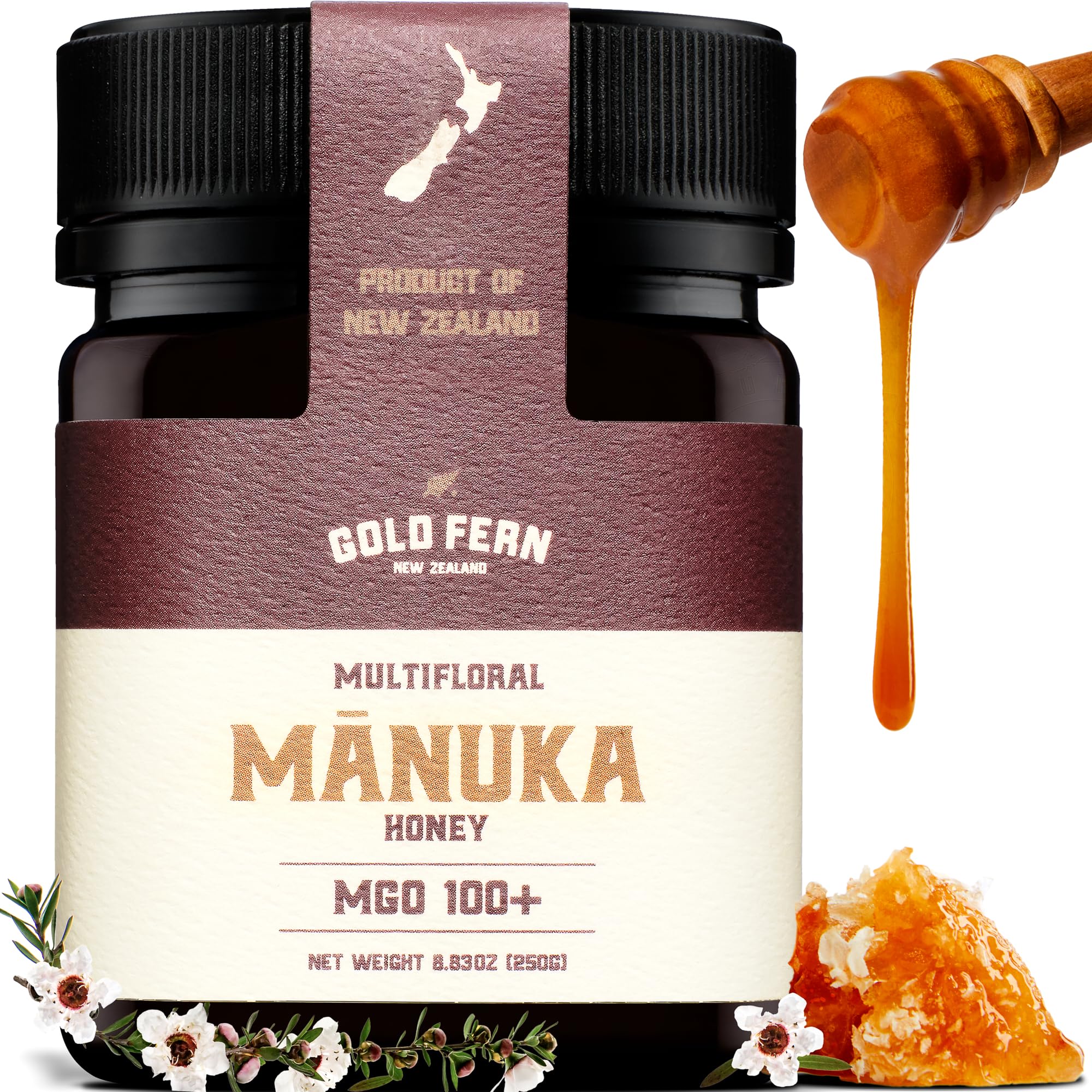
Gold Fern’s manuka honey represents a tier above standard organic honey due to its documented MGO 100+ rating, which quantifies the natural methylglyoxal content responsible for manuka’s reputed antibacterial properties. Sourced from South Island, New Zealand, this honey is raw, unpasteurized, and unfiltered, preserving the unique blend of enzymes, amino acids, and flavonoids that set manuka apart from clover or wildflower varieties.
Verified buyers describe the flavor as earthy with caramel undertones, distinctly different from the bright sweetness of typical floral honeys. Many use it in a wellness context — stirred into warm water or taken by the spoonful to support immune function during cold season. The jar is compact at 8.8 ounces, reflecting the premium nature of the product and the stringent third-party testing required for MGO certification.
The per-ounce cost places this firmly in the premium tier, but the combination of traceable origin, certified potency, and positive health feedback from users makes it a worthwhile investment for anyone seeking functional benefits beyond simple sweetness. The only caveat is that the thick, crystalline texture may not dissolve as quickly in cold beverages as thinner, processed honey would.
Why it’s great
- Independent lab-tested MGO 100+ guarantees antibacterial potency.
- 100% New Zealand sourced with full hive-to-hand traceability.
- Distinct caramel flavor that stands out in tea and on toast.
Good to know
- Smaller jar means faster repurchase compared to bulk options.
- Thicker consistency does not pour easily into cold drinks.
3. Y.S. Eco Bee Farms Raw Honey 22 oz Pack of 3

Y.S. Eco Bee Farms has been operating since 1995 as an organic pioneer, and this three-pack provides a total of 66 ounces of raw, unfiltered honey sourced from the United States and Canada. The honey is unpasteurized, meaning the natural enzymes and pollen grains remain active, and the flavor profile is consistently described as sweet with a mild floral finish and no artificial aftertaste.
Customers who repurchase this product frequently cite the exceptional value per ounce — you get three substantial jars for the price of a single jar of premium manuka. Many reviewers use it as their primary household sweetener, adding it to yogurt, drizzling it over pancakes, or baking it into granola bars. The plastic jars are lightweight and shatterproof, making them practical for pantry storage and less risky for households with children.
The only notable drawback is that the honey can crystallize relatively quickly at cooler room temperatures, which is a natural characteristic of raw, unfiltered honey rather than a defect. Placing the jar in a bowl of warm water returns it to a liquid state without damaging the enzymes. For buyers seeking a large-volume, budget-friendly organic honey that does not compromise on raw integrity, this three-pack is difficult to beat.
Why it’s great
- Three jars provide enough honey for heavy daily use.
- Plastic jars are lighter and safer than glass options.
- Trusted brand with long history in organic honey production.
Good to know
- Prone to crystallization in cooler environments.
- Not a single floral source, so flavor may vary slightly between batches.
4. Oneroot 100% Organic Canadian Wildflower Honey
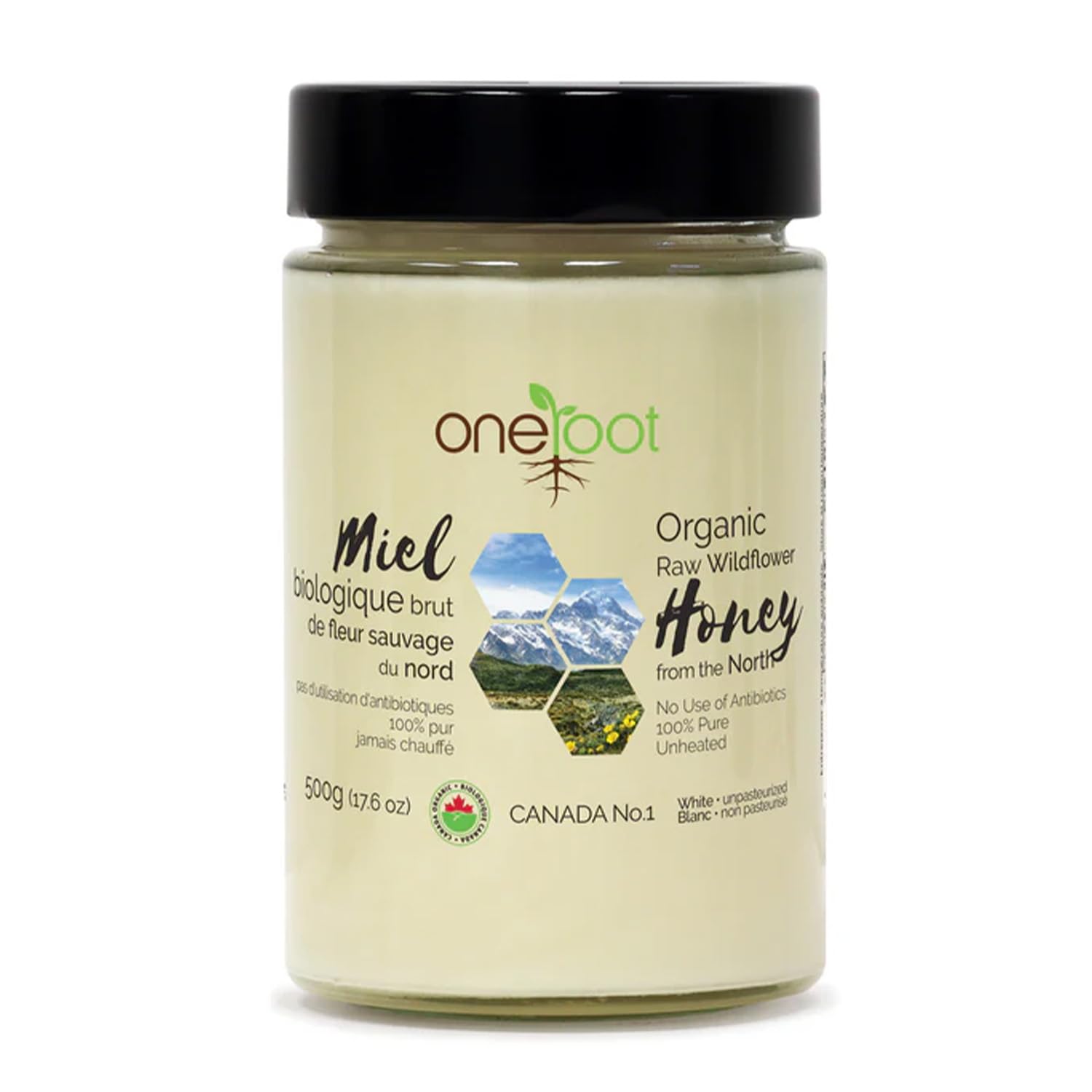
Oneroot’s wildflower honey is distinguished by its creamed texture — a whipped consistency that makes it spreadable like butter on toast, bagels, or crackers. The honey is certified organic, sourced exclusively from Canadian wildflower fields, and is explicitly labeled unheated and unfiltered, preserving the delicate floral notes and enzyme content that lighter processing destroys.
Verified buyers praise its thick, luxurious mouthfeel and note that it dissolves beautifully in hot tea while also serving as a standout topping for ice cream or yogurt. The flavor is milder than eucalyptus or manuka honey, with a gentle sweetness that complements rather than overwhelms other ingredients. Several long-term customers mention that the creamed texture remains stable at room temperature without separating or fermenting.
The primary trade-off is the smaller net weight of 17.6 ounces relative to the price, which places this in the premium tier. Additionally, the creamed consistency means it does not work well as a direct substitute for liquid honey in recipes that require precise pouring measurements. For anyone who prioritizes a unique, spreadable texture and single-origin Canadian sourcing, however, Oneroot delivers an exceptional experience.
Why it’s great
- Creamed texture spreads easily without dripping or running.
- Certified organic from single-origin Canadian wildflower sources.
- Unheated process retains nutrients and natural floral flavor.
Good to know
- Not suitable for recipes that need liquid honey.
- Higher per-ounce cost compared to standard raw honey.
5. Bee Harmony Raw Honey Organic Brazilian
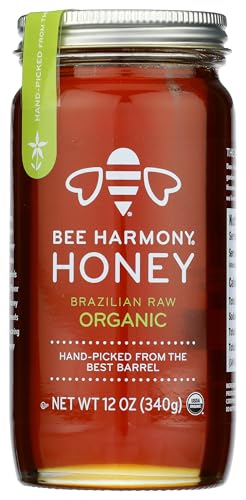
Bee Harmony offers a single-origin organic honey from Brazilian forage lands, with the dominant floral notes coming from eucalyptus. The 12-ounce glass jar is a classic presentation that appeals to buyers who prefer glass over plastic, and the honey is certified USDA organic, raw, and unfiltered, retaining the natural pollen and enzymes that give it a darker color and robust flavor.
Reviews highlight the honey’s excellent taste for use in tea and on sandwiches, and many customers comment on the secure packaging — a sturdy box with internal partitions and a plastic bag that minimizes the risk of breakage during shipping. The eucalyptus-forward flavor is bolder than you would find in a typical clover honey blend, which makes it a good choice for those who want a distinct floral character in their sweetener.
The main downside is the relatively small jar size at 12 ounces, which may require more frequent repurchasing for heavy users. A small number of buyers have reported receiving a jar without a tamper seal, though the brand’s customer service was responsive in replacing defective units. For someone trying organic honey for the first time without committing to a large volume, this single jar is an affordable entry point with clear source transparency.
Why it’s great
- Clear single-origin sourcing from Brazil with eucalyptus notes.
- Glass jar packaging is recyclable and premium in feel.
- Robust, dark flavor stands up well to strong teas.
Good to know
- 12 oz jar is small for daily baking or frequent use.
- Inconsistent tamper seal quality reported by a few buyers.
FAQ
Does “organic honey” automatically mean it is raw and unfiltered?
Why does my organic honey crystallize so quickly?
Final Thoughts: The Verdict
For most users, the best organic honey winner is the Nature Nate’s Organic because it delivers certified raw quality in a practical 32-ounce squeeze bottle at a reasonable price point. If you want the documented antibacterial potency and unique flavor of manuka, grab the Gold Fern Manuka. And for a budget-friendly bulk supply that does not sacrifice raw integrity, nothing beats the Y.S. Eco Bee Farms three-pack.