Walking past greasy, dull, or water-spotted kitchen cabinets can drain the joy out of the room you spend the most time in. The wrong polish leaves a sticky film that attracts dust or a waxy build-up that yellows over time, turning a quick cleaning chore into a full refinishing project.
I’m Mohammad Maruf — the founder and writer behind AirfryerBite. I analyze hundreds of household care products based on real-world testing data and customer feedback to separate surface-level marketing from formulas that actually protect and restore cabinetry.
The right formulation—whether a carnauba wax gel, a penetrating oil, or a silicone-free cream—determines whether your cabinets look refreshed or just greasy. This guide breaks down the top contenders for the best polish for kitchen cabinets to help you select a product that matches both your cabinet finish and your tolerance for elbow grease.
How To Choose The Best Polish For Kitchen Cabinets
Selecting a cabinet polish is not a one-size-fits-all decision. The finish of your cabinetry—whether it is a factory laminate, a stained wood, a painted surface, or an antique veneer—dictates whether a wax, oil, or cream formulation will do the job without causing damage.
Match the Polish to Your Cabinet Finish
Stained and sealed wood cabinets benefit from lemon oil or orange oil blends that penetrate the finish to replenish lost moisture and restore depth of grain. Painted cabinets require a silicone-free cream or wax that cleans without leaving a yellowing residue. Laminate and thermofoil surfaces need a carnauba wax gel that seals against water spotting and staining without soaking into the substrate.
Check for Silicone and Wax Content
Silicone-heavy polishes provide an immediate high-gloss sheen but create a buildup that makes future refinishing nearly impossible without stripping. Wax-based products seal moisture out, which is beneficial on non-porous laminates but can trap dirt on unfinished wood. If you plan to paint or re-stain your cabinets later, choose a silicone-free, wax-free formula that cleans without leaving a permanent barrier.
Prioritize UV Protection and Stain Resistance
Kitchen cabinets endure constant light exposure and airborne grease. Polishes containing UV-blocking agents prevent fading and discoloration on wood surfaces. Stain-resistant waxes and creams create a smooth hydrophobic layer that makes grease splatters and fingerprint smudges easier to wipe off during regular cleaning.
Quick Comparison
On smaller screens, swipe sideways to see the full table.
| Model | Category | Best For | Key Spec | Amazon |
|---|---|---|---|---|
| Guardsman Clean & Polish | Cream Polish | UV protection and scratch concealment on wood | Silicone-free cream, UV sunscreen | Amazon |
| TR Industries Gel-Gloss | Carnauba Wax | Non-porous surfaces and laminate cabinets | 8 oz carnauba wax gel, water-spot resistant | Amazon |
| Milsek Furniture Polish | Orange Oil Liquid | Dark and espresso wood cabinets | Orange oil, wax-free and silicone-free | Amazon |
| Howard Lemon Oil | Natural Oil | Reviving dry, faded wood doors and frames | Real lemon oil, silicone-free formulation | Amazon |
| Jubilee Kitchen Wax | Liquid Wax | Creating a hard, shiny barrier on laminates | Streak-resistant liquid wax, scratch-free | Amazon |
In‑Depth Reviews
1. Guardsman Clean & Polish for Wood Furniture

This cream polish from Guardsman stands out because it cleans, shines, and protects wood cabinets without leaving any silicone buildup that complicates future refinishing. The included UV sunblock is a practical defense against the fading that kitchen cabinets experience from afternoon sunlight—a feature not found in most liquid wax or oil polishes. Formulated as a cream, it absorbs into wood finishes efficiently, concealing fine surface scratches while avoiding the greasy residue common with petroleum-based products.
Real-world users consistently report positive results on both antique furniture and modern Pennsylvania house woodwork, with reviews noting that two applications visibly restore color and luster to dry surfaces. The woodland scent is mild and dissipates quickly, making it tolerable for use in closed kitchen spaces. Because Guardsman is silicone-free, it respects the original manufacturer’s finish, preserving the intended radiance rather than overlaying an artificial gloss.
For cabinet owners who want a dedicated wood care product that doubles as a gentle cleaner, this cream offers a clear path to refreshed cabinetry without the need for heavy buffing. The 32-ounce pack provides enough volume for multiple full-cabinet applications, reinforcing its value as a go-to maintenance polish.
Why it’s great
- UV-blocking formula prevents sun damage on wood cabinets
- Silicone-free cream avoids greasy buildup
- Conceals fine scratches while restoring natural luster
Good to know
- Best suited for wood cabinets, not for laminate or thermofoil
- Requires a dry microfiber cloth for streak-free application
2. TR Industries Gel-Gloss Kitchen and Bath Cream Wax Polish
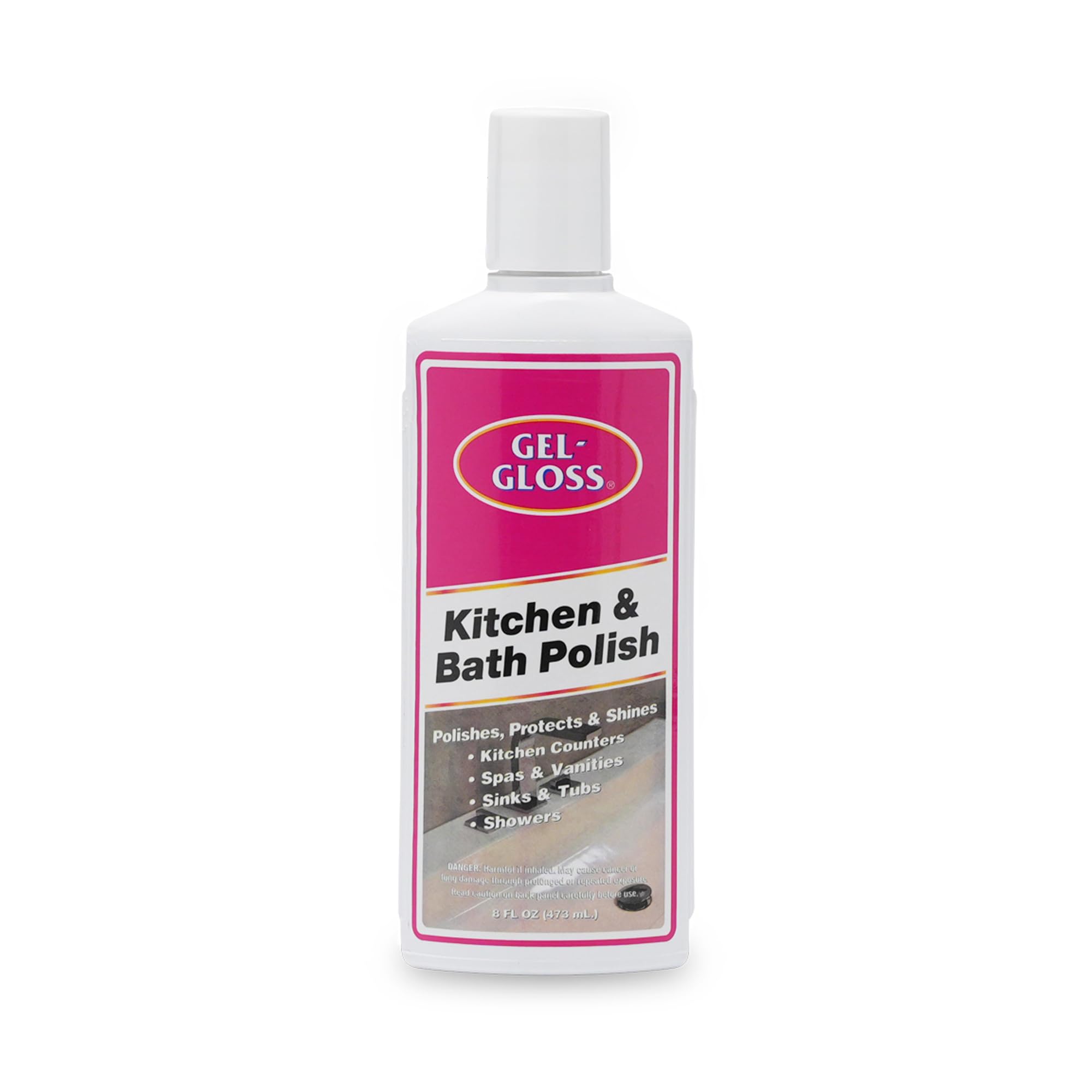
Gel-Gloss is the undisputed heavyweight for non-porous cabinet surfaces like laminate, cultured marble, acrylic, and plastic laminate. Its formula relies on carnauba wax—one of the hardest natural waxes available—to produce a high-surface luster that resists water spotting and staining. Unlike oil-based polishes that soak into wood, this gel creates a sealed protective layer that prevents discoloration in porcelain kitchen sinks and keeps tubs and countertops cleaner for longer.
Users tackling restoration projects on cultured marble sinks report that following sanding steps (1000 to 2500 grit) with Gel-Gloss effectively adds a protective top coat, leaving the surface looking and feeling new. The gel form means less mess compared to liquid waxes, and the unscented formula is welcome in kitchens where artificial fragrances clash with food prep areas. Because it is designed for bathroom and kitchen environments, it handles grease and soap scum better than general-purpose furniture polishes.
This is a niche performer that excels specifically on sealed, non-porous cabinetry. For wood cabinet owners, a different product will serve better, but for laminate and solid-surface kitchen cabinets, Gel-Gloss delivers a shine that lasts through repeated cleanings without degrading.
Why it’s great
- Hard carnauba wax coating resists water spots and stains
- Works on fiberglass, acrylic, laminate, stainless steel, and porcelain
- Leaves a smooth, sealed surface that stays clean longer
Good to know
- Not formulated for bare or unfinished wood surfaces
- Strong wax barrier may feel greasy if over-applied
3. Milsek Furniture Polish and Wood Cleaner with Orange Oil

Milsek distinguishes itself by cleaning and polishing without water, wax, or silicone—ingredients that cause long-term buildup on kitchen cabinets. The orange oil formulation cuts through grease and leaves a natural luster that is particularly effective on dark espresso finishes where many polishes leave streaky residue. Users with oak cabinets report that it fills fine scratches and makes cupboards look refreshed without feeling oily to the touch.
Real customer feedback highlights its ability to remove heat marks and water rings from wood surfaces, a common kitchen complaint. The orange scent is strong but natural, so opening a window during application is a simple precaution. Because it is concentrated, only a small amount is needed per cabinet door, making the 12-ounce bottle last through multiple deep-cleaning sessions.
One practical limitation is that Milsek does not remove heavy grease by itself—surfaces should be wiped down with a degreaser first. Once the base is clean, this polish finishes the job by restoring moisture and depth to the wood grain. It is a strong all-rounder for stained and sealed wood cabinets.
Why it’s great
- Wax-free and silicone-free prevents harmful buildup
- Erases heat rings and water marks on wood
- Strong orange oil cuts through moderate grime
Good to know
- Not a heavy degreaser; grease must be removed first
- Strong orange scent requires ventilation during use
4. Howard Lemon Oil Wood Polish

Howard Lemon Oil is the strongest oil-based option on this list for penetrating dry wood finishes and replenishing the natural oils that stripped or faded cabinetry loses over time. Unlike wax-based polishes that sit on top of the surface, this oil formulation absorbs into the grain to restore depth and bring out the wood’s character. It is ideal for kitchen cabinets that have become dry, dull, or faded from years of heat and sunlight exposure.
The lemon scent is fresh without being cloying, and the oil blends with highly refined mineral oil to ensure even application without sticky pockets. Reviews from users applying it to oak cabinets confirm that a small amount goes a long way—one bottle can cover multiple rooms. It is also safe for finished and unfinished wood, making it a flexible option if you have a mix of cabinet types in your kitchen.
Because it is an oil, not a wax, it does not create a hard protective barrier against moisture. Cabinet doors near the dishwasher or sink may require more frequent reapplication. Howard Lemon Oil is best used as a conditioning treatment for dry wood rather than a daily cleaner for greasy surfaces.
Why it’s great
- Penetrates dry wood to restore lost moisture and natural grain depth
- Safe on finished and unfinished wood surfaces
- Pleasant lemon scent that dissipates quickly
Good to know
- Does not provide a hard wax protective layer against moisture
- Requires regular reapplication on high-use cabinet doors
5. Jubilee Kitchen Wax (2-Pack)

Jubilee Kitchen Wax is a generational product that has been a household favorite for decades, and its position in this list reflects its proven performance on laminate countertops and cabinets. The liquid wax formula cleans, shines, and protects in a single step—removing grease spots, food stains, and fingerprints without scratching or dulling the surface. It is versatile enough for kitchen cabinets, bathroom fixtures, chrome faucets, woodwork, and even vinyl and plastic surfaces.
Users report that Jubilee takes grease off cabinets effectively and leaves a streak-free, shiny finish. The classic scent is mild and familiar. Important caveat: the label advises against use on granite or stainless steel, so its application is limited to non-porous materials like laminate and ceramic tile. Some users note that achieving a streak-free shine requires heavy buffing, so expect a bit of elbow grease during application.
For laminate kitchen cabinets that need a tough, stain-resistant barrier, Jubilee is a reliable entry-level choice. It requires more physical effort than cream or oil polishes but delivers a hard shine that stands up to daily kitchen traffic.
Why it’s great
- Removes grease, food stains, and fingerprints from laminate cabinets
- One-step clean and shine for multiple surfaces
- Streak-resistant formula with a classic, mild scent
Good to know
- Requires significant buffing to avoid a streaky finish
- Do not use on granite, stainless steel, or unfinished wood
FAQ
Can I use car wax or car polish on kitchen cabinets?
How often should I polish my kitchen cabinets?
Will lemon oil damage my kitchen cabinet finish?
Final Thoughts: The Verdict
For most users, the better polish for kitchen cabinets winner is the Guardsman Clean & Polish because it combines UV protection, a silicone-free cream base, and the ability to clean, shine, and protect wood cabinets in a single step. If you need a heavy-duty seal for laminate or solid-surface cabinets, grab the TR Industries Gel-Gloss. And for reviving dry, faded wood cabinets with a natural oil treatment, nothing beats the Howard Lemon Oil.