Every home baker eventually faces the same moment of doubt when pulling a golden loaf from the oven. You can smell the fresh bread, but in the back of your mind, a quiet question lingers. Is the pan you baked it in leaching anything into your family’s food? Standard non-stick coatings degrade at high temperatures. The PTFE and PFOA in most conventional bakeware are precisely the chemistries that serious bread bakers are working to eliminate from their kitchens.
I’m Mohammad Maruf — the founder and writer behind AirfryerBite. I’ve spent years analyzing the material science of cookware, from ceramic glazes to enameled cast iron formulations, specifically to identify which bakeware delivers on the promise of truly inert, food-safe construction without sacrificing baking performance.
After cross-referencing lab certifications, customer durability reports, and in-use baking results across seven distinct models, I’ve compiled this guide to help you find a genuinely safe and effective non toxic bread pan. Each recommendation prioritizes verified material safety over vague marketing claims, so you know exactly what your bread is touching.
How To Choose The Best Non Toxic Bread Pan
Choosing a truly non-toxic bread pan requires you to look past the price tag and the pretty photos. You need to verify the material composition, the coating chemistry, and the manufacturing standards. Below are the three most critical factors that separate a safe pan from a dangerous one.
Material Composition: Ceramic vs. Enameled Cast Iron vs. Stoneware vs. Silicone
The base material determines the pan’s heat retention, reactivity, and long-term durability. Pure stoneware and high-fire ceramic bodies are naturally inert — they contain no metals to leach. Enameled cast iron uses a glass-like coating fused onto iron, creating a non-reactive cooking surface. Platinum-cured silicone is another safe option, provided it is certified BPA and BPS-free. Avoid aluminum cores and standard PTFE non-stick coatings at all costs.
Coating Integrity: Lead-Free and Cadmium-Free Verification
A pan may be advertised as “non-toxic,” but the real test is independent certification. For ceramic glazes, look for explicit statements that the product is lead-free and cadmium-free, or that it has been tested by a third-party lab like SGS or Intertek. Enameled cast iron from reputable sources uses food-grade enamel that is fused at extreme temperatures, making it impermeable to chemical leaching. Stoneware in its natural form requires no coating at all, but some decorative glazes still contain heavy metals — always check the fine print.
Heat Performance and Oven Safety Range
Bread bakes best between 350°F and 450°F. Your pan must maintain structural integrity and chemical stability across that entire range. Silicone pans must be reinforced with a steel frame to avoid sagging under the weight of wet dough. Cast iron pans can exceed 500°F safely, making them ideal for artisan loaves that require high initial heat. Stoneware typically handles temperatures up to 500°F, but sudden temperature shifts can cause cracking. Always match the pan’s maximum safe temperature to your typical baking routine.
Quick Comparison
On smaller screens, swipe sideways to see the full table.
| Model | Category | Best For | Key Spec | Amazon |
|---|---|---|---|---|
| Le Creuset Stoneware Heritage Loaf Pan | Stoneware | Premium durability and even browning | Oven Safe to 500°F | Amazon |
| Northriver Casting Enameled Cast Iron Loaf Pan | Enameled Cast Iron | Artisan sourdough with crispy crust | Oven Safe to 500°F | Amazon |
| EDGING CASTING Enameled Cast Iron Dutch Oven | Enameled Cast Iron | Large round loaves and multi-purpose cooking | 6 Quart Capacity | Amazon |
| VORRINGARD Enameled Cast Iron Bread Oven | Enameled Cast Iron | Large oblong loaves and stews | 5 Quart Capacity | Amazon |
| Wisenvoy Porcelain Loaf Pan | Porcelain | Colorful design with lead-free ceramic | Oven Safe to 400°F | Amazon |
| Boxiki Kitchen Silicone Bread Loaf Pan | Silicone | Flexible non-stick with easy cleanup | BPA & PFOA Free | Amazon |
| GRMImosa 2 in 1 Cast Iron Loaf Pan | Cast Iron | Budget-friendly pre-seasoned iron | Pre-Seasoned Surface | Amazon |
In-Depth Reviews
1. Le Creuset Stoneware Heritage Loaf Pan
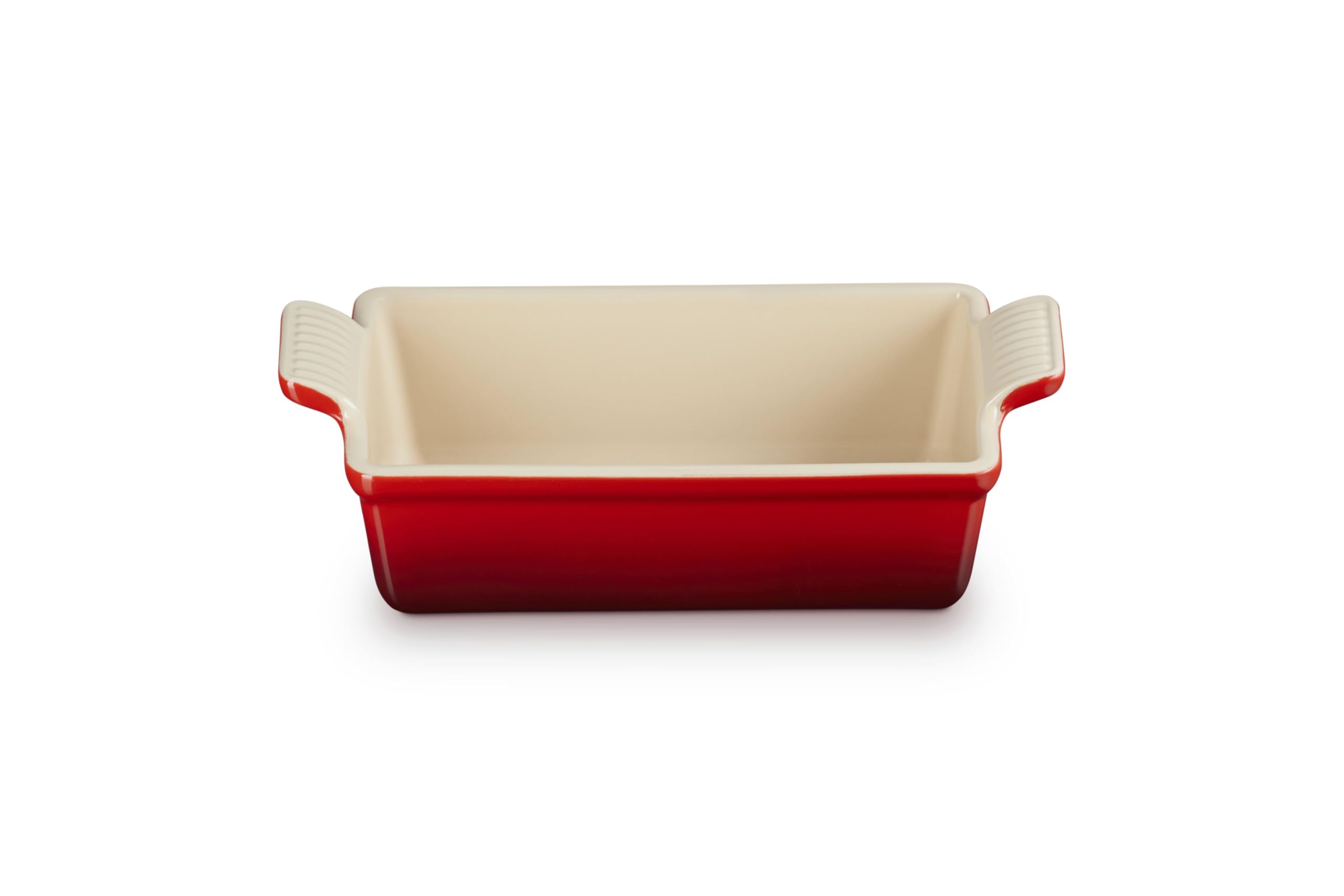
The Le Creuset Stoneware Heritage Loaf Pan is the definitive non-toxic choice for the baker who refuses to compromise on material integrity. This is pure stoneware fired at extremely high temperatures — there is no metal core, no PTFE coating, and no reactive glaze. The surface is naturally non-porous and non-reactive, meaning it will never absorb flavors, odors, or leach any chemicals into your bread. It handles direct transitions from freezer to oven without thermal shock, withstanding temperatures from -9°F all the way up to 500°F.
Baking performance is outstanding. The dense stoneware distributes heat evenly across the entire pan, eliminating hot spots that cause burnt edges or undercooked centers. Users report that their sandwich bread slices come out perfectly toaster-ready. The 9 x 5 x 3-inch interior is the ideal size for standard 500-gram loaves of sourdough or traditional yeast bread. The smooth interior enamel releases food easily, especially when the pan is greased or lined with parchment paper.
Cleaning is remarkably simple. The glaze resists staining from tomato-based meatloaf or deeply caramelized crusts. It is dishwasher-safe, though hand washing with warm soapy water is even gentler on the surface. Le Creuset backs this piece with a limited lifetime warranty, reflecting the brand’s confidence in its durability over decades of use. The Cerise color is a bright, cheerful addition to any kitchen countertop.
Why it’s great
- Pure, uncoated stoneware with zero PTFE or PFOA
- Exceptional thermal resistance from -9°F to 500°F
- Non-porous glaze resists staining and flavor absorption
- Dishwasher-safe and backed by a limited lifetime warranty
Good to know
- Premium price point compared to metal or silicone pans
- Stoneware can chip or crack if dropped on hard surfaces
- Not designed for stovetop use; oven and microwave only
2. Northriver Casting Enameled Cast Iron Loaf Pan with Lid
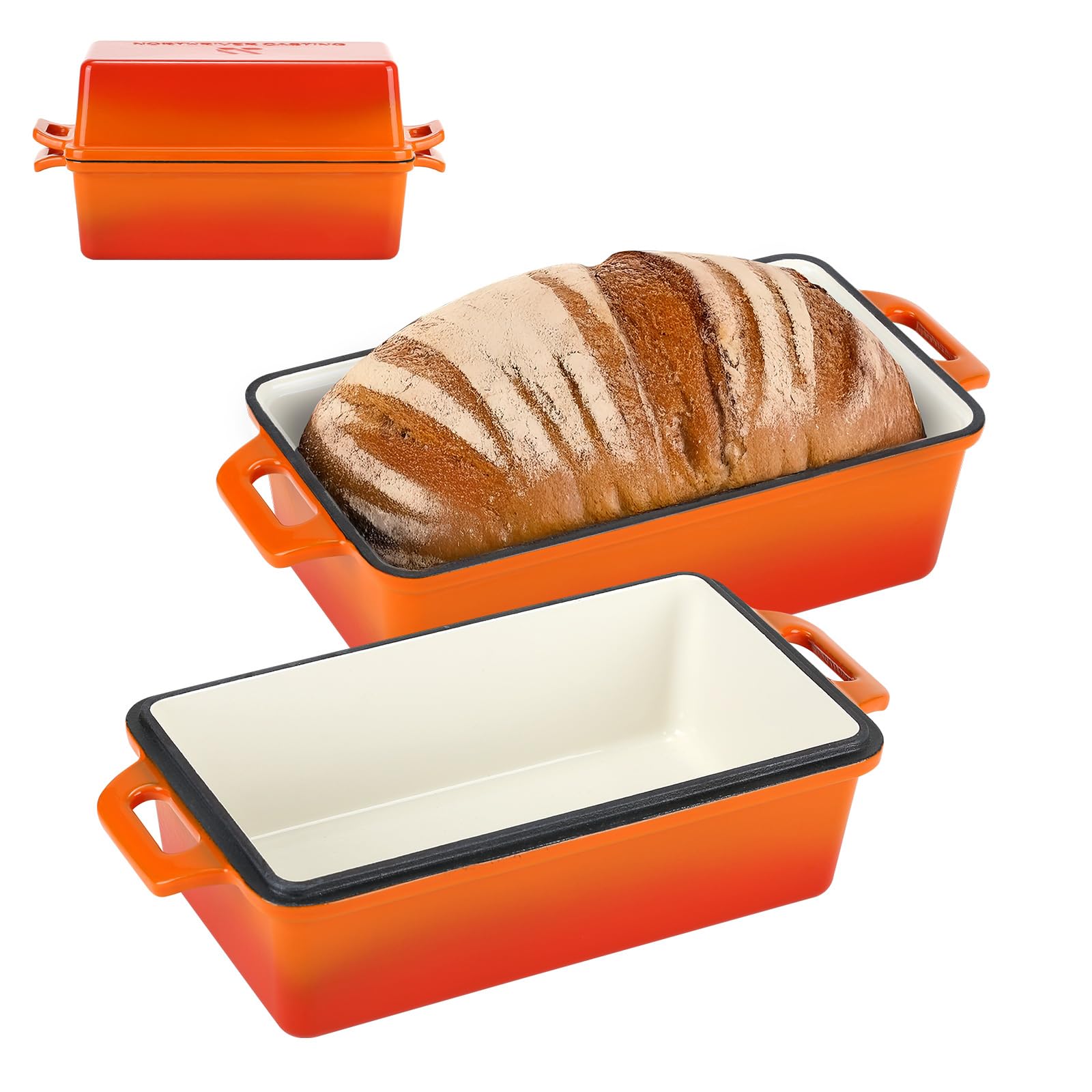
The Northriver Casting Loaf Pan redefines what a bread pan can do by including a lid that transforms it into a miniature Dutch oven. This is critical for artisan bread bakers because the lid traps steam during the first phase of baking, creating the deep, caramelized crust that is the hallmark of professional sourdough. The pan is constructed from heavy-duty enameled cast iron — the glass-like enamel coating is fused to the iron at extreme temperatures, creating a completely non-reactive, non-toxic cooking surface that will never rust or leach.
Heat retention is extraordinary. The thick cast iron walls distribute heat evenly, eliminating cold spots that lead to dense, gummy loaves. Users report that gluten-free bread — a notoriously difficult category — comes out tall, airy, and perfectly brown with a crisp crust. The 9 x 5-inch standard size produces loaves that fit most toasters. The lid and base can also be used separately as two individual loaf pans, doubling your baking capacity for batch baking sessions.
The enamel coating makes cleanup far simpler than traditional raw cast iron. You do not need to season the pan periodically. A quick hand wash with warm soapy water is all that is required. The Flame color is vibrant and attractive. The main operational note is that the enamel is not naturally non-stick — users recommend a thin layer of oil or a parchment paper liner to prevent sticking, especially with high-hydration doughs that tend to adhere to smooth surfaces.
Why it’s great
- Included lid traps steam for professional-grade crust
- Fully enameled non-reactive cooking surface
- Dual use as lidded baker or two separate pans
- Oven safe to 500°F with excellent heat distribution
Good to know
- Heavy — approximately 12 pounds for the 2-piece set
- Enameled surface requires oil or parchment to prevent sticking
- Not dishwasher safe; hand washing is required
3. EDGING CASTING Enameled Cast Iron Dutch Oven
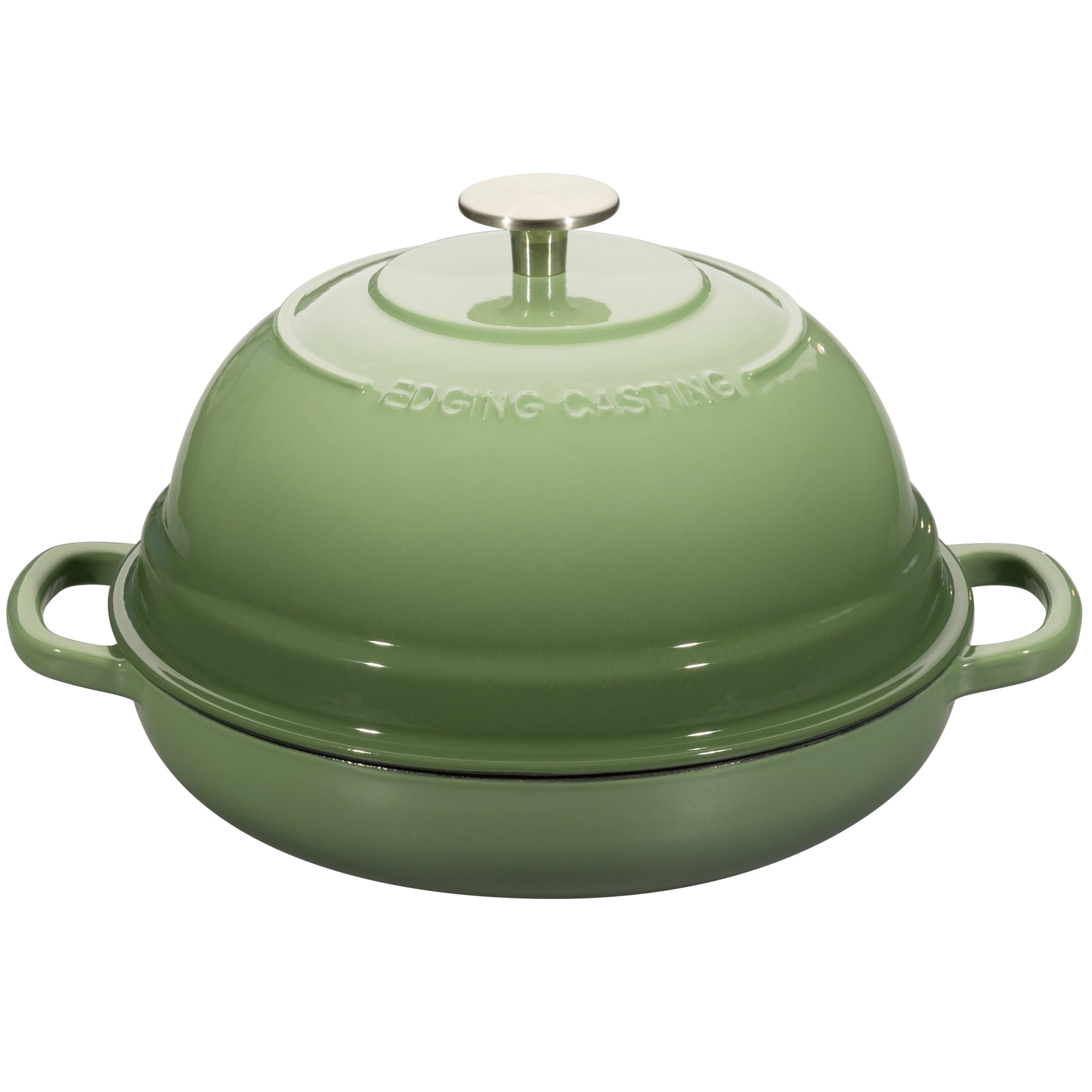
The EDGING CASTING Dutch Oven is a round bread baker designed for bakers who prefer boules and round artisan loaves rather than sandwich-style bread. The 6-quart capacity is generous enough for large sourdough boules, but also practical for roasting whole chickens, slow-cooking stews, and braising meats. The enameled coating is non-reactive and free from any PTFE or PFOA, making it a safe choice for high-heat baking up to 500°F. The domed lid provides ample headroom for loaves to rise without hitting the top.
Heat management is a strong point. The heavy cast iron construction holds heat exceptionally well, and the dome lid creates a self-circulating environment that traps moisture naturally. This eliminates the need for ice cubes or water sprays to generate steam. Users report consistently beautiful oven spring and that signature crackling crust that makes artisan bread so satisfying. The stainless steel knob is oven-safe and comfortable to grip, even with heavy oven mitts.
The Pistachio Green color is elegant and modern. The pot is compatible with all cooktops, including induction, because of its flat magnetic base. Cleaning is straightforward — the enameled interior resists food residue, and a simple hand wash with mild soap restores its glossy finish. The main caution is that this is a round pot, not a rectangular loaf pan, so it won’t produce rectangular sandwich loaves. It also requires more oven space than a standard loaf pan due to its 13.2-inch width.
Why it’s great
- Large 6-quart capacity for big boules and family meals
- Dome lid creates steam for crispy crust without additional effort
- Enameled non-reactive surface safe for all cooking methods
- Compatible with induction, gas, ceramic, and electric cooktops
Good to know
- Round shape does not produce standard rectangular sandwich loaves
- Heavy at over 13 pounds — may be difficult for some users to lift
- Not dishwasher safe; requires careful hand washing
4. VORRINGARD Enameled Cast Iron Sourdough Bread Oven

The VORRINGARD Bread Oven solves a problem that round Dutch ovens create: loaf shape. This 5-quart pot has an oblong design that closely matches the shape of a standard sandwich loaf, meaning your bread will naturally form a rectangular shape that fits perfectly into a toaster slot. The enameled cast iron construction provides the same non-reactive, chemically inert cooking surface found in premium brands, but at a more accessible price point. It is oven-safe to 500°F and compatible with all cooktop types, including induction.
The design is particularly thoughtful for bread bakers. The base has relatively low sides, making it easy to load scored dough without burning your knuckles on hot cast iron. The domed lid has a slightly wider footprint, allowing the loaf to rise upward rather than spreading sideways. Users report that this pot produces bread with an evenly browned crust and a light, airy crumb structure. The flat bottom fits standard hot pads and trivets without wobbling.
The enamel coating is thick and chip-resistant. Users with multiple Dutch ovens rank this design as one of the best for bread because of the ease of loading and unloading. The handles are large enough to accommodate thick oven mitts, and the lid can be used as a separate baking surface for smaller items. The one caveat is that at 14.2 inches wide, it occupies significant oven space, and the 5-quart capacity, while generous, is slightly smaller than traditional 6-quart round Dutch ovens for large batch cooking.
Why it’s great
- Oblong shape produces toaster-friendly sandwich loaves
- Low-profile base allows safe loading of dough without burns
- Thick, chip-resistant enamel with excellent heat retention
- Compatible with induction, gas, and electric cooktops
Good to know
- Large footprint requires significant oven space
- Heavy at nearly 13 pounds
- Hand washing only — prolonged soaking can damage enamel
5. Wisenvoy Porcelain Loaf Pan
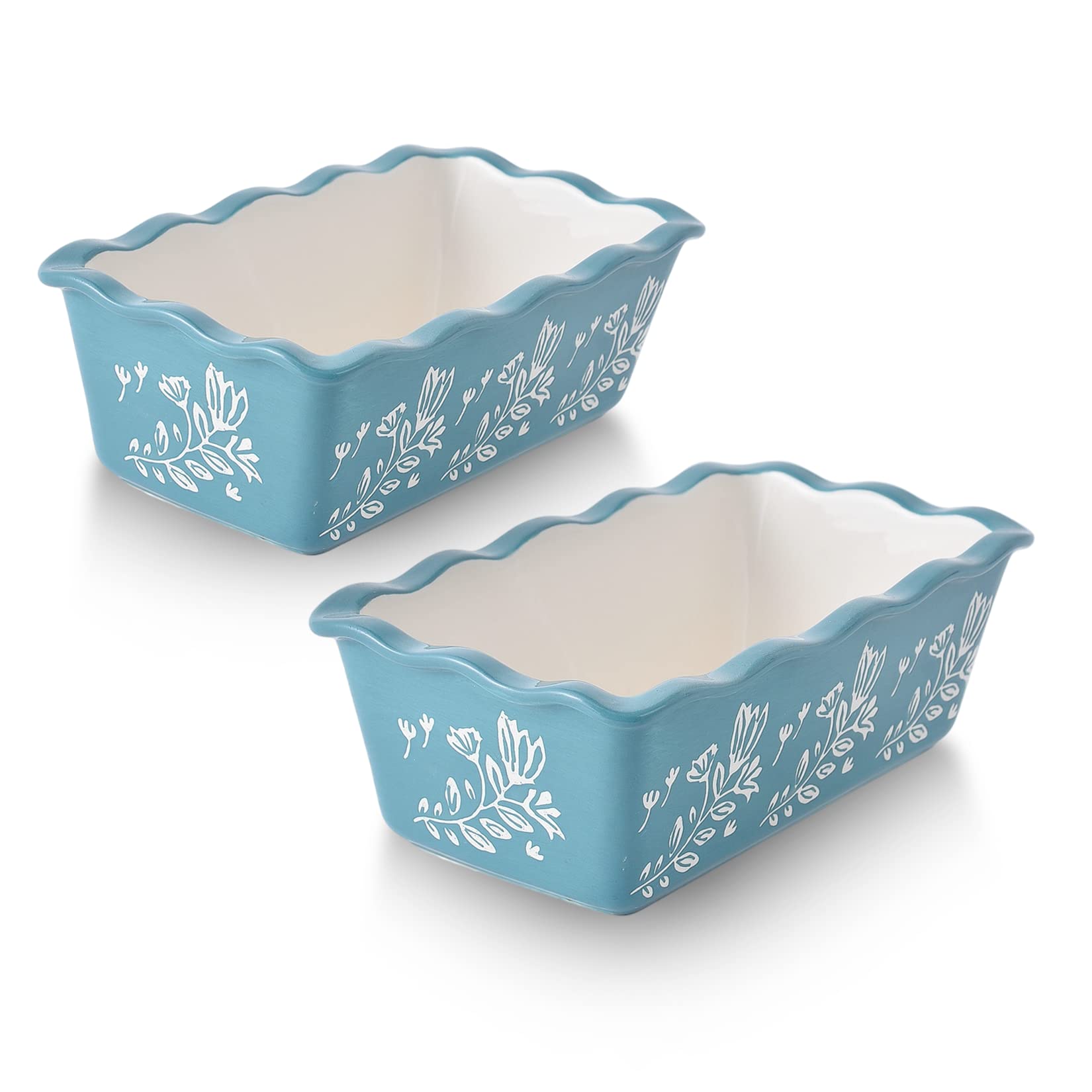
The Wisenvoy Porcelain Loaf Pan proves that you don’t need to spend a fortune to get a genuinely non-toxic baking surface. This pan is made from durable porcelain ceramic that is explicitly certified as lead-free and non-toxic. The ceramic body is fired at high temperatures, creating a dense, non-porous surface that resists staining, odors, chipping, and cracking better than many lower-fired ceramics. The hand-painted turquoise pattern gives it a decorative quality that can go straight from oven to table as a serving dish.
The dimensions are slightly larger than standard metal loaf pans at 9.8 x 5.5 x 3.2 inches, giving dough just a bit more room to expand during proofing and baking. The ceramic material heats up gradually but retains heat well, providing even browning across the entire loaf. Users report excellent results with quick breads like banana bread and pound cake, where the even heat distribution prevents the dreaded raw-center-burnt-edge problem. The pan is also rated for microwave use up to 400°F, making it versatile for reheating or cooking.
Cleanup is genuinely effortless. The smooth porcelain surface releases baked goods cleanly, especially when the pan is greased or lined. It is dishwasher-safe, freezer-safe, and oven-safe up to 400°F. The main limitation is the temperature ceiling — 400°F is sufficient for most quick breads and cakes, but it falls short for artisan sourdough that requires 450°F or higher. Also, the hand-painted pattern means each pan is unique, which is charming but may not match all kitchen decors.
Why it’s great
- Explicitly certified lead-free and non-toxic ceramic body
- Decorative hand-painted design suitable for serving table
- Dishwasher, freezer, and microwave safe for maximum convenience
- Resists chipping, cracking, and staining over extended use
Good to know
- Maximum oven temperature is 400°F — not suitable for high-heat artisan bread
- Heavier than standard aluminum or silicone pans
- Hand-painted design may vary from unit to unit
6. Boxiki Kitchen Silicone Bread Loaf Pan
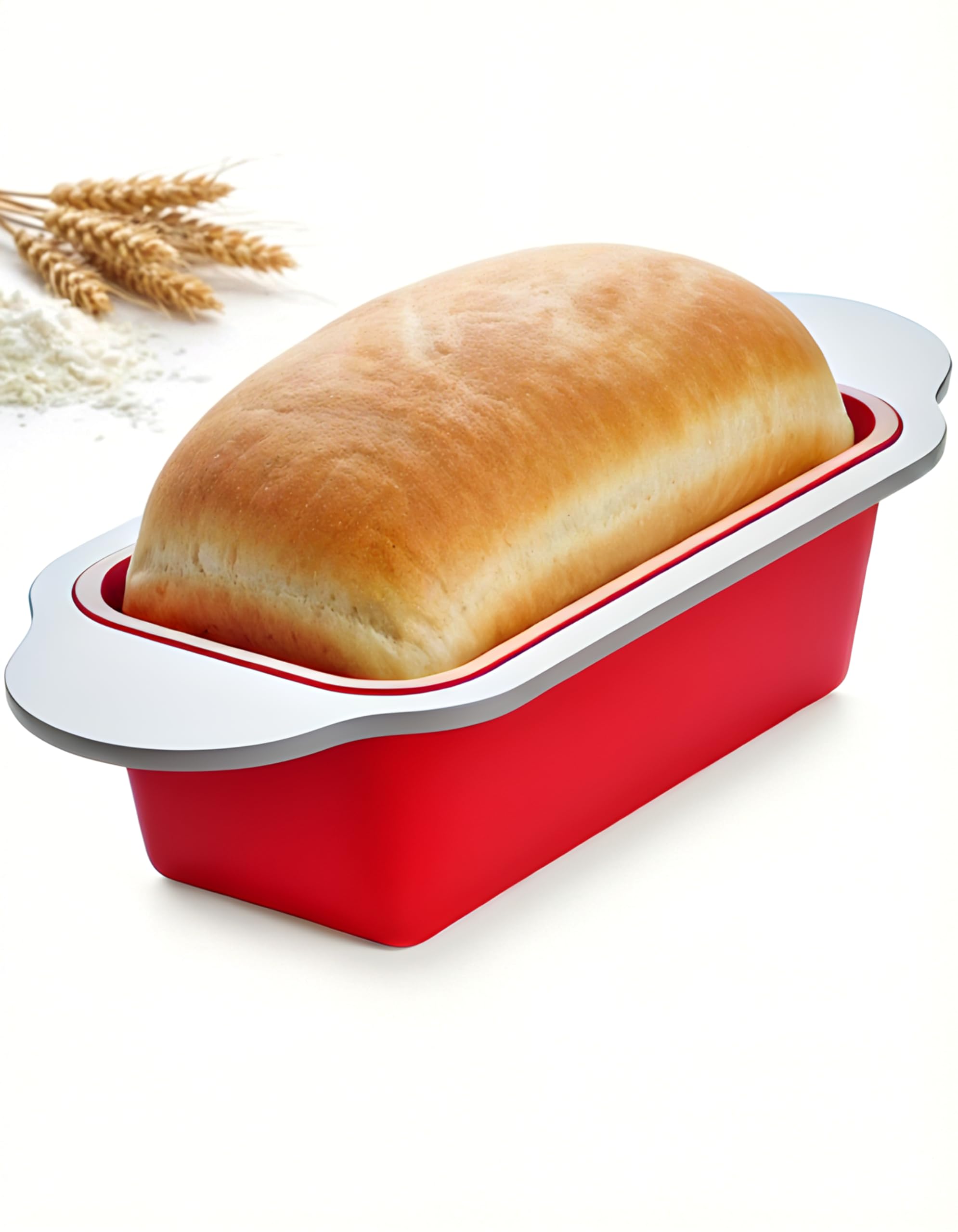
The Boxiki Kitchen Silicone Bread Loaf Pan is the safe alternative for bakers who prioritize effortless release and quick cleanup. This pan is made from food-grade silicone that is certified BPA-free and PFOA-free, with no chemical coatings to degrade at high temperatures. The critical design upgrade is the heavy-duty steel wire frame embedded in the silicone walls. This reinforcement prevents the pan from collapsing when filled with heavy, wet dough — the most common failure of cheap silicone bakeware. The 9 x 5-inch size matches standard recipes.
The flexible silicone surface is naturally non-stick without any added coating chemistry. Users report that meatloaf and banana bread slide out cleanly without greasing the pan. The flexibility also means you can push the bottom of the pan to release stubborn corners. Even heating is decent for a silicone pan, though silicone is inherently less conductive than metal or cast iron. The steel frame helps distribute heat somewhat, but the pan works best with parchment paper for dense doughs and at moderate temperatures around 350°F.
Durability is impressive. Long-term users report that the pan does not deform or stain over years of regular use, and the silicone material does not absorb odors. The pans stack easily for storage. The main operational caution is that the steel frame leaves ridges on the bottom of the baked loaf — some users prefer to set the pan on a baking sheet for additional support and to prevent the wire marks from pressing into the bread. The silicone is dishwasher-safe for ultimate cleaning convenience.
Why it’s great
- Certified BPA and PFOA-free food-grade silicone
- Reinforced steel frame prevents collapse with heavy dough
- Naturally non-stick without chemical coatings
- Dishwasher-safe and stain-resistant over years of use
Good to know
- Silicone conducts heat less efficiently than metal or cast iron
- Steel frame may leave wire marks on the bottom of the loaf
- Needs a baking sheet underneath for even heat distribution
7. GRMImosa 2 in 1 Cast Iron Loaf Pan with Lid

The GRMImosa 2 in 1 Cast Iron Loaf Pan is the entry-level option for bakers who want the thermal properties of cast iron without the expense of enameled models. The pan is pre-seasoned with a layer of vegetable oil that creates a natural, non-toxic non-stick surface over time. Raw cast iron is chemically inert when properly seasoned — there are no synthetic coatings, PTFE, or PFOA involved. The 9 x 5-inch interior matches standard loaf recipes, and the lid provides a second baking surface or can be used to trap steam for crusty bread.
The heat performance is classic cast iron: excellent heat retention, even distribution, and no hot spots. Users report that beginner bakers can produce consistent, evenly baked loaves with a good crust structure. The pan is particularly well-suited for no-knead doughs with high hydration, as the cast iron holds the heat necessary to create oven spring. The lid also works well for cooking meatloaf and roasting vegetables, adding versatility beyond bread baking.
The main trade-off is maintenance. Raw cast iron requires careful drying after washing and periodic re-seasoning to maintain its non-stick properties. Users note that the pan is slightly smaller than traditional loaf pans, so recipes may need to be scaled down or split into two batches. The cooking surface is naturally non-stick once seasoned, but beginners will need to learn proper care techniques. The included cookbook PDF is a nice bonus for new bakers looking for recipe inspiration.
Why it’s great
- Pre-seasoned natural non-stick surface with no synthetic coatings
- Excellent heat retention for even baking and crispy crusts
- Versatile 2-in-1 design with lid doubles as baking stone
- Budget-friendly entry point into cast iron baking
Good to know
- Slightly smaller than standard 9×5 loaf pan — adjust recipe quantities
- Requires hand washing, thorough drying, and periodic seasoning
- Heavier than aluminum or silicone pans of similar size
FAQ
Is ceramic coating on metal pans truly non-toxic for bread baking?
Does enameled cast iron contain PFOA or PTFE in the coating?
Can I use parchment paper to prevent sticking in a non-toxic bread pan?
Why does my bread stick to a ceramic or enameled pan even though it claims to be non-stick?
Final Thoughts: The Verdict
For most users, the non toxic bread pan winner is the Le Creuset Stoneware Heritage Loaf Pan because it offers absolute chemical inertness, proven durability, and flawless baking performance in one beautifully crafted package. If you want the steam-trapping crust of artisan bakery bread, grab the Northriver Casting Enameled Cast Iron Loaf Pan. And for a budget-friendly entry into non-toxic baking, nothing beats the GRMImosa 2 in 1 Cast Iron Loaf Pan — just be ready to learn proper seasoning maintenance for that one.