The search for truly clean drinking water often ends under your kitchen sink, where a reverse osmosis system quietly transforms tap water into crystal-clear refreshment. But navigating the maze of stages, membrane types, and flow rates can feel like deciphering a chemistry lab manual—one wrong choice and you are stuck with a sluggish drip or a system that wastes half the water it processes.
I’m Mohammad Maruf — the founder and writer behind AirfryerBite. I’ve spent years analyzing water filtration hardware, from membrane pore sizes to NSF certification standards, to separate the systems that deliver on their promises from those that just take up cabinet space.
Whether you are battling hard-water scale, worrying about PFAS, or simply tired of hauling plastic jugs, this guide cuts through the marketing noise to spotlight the under sink reverse osmosis water filter options that actually earn a spot under your sink.
How To Choose The Best Under Sink Reverse Osmosis Water Filter
A reverse osmosis system is a long-term investment in your daily hydration. Getting it right the first time means understanding what each spec actually means for your tap water and your kitchen cabinet space. Focus on these three decisions first.
Stage Count vs. Filtration Depth
The number of stages—anywhere from three to eleven—directly reflects how many times your water gets processed before it reaches your glass. A 3-stage system handles basic reduction of chlorine and sediment, while 5-stage systems add a dedicated membrane and a post-polishing filter. Beyond six stages, you are usually paying for remineralization cartridges that add healthy minerals back after the RO membrane strips everything out, or for UV sterilization that targets microorganisms. More stages do not automatically mean better water if your source is already treated municipal supply; they matter most if you are on well water or concerned about specific contaminants like bacteria.
Flow Rate and Tank Design
Flow rate, measured in gallons per day (GPD), determines how fast your glass fills. A 50 GPD system trickles slowly and relies on a storage tank to provide usable pressure. Tankless systems, which start around 400 GPD, use an electric pump to push water through the membrane faster and eliminate the storage tank entirely—freeing up under-sink space but requiring a nearby power outlet. If you hate waiting, prioritize 400 GPD or higher. If you want zero electricity dependency and have room for a tank, a 50 to 100 GPD unit with a built-in tank works reliably.
NSF Certifications and Material Safety
Not all reverse osmosis systems are certified to actually remove what they claim. Look for NSF/ANSI Standard 58, which specifically covers RO systems and verifies contaminant reduction. NSF/ANSI 372 confirms the system has low lead content in its construction. For BPA-free plumbing and food-grade tubing, check that the product explicitly states BPA-free certification in its spec sheet. Certification is a concrete guarantee; a marketing line that says “reduces up to 99% of lead” without an NSF standard is just a claim.
Quick Comparison
On smaller screens, swipe sideways to see the full table.
| Model | Category | Best For | Key Spec | Amazon |
|---|---|---|---|---|
| Waterdrop D6 | Tankless | Smart monitoring & high flow | 600 GPD, Smart Faucet | Amazon |
| Express Water ROALKUV10D | Alkaline + UV | UV sterilization & mineral addition | 11-Stage, UV Bulb | Amazon |
| Home Master TMHP | High-Flow | Fast fill & dual remineralization | 4.5 Sec Fill, 1:1 Waste | Amazon |
| Waterdrop G3P800 | Premium Tankless | Maximum flow & NSF certification | 800 GPD, 3:1 Ratio | Amazon |
| Frizzlife PD400 | Tankless | Compact tankless & simple twist | 400 GPD, Quick Twist | Amazon |
| PureDrop PDR-100RO | Tankless | Easy DIY with built-in tank | 100 GPD, 3-Stage | Amazon |
| APEC Water ROES-50X | Traditional Tank | Reliable 5-stage with extra filters | 50 GPD, NSF Certified | Amazon |
| Countertop RO Pitcher | Portable | No installation needed, portable | 528 Gal, 3:1 Drain | Amazon |
| Geekpure 5-Stage | Budget Bundle | Incredible value with extra filters | 75 GPD, 7 Extra Filters | Amazon |
In‑Depth Reviews
1. Waterdrop D6 Reverse Osmosis Water Filter

The Waterdrop D6 delivers an impressive 600 GPD flow rate through a tankless, 6-stage composite filter that fits neatly under even cramped kitchen sinks. Its smart faucet displays real-time TDS levels and remaining filter life, so you never have to guess when a change is due—a practical convenience for daily use.
The 2:1 pure-to-drain ratio is notably efficient, meaning you waste only one cup of water for every two cups of purified water produced. The push-in filter replacement design takes about two seconds without moving the system, which lowers the long-term maintenance hurdle significantly.
Keep in mind that the D6 requires a power outlet for its internal pump, so it is not an option for off-grid setups. Also, the composite filter is brand-specific, meaning you are locked into Waterdrop’s replacement cartridges rather than universal standards.
Why it’s great
- 600 GPD flow fills a cup in about 8 seconds
- Smart faucet shows TDS and filter life in real time
- 2-second twist-in filter changes with no tools needed
Good to know
- Requires an electrical outlet under the sink
- Proprietary replacement filters are not universal
2. Express Water ROALKUV10D 11-Stage Alkaline RO System

This 11-stage system from Express Water combines an RO membrane, UV sterilization, and an alkaline remineralization filter into one under-sink unit. The UV bulb targets microorganisms like E. coli and coliform bacteria—making this a strong choice for well water users who want a biological safety net beyond standard contaminant reduction.
The alkaline stage adds calcium, potassium, and magnesium back into the water after demineralization, raising the pH for a smoother taste similar to bottled mineral water. The system also includes a built-in leak detection sensor that automatically shuts off the water supply when moisture is detected, adding a layer of flood protection.
At 31 pounds, this is a heavy setup, and the tank takes up additional cabinet space. The replacement UV bulb adds a recurring cost that simpler systems skip entirely.
Why it’s great
- UV sterilization eliminates bacteria and viruses
- Leak detection auto-shutoff prevents water damage
- Alkaline stage restores healthy minerals for taste
Good to know
- Heavier and bulkier than most under-sink systems
- UV bulb needs periodic replacement at extra cost
3. Home Master TMHP HydroPerfection Reverse Osmosis System
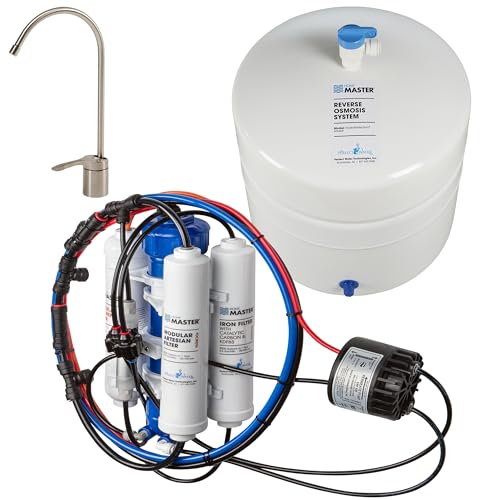
The Home Master TMHP is engineered for speed with a patented non-electric pump that delivers a 4.5-second fill rate per glass and an exceptional 1:1 pure-to-drain ratio—one of the most water-efficient designs on the market. Its 9-stage filtration includes a two-pass alkaline remineralization process that adds minerals twice for a noticeably crisp, balanced mouthfeel.
An integrated UV sterilizer, EPA registered under number 97952AZ1, provides verified microorganism reduction, and the iron prefilter helps prevent staining and metallic tastes common in wells with high iron content. The system operates without electricity, relying solely on water pressure, which makes it viable for kitchens without an available outlet.
The physical footprint is still large due to the tank and multiple filter housings, and the initial investment is higher than conventional tank-based systems. Replacement filter packs are also more expensive than standard 3-stage cartridges.
Why it’s great
- No electricity needed—works on water pressure alone
- Industry-leading 1:1 pure-to-drain waste ratio
- Dual-pass remineralization for superior taste
Good to know
- Large under-sink footprint with tank and filter housings
- Replacement filter packs are pricier than basic systems
4. Waterdrop G3P800 Reverse Osmosis System
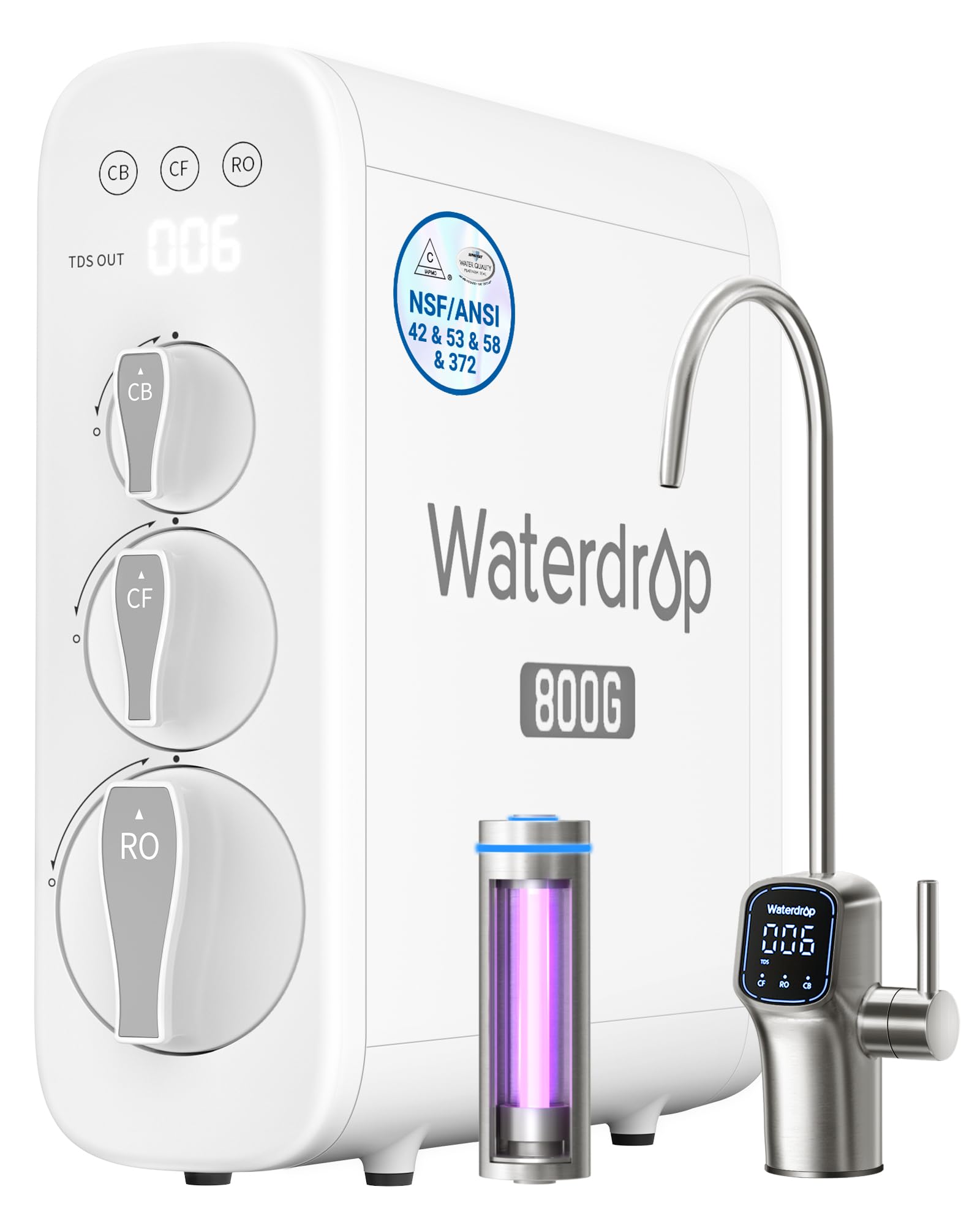
The Waterdrop G3P800 pushes the boundary of residential RO flow rates with 800 GPD—enough to fill a standard glass in roughly 6 seconds. It carries full NSF/ANSI certifications for Standards 42, 53, 58, and 372, which independently verify its ability to reduce chlorine, lead, PFAS, and total dissolved solids while maintaining lead-free construction.
The 3:1 pure-to-drain ratio is among the best in any tankless system, dramatically cutting wastewater compared to older 1:1 or 2:1 designs. The smart faucet features an LED display that reports real-time water quality and filter status, and the tankless design saves significant under-sink real estate.
The system’s higher price point places it firmly in the premium tier, and like all electric tankless RO units, it requires a dedicated power outlet. Replacement filters are also proprietary to Waterdrop’s G3 series.
Why it’s great
- NSF/ANSI 58 certified contaminant reduction
- 3:1 pure-to-drain ratio minimizes water waste
- Smart faucet with LED quality indicator
Good to know
- High premium cost for the fastest flow tier
- Requires electrical outlet and proprietary filters
5. Frizzlife PD400 Tankless RO System

The Frizzlife PD400 delivers a solid 400 GPD flow rate without a storage tank, making it a strong mid-range tankless option for households that want fast water without the bulk. Its quick-twist filter design allows for tool-free cartridge swaps in seconds, and the compact footprint fits under sinks where larger systems simply will not go.
The system achieves a 1.5:1 pure-to-drain ratio, which is reasonable for its class, and includes US-based technical support for installation questions. Frizzlife specifically highlights TDS reduction and integrates a sediment prefilter that protects the RO membrane from premature clogging.
The 400 GPD flow is noticeably slower than 600 or 800 GPD units, so large pitchers or cooking pots will still require a moment of patience. It also needs an electrical outlet, as is standard with tankless designs.
Why it’s great
- Quick-twist filter changes in seconds without tools
- Very compact tankless design for tight spaces
- US-based tech support for installation help
Good to know
- Slower flow than 600+ GPD competitors
- Requires electrical outlet under the sink
6. PureDrop PDR-100RO 3-Stage Tankless RO

The PureDrop PDR-100RO is a 3-stage tankless system that simplifies the RO experience to its essentials: a composite prefilter, a 100 GPD membrane, and a post-carbon polishing filter. The manufacturer claims it eliminates up to 99% of over 1,000 contaminants including PFAS, lead, chlorine, and fluoride, making it capable for most municipal water concerns.
The DIY installation aims to be straightforward with clear instructions and video guides, and the tankless design means you reclaim cabinet space that a traditional storage tank would occupy. Filter life indicators on the control panel take the guesswork out of maintenance scheduling.
The 100 GPD flow rate is modest compared to the tankless giants in the 400-800 GPD range, so you will wait longer for a full glass. The 3-stage setup also means no remineralization or UV stage is included, so the water will taste flat if you are accustomed to alkaline-enhanced water.
Why it’s great
- Simple 3-stage design is easy to understand and maintain
- Space-saving tankless form factor
- Filter life indicators help track replacements
Good to know
- 100 GPD flow is slower than tankless competitors
- No remineralization stage; water may taste flat
7. APEC Water ROES-50X 5-Stage RO System
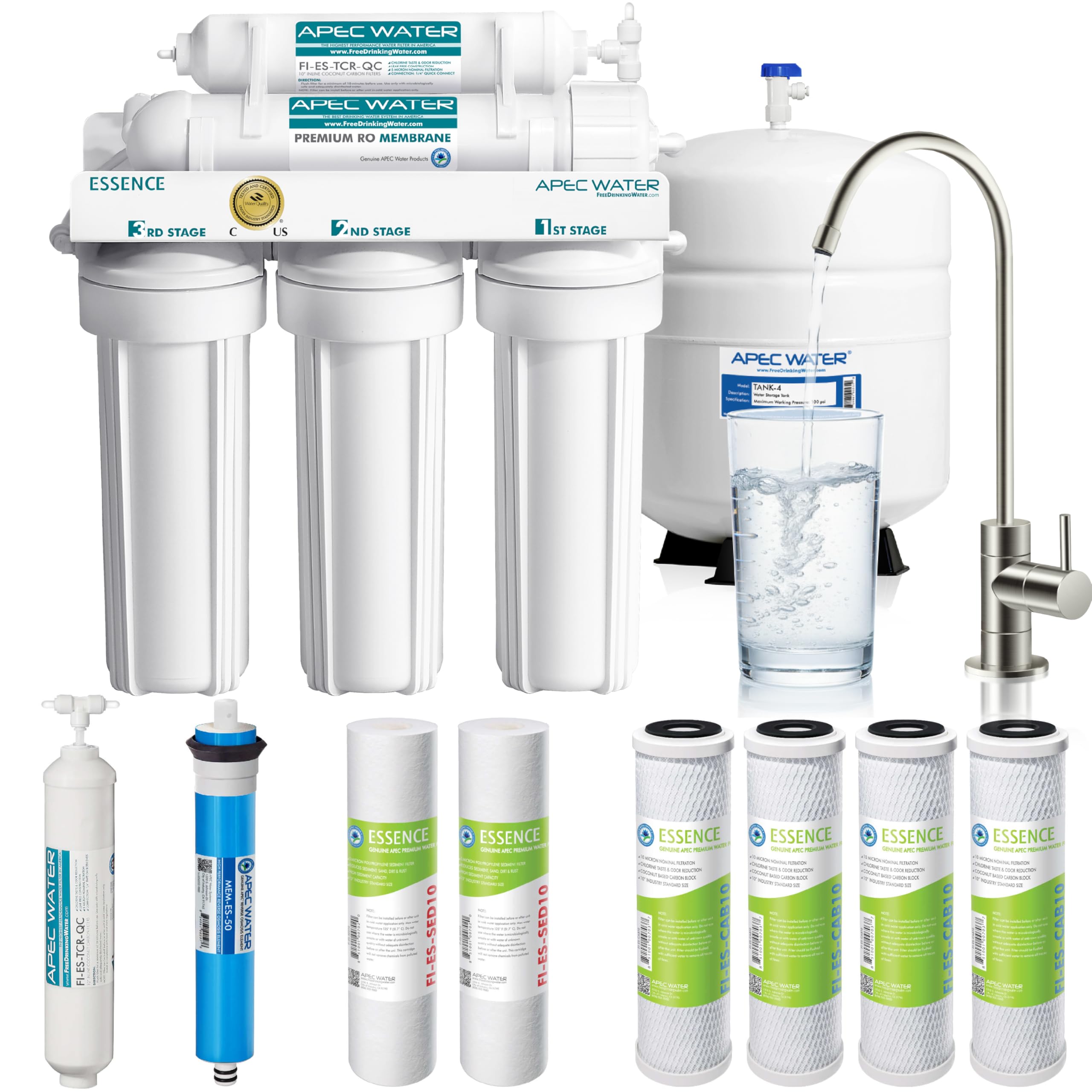
The APEC Water ROES-50X is a classic 5-stage under-sink system that relies on a storage tank and a 50 GPD membrane—a proven formula that has been a mainstay in the RO category for years. It carries NSF/ANSI certifications for Standards 372 and 58, giving you documented assurance that the system reduces lead, arsenic, fluoride, and other common contaminants while being built with low-lead materials.
The package includes an extra high-capacity pre-filter set for stages 1-3, which extends the service life before you need to order replacement cartridges. This is a non-electric system that works on standard household water pressure, so there is no need for a power outlet under the sink.
With only 50 GPD flow and a storage tank, the fill rate is slow compared to tankless units. The tank also occupies noticeable cabinet space, and the system lacks any remineralization or UV stages.
Why it’s great
- NSF 58 certified contaminant reduction
- No electricity required for operation
- Extra pre-filters included for longer service life
Good to know
- Slow 50 GPD flow with storage tank delay
- Tank takes up under-sink space
8. 7-Stage Countertop Reverse Osmosis Water Filter System
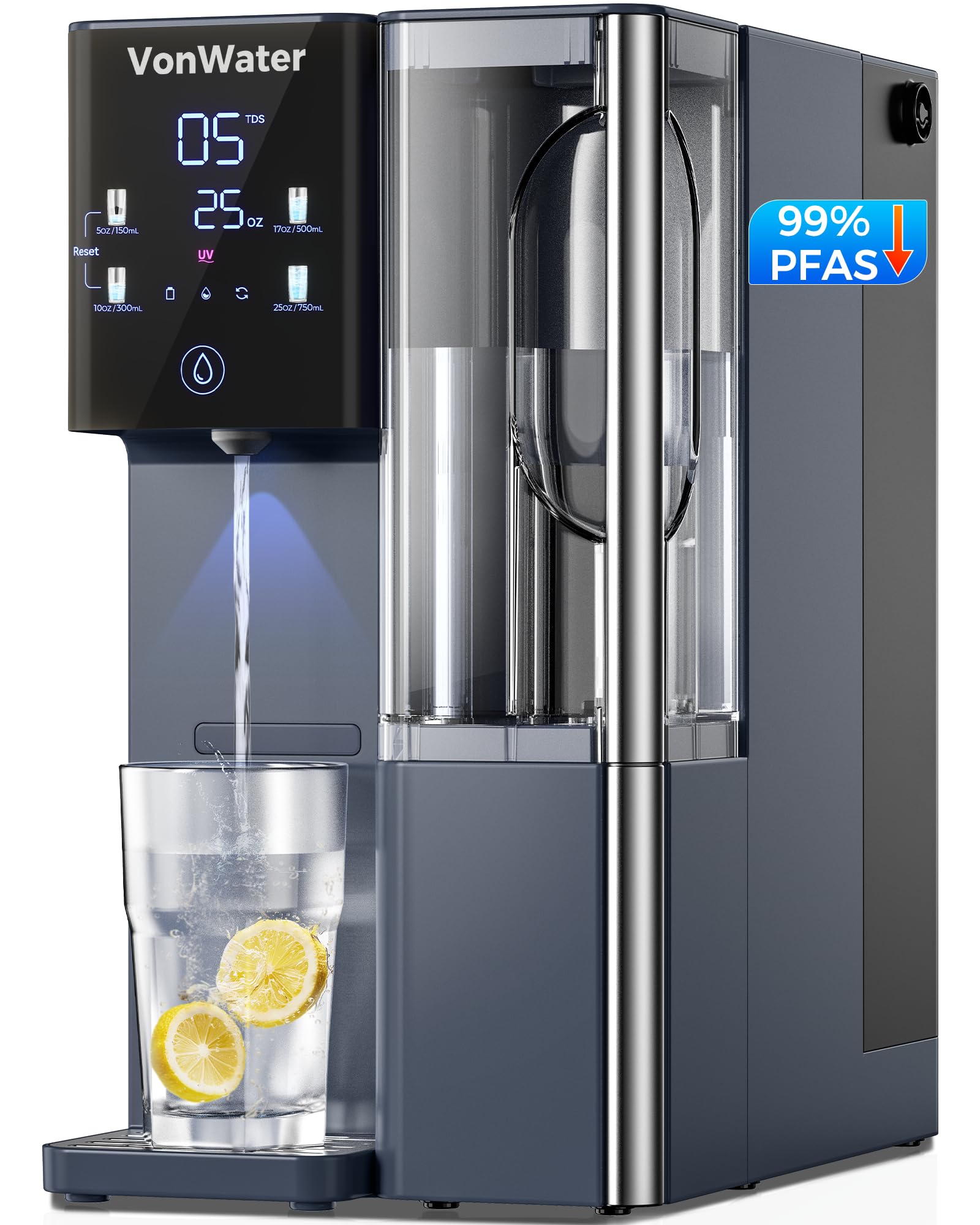
This 7-stage countertop system takes a different approach by packaging RO filtration into a portable pitcher rather than a permanent under-sink installation. It is NSF/ANSI certified against Standards 372, 53, 42, and 58, covering lead reduction, chlorine taste, and overall RO performance, and it claims a 3:1 pure-to-drain ratio that is surprisingly efficient for a non-plumbed unit.
The pitcher offers five volume settings and a total capacity of 528 gallons per filter set, which makes it a viable option for renters or those who cannot modify their kitchen plumbing. It targets TDS and PFAS reduction without the need for any drilling, tubing, or electrical work.
The countertop footprint takes up valuable kitchen workspace, and the per-glass filtration speed is inherently slower than plumbed systems since it relies on gravity or manual refilling. It is also a countertop unit, not a true under-sink system by definition.
Why it’s great
- No installation or plumbing modification needed
- NSF/ANSI 58 certified for RO performance
- Portable and great for renters or small kitchens
Good to know
- Countertop footprint occupies kitchen workspace
- Slower filtration speed than plumbed systems
9. Geekpure 5-Stage RO System with Extra Filters

The Geekpure 5-Stage system is an entry-level under-sink RO unit that delivers a 75 GPD flow rate through a traditional 5-stage filtration path. Its standout feature is the inclusion of seven extra replacement filters in the box, which dramatically lowers the cost per gallon over the first few years of ownership compared to systems that sell filter packs separately.
The standard stage setup includes sediment, carbon block, RO membrane, and post-carbon polishing, covering the basics of chlorine, sediment, and TDS reduction. This is a non-electric system that runs on standard water pressure, making it suitable for kitchens without an available outlet.
Build quality and fit-and-finish are more utilitarian than premium brands, and the included faucet is a basic chrome model rather than a brushed nickel or smart unit. The 75 GPD rating is modest, and the storage tank occupies cabinet space that a tankless system would save.
Why it’s great
- Exceptional value with 7 extra filters included
- No electrical outlet needed for operation
- Straightforward 5-stage filtration for basic needs
Good to know
- Build quality feels more basic than premium units
- Storage tank reduces available cabinet space
FAQ
Does a tankless RO system need a power outlet under the sink?
How often do I need to change the filters on an under-sink RO system?
What does NSF/ANSI Standard 58 certification actually mean?
Final Thoughts: The Verdict
For most users, the under sink reverse osmosis water filter winner is the Waterdrop D6 because it blends a fast 600 GPD tankless design, a smart faucet with real-time monitoring, and a compact footprint without sacrificing filtration quality. If you want UV sterilization and alkaline remineralization in one package, grab the Express Water ROALKUV10D. And for maximum water efficiency and the fastest fill rate at the premium end, nothing beats the Waterdrop G3P800.