Stepping into matcha for the first time can feel intimidating — bitter supermarket powders, confusing “ceremonial” labels, and vivid green lattes that taste more like sugar than tea. The real struggle is finding a powder that’s smooth enough to drink straight yet forgiving enough for your first whisking session.
I’m Mohammad Maruf — the founder and writer behind AirfryerBite. I’ve spent years analyzing food-grade specifications, from stone-grinding methods to cultivar blends, to separate genuine culinary quality from marketing hype.
After tasting and cross-referencing dozens of tins, I’ve narrowed the field down to five standout options that prioritize approachable flavor, grind fineness, and honest sourcing. This guide ranks the best matcha for beginners based on flavor profile, texture, and how forgiving the powder is when you are still dialing in your water temperature and whisk technique.
How To Choose The Best Matcha For Beginners
Picking your first tin is less about prestige and more about flavor forgiveness. A beginner-friendly matcha should be naturally sweet, finely milled to avoid clumps, and sourced from a single-origin farm or trusted producer so the taste is consistent every time you open the tin.
Grade: Ceremonial vs. Culinary
Ceremonial grade uses the youngest, tenderest leaves — usually from the first harvest — ground to a powder fine enough that no grit remains on your tongue. Culinary grade is made from slightly older leaves that can be more astringent, designed to be masked by milk or sugar in lattes and baking. For beginners who want to taste matcha straight (usucha), a true ceremonial grade like one from the FKRO or Naoki Matcha lines provides the smooth entry point you need.
Flavor Profile: Umami, Sweetness, and Astringency
A good beginner matcha leans toward nutty, buttery, or roasted notes rather than sharp vegetal bitterness. The Midori Spring Gold No. 2 uses a longer-roasted tencha leaf that softens the punchy green flavor into a toasty, approachable cup. The Republic of Tea’s stone-ground powder is described by reviewers as having “vegetal sweetness with no astringency” — exactly what a first-timer should look for.
Grind Quality and Texture
Matcha should feel like a silky talc between your fingers, not like a coarse sand. Traditional stone grinding produces the finest, most consistent particle size, which dissolves completely when whisked and creates a thicker mouthfeel. Jet-milled powders are sometimes finer in measurement but can heat the leaf during processing, altering the flavor. Look for phrases like “small-batch stone ground” in the product description — all five picks below meet this standard.
Quick Comparison
On smaller screens, swipe sideways to see the full table.
| Model | Category | Best For | Key Spec | Amazon |
|---|---|---|---|---|
| Midori Spring Gold No. 2 | Ceremonial | Nutty, roasted daily sipping | 5-cultivar blend, first harvest young leaves |
Amazon |
| Naoki Matcha Yame Blend | Ceremonial | Sweet, creamy daily matcha | Single origin, Yame, Fukuoka |
Amazon |
| FKRO Tea Master’s Organic | Ceremonial | Nutty umami with energy focus | Asanoka & Okumidori, 19mg L-theanine per gram |
Amazon |
| Rishi Tea Everyday Matcha | Daily | Affordable cafe-quality iced or hot | Stone-ground, USDA Organic |
Amazon |
| The Republic of Tea Organic | Daily | Smooth no-astringency hot tea | Stone ground, 1.5 oz yields 30 cups |
Amazon |
In‑Depth Reviews
1. Midori Spring Gold No. 2 – Conventional Ceremonial Grade Matcha
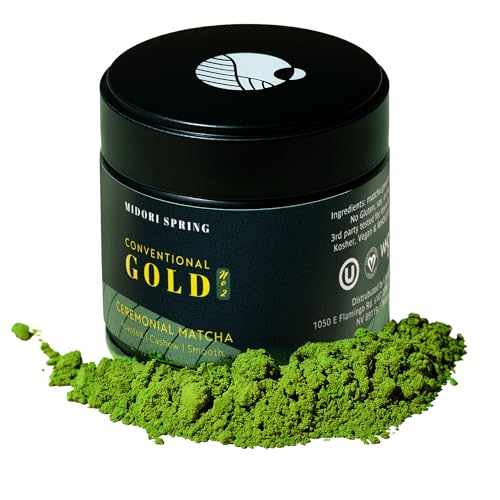
This is the pick if you want a ceremonial grade that tastes good even when your water is a little too hot or your whisk rhythm is sloppy. The longer-roasted tencha leaf creates a nutty, toasty profile that softens the grassy punch typical of traditional matcha, making it far more approachable for a first-time drinker. The 5-cultivar blend — combining Okumidori, Samidori, Kanayamidori, Yabukita, and Sayamakaori — delivers a layered complexity that keeps the cup from tasting one-dimensional.
It comes from carefully selected Kyoto prefecture farms, ground in small batches to preserve freshness and that vibrant green hue. Because the leaves are first harvest and shade-grown, you get a naturally occurring dose of L-theanine that provides steady energy without the jittery spike from coffee.
Third-party lab testing for metals and toxins gives peace of mind too. The tin is compact at 2.47 ounces total packaging weight, but the matcha inside is dense enough for many sessions — especially since you only need about 2 grams per cup.
Why it’s great
- Toasted, nutty flavor is naturally sweet and forgiving of imperfect preparation
- Five-cultivar mix provides rare depth for the category
- Lab-tested for purity, with vegan and Kosher certifications
Good to know
- Roasted profile may be unconventional for purists expecting a bright green taste
- Small tin size (1 count) requires repurchasing more frequently
2. Naoki Matcha Fragrant Yame Blend – Ceremonial Grade

This blend won a Silver award in a national Japanese tea competition, and the reason is immediately clear the first time you taste it. The Yame region in Fukuoka is famous for producing extremely sweet tencha leaves thanks to wide-open plains and high temperature swings between day and night. That natural sweetness is front and center here — fresh, buttery, creamy, with a finish so smooth you almost forget you are drinking something caffeinated.
The maker recommends enjoying this straight — just powder and water — to let the natural sweetness shine without distractions. Ideal for beginners who want to build a habit of drinking usucha (thin tea) rather than relying on milk or sweeteners. At 40 grams (1.4 ounces), you get roughly 20 servings, making it a mid-term supply for daily practice.
It is ceremonial grade from first-harvest leaves, so the grind is ultra-fine and dissolves easily even with a bamboo whisk. The flavor is described as “on the lighter side with less pronounced umami,” which works beautifully for palates still learning to identify those savory notes.
Why it’s great
- Competition-winning flavor profile with notable natural sweetness
- Buttery, creamy texture with zero astringency
- Single-origin from Yame guarantees consistent, high-quality leaves
Good to know
- Lighter umami may feel “thin” to those wanting a punchy vegetal cup
- Premium pricing per gram pushes it into a weekly splurge category
3. FKRO Tea Master’s Organic Ceremonial Grade Matcha
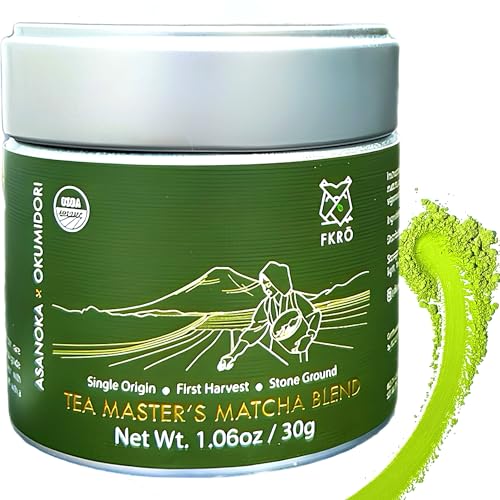
Sourced from the Nishi family farm in Kagoshima and blended by a 4th-generation tea master who also won the 58th National Tea Appraisal, this tin carries serious credentials. The cultivar blend uses the rare Asanoka and Okumidori varieties, which together produce a nutty, rounded flavor with hints of nori, sweet potato, and chestnut — a savory complexity that feels like a natural step up once you are comfortable with basic matcha.
Each gram delivers roughly 19mg of L-theanine and 80mg of caffeine, giving you sustained focus without a crash. That makes it an excellent morning replacement for coffee, especially if you are sensitive to acidic brews. It is USDA Organic and stone-ground in small batches, with monthly fresh shipments from Japan to prevent oxidation.
The 30-gram tin (1.06 oz) is compact but potent — one teaspoon whisks into a deeply satisfying cup. The flavor is forgiving enough for beginners yet complex enough to hold the attention of a more experienced drinker.
Why it’s great
- Rare Asanoka/Okumidori blend for a uniquely nutty, umami-rich cup
- High 19mg/g L-theanine content for smooth energy without jitters
- Fresh monthly shipments from a single-origin family farm
Good to know
- Smaller 30-gram tin means more frequent reordering
- Pronounced umami might be unfamiliar for absolute beginners
4. Rishi Tea Everyday Matcha – Organic Japanese Daily Matcha

Rishi’s Everyday Matcha occupies the slot between cheap culinary powders and premium ceremonial tins. It is a stone-ground Japanese green tea powder made from organic leaves, and it works equally well whisked into hot water for a straight cup or shaken over ice for a cold latte. The 1.05-ounce tin is compact enough for a desk drawer or kitchen counter, and the resealable lid keeps the powder from oxidizing after opening.
While not labeled ceremonial grade, the grind consistency here is still impressive — few clumps, good dissolution, and a color that leans toward a solid medium green rather than the muddy brown of budget bags. The flavor is approachable: mild vegetal notes without the fishy or bitter finish that plagues cheap matcha. This makes it a safe entry point for someone who is still deciding if they like the taste of pure matcha.
It is also versatile for beginners who want to experiment with matcha lattes, baking, or smoothies. The price per ounce is reasonable, so you will not feel guilty using a double scoop for an iced drink.
Why it’s great
- Reliable performance both hot and iced without bitterness
- Stone-ground texture dissolves well even with basic whisking
- Organic certification and resealable tin preserve freshness
Good to know
- Not ceremonial grade — lacks the ultra-fine silkiness of premium picks
- Flavor is mild; experienced drinkers may find it one-dimensional
5. The Republic of Tea Organic Full-Leaf Japanese Matcha
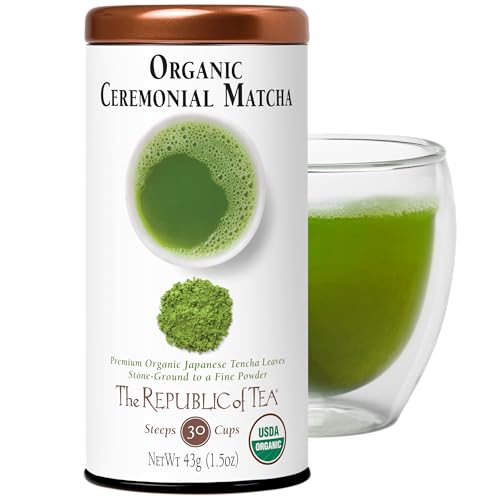
This is the largest tin in the lineup at 1.5 ounces, yielding roughly 30 cups per container. That makes it the most cost-effective option for someone who wants to practice daily without worrying about running out quickly. The leaves are shade-grown and stone-ground the traditional way, producing a fine powder that promises “smooth cup with no astringency and a vegetal sweetness” — exactly the promise a beginner needs to hear.
The Republic of Tea uses organic Japanese matcha powder from premium Tencha leaves. The caffeine content is listed as less than half of coffee per cup, so you get a gentle lift without the sharp edge. It works well as a simple hot tea; the company suggests whipping the powder into water heated to just before boiling.
Because it is not labeled ceremonial grade but rather a daily-use stone-ground powder, some purists might argue it lacks the complexity of a single-origin first-harvest tin. However, for a beginner focused on building the habit and dialing in their technique, this is a practical, forgiving, and budget-conscious starting point.
Why it’s great
- Large 1.5 oz tin provides up to 30 servings for extended practice
- Stone-ground texture ensures smooth dissolution and creamy mouthfeel
- No astringency even when whisked at near-boiling temperatures
Good to know
- Lacks the intense umami and vivid green of ceremonial-grade tins
- Blended from multiple sources rather than single-origin
FAQ
What does ceremonial grade mean for a beginner?
How many cups does a 30-gram tin of matcha make?
Final Thoughts: The Verdict
For most beginners, the best matcha for beginners winner is the Midori Spring Gold No. 2 because its roasted, nutty flavor profile is naturally sweet and incredibly forgiving of imperfect water temperature and whisking technique. If you want a competition-winning sweet cup with creamy buttery notes, grab the Naoki Matcha Yame Blend. And for a budget-conscious daily tin that yields up to 30 servings without astringency, nothing beats the Republic of Tea Organic Matcha.