That sharp, acrid bite that lingers on your tongue long after the mug is empty — that’s not just bad coffee, it’s a signal that the roast chemistry or bean origin is working against you. Finding a brew that delivers depth without that punishing aftertaste requires looking past the bag design and focusing on how the beans are grown, roasted, and processed.
I’m Mohammad Maruf — the founder and writer behind AirfryerBite. I’ve spent years analyzing the chemistry of coffee extraction, studying how altitude, roast level, and post-harvest handling directly influence bitterness and acidity, and cross-referencing third-party lab results to separate marketing claims from measurable quality.
Whether you’re managing acid reflux, avoiding the bitter edge, or simply chasing a cleaner morning cup, this guide breaks down the non-bitter coffee options that actually deliver on flavor without the burn.
How To Choose The Best Non-Bitter Coffee
Bitterness in coffee doesn’t appear by accident — it’s the result of over-roasting, low-quality beans, or high acid content that irritates your palate before you even swallow. The right buy starts with understanding how roast level, growing altitude, and certification standards each shape the final taste.
Roast Level and Acid Correlation
A medium roast is the sweet spot for avoiding bitterness while preserving the bean’s natural flavor compounds. Dark roasts char the sugars, creating that burned, harsh edge. Light roasts preserve acidity. Medium roasts strike the balance — enough heat to break down harsh acids, but not so much that the bean turns bitter.
Altitude and Bean Density
Beans grown at high altitudes (above 4,000 feet) develop a denser structure and more complex sugar profile. This density produces a smoother extraction during brewing and a naturally sweeter, less bitter cup. Look for “high altitude” or “strictly hard bean” labeling to confirm this trait.
Certifications That Matter for Taste
USDA Organic certification eliminates the chemical residues that can cause astringency. Mycotoxin-free testing (third-party lab verified) ensures no mold byproducts are present — mold is a hidden source of bitterness in many mass-market coffees. These two checks are non-negotiable for a truly clean, non-bitter cup.
Quick Comparison
On smaller screens, swipe sideways to see the full table.
| Model | Category | Best For | Key Spec | Amazon |
|---|---|---|---|---|
| Puroast Low Acid | Ground | Acid reflux relief | 70% less acid, 12 oz | Amazon |
| Peak Performance | Ground | Antioxidant-rich smooth cup | High altitude SHB, 12 oz | Amazon |
| Fabula Low Acid | Ground | Mold-free purity | Lab tested 350+ chems, 12 oz | Amazon |
| VitaCup Perfect | Whole Bean | Single origin dark roast | Fair Trade, 11 oz | Amazon |
| Lucy Jo’s Mellow Belly | Whole Bean | Gentle tummy blend | Small batch, 11 oz | Amazon |
In‑Depth Reviews
1. Puroast Low Acid Coffee Ground

Puroast’s medium roast House Blend achieves that rare thing — a bold, full-bodied flavor without the acidic bite that typically follows. The lab-confirmed 70% acid reduction makes this one of the most effective options for drinkers who experience heartburn or GERD after a standard cup.
The blend is built from all-natural beans with no additives or preservatives, and the roasting process uses 100% renewable fuels, which also stabilizes the flavor compounds. It’s a 12-ounce bag of pre-ground coffee, which means convenience is high, but you sacrifice the ability to tweak grind size for your brewing method.
With 7x more antioxidants than green tea, this bag delivers more than just a smooth sip — it’s also the most practical choice for anyone who wants one coffee to work for drip, French press, and cold brew without turning bitter.
Why it’s great
- 70% acid reduction verified by third-party testing
- Rich antioxidant content supports overall wellness
- Versatile across drip, French press, Keurig, and cold brew
Good to know
- Pre-ground means you can’t adjust grind coarseness
- Medium roast may be too mild for dark-roast loyalists
2. Peak Performance High Altitude Organic Coffee
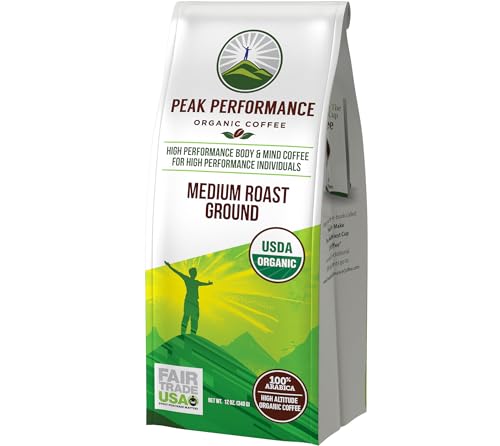
Peak Performance sources its beans from the Guatemalan highlands where the elevation forces the cherries to develop slowly, creating a denser bean with a naturally sweeter profile. That density translates directly into a brew that extracts evenly and lacks the hollow bitterness common in low-altitude commodity beans.
This is USDA Organic, Fair Trade certified, and single-origin — meaning every bean in the 12-ounce bag comes from the same farm region, eliminating the quality roulette of blended coffees. The medium roast preserves the bean’s intrinsic sugars, so you get a smooth cup with no chemical aftertaste.
The brand also includes a free guide on making the healthiest cup of coffee, and each purchase funds vitamins for a child through the Vitamin Angels partnership. It’s a coffee that tastes clean because it’s grown and processed cleanly from the ground up.
Why it’s great
- High-altitude SHB beans for dense, sweet, even extraction
- Single-origin eliminates batch-to-batch inconsistency
- Fair Trade and USDA Organic certified
Good to know
- 12-ounce bag is smaller than standard 16-ounce grocery coffees
- Medium roast is bright, not bold — dark roast fans may want more depth
3. Fabula Low Acid Coffee, USDA Organic Ground

Fabula goes further than most by submitting every batch to independent lab testing for over 350 chemicals, pesticides, and mycotoxins. For drinkers who suspect that mold or storage contaminants are causing bitterness, this single-origin Peruvian coffee offers the clearest verification of purity on the market.
The beans are grown at elevations up to 7,000 feet in Peru, which slows ripening and concentrates the sugar content. The medium roast produces flavor notes of caramelized sugars, nuttiness, and rich chocolate without any of the sharp, dry finish that signals acid overload.
The 12-ounce bag is roasted ongoing to ensure peak freshness upon arrival. The roast date matters more for ground coffee than whole bean since grounds degrade faster, and Fabula’s rotation schedule keeps the product close to its ideal flavor window.
Why it’s great
- Third-party lab tested for 350+ contaminants — mold-free verified
- High-altitude Peruvian origin for dense, sweet beans
- Fresh roasted on an ongoing schedule for peak flavor
Good to know
- Premium price point reflects extensive lab testing overhead
- Single-origin profile may differ from blended coffee drinkers’ expectations
4. VitaCup Perfect Low Acid Coffee Beans

VitaCup’s dark roast whole beans come from a single origin in Guatemala and are grown at high altitude to maximize bean density. Despite being a dark roast — typically associated with bitterness — the low-acid processing and careful roasting preserve a smooth, chocolaty profile without the charred edge.
The 11-ounce bag is USDA Organic and Fair Trade certified, and the beans are third-party tested to confirm they are free of mycotoxins. Whole bean format gives you control over grind size, which is critical for dialing in extraction and avoiding the bitter over-extraction that fine pre-ground coffee can produce.
This coffee works across drip brewers, French press, cold brew, and reusable K-cups. The dark roast delivers a robust flavor that still stays gentle on the stomach — a combination that’s genuinely hard to find in mass-market dark roasts.
Why it’s great
- Dark roast with low acid — rare combination for smooth taste
- Whole bean allows grind customization for optimal extraction
- Third-party lab tested for mycotoxins
Good to know
- 11-ounce bag is smaller than typical whole bean offerings
- Dark roast fans may find the flavor slightly more mellow than traditional dark blends
5. Lucy Jo’s Coffee, Organic Mellow Belly Low Acid Blend

Lucy Jo’s takes a different approach — instead of single-origin, this is a blend of Indonesian and Brazilian Arabica beans roasted in small batches by hand. The result is a smooth, earthy, slightly spicy cup with a sweetness that naturally offsets any bitter notes.
The 11-ounce whole bean bag is USDA Organic certified, and the low-acid formulation is designed specifically for people with sensitive stomachs. The hand-roasting process allows the roaster to adjust heat profiles mid-batch, reducing the risk of scorching the bean surface, which is a primary source of bitter flavor.
Being a family-run facility, the batch sizes are smaller and the quality control is tighter than what you’d get from a large-scale roaster. The trade-off is that availability can be inconsistent, so it’s worth stocking up when it’s in stock.
Why it’s great
- Hand-roasted small batches prevent scorching and bitterness
- Organic Arabica blend from two distinct growing regions
- Earthy, sweet profile that masks acid without additives
Good to know
- 11-ounce bag is on the smaller side
- Availability can fluctuate due to small-batch production cycle
FAQ
Does low-acid coffee taste weaker than regular coffee?
Why does single-origin coffee taste less bitter than blends?
Final Thoughts: The Verdict
For most users, the non-bitter coffee winner is the Puroast Low Acid Ground because it delivers 70% less acid along with antioxidant benefits and broad brew-method compatibility at a fair value. If you want single-origin purity with verified mycotoxin-free lab results, grab the Fabula Low Acid Coffee. And for dark-roast drinkers who refuse to compromise on boldness while still avoiding bitterness, nothing beats the VitaCup Perfect Low Acid Beans.