Most vitamin C supplements deliver the full labeled dose, but your body only uses a fraction — the rest is flushed out. The difference between an effective supplement and an expensive placebo comes down to a handful of form-specific details most labels don’t shout about. Understanding those details is the only way to make a decision that actually supports your immune system and collagen production.
I’m Mohammad Maruf — the founder and writer behind AirfryerBite. I spend my days breaking down supplement chemistry and bioavailability data so you can skip the marketing and grab the formula that actually works.
Whether you’re shopping for daily immune support, brighter skin, or a clean-label formula without unnecessary fillers, this guide cuts through the noise to help you find the best vitamin c for your specific needs.
How To Choose The Best Vitamin C
Vitamin C is one of the most researched supplements on the market, but not every bottle delivers equal results. The choices you make about form, dosage, co-factors, and certifications directly impact how much your body actually retains and uses.
Form Matters More Than Dosage
The two most common forms are ascorbic acid and mineral ascorbates. Ascorbic acid is the standard form — highly effective but can cause digestive upset in sensitive individuals at higher doses. Mineral ascorbates (like sodium ascorbate or calcium ascorbate) are buffered, meaning they are gentler on the stomach and often better absorbed. If you have a sensitive GI tract, a buffered form will serve you better than a plain ascorbic acid powder.
Bioflavonoids and Rose Hips Are Not Fillers
Many premium vitamin C supplements include bioflavonoids (plant compounds found in citrus) and rose hips (the fruit of the rose plant). These co-factors are not just filler ingredients — they help improve the absorption and antioxidant activity of the vitamin C itself. A supplement that lists both ascorbic acid and a bioflavonoid complex will generally offer more usable nutrition per milligram than a straight ascorbic acid tablet.
Third-Party Certifications Separate Hype from Quality
Any brand can print “non-GMO” or “gluten-free” on a label. A supplement that carries third-party verification from organizations like NSF International, USP, or ConsumerLab has been independently tested for purity, potency, and contaminants. If you are paying for a premium formula, make sure a third party has actually looked at what is inside the bottle.
Quick Comparison
On smaller screens, swipe sideways to see the full table.
| Model | Category | Best For | Key Spec | Amazon |
|---|---|---|---|---|
| Carlyle Vitamin C 1000mg | Mid-Range | Daily immune support with co-factors | 1,000 mg ascorbic acid with rose hips & bioflavonoids | Amazon |
| Cetaphil Vitamin C Serum | Premium | Brightening sensitive skin | Vitamin C + niacinamide, fragrance-free | Amazon |
| Horbäach Vitamin C 1000mg | Mid-Range | High-strength capsules with bioflavonoids | 1,000 mg with bioflavonoids & rose hips | Amazon |
| THORNE Vitamin C 1,000 mg | Premium | Collagen support & immune function | 1,000 mg ascorbic acid, third-party certified | Amazon |
| TruSkin Vitamin C Serum | Premium | Anti-aging & dark spot correction | Sodium ascorbyl phosphate with hyaluronic acid | Amazon |
In‑Depth Reviews
1. Carlyle Vitamin C 1000mg

The Carlyle formula delivers 1,000 mg of ascorbic acid per coated caplet, paired with rose hips and citrus bioflavonoids — a combination that improves absorption compared to straight ascorbic acid. The caplets are coated to reduce the metallic aftertaste common with uncoated tablets, making them easier to swallow on a daily basis. This is a solid mid-range option that hits the dosage sweet spot for most adults without breaking the bank.
What sets this apart from cheaper alternatives is the explicit vegetarian formulation and the naturally free label — no gluten, wheat, yeast, milk, lactose, soy, artificial color, or flavor. Carlyle also manufactures their own supplements in-house, which gives them tighter control over quality compared to white-label brands that outsource production. The 250-caplet count provides roughly eight months of daily use at the standard one-per-day serving.
On the downside, ascorbic acid can still cause mild stomach discomfort in very sensitive individuals, especially if taken on an empty stomach. The bioflavonoid content is present but not quantified on the label, so you are trusting the blend rather than a measured amount. For most users, however, this is the most balanced combination of potency, purity, and value on the list.
Why it’s great
- Includes rose hips and bioflavonoids for enhanced absorption
- Coated caplets reduce aftertaste and are easy to swallow
- Vegetarian formula with clean, allergen-free label
Good to know
- Bioflavonoid content is not quantified on the label
- Ascorbic acid form may cause GI upset in sensitive users
2. Cetaphil Vitamin C Serum

Cetaphil brings its dermatologist-tested, sensitive-skin ethos to vitamin C with a serum that pairs ascorbic acid with niacinamide — two ingredients that work synergistically to reduce the look of dark spots and hyperpigmentation while calming inflammation. The 1-ounce bottle is compact but highly concentrated, and the fragrance-free formulation eliminates the irritation that scented serums often cause on reactive skin.
This is not an oral supplement — it is a topical serum designed for daily facial application. The vitamin C concentration is not disclosed as a percentage on the label, which is a minor transparency gap compared to competing serums that advertise 10% or 20% concentrations. However, the inclusion of niacinamide at a clinically relevant level supports barrier repair and helps fade discoloration more effectively than vitamin C alone.
The main trade-off is the low total volume relative to the price point. One ounce at this price tier places it firmly in the premium skincare category. For users who already trust Cetaphil for their cleansers and moisturizers, the brand consistency and compatibility make this an easy addition to the routine. If you want a high-potency brightening serum that won’t trigger breakouts or stinging, this is a sound choice.
Why it’s great
- Niacinamide + vitamin C for dual-action brightening
- Fragrance-free and dermatologist-tested for sensitive skin
- Trusted brand with consistent formulation standards
Good to know
- Vitamin C percentage is not listed on the label
- Premium pricing for a 1-ounce bottle
3. Horbäach Vitamin C 1000mg

Horbäach delivers a strong mid-range formula that matches the same core composition as the Carlyle option: 1,000 mg of ascorbic acid per serving, plus bioflavonoids and rose hips. The main difference is the delivery format — this comes as capsules rather than coated caplets, which some users find easier to swallow. The 250-capsule bottle offers a long supply at a cost per serving that stays competitive.
The non-GMO and gluten-free labels are verified, and Horbäach has a reputation for manufacturing in facilities that follow Good Manufacturing Practices (GMP). The inclusion of bioflavonoids is a meaningful addition, as these compounds have been shown in clinical research to enhance the antioxidant capacity of vitamin C in the bloodstream. If you are comparing this directly to the Carlyle, the key differentiator is capsule format versus caplet format.
One limitation is that the capsule shell itself can add a minor gelatin or cellulose taste depending on your sensitivity. The label does not specify whether the capsule is vegetarian or gelatin-based, which matters if you follow a strict plant-based diet. For the price, this is a reliable, no-frills option that hits all the important markers — high potency, co-factors included, and clean manufacturing.
Why it’s great
- Capsule format is easy to swallow and digest
- Non-GMO verified and GMP manufactured
- Includes bioflavonoids and rose hips for better absorption
Good to know
- Capsule type (vegetarian vs. gelatin) is not specified
- Same ascorbic acid base may cause stomach sensitivity
4. THORNE Vitamin C 1,000 mg
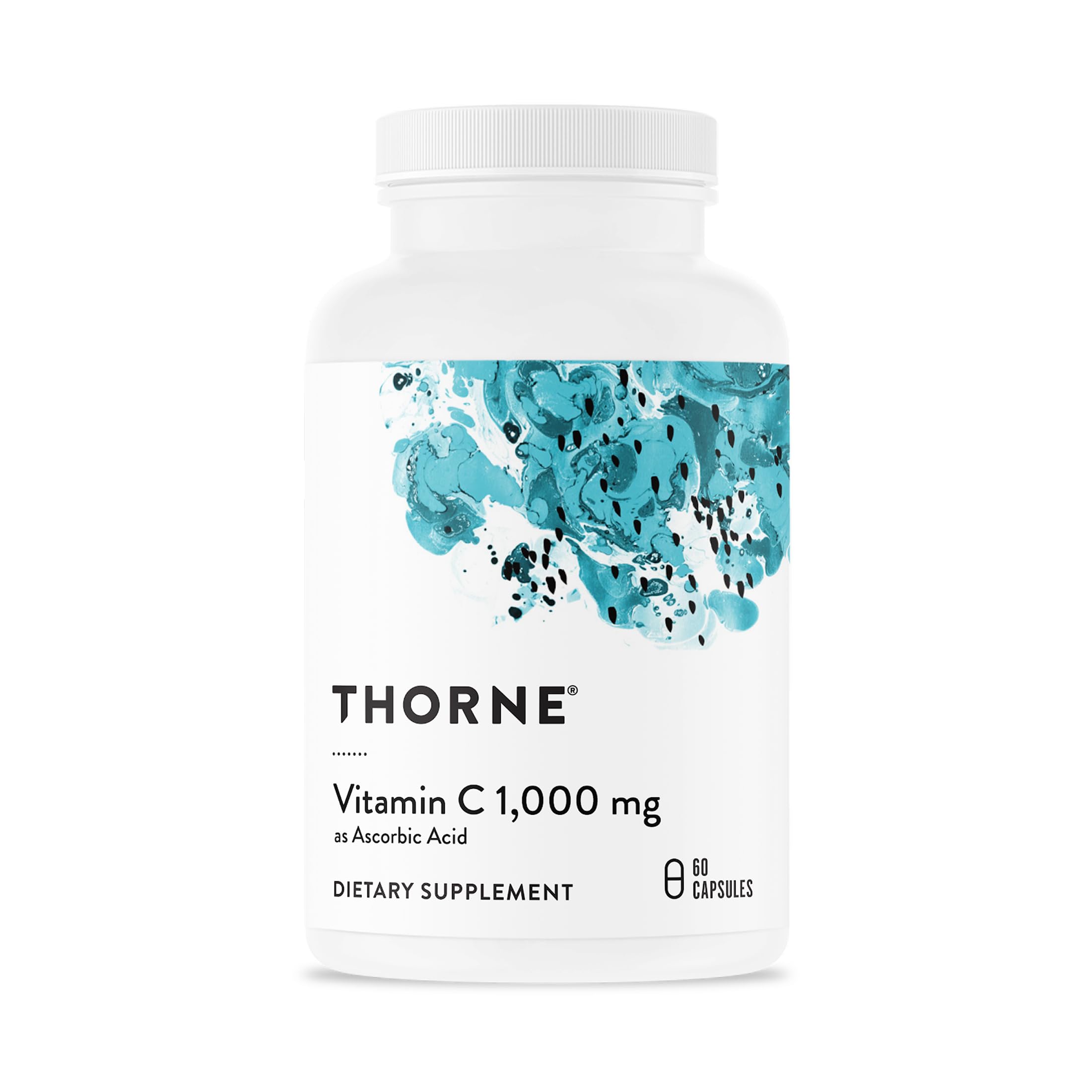
THORNE is widely regarded as one of the most rigorous supplement manufacturers in the industry, and their vitamin C 1,000 mg capsule reflects that reputation. The formula is straight ascorbic acid — no bioflavonoids, no rose hips — but the purity is verified through multiple third-party certifications, making this one of the most trustworthy options for users who prioritize ingredient integrity above all else.
The capsule count is 60, which works out to a two-month supply if you take one per day. The price per capsule is higher than the Carlyle or Horbäach options, but you are paying for the certification layer — THORNE supplements are tested for heavy metals, microbial contaminants, and potency by independent labs. For someone with autoimmune concerns, or for a practitioner recommending a supplement to patients, this transparency is worth the premium.
The absence of bioflavonoids is a notable departure from the formula philosophy of the mid-range picks. THORNE’s stance is that a pure, high-potency ascorbic acid is sufficient for most immune and collagen support needs, and the added plant compounds are unnecessary for the clinical outcomes they target. If you want a no-compromise purity play with verifiable testing behind every batch, this is your bottle.
Why it’s great
- Third-party certified for purity, potency, and contaminants
- Minimal ingredients — exactly what is on the label
- Trusted in clinical and practitioner settings
Good to know
- No bioflavonoids or co-factors included
- Higher cost per capsule than comparable options
5. TruSkin Vitamin C Serum
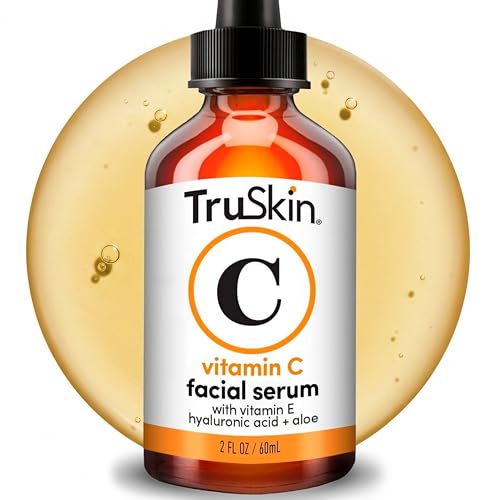
TruSkin uses sodium ascorbyl phosphate (SAP), a stable, water-soluble form of vitamin C that is less irritating than L-ascorbic acid while maintaining strong antioxidant activity. This is paired with hyaluronic acid for deep hydration, vitamin E for additional antioxidant support, and aloe vera plus jojoba oil for skin barrier enhancement. The 2-ounce bottle offers double the volume of many competing serums in the same price tier.
The formula is designed for daily use across all skin types, including oily, dry, and combination skin. The absence of fragrances, parabens, and dyes makes it suitable for sensitive skin as well. Clinical testing is cited on the label, and the serum has a large base of long-term users who report visible improvements in skin brightness, dark spot fading, and fine line reduction within four to six weeks of consistent use.
The main consideration with SAP-based formulas is that the brightening effects may appear more gradually compared to high-concentration L-ascorbic acid serums. If you are looking for fast-acting results, this is not the fastest option. For users who want a gentle, hydrating, long-term brightening routine without the stinging or redness that acidic serums can cause, this is a top-tier choice.
Why it’s great
- Gentler SAP form of vitamin C minimizes irritation
- 2-ounce bottle offers exceptional volume for the premium tier
- Hydrating formula with hyaluronic acid and aloe vera
Good to know
- Results appear more gradually than L-ascorbic acid serums
- Not an oral supplement — topical application only
FAQ
What is the difference between topical vitamin C serum and oral vitamin C supplements?
Why do some vitamin C supplements include bioflavonoids and rose hips?
Can I take 1,000 mg of vitamin C every day safely?
Final Thoughts: The Verdict
For most users, the best vitamin c is the Carlyle Vitamin C 1000mg because it combines a potent 1,000 mg dose with bioflavonoids and rose hips for enhanced absorption, all in a vegetarian-coated caplet at a fair price point. If you want third-party verified purity above all else, grab the THORNE Vitamin C 1,000 mg. And for topical brightening with minimal irritation, nothing beats the TruSkin Vitamin C Serum.