A proper bread proofing towel does more than cover a bowl — it manages moisture wicking, prevents a dry skin from forming on your dough, and supports the structural rise that separates an airy crumb from a dense brick. The wrong fabric, whether a synthetic microfiber or a loosely woven tea towel, will either trap too much humidity or let the dough surface crust over before it hits the oven.
I’m Mohammad Maruf — the founder and writer behind AirfryerBite. Over the years analyzing bakeware textiles and proofing cloths, I’ve studied how flax linen composition, weave density, and seam construction directly affect dough hydration retention and crust formation during the final proof.
This guide breaks down the fiber types, weave characteristics, and sizing that differentiate a genuine bakers couche from an ordinary kitchen towel. If you are serious about consistent, bakery-quality results at home, you need to understand what separates a true towels for bread proofing from a multipurpose cloth that will sabotage your bake.
How To Choose The Best Towels For Bread Proofing
Selecting a bread proofing towel comes down to fiber composition, weave density, and dimensions. A cloth that works for covering a banneton basket may be too small or too loosely woven for shaping baguettes on a couche. Understanding these three variables will keep your dough from sticking, drying out, or collapsing during its final rise.
Fiber: Flax Linen vs. Cotton vs. Synthetics
Flax linen is the benchmark material for proofing cloths because of its natural moisture-wicking ability. Linen fibers pull surface moisture away from the dough without absorbing it into the weave, which prevents the dough from sticking while maintaining a pliable, slightly tacky surface. Cotton, especially unbleached organic cotton, is a distant second — it works for covering bowls but lacks the moisture-repellent structure that makes linen ideal for couche-style shaping. Synthetic blends and microfiber fabrics trap humidity against the dough, promoting a sticky exterior that tears during transfer.
Weave Density and Fabric Weight
A proofing cloth’s weave — measured loosely by feel rather than thread count — determines how much air passes through the fabric. An open, loose weave lets too much air hit the dough, forming a dry crust before baking. A tight, heavy canvas-weight weave (often described as “heavy-duty” or “thickened”) creates a microclimate that retains just enough surface moisture without wetness. For baguette couches specifically, the fabric needs enough stiffness from a dense weave to hold pleats and support shaped dough logs during proofing.
Dimensions and Batch Fit
Standard proofing cloths range from 26 by 26 inches up to 35 by 26 inches. A smaller square works for covering a single banneton or bowl. An extra-large rectangle (35 by 26 inches) is necessary for a proper baguette couche setup, allowing you to create the pleated ridges that support multiple dough logs side by side. If you bake large batches or need to proof several loaves simultaneously, opt for the larger dimension and never settle for a multipurpose tea towel that will leave your dough unsupported.
Quick Comparison
On smaller screens, swipe sideways to see the full table.
| Model | Category | Best For | Key Spec | Amazon |
|---|---|---|---|---|
| Saint Germain Extra Large Couche | Premium Linen | Baguette shaping & large batches | 35″ x 26″ heavy-weight flax linen | Amazon |
| Shop Square Professional Couche | Heavy Canvas | Boules & artisan loaves | 35″ x 26″ with bonus storage bag | Amazon |
| Professional Bread Cloth Bakers Couche | Mid-Range Linen | Everyday proofing & value | 35″ x 26″ premium flax linen | Amazon |
| Heavy Duty Bakers Couche | Thickened Linen | Extra dough support | 36″ x 26″ natural flax thickened weave | Amazon |
| Bread Towels for Proofing Cover | Budget Cotton | Bowl covering & banneton liners | 27″ x 27″ organic cotton 5-pack | Amazon |
In‑Depth Reviews
1. Saint Germain Bakery Premium Professional Bakers Extra Large Couche

The Saint Germain couche is made from 100% natural flax linen sourced from France, which gives it a dense, canvas weight that professional bakers expect from a true couche. At 35 by 26 inches, it provides enough surface area to pleat and support multiple baguettes during their final proof without the dough sagging into adjacent folds. The heavy weave pulls surface moisture away from the dough just enough to prevent sticking while leaving a tacky exterior that scores cleanly.
Every aspect of this cloth is optimized for the final proof — from the raw linen fibers that gradually soften with use to the absence of chemical treatments or bleaches that could leach into high-hydration doughs. The fabric’s stiffness is a feature, not a flaw; it holds the pleated shapes firmly so baguettes develop their classic oval form and blistered crust.
For bakers who proof multiple loaves weekly and demand a true French boulangerie couche, this is the cloth that performs identically to what commercial bakeries receive from French mills. Skip the multipurpose towels — this one is purpose-built for the job.
Why it’s great
- Authentic French-sourced flax creates a stiff canvas weave that holds baguette pleats securely.
- Raw, unbleached fibers manage moisture wicking without leaving lint on high-hydration dough.
- Full 35×26 dimension accommodates multiple baguettes or large artisan boules in one proof.
Good to know
- Requires a stiff brush cleaning method — washing destroys the weave structure entirely.
- Initial stiffness may feel rough until the fibers relax after a few uses.
2. Shop Square Professional Bakers Couche

The Shop Square couche uses a heavy canvas-weight 100% natural flax linen construction designed to wick moisture while maintaining shape stability. At the same 35 by 26 inch footprint as the Saint Germain, this cloth is built for large batches of artisan loaves, offering enough rigidity to create the folds that support oblong dough shapes without collapsing. The moisture-wicking structure means your dough surface stays tacky but never wet, which is critical for good oven spring.
Seam protection is a thoughtful addition here — the edges are reinforced to prevent fraying after repeated pleating and unfolding. A bonus storage bag keeps the couche dust-free between bakes, which matters because this cloth should never be washed with detergent. The fabric weighs roughly 0.37 kilograms, giving it a substantial hand that feels noticeably heavier than standard kitchen linens.
This is a solid mid-range option that delivers professional-grade moisture management without the premium price tag of a French import. For home bakers moving from bowl covers to a proper couche setup, this is the first cloth to buy.
Why it’s great
- Seam-reinforced edges prevent fraying even with frequent folding and pleating.
- Heavy canvas-weight structure holds pleated ridges firmly for baguette and batard shaping.
- Includes a dedicated storage bag to protect the unwashed fabric from dust and pantry debris.
Good to know
- New fibers may shed light lint on the first few uses — shake out thoroughly before proofing.
- Canvas weight makes it stiff to fold initially; a few hand-crumples help break it in.
3. Professional Bread Cloth Bakers Couche
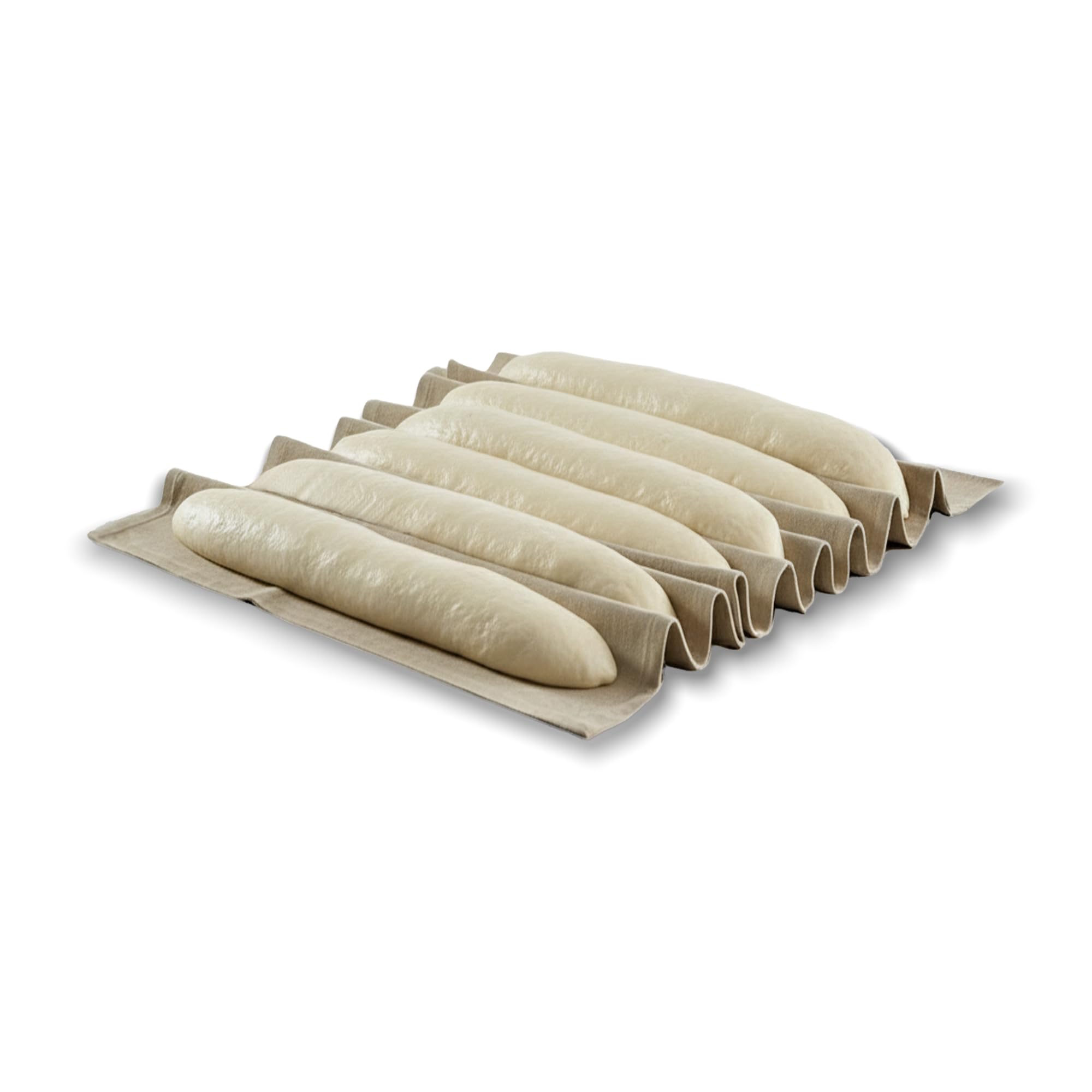
This mid-range couche from Professional Bread Cloth measures 35 by 26 inches and is woven from premium flax linen with a focus on balanced absorption. The fabric falls between a lightweight kitchen towel and a heavy canvas, making it versatile for both banneton basket lining and baguette couche folding. For home bakers who want a single cloth that handles multiple proofing tasks, this is the most adaptable entry point.
The weave is dense enough to prevent dough from forcing through the fabric during shaping, yet breathable enough to stop condensation from pooling under the cloth. Users report that the linen softens after two or three uses, which actually improves its grip on the dough surface — a slightly softer fabric clings better to high-hydration dough without tearing the skin during transfer.
At a mid-range price point, this cloth delivers consistent moisture wicking without the premium branding. If you bake bread once or twice a week and want a dedicated proofing cloth that won’t break the bank, this is the right fit.
Why it’s great
- Mid-weight flax weave offers a balanced blend of moisture wicking and dough support.
- Fabric softens after a few uses for better adhesion to high-hydration dough surfaces.
- Works equally well as a banneton liner and a baguette pleating couche.
Good to know
- Initial stiffness may make pleating difficult until the fabric has been broken in.
- No storage bag is included for protecting the unwashed linen between bakes.
4. Heavy Duty Bakers Couche (Thickened Linen)

This couche distinguishes itself with a 36 by 26 inch dimension — one inch longer than the standard 35 inch models — and a deliberately thickened weave that offers extra durability for heavy use. The 100% natural flax construction is ideal for bakers who proof daily and need a cloth that resists stretching out of shape after repeated folding. The added thickness also means more moisture buffering, which is beneficial in humid kitchens where condensation can form on the dough surface.
Because the weave is denser and thicker, this cloth handles high-hydration doughs above 80 percent hydration without the dough squeezing through or leaving residue on the fabric. The extra stiffness helps the pleats stay upright, which is critical when proofing multiple batards side by side. Bakers who work with wet doughs will notice less sticking during the transfer to a preheated baking stone.
The thickened construction does mean a slightly longer break-in period compared to standard linen couches. But for those who prioritize durability and batch volume over softness out of the package, this is a sensible choice.
Why it’s great
- Thickened flax weave handles high-hydration doughs (80%+) without dough seepage.
- Extra inch of length provides more pleat room for large baguette batches.
- Dense fibers resist stretching, maintaining pleat shape after repeated use.
Good to know
- Thicker weave requires more break-in time before the fabric drapes easily.
- Heavier weight may be overkill for bakers who only proof low-hydration doughs once a week.
5. Bread Towels for Proofing Cover (Organic Cotton 5-Pack)
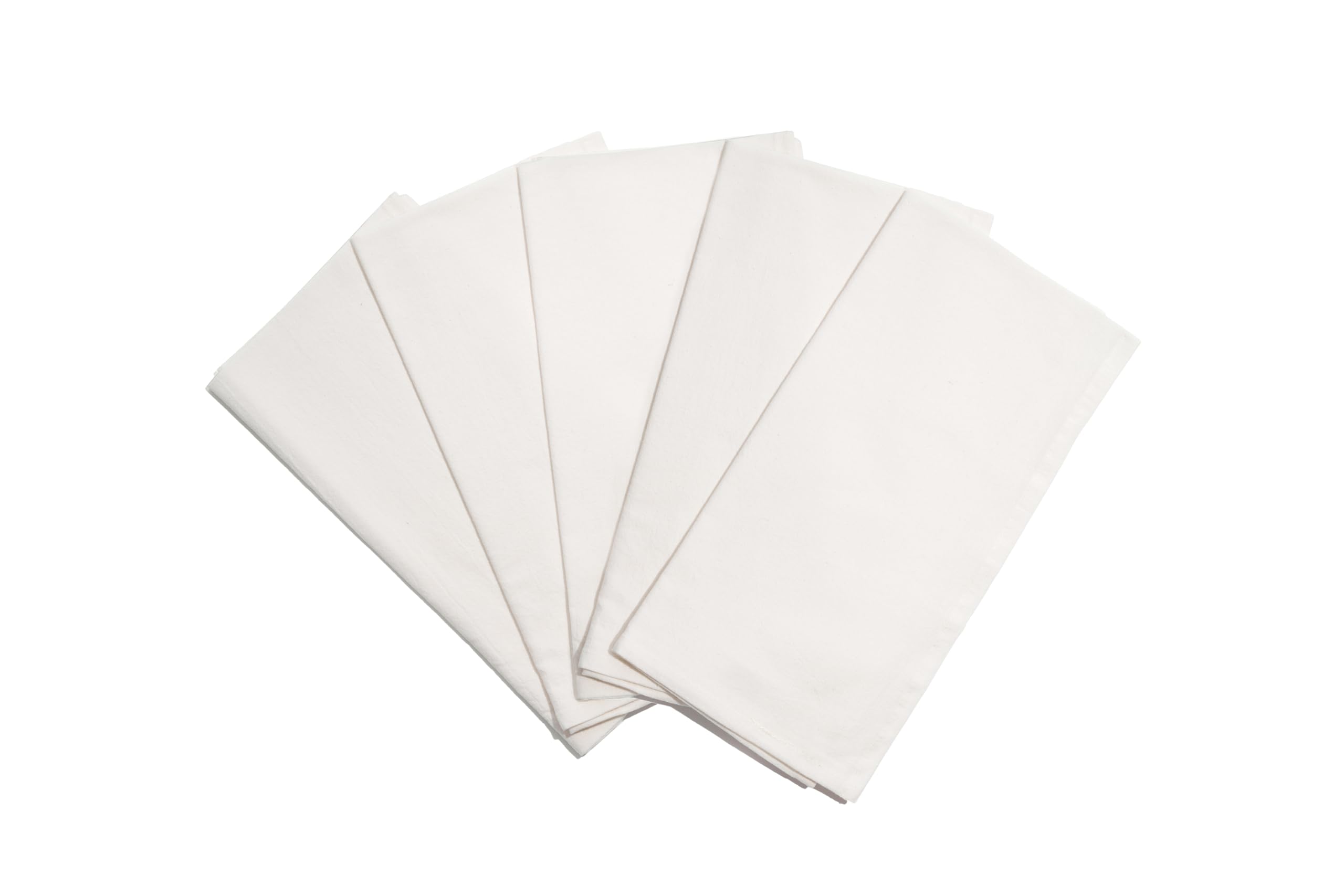
This set of five unbleached organic cotton towels offers a different approach to bread proofing — not a linen couche for shaping, but a breathable cover for bowl-rising and banneton basket lining. Each towel measures 27 by 27 inches, which is large enough to drape over a standard mixing bowl or line a 9-inch banneton without excess fabric bunching. The cotton weave is moderately breathable, preventing condensation from forming under the cloth while letting the dough breathe during its bulk fermentation.
Because these are cotton rather than flax linen, they lack the moisture-wicking structure that makes a proper couche non-stick. For low-hydration doughs and simple bowl covers, however, the cotton performs adequately. The five-pack is practical for bakers who need to proof multiple batches simultaneously or want clean cloths available without laundering mid-week. These towels are machine-washable, which is a convenience that flax linen couches explicitly forbid.
For entry-level bakers or those primarily covering bowls rather than shaping baguettes, this budget-friendly cotton set is a functional starting point. It is not a replacement for a true bakers couche, but it fills the covering role with zero fuss.
Why it’s great
- Five-piece set provides backup cloths for multiple batches without daily washing.
- Machine-washable cotton is easy to care for compared to unwashed linen couches.
- Unbleached organic construction avoids chemical residues that could affect dough flavor.
Good to know
- Cotton lacks the moisture-wicking property of flax linen — dough may stick on high-hydration recipes.
- 27-inch square is too small for baguette pleating or multiple loaf proofing in a couche formation.
FAQ
Can I wash a flax linen bakers couche in the washing machine?
What is the difference between a proofing towel and a bakers couche?
How often should I replace a bread proofing cloth?
Can I use a regular kitchen towel for bread proofing?
Final Thoughts: The Verdict
For most users, the towels for bread proofing winner is the Saint Germain Extra Large Couche because its French-sourced flax linen and heavy canvas weight deliver the exact moisture management and pleat support that professional bakers require. If you want a budget-friendly entry point with machine-washable fabric, grab the Bread Towels for Proofing Cover 5-Pack. And for a mid-range couche that includes a storage bag and seam reinforcement, nothing beats the Shop Square Professional Bakers Couche.