Making yogurt at home means you control the ingredients, the thickness, and the tang—but only if you start with the right live cultures. The wrong probiotic blend yields thin, watery, or sour batches that never set properly, turning a simple process into a frustrating guessing game.
I’m Mohammad Maruf — the founder and writer behind AirfryerBite. My research focuses on the bacterial strains, CFU counts, and packaging formats that separate reliable starter cultures from duds, ensuring every quart you produce is thick, creamy, and predictable.
Choosing the right culture means understanding thermophilic versus mesophilic strains, batch yield potential, and reusability options. This guide breaks down the top contenders to help you find the best probiotic for yogurt making that matches your kitchen routine and texture preferences.
How To Choose The Best Probiotic For Yogurt Making
Not all starter cultures behave the same way. Some produce thick, spoonable Greek-style yogurt; others yield a thinner drinking kefir. Understanding a few key variables will save you from batches that fail to set or develop off-flavors.
Thermophilic vs. Mesophilic Strains
Yogurt requires thermophilic bacteria—strains like Lactobacillus bulgaricus and Streptococcus thermophilus that thrive at 105–115°F. Mesophilic starters, meant for cheeses and fermented vegetables, won’t produce the characteristic yogurt tang or thick curd. Always check the label for these two specific strains if you want traditional yogurt.
Direct-Set vs. Heirloom (Reusable) Cultures
Direct-set packets contain enough bacteria for one single batch; you use the whole packet and buy more for the next round. Heirloom starters let you reserve a few tablespoons from your finished yogurt to inoculate the next gallon, reducing long-term cost. Heirloom versions require careful temperature management and sanitation to avoid strain drift over time.
CFU Potency and Shelf Life
Colony-forming units (CFUs) indicate how many live bacteria are in each sachet. A higher count—over 10 billion per gram—usually produces a faster, more reliable set. Shelf life matters too: freeze-dried cultures stored in a cool, dark place stay viable for up to 24 months, but expired packets may yield weak fermentation or no fermentation at all.
Quick Comparison
On smaller screens, swipe sideways to see the full table.
| Model | Category | Best For | Key Spec | Amazon |
|---|---|---|---|---|
| Bulgarian Yogurt Starter | Heirloom | Reusable batches, authentic tang | 25+ billion CFU per gram | Amazon |
| Yogourmet Kefir Starter (12 Pack) | Direct-Set | Bulk kefir making, long shelf life | 12 sachets, each makes 1 quart | Amazon |
| Natural Probiotic Selection Bifido Yogurt Starter | Direct-Set | Bifidobacteria-rich yogurt | 10 sachets with Bifidobacterium blend | Amazon |
| Cultures for Health Mesophilic Cheese Starter | Mesophilic | Soft cheese and quark making | 4 packets + 2 rennet tablets | Amazon |
| Cutting Edge Cultures Vegetable Starter Culture | Mesophilic | Lacto-fermented vegetables | 6 pouches, each ferments 5 lb | Amazon |
In‑Depth Reviews
1. Bulgarian Yogurt Starter (Makes 8 Gal / 30 L)

This heirloom starter from Bacillus Bulgaricus delivers an exceptional concentration of over 25 billion CFU per gram, producing thick, tangy Bulgarian-style yogurt with a distinct aroma. Because it is a reusable culture, you can reserve a few tablespoons from each batch to inoculate your next gallon, stretching a single packet into months of yogurt without repurchasing.
The thermophilic strains thrive at standard yogurt-making temperatures and work equally well with dairy or non-dairy milk. The starter is fully organic, gluten-free, and certified Kosher and Halal, with zero preservatives or GMOs. It is packaged loose in a recyclable, plastic-free sachet—one gram yields up to 8 gallons total when properly recultured.
New users should note that heirloom starters require careful sanitation and consistent incubation temperature to avoid bacterial drift. If you value authentic Bulgarian tartness and want the lowest per-batch cost over time, this starter offers unmatched value and potency.
Why it’s great
- Reusable culture drastically reduces long-term cost
- Extremely high CFU count for reliable, fast fermentation
- Organic, plastic-free, and free of additives
Good to know
- Requires temperature control and clean handling
- Single sachet only—must reculture for volume
2. Yogourmet Kefir Starter (12 Pack Bulk Version)
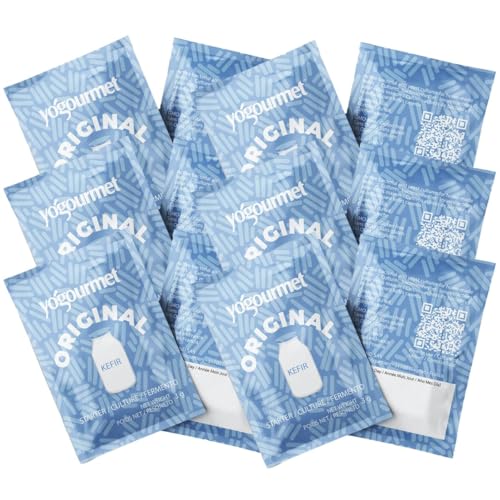
Yogourmet’s bulk pack includes 12 individual 3-gram sachets, each capable of fermenting one full liter of milk into kefir. The direct-set format eliminates guesswork—tear open one packet, stir into warm milk, and let it culture. The starter is all-natural, gluten-free, and carries both Kosher and Halal certifications.
These sachets have a 24-month shelf life, making them ideal for stocking up without worrying about potency loss. The cultures produce a mild, drinkable kefir with a balanced tang, not the thick spoonable consistency of yogurt. If you prefer sipping your fermented dairy or want to introduce kefir grains into your routine, this is the most convenient entry point.
Because it is a single-use culture, you cannot reculture from the finished kefir—each batch requires a fresh sachet. The manufacturer follows ISO 9001 and FSSC 22000 quality standards, ensuring batch-to-batch consistency. For households that go through multiple liters of kefir weekly, the 12-pack format keeps cost per batch low.
Why it’s great
- Twelve individually sealed sachets offer great value
- Two-year shelf life for worry-free storage
- Kosher, Halal, gluten-free, and Non-GMO verified
Good to know
- Single-use only—cannot reculture from finished kefir
- Produces drinkable kefir, not thick yogurt
3. Natural Probiotic Selection Bifido Yogurt Starter (Pack of 10)

This starter contains a targeted blend that includes Lactobacillus delbrueckii subsp. Bulgaricus, Streptococcus thermophilus, and three Bifidobacterium strains (bifidum, infantis, and longum). The inclusion of Bifidobacteria is particularly beneficial for gut health, as these strains survive digestion better than standard yogurt cultures.
Each freeze-dried sachet makes one quart of plain yogurt, and the manufacturer states that the finished yogurt can be recultured once (though this is not guaranteed long-term like a heirloom starter). The culture is produced in a laboratory environment without maltodextrin, gluten, or GMOs, making it a clean-label choice for health-conscious users.
The 10-pack provides flexibility for frequent yogurt makers, but users should store the sachets in a cool, dry place to preserve viability. Because Bifidobacteria are more sensitive to heat, maintaining a steady 110°F incubation temperature is critical to achieving a firm set. The resulting yogurt is mildly tangy with a smooth, creamy texture.
Why it’s great
- Includes three Bifidobacterium strains for digestive health
- Free of maltodextrin, gluten, and GMOs
- 10 sachets provide good mileage for regular use
Good to know
- Limited reusability—best treated as direct-set
- Requires precise temperature to activate Bifidobacteria
4. Cultures for Health Mesophilic Cheese Starter (4 Packets + 2 Rennet Tablets)
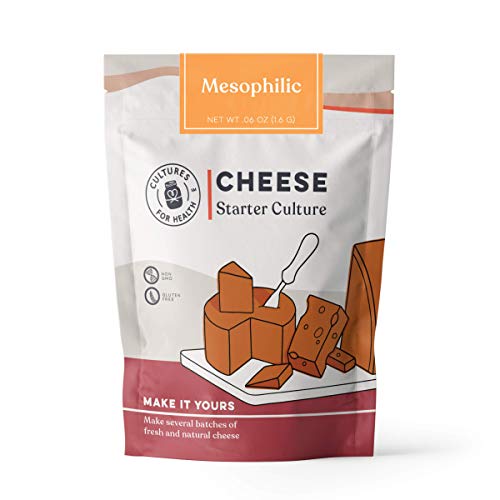
While this starter is not designed for traditional yogurt, it is a strong option for home cheesemakers who want to produce fresh, semi-soft varieties like feta, cheddar, quark, and cottage cheese. The four packets each work as a direct-set culture, meaning they ferment once and require no ongoing maintenance—ideal for beginners experimenting with cheese.
Each packet can culture 1–2.5 gallons of milk, and the included rennet tablets help form a clean curd. The cultures are mesophilic, fermenting at room temperature (72–78°F) rather than the higher heat needed for yogurt. Third-party pathogen testing on every batch ensures safety for home-use dairy projects.
If you want to branch out from yogurt into cheese, this starter simplifies the process without requiring a starter mother culture. Keep in mind that mesophilic cultures will not produce yogurt’s signature tang or thick, spoonable texture. For dedicated yogurt makers, a thermophilic starter is the correct choice, but this kit opens the door to broader dairy fermentation.
Why it’s great
- Versatile for multiple cheese styles from a single starter
- Includes rennet tablets for proper curd formation
- Pathogen tested for home safety
Good to know
- Not suitable for making traditional yogurt
- Requires room temperature fermentation, not incubation
5. Cutting Edge Cultures Vegetable Starter Culture (6 Pouches)

This starter is formulated specifically for lacto-fermenting vegetables, not for dairy. Each 12-gram pouch ferments up to five pounds of produce, making it ideal for large batches of sauerkraut, kimchi, pickles, or fermented salsas. The multi-strain blend optimizes the fermentation process for consistent texture and probiotic density.
Because it uses mesophilic bacteria, the fermentation happens at room temperature over 3–7 days, depending on ambient conditions. The starter reduces the risk of mold or spoilage compared to relying on wild lactobacilli, especially for beginners. Cutting Edge Cultures also claims enhanced crispness retention and a more complete fermentation profile.
This is a niche product for vegetable fermentation enthusiasts rather than yogurt makers. If your primary goal is a probiotic for yogurt, thermophilic starters remain the correct tool. However, if you want to expand your probiotic fermenting beyond dairy—or if you follow a dairy-free lifestyle—this starter delivers a clean, lab-tested culture for vegetables.
Why it’s great
- Each pouch handles 5 lb of vegetables for large batches
- Reduces mold risk compared to wild fermentation
- Enhances vegetable crispness and probiotic yield
Good to know
- Not for yogurt or dairy fermentation
- Longer fermentation time than thermophilic cultures
FAQ
Can I use a mesophilic starter to make yogurt?
How long does a heirloom starter remain viable for reculturing?
What does CFU count mean for my yogurt batch?
Can I use vegetable starter culture for yogurt?
Final Thoughts: The Verdict
For most users, the probiotic for yogurt making winner is the Bulgarian Yogurt Starter because its high CFU count and heirloom reusability deliver the best long-term value and authentic tang. If you want a bulk supply of single-use packets for kefir, grab the Yogourmet 12-Pack. And for gut-health-focused yogurt with Bifidobacteria, nothing beats the Natural Probiotic Selection Bifido Starter.