A chef’s knife is the single most-used tool in any kitchen, but choosing between stainless and carbon steel often comes down to a trade-off: ease of maintenance versus raw cutting performance that improves with age. The patina that develops on a high-carbon blade is not a flaw—it’s the mark of a knife that gets better with every meal prep.
I’m Mohammad Maruf — the founder and writer behind AirfryerBite. I’ve spent years researching blade metallurgy, handle ergonomics, and edge geometry across dozens of forged kitchen knives to help cooks separate genuine craftsmanship from marketing claims.
A blade’s Rockwell hardness, layer count, and handle material matter more than brand badges when selecting the carbon steel chef knife that will serve you reliably through thousands of cuts.
How To Choose The Best Carbon Steel Chef Knife
A carbon steel chef knife demands different evaluation criteria than a stainless blade. The steel composition, forging method, edge angle, and handle material all work together to create a tool that reacts to its environment — forming a protective patina rather than relying on a chemical coating. Understanding these factors keeps you from buying a knife that stains easily or fails to hold an edge.
Steel Core and Hardness Rating
The core steel determines how long the blade stays sharp. Look for high-carbon steel with a Rockwell hardness between 58 and 62 HRC. Below 58, the edge rolls quickly under heavy chopping. Above 62, the blade becomes brittle and chips during hard use on squash or bone. Japanese steels like 10Cr15MoV and VG10 offer a sweet spot around 60–62 HRC, balancing carbide density for edge retention with enough toughness to handle daily kitchen tasks.
Layer Construction and Corrosion Resistance
A single-layer carbon blade develops patina fast but can rust if left wet. Multi-layer forged construction — 9 layers, 67 layers, or 3-layer cladding — sandwiches a hard carbon core between softer stainless or carbon outer layers. This reduces exposed edge surface area while retaining the core’s cutting performance. More layers also create the Damascus wave pattern that signals skilled forge work, though the number of layers alone does not guarantee performance if the heat treatment is poor.
Handle Material and Balance Point
The handle must resist moisture absorption and stay secure during wet prep. Octagonal rosewood and pakkawood handles provide a traditional grip that reduces wrist fatigue, but they require manual oiling to prevent cracking. Resin-stabilized wood handles offer better moisture resistance without sacrificing comfort. A full-tang design with three rivets or a hidden tang that runs the length of the handle ensures the blade and handle weight are balanced — typically at the bolster or just forward of it for nimble rock-chopping.
Edge Angle and Maintenance Requirements
A 12-to-15-degree edge angle on each side produces a razor-sharp slicing edge that excels on protein and vegetables, but it requires more frequent honing than a 20-degree Western edge. If you prefer to minimize sharpening sessions, look for a 15-degree bevel stated by the manufacturer. Carbon steel also requires immediate drying after each wash and occasional mineral oil application to the blade to guide patina formation evenly. Dishwashers destroy carbon steel edges and handles — hand-washing and towel-drying are mandatory.
Quick Comparison
On smaller screens, swipe sideways to see the full table.
| Model | Category | Best For | Key Spec | Amazon |
|---|---|---|---|---|
| KAWAHIRO Gyuto | Premium | Artisan presentation & balanced handling | VG10 core, 62 HRC, ruby & ebony handle | Amazon |
| Atumuryou JPCK Damascus | Premium | 67-layer build & leather sheath carry | VG10 damascus, 62 HRC, stabilized resin handle | Amazon |
| MITSUMOTO SAKARI 4-Pc Set | Premium | Complete set with sandalwood storage | 9CR18MOV core, 58 HRC, rosewood handle | Amazon |
| Seido Master 8-Pc Set | Mid-Range | Multi-knife set for versatile prep | VG10 stainless, 8-piece collection | Amazon |
| HOSHANHO Gyuto | Mid-Range | Hand-forged 9-layer with rosewood grip | 10Cr15CoMoV, 9-layer forged, 12–15° edge | Amazon |
| Miyamoto Damascus | Mid-Range | Non-slip resin handle & magnetic gift box | VG10 damascus, 62 HRC, 67-layer | Amazon |
| SHAN ZU 8-Inch | Budget-Friendly | Entry-level 9-layer with red sandalwood | 10Cr15MoV core, 62 HRC, 12° edge | Amazon |
In‑Depth Reviews
1. KAWAHIRO Japanese Chef Knife
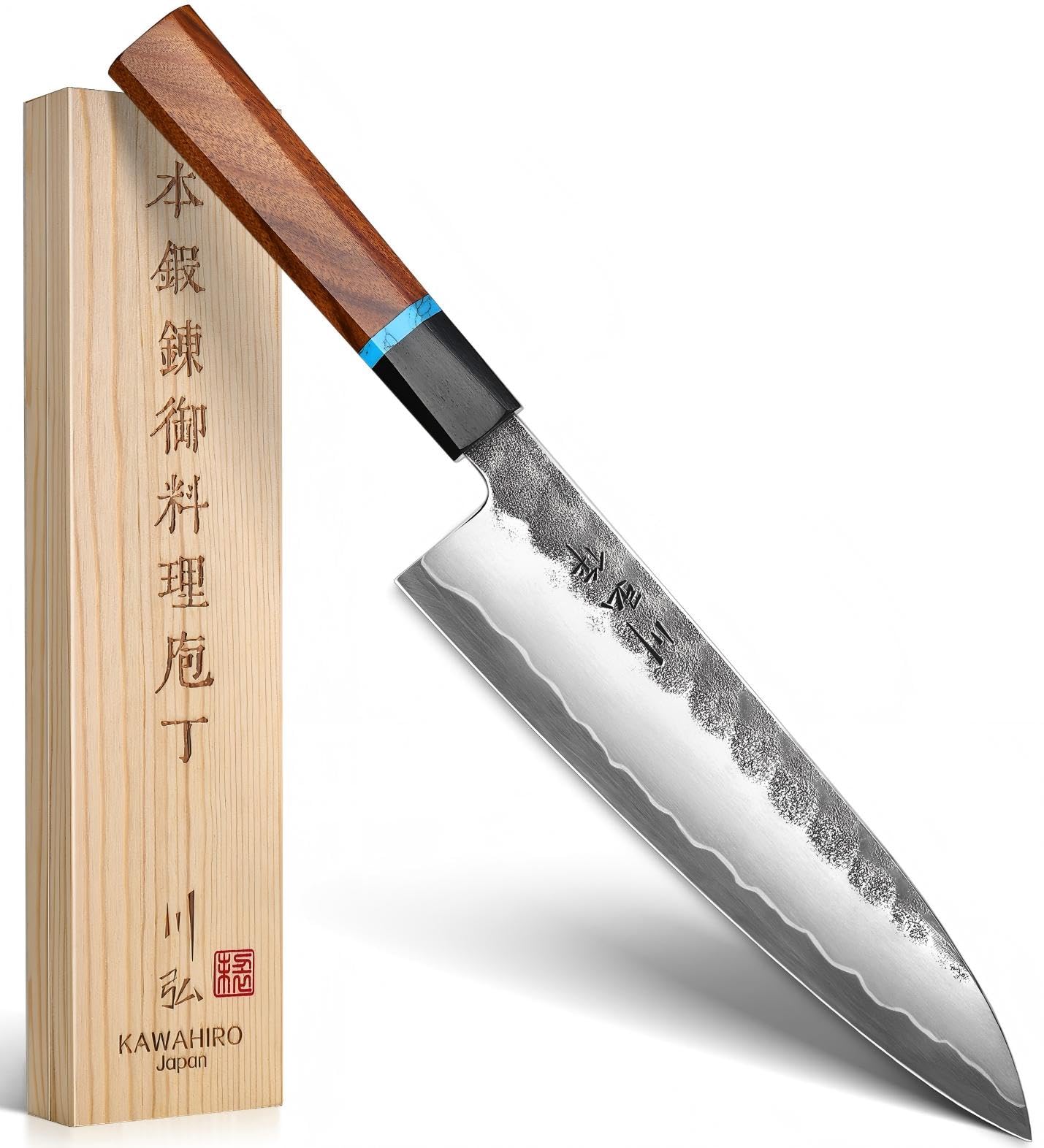
The KAWAHIRO Gyuto uses a VG10 stainless steel core with a three-layer composite cladding, delivering a Rockwell hardness of 62 for long-lasting edge retention. The 8.24-inch blade features a black forged finish that reduces drag through dense ingredients like sweet potatoes and butternut squash. The 12–15 degree edge angle produces clean slices without tearing protein fibers, making it suitable for both raw fish preparation and heavy vegetable chopping.
The handle construction sets this knife apart — ruby wood, turquoise, and ebony are combined in an octagonal profile that fills the palm without slipping, even when hands are wet or oily. At 6.72 ounces, the blade-to-handle balance sits just forward of the bolster, giving you precise control for rock-chopping and push-cutting. The full-tang design with hidden rivets reinforces structural integrity while maintaining a clean aesthetic.
Packaging includes a wooden storage case and certificate of authenticity, which elevates the unboxing experience significantly above standard slip-sheet boxes. The main trade-off is the blade’s black forged finish, which can show light scratches if you use a steel honing rod aggressively. Hand-washing and immediate drying are required — the ebony and turquoise components absorb moisture if left wet.
Why it’s great
- VG10 core at 62 HRC holds an edge for weeks of daily use
- Octagonal ebony and turquoise handle provides a non-slip, fatigue-free grip
- Beautiful wooden presentation case makes it gift-ready
Good to know
- Black forged finish may show honing scratches over time
- Requires hand-washing — not dishwasher safe
- Premium price positions it above casual home cook budgets
2. Atumuryou JPCK Damascus Chef Knife
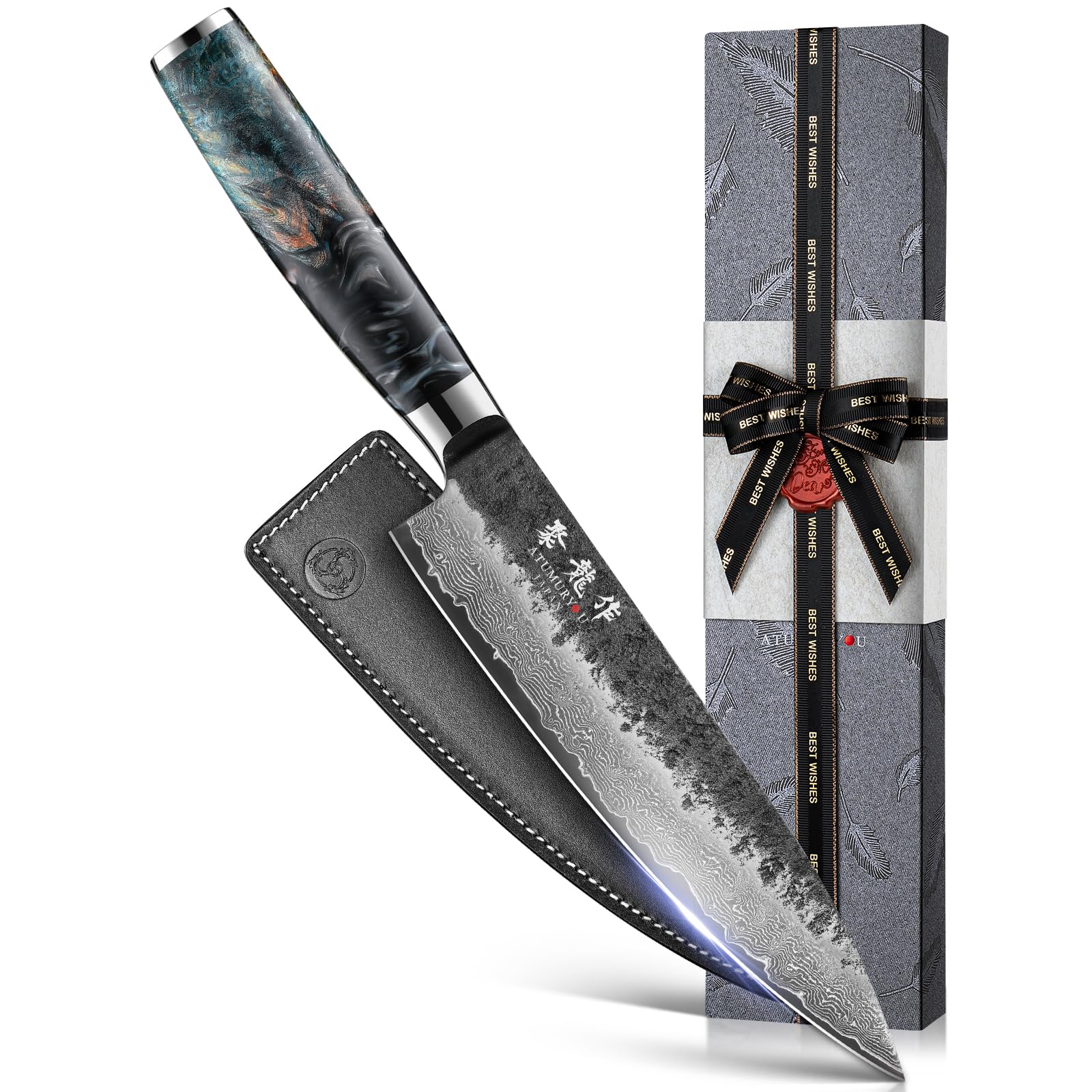
The Atumuryou JPCK Damascus knife features a 67-layer construction with a VG10 steel core hardened to 62 HRC. Thirty-three layers of Damascus steel are forged on each side of the core, creating a visible wave pattern that also improves edge stability during lateral cutting motions. The black forged finish reduces friction and resists food sticking during continuous slicing tasks like breaking down a large cut of beef or dicing onions.
The handle uses stabilized wood and resin, which provides moisture resistance superior to natural rosewood — it will not crack or swell after repeated exposure to humidity. The ergonomic profile with a slight palm swell gives a secure pinch grip without hot spots. A genuine leather sheath protects the blade when stored in a drawer or transported to a cooking class, and the magnetic closure gift box with feather pattern trim adds presentation value.
The primary advantage over competitive Damascus knives is the inclusion of the leather sheath and suede cloth at this feature level. The 62 HRC rating means the edge will feel aggressive out of the box but responds well to a ceramic honing rod for quick touch-ups. The only notable limitation is the handle’s multicolor resin pattern — some buyers may prefer a uniform wood tone over the speckled appearance.
Why it’s great
- 67-layer Damascus build delivers excellent edge toughness and visual appeal
- Stabilized resin handle resists moisture absorption better than raw wood
- Leather sheath and premium gift box included
Good to know
- Multicolor resin pattern is not to everyone’s aesthetic taste
- Requires hand-washing and immediate drying to protect the sheath
- Resin handle may feel slick if hands are heavily oiled
3. HOSHANHO 8-Inch Gyuto Chef Knife

The HOSHANHO Gyuto uses a 10Cr15CoMoV steel core clad in 8 layers of corrosion-resistant composite steel, creating a 9-layer sandwich structure that balances edge hardness with outer-layer protection against rust. The core reaches a hardness that supports a 12–15 degree V-shaped edge angle, which glides through tomatoes and bell peppers without crushing the flesh. The 8.11-inch blade and 6.1-inch handle follow a near-golden ratio that centers the balance point for comfortable rock-chopping during long prep sessions.
The rosewood octagonal handle is fitted with two copper wire accents that add visual contrast and help secure the tang. Rosewood naturally contains oils that resist moisture absorption, though periodic mineral oil treatment will extend the wood’s lifespan. The hand-forged hammer pattern on the blade face reduces food adhesion and gives the knife a distinctive tactile finish that improves grip when pinching the blade spine.
Each knife undergoes a 60-day hand-forging process by skilled craftsmen, resulting in subtle variations in the layered pattern — no two knives are identical. The primary consideration is the weight at 221 grams, which is lighter than many Western-style chef knives. This favors nimble, precise cuts over heavy-duty cleaving. It also lacks a bolster, meaning the entire edge is usable for sharpening over the blade’s lifetime.
Why it’s great
- 9-layer forged construction with 10Cr15CoMoV core for long edge life
- Hand-forged hammer pattern reduces sticking during slicing
- Lightweight at 221 grams for fatigue-free precision cutting
Good to know
- Rosewood handle requires periodic oiling to prevent drying
- No bolster means less protection for fingers during heavy chopping
- Limited to single-knife packaging — no sheath included
4. Miyamoto 8-Inch Japanese Damascus Chef Knife
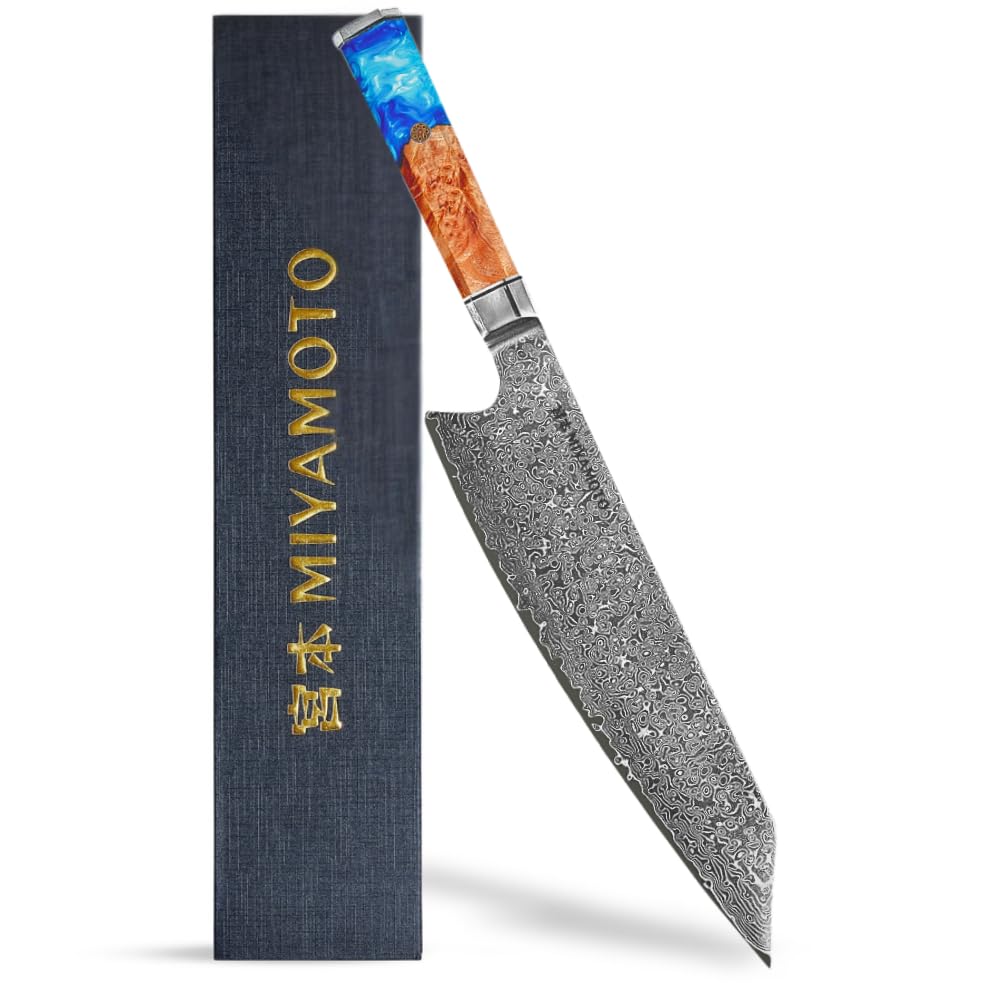
The Miyamoto Damascus knife distinguishes itself with a genuine VG-10 Damascus pattern achieved through repeated heating, folding, and pressing — not laser etching that fades after a few months of washing. The 67-layer structure yields a 62 HRC hardness rating that keeps the edge sharp through regular meal prep without frequent trips to a whetstone. The 8.5-inch blade length extends reach for large slicing tasks while maintaining enough pointed tip control for detail work like trimming silverskin.
The handle combines blue resin with Canadian maple wood, creating a non-slip surface even when hands are wet from rinsing produce. The resin-stabilized maple resists cracking and swelling in humid kitchens far better than untreated wood handles. A magnetic gift box with a knife protector and suede cloth is included, making this a strong candidate for gifting to someone who values both performance and packaging presentation.
At 401 grams, this knife has a moderate heft that helps power through dense root vegetables without needing to apply excessive downward force. The Damascus layers are visible along the blade spine and cutting edge, confirming the forging process is authentic rather than surface-deep. The main drawback is the resin handle’s blue color — it may clash with kitchens that favor warm wood tones or neutral stainless steel accents.
Why it’s great
- Genuine VG-10 Damascus with 67-layer forging, not laser-etched
- Blue resin and maple handle provides excellent slip resistance
- Magnetic gift box and knife protector add gifting value
Good to know
- Blue resin handle color may not match all kitchen aesthetics
- Heavier than full carbon steel knives at 401 grams
- Hand-wash only — resin handle can degrade in dishwasher heat
5. Seido Knives Master Chef Knife Set
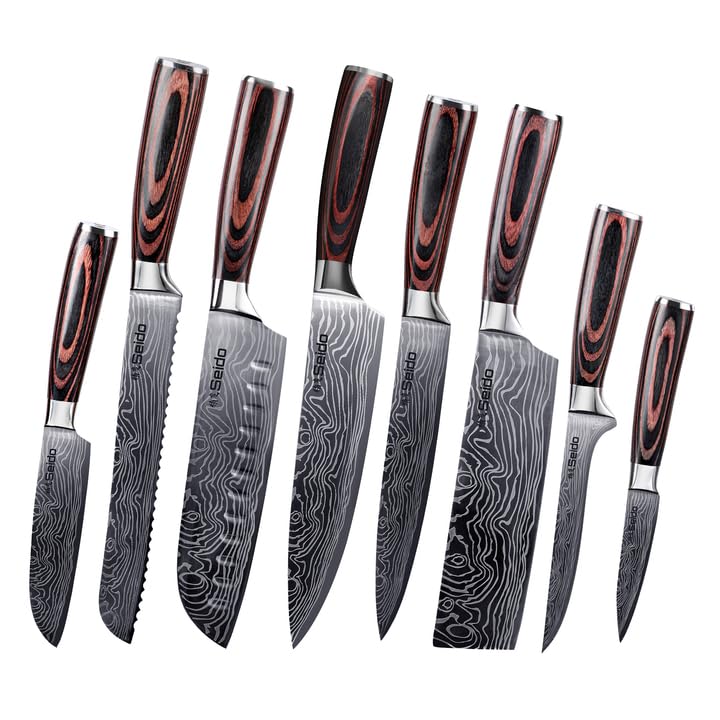
The Seido Master set delivers eight pieces in a single package, including an 8-inch chef knife, Santoku, boning knife, paring knife, carving knife, and utility blades — all forged from high-carbon stainless steel. The blades are sharpened to a 15-degree angle on each side, which produces clean cuts through meat and vegetables while being forgiving enough for cooks who do not own a honing steel. The entire set stores in a chef bag-style case that saves drawer space and prevents blade contact.
The pakkawood handles on each knife feature a triple-rivet design that reinforces the tang-to-handle bond. Pakkawood is a resin-impregnated hardwood that resists moisture and staining better than natural wood, making it a practical choice for cooks who may not always dry knives immediately after washing. The high-carbon stainless alloy offers better corrosion resistance than pure carbon steel, reducing the patina development that worries some home cooks.
The versatility of having multiple blades means you can use the Santoku for vegetable prep and the carving knife for roasted meats without dulling the chef knife prematurely. The main consideration is that an 8-piece set at this price point sacrifices some metallurgy specialization — each individual blade may not match the edge retention of a dedicated single-piece Gyuto at a similar total spend. Hand-washing is still required; the pakkawood handles can warp if exposed to dishwasher cycles.
Why it’s great
- Eight-piece set covers all common cutting tasks in one purchase
- Pakkawood handles with triple-rivet construction resist moisture damage
- 15-degree edge angle balances sharpness with edge durability
Good to know
- Individual blades may not match dedicated single-knife edge retention
- Chef bag case offers less protection than individual sheaths
- High-carbon stainless is less reactive but still requires hand-washing
6. MITSUMOTO SAKARI Chef’s Knife Set

The MITSUMOTO SAKARI set includes four hand-forged knives — a Gyuto chef knife, Santoku, utility knife, and paring knife — each made from 9CR18MOV high-carbon steel with a 58 HRC hardness rating. The 2.5mm ultra-thin blade thickness reduces wedging in dense vegetables and allows the knife to glide through fish fillets without tearing. The hand-forged pattern on the blade face reduces surface area contact with food, improving release during repetitive slicing tasks.
Each handle is crafted from Southeast Asian rosewood in a traditional octagonal shape that minimizes wrist tension during extended prep sessions. The handles are not sealed with lacquer, which means the natural wood grain remains tactile but requires occasional oiling with the included blade oil. The set arrives in a sandalwood storage box that doubles as a display case and offers better long-term protection than a knife block or magnetic strip.
The 58 HRC rating is lower than the VG10 knives on this list, which means the edge will need more frequent sharpening — but it also means the blade is less brittle and less likely to chip during bone-in meat prep. The 45-day hand-forging process includes precision quenching and vacuum cold nitrogen treatment, which improves blade durability compared to mass-stamped alternatives. Buyers who prefer a harder edge with longer retention may find 58 HRC too soft for high-volume professional use.
Why it’s great
- Four-knife set with sandalwood storage box for organized protection
- 2.5mm ultra-thin blade reduces sticking and wedging
- 45-day hand-forging process with precision heat treatment
Good to know
- 58 HRC is softer than VG10 alternatives — needs more frequent sharpening
- Rosewood handles require periodic oiling to prevent drying
- Blade oil included, but additional sharpening tools not provided
7. SHAN ZU 8 Inch Japanese Chef Knife

The SHAN ZU 8-inch knife brings 10Cr15MoV high-carbon steel into the entry-level price tier with a 9-layer forged construction that resists chipping better than single-layer stamped blades. The steel core is hardened to 62 HRC and sharpened to a 12-degree angle, producing an aggressive edge that cuts through ripe tomatoes and raw chicken skin without tearing. The matte blade finish reduces fingerprint buildup and food residue accumulation during prep work.
The red sandalwood octagonal handle follows the traditional Japanese contour that naturally guides the hand into a pinch grip. Sandalwood has natural anti-microbial properties and a light aromatic scent when new, though the fragrance fades after several washes. The full-tang construction is visible at the handle spine, confirming the blade runs through the entire handle length for improved balance and structural integrity. A premium gift box is included, which is rare at this price tier.
The main trade-off at this tier is fit-and-finish consistency — the 12-degree bevel is extremely thin and can chip if used to cut through frozen foods or bone. The red sandalwood handle may develop small cracks in very dry climates if not oiled occasionally. That said, for the buyer who wants a genuine carbon steel core with layered forging and a traditional handle without spending triple digits, the SHAN ZU delivers the essential performance specs without unnecessary frills.
Why it’s great
- 10Cr15MoV core at 62 HRC delivers VG10-adjacent performance
- Red sandalwood octagonal handle offers traditional ergonomics
- Luxury gift box included despite entry-level pricing
Good to know
- 12-degree edge is prone to chipping on bone or frozen food
- Sandalwood handle may dry out in low-humidity kitchens
- Matte finish can show scratches from improper honing technique
FAQ
Does a higher HRC rating always mean a better carbon steel chef knife?
How do I prevent rust on my carbon steel chef knife?
Can I use a carbon steel chef knife to cut through bones or frozen food?
Final Thoughts: The Verdict
For most users, the carbon steel chef knife winner is the KAWAHIRO Gyuto because it combines a VG10 core with an exceptional multi-wood handle and precise balance that suits both home cooks and aspiring professionals. If you want a Damascus pattern with a protective leather sheath and stabilized resin handle, grab the Atumuryou JPCK. And for the bargain-focused cook who wants a legit 9-layer forged carbon steel blade without spending triple digits, nothing beats the SHAN ZU.