The difference between a dull knife edge and a razor-sharp blade often comes down to the surface beneath it. A maple end grain cutting board offers a unique butchers-block-style surface that is engineered to be gentle on knives while being naturally self-healing and durable enough for heavy daily chopping.
I’m Mohammad Maruf — the founder and writer behind AirfryerBite. I have spent years analyzing kitchen gear specifications, including the heat treatment, grain direction, and moisture resistance of various wood species used in premium cutting boards.
The critical task of finding a maple end grain cutting board requires understanding key dimensions like board thickness, juice groove depth, and the quality of the wood’s preseasoning.
How To Choose The Best Maple End Grain Cutting Board
Selecting the right board involves more than just picking a pretty piece of wood. You need to evaluate thickness, wood treatment, and the specific design features that protect your knives and counters.
Thickness and Stability
The thickness of the board dictates its weight resistance. A board that is at least 1.5 inches thick will stay firmly on the counter during heavy chopping, while a 2.25-inch thick block like the John Boos CCB offers professional-grade stability that prevents sliding and absorbs impact without warping.
End Grain vs. Edge Grain
Unlike edge grain boards where the wood fibers run parallel to the surface, end grain boards expose the wood cells perpendicular to your knife. This allows the blade to slide between the fibers, keeping the edge sharper longer. The end grain also possesses natural self-healing properties where cuts close up after use, reducing visible scarring.
Juice Groove and Board Care
A deep juice groove is critical when cutting juicy fruits, meats, or roasting vegetables. Look for boards with a well-defined groove that channels liquids away from the counter. Also, check if the board is preseasoned with a food-grade mineral oil and beeswax blend. Boards that arrive dry require immediate conditioning before first use.
Quick Comparison
On smaller screens, swipe sideways to see the full table.
| Model | Category | Best For | Key Spec | Amazon |
|---|---|---|---|---|
| John Boos CCB | Premium End Grain | Pro-grade stability | 2.25-inch thickness | Amazon |
| WoodForChef 24×18 | Large Edge Grain | Extra large surface | 24×18-inch surface | Amazon |
| BABILONIA Walnut | End Grain | Thick walnut block | 1.7-inch thickness | Amazon |
| WoodForChef 20×16 | Edge Grain | Balanced performance | 20×16-inch size | Amazon |
| Artistic Chef’s Kitchen | End Grain | Decorative serving | 0.75-inch thickness | Amazon |
| CONSDAN Hard Maple | Edge Grain | Lifetime warranty | 1.5-inch thickness | Amazon |
| Vesta Homes Acacia | Acacia End Grain | Budget end grain | 1-inch thickness | Amazon |
In‑Depth Reviews
1. John Boos CCB Series Maple End Grain Cutting Board

The John Boos CCB2015-225 stands as the benchmark for professional-grade end grain boards. At a massive 2.25 inches thick and weighing close to 20 pounds, this block delivers uncompromised stability during heavy butchery or vigorous vegetable prep. The reversible design means you can flip to a fresh surface between tasks, and the recessed finger grips on each side make lifting this heavy block manageable.
The board is constructed from North American maple and finished with an oil finish that is ready for immediate use. The end grain surface exhibits true self-healing behavior—knife marks tend to close up after a few hours, keeping the board looking cleaner for longer. John Boos has been manufacturing in the USA since 1887, and this board reflects that heritage with tight joinery and no fillers.
While this is the priciest option, it includes no extras like a juice groove or included oil. You will need to purchase Boos Block Mystery Oil separately for monthly conditioning. If you want a board that will outlast your kitchen renovation, this is the one to choose.
Why it’s great
- Heavy 21-pound build provides rock-solid stability
- True end grain self-healing surface protects knife edges
- Reversible with recessed finger grips for easy handling
Good to know
- Does not include juice groove or oil
- Requires separate purchase of Boos Block oil for care
2. WoodForChef Extra Large Maple Cutting Board 24×18

This board from WoodForChef is the largest maple board on our list at a generous 24 inches by 18 inches. While it uses edge grain rather than true end grain, it still provides a durable surface that is lighter on maintenance than pure end grain. The board is FSC Certified, meaning the maple is sourced from responsibly managed North American forests.
A deep juice groove runs around the perimeter, effectively trapping liquids from meats or juicy watermelon. The board is preseasoned with a blend of mineral oil and beeswax, so it arrives ready to use straight out of the box. Weighing about 19 pounds, it is hefty enough to stay in place but still manageable for a home cook to move to the sink.
The edge grain construction means knife marks will show more visibly over time compared to an end grain board, but the trade-off is lower price and easier upkeep. If your priority is maximum cutting surface for big meal preps, this board delivers.
Why it’s great
- Massive 24×18-inch workspace for big batch cooking
- Deep juice groove prevents countertop messes
- FSC Certified and preseasoned ready to use
Good to know
- Edge grain rather than end grain construction
- Shows knife marks more than true end grain boards
3. BABILONIA Black Walnut End Grain Cutting Board
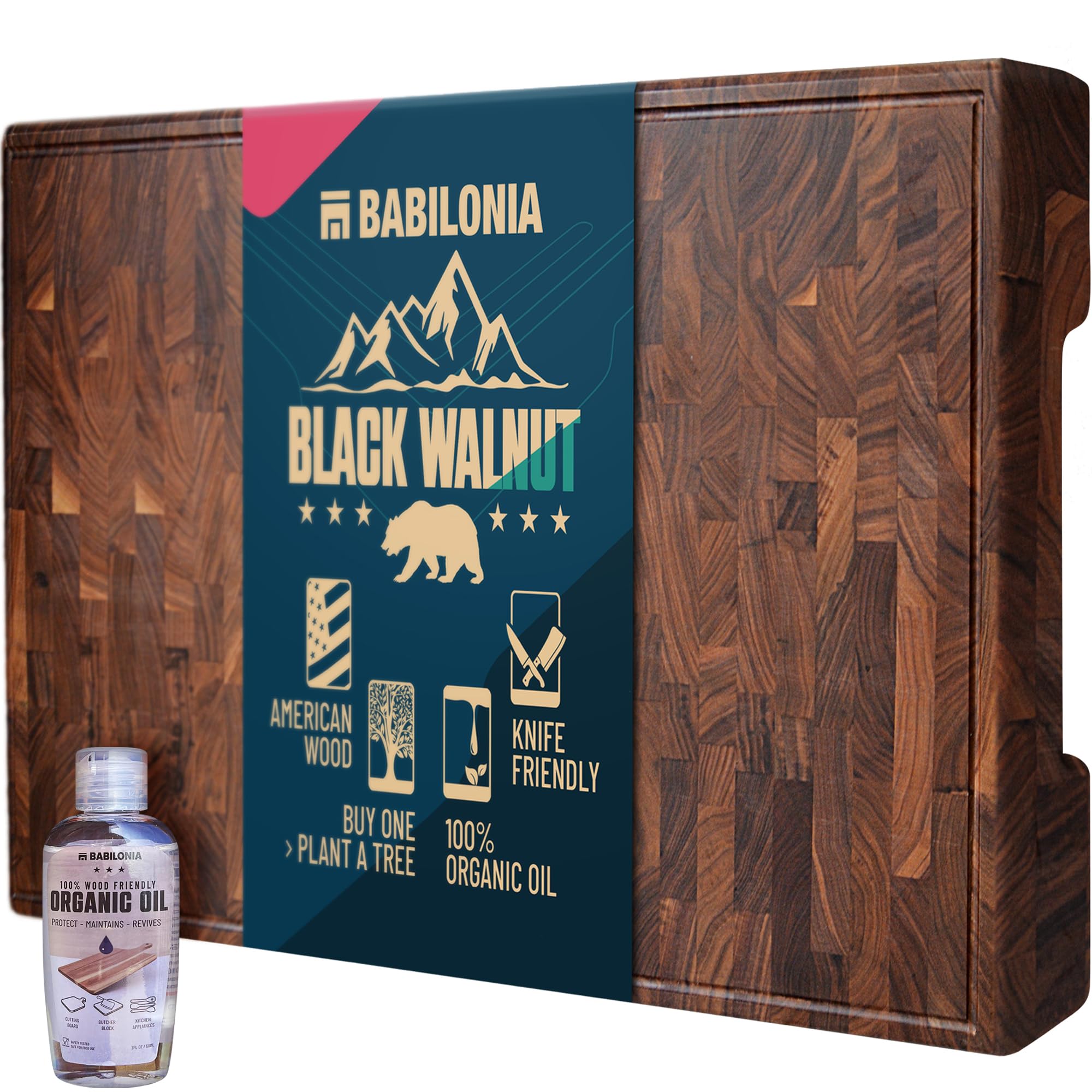
The BABILONIA board is made from American black walnut, which is naturally denser and darker than maple, providing a striking aesthetic for both prep and charcuterie serving. At 1.7 inches thick, it offers substantial weight and durability without being as massive as the John Boos block. The board features a juice groove, side handles, and a hidden notch that works with an included plate to sweep chopped ingredients directly into a bowl.
This end grain board comes preseasoned and includes a free bottle of organic mineral oil, so you can start using it immediately and maintain it easily. The board is also reversible, allowing you to use the flat side for serving bread or cheese. The built-in handle is cleverly recessed, preserving the clean lines of the board.
Because this is walnut, the wood has a higher natural oil content, making it slightly more water-resistant than maple. However, the board requires hand washing only and should never be soaked. The included plate is a nice bonus but is small; it works best for wet prep tasks like dicing tomatoes.
Why it’s great
- Thick 1.7-inch end grain walnut construction
- Includes free organic oil and a small plate for prep
- Hidden notch system for easy ingredient transfer
Good to know
- Walnut requires careful moisture management
- Included plate is small, not a full prep solution
4. WoodForChef Maple Cutting Board 20×16

This mid-range board from WoodForChef hits a sweet spot between size and value. At 20 by 16 inches with a 1.5-inch thickness, it provides a substantial work surface for most home kitchens without taking over the entire counter. The edge grain construction is preseasoned with a mineral oil and beeswax blend, and the deep juice groove effectively captures runoff.
The board is made from responsibly sourced North American maple and carries FSC Certification. It is also reversible, giving you a flat side for serving or dough work and a grooved side for wet chopping. The dark brown finish gives it a rich look that ages well with proper care.
This board is ideal for cooks who want a large maple block but do not need the ultra-thick end grain profile of the John Boos. It is lighter, easier to store, and significantly easier on the budget. The edge grain will show cuts over time, but regular oiling minimizes the appearance.
Why it’s great
- Generous 20×16-inch size at a practical thickness
- Preseasoned and ready to use immediately
- Reversible with deep juice groove on one side
Good to know
- Edge grain construction shows knife marks
- Not true end grain like more expensive models
5. Artistic Chef’s Kitchen End Grain Cutting Board

This board from Artistic Chef’s Kitchen is a visually striking end grain piece that uses a 3D-like pattern made from walnut, ebony, and beech woods. At 15 by 11 inches and only 0.75 inches thick, it is much thinner than the other boards on our list. The end grain construction, however, still provides a knife-friendly surface that is gentler on edges than cheaper plastic boards.
The board features four non-slip rubber feet on the bottom, which helps keep it in place during light chopping. It also includes two side handles for easy carrying to the table for serving charcuterie. The board is handcrafted, meaning slight variations in grain pattern make each piece unique.
Because of the 0.75-inch thickness, this board is not suitable for heavy butchery or pounding meat. The thin profile also means it may warp if exposed to excessive moisture or heat. This board is best used as a decorative serving board or for light vegetable prep.
Why it’s great
- Unique 3D-like wood pattern for visual appeal
- Non-slip rubber feet for counter stability
- End grain construction is gentle on knives
Good to know
- Only 0.75 inches thick, not for heavy use
- Thin profile more prone to warping
6. CONSDAN Hard Maple Edge Grain Cutting Board
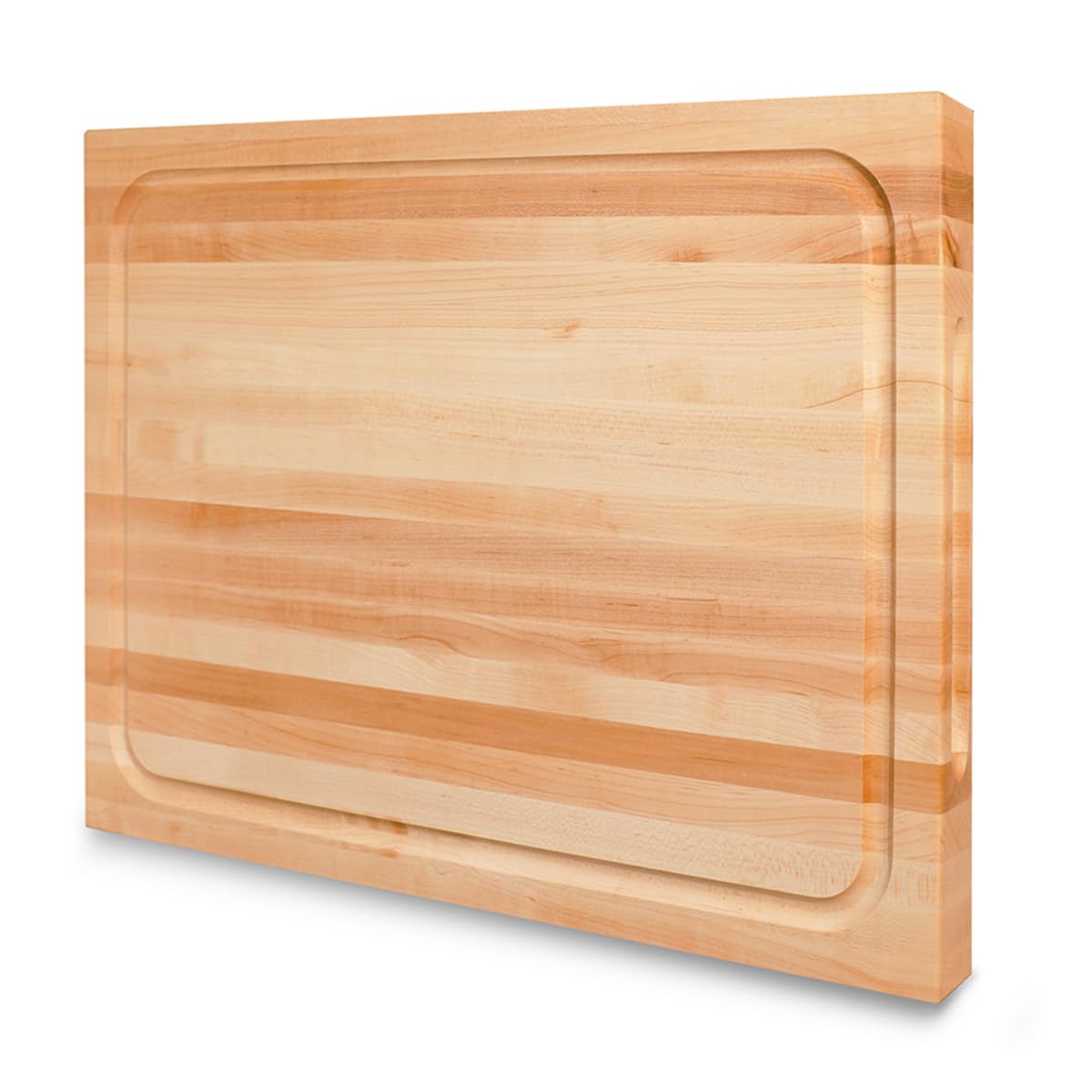
The CONSDAN board uses USA-grown hard maple with a tight, closed grain that gives a clean, uniform appearance. At 20 by 15 inches and 1.5 inches thick, it provides ample space for everyday chopping. A deep juice groove runs around the perimeter, and the board features invisible inner handles on both sides that are polished flush, so they do not interfere with the flat work surface.
The board is prefinished with a food-grade oil and wax finish, making it ready to use immediately. The edge grain here is smooth and durable, and the board weighs 13.3 pounds, giving it enough heft to stay put during vigorous cutting. CONSDAN backs this board with a lifetime warranty covering defects in materials and workmanship.
One limitation is that the inner handles, while comfortable, can catch food particles if not cleaned thoroughly. The board also lacks non-slip feet, so it may slide on smooth countertops unless you place a damp towel underneath. Still, the lifetime warranty makes this a very low-risk purchase.
Why it’s great
- USA-grown hard maple with tight grain
- Lifetime warranty for defects
- Invisible handles preserve flat surface
Good to know
- Inner handles may trap food debris
- No non-slip feet included
7. Vesta Homes Large Acacia End Grain Cutting Board

The Vesta Homes board offers entry-level end grain construction using acacia wood instead of maple. Acacia is a dense, sustainable hardwood that naturally resists moisture and has beautiful contrasting grain patterns. At 18 by 12 inches with a 1-inch thickness, it is the thinnest and lightest end grain board on the list, making it easy to store and carry.
The board is preseasoned with natural oils and waxes and is reversible, offering both a flat side for serving and a grooved side for cutting. A built-in handle allows for convenient transport from kitchen to table. The acacia wood is BPA-free and formaldehyde-free, making it a safe surface for food prep.
Because of the thinner profile (1 inch), this board lacks the stability of the thicker options and may shift during heavy chopping. The acacia wood is harder than maple, which means it can be slightly less forgiving on knife edges over long-term use. However, for a budget-friendly end grain board that still offers self-healing properties, this is a solid choice.
Why it’s great
- Entry-level end grain acacia construction
- Preseasoned and ready to use immediately
- Reversible with built-in handle
Good to know
- Thin 1-inch profile may shift during cutting
- Acacia wood is harder and less knife-friendly than maple
FAQ
How often should I oil my maple end grain cutting board?
Can I use my end grain board for raw meat and fish?
Why is end grain better than edge grain for knives?
Final Thoughts: The Verdict
For most users, the maple end grain cutting board winner is the John Boos CCB Series because its 2.25-inch thickness, reversible design, and true self-healing end grain surface deliver professional-grade performance that will last for decades. If you want the largest cutting surface without moving to end grain, grab the WoodForChef 24×18. And for a premium walnut board that includes oil and a handy prep plate, nothing beats the BABILONIA Black Walnut.