A dull chef knife turns a pleasant evening of meal prep into a frustrating, unsafe chore. The difference between a blade that wedges through a tomato and one that parts it with a whisper comes down to steel composition, heat treatment, and the geometry of the edge — three details that separate a genuine Japanese chef knife from a stamped blade with a trendy handle.
I’m Mohammad Maruf — the founder and writer behind AirfryerBite. I’ve spent years analyzing the metallurgy, forging methods, and ergonomic profiles that define performance-driven kitchen cutlery, and I built this guide around real spec sheets and user reports.
After weighing steel types, handle construction, edge angles, and blade geometries across seven leading models, this guide will help you find the best japanese chef knife that matches your cutting style and kitchen routine.
How To Choose The Best Japanese Chef Knife
Selecting a Japanese chef knife — often a Gyuto — requires understanding three interconnected elements: the steel core, the blade geometry, and the handle ergonomics. The steel determines how long the edge holds, the geometry determines how effortlessly it cuts, and the handle determines how comfortable it feels over a long prep session. Ignore any one of these and the knife becomes a compromise.
Steel Core: VG10, SG2, and High-Carbon Alloys
VG10 stainless steel is the most common high-performance core in this category. It holds a 58-60 HRC hardness, resists corrosion well, and takes a razor edge. SG2 (also called R2) is a micro-carbide powder steel that reaches 63+ HRC and offers even longer edge retention, but it is more brittle and expensive. Entry-level high-carbon steels like 10Cr15CoMoV perform similarly to VG10 at a lower cost. The core steel is the single spec that dictates how often you need to sharpen.
Blade Geometry: Edge Angle and Thickness
Japanese chef knives typically come sharpened to a 9 to 15 degree edge per side. A 9-12 degree edge yields exceptional sharpness but is fragile — best for fish and vegetables. A 12-15 degree edge balances sharpness with durability for meat and all-purpose work. Blade thickness at the spine also matters: a 2mm spine creates a light, nimble slicer, while a 2.3mm spine offers more stability for denser ingredients like squash.
Handle Style: Western vs. Octagonal Japanese
Western-style handles (full tang with riveted scales or a contoured synthetic) provide a familiar, secure grip for those who use a pinch grip. Traditional Japanese octagonal handles (often made of rosewood, magnolia, or pakka wood) encourage a lighter pinch grip and reduce wrist fatigue but require adjustment if you are accustomed to a heavy bolster. Hand feel is subjective — the best handle is the one that naturally aligns your index finger and thumb above the edge.
Quick Comparison
On smaller screens, swipe sideways to see the full table.
| Model | Category | Best For | Key Spec | Amazon |
|---|---|---|---|---|
| Made In 8″ Damascus Gyuto | Premium | All-purpose precision with perfect balance | 66 layers VG10 core, 2.3mm spine | Amazon |
| Yoshihiro VG10 Hammered Damascus | Premium | Traditional craftsmanship and food release | 16 layers, VG10 core, HRC 60 | Amazon |
| Miyabi Birchwood SG2 | Premium | Ultimate edge retention and luxury feel | SG2 powder steel, 9.5-12° edge | Amazon |
| KAWAHIRO VG10 Gyuto | Mid-Range | Gift-ready presentation and artistic handle | 3-layer VG10, ruby/turquoise/ebony handle | Amazon |
| Mac Chef Series Hollow Edge | Mid-Range | Stick-resistant slicing for dense veggies | Molybdenum steel, 2mm blade, hollow edge | Amazon |
| KYOKU Shogun Series VG10 | Budget | Entry-level Damascus with solid VG10 core | 67 layers VG10, 58-60 HRC, G10 handle | Amazon |
| HOSHANHO 10Cr15CoMoV Gyuto | Budget | Budget-friendly traditional octagonal handle | 9 layers, 10Cr15CoMoV core, 12-15° edge | Amazon |
In‑Depth Reviews
1. Made In 8″ Japanese Damascus Steel Gyuto
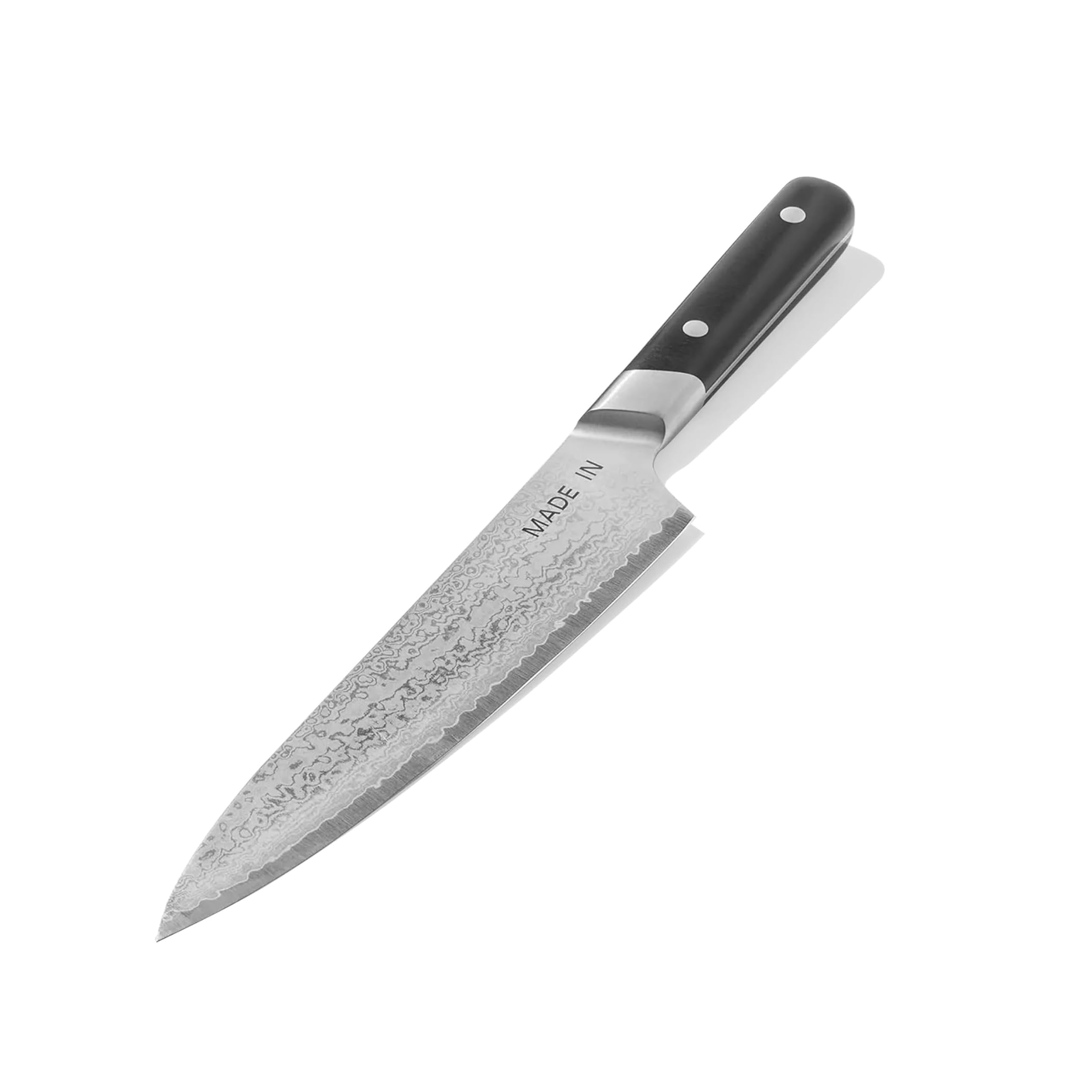
The Made In Gyuto combines a VG10 core with 66 total layers of Damascus steel, producing a blade that balances hardness with enough ductility to avoid chipping during heavy prep. It is forged in Seki, Japan — a city with eight centuries of blade-making heritage — and the 15-degree edge angle hits the sweet spot between razor sharpness and daily durability. The blade thickness measures 2.3mm at the spine, giving it enough rigidity for butternut squash while remaining light enough for precision vegetable work.
The black POM (polyoxymethylene) handle is full tang, which provides excellent balance and eliminates the weak points found in hidden-tang knives. At 7.25 ounces overall, it feels nimble rather than heavy. The blade height of 1 11/16 inches offers ample knuckle clearance, and the subtle Damascus pattern is unique to each knife because the folding process creates organic variation.
This knife suits home cooks and professionals who want a single go-to Gyuto that performs well across proteins, vegetables, and herbs. The VG10 core will need occasional honing between sharpenings, but the edge retention comfortably outlasts standard German stainless steel knives.
Why it’s great
- 66-layer Damascus with VG10 core offers excellent edge retention
- Full-tang POM handle provides perfect balance for extended use
- Forged in Seki, Japan with a practical 15-degree edge angle
Good to know
- Blade length is 7.25 inches rather than a full 8 inches
- POM handle may feel less premium than natural wood
2. Yoshihiro VG10 16 Layer Hammered Damascus Gyuto
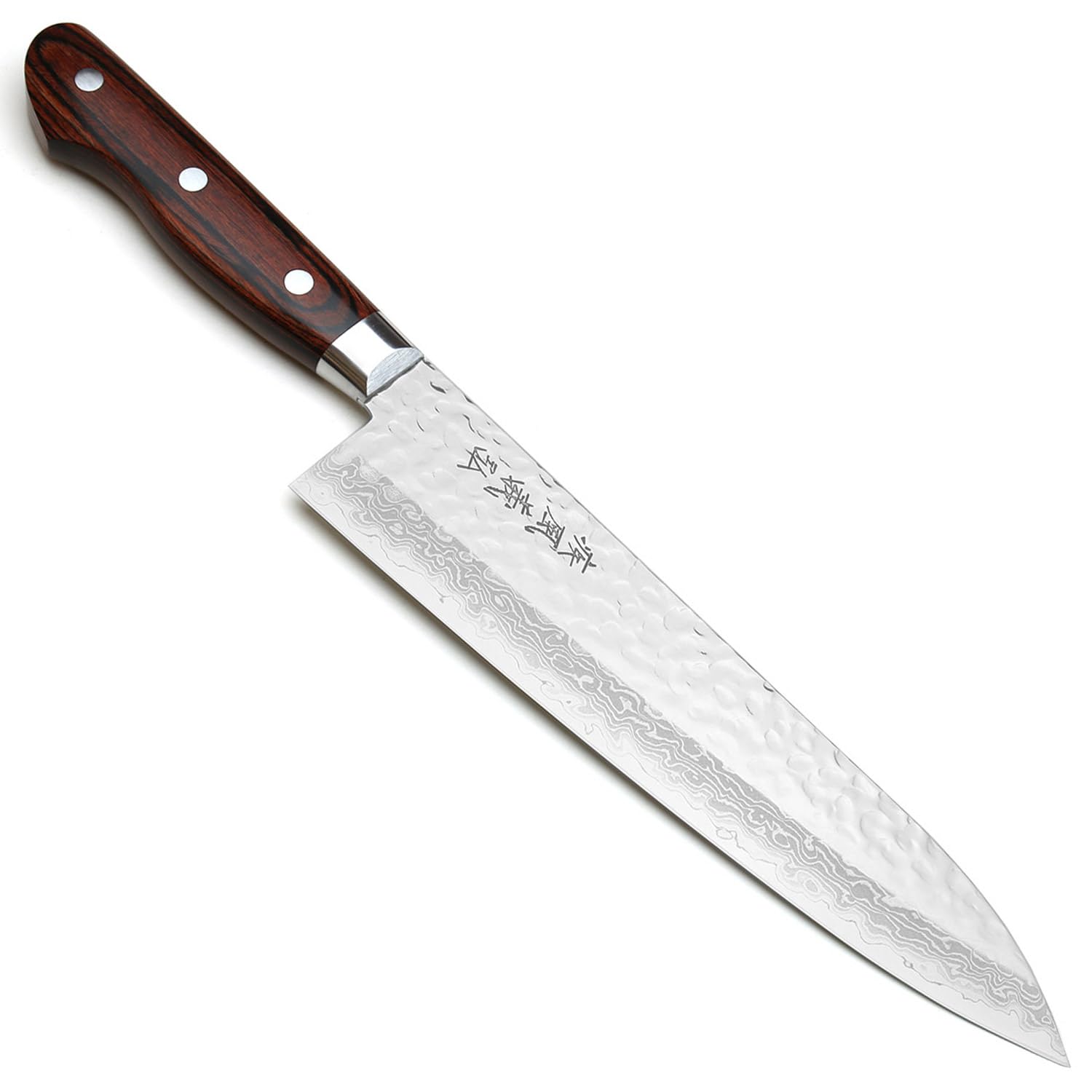
The Yoshihiro Hammered Damascus Gyuto uses a VG10 core clad in 16 layers of steel, and the hammered (tsuchime) finish on the blade surface reduces friction so sliced food releases easily. The 60 HRC hardness rating gives it strong edge stability, and the double-edged blade is sharpened to a traditional Japanese profile that cuts with minimal resistance. The 8.25-inch blade length offers extra reach compared to standard 8-inch chef knives.
The Western-style handle is made from mahogany and ergonomically contoured for a comfortable pinch grip. It is full tang, which centers the weight exactly where your hand grips it. Each knife is handcrafted by master artisans, so minor variations in the Damascus pattern and handle finish are normal. The hammered texture also helps prevent the blade from sticking to ingredients during long slicing tasks.
This knife is ideal for cooks who appreciate traditional Japanese forging methods and want a blade that feels substantial without being heavy. The VG10 core is responsive to water whetstone sharpening, and the 16-layer cladding adds visual character without affecting performance.
Why it’s great
- Hammered tsuchime finish improves food release during slicing
- Mahogany Western handle offers a secure, familiar grip
- Handcrafted in Japan with a genuine VG10 core at HRC 60
Good to know
- No saya cover is included for storage
- Hammered finish requires careful cleaning to avoid residue buildup
3. Miyabi Birchwood SG2 Japanese Chef’s Knife

The Miyabi Birchwood represents the top tier of production Japanese chef knives, using SG2 micro-carbide powder steel that reaches an exceptional hardness while maintaining fine grain structure. The blade is hand-honed through the three-step Honbazuke process to a 9.5 to 12 degree edge — the sharpest factory edge in this comparison. The 100-layer flower Damascus pattern is purely aesthetic but beautifully executed.
The handle is crafted from Karelian birch, a dense, figured wood that feels warm and secure in the hand. The traditional Japanese D-shaped profile encourages a light pinch grip and reduces fatigue during extended prep. At 8 inches, the blade is thin behind the edge, making it exceptional for precision work like slicing raw fish, chiffonading herbs, or dicing shallots. The handle length is 5.39 inches, providing a balanced overall length of 14.75 inches.
This knife demands care. The thin edge can chip if used on bones, frozen food, or hard squash. It requires honing with a ceramic rod and sharpening exclusively on water whetstones. For the cook who wants vanishingly sharp performance and is willing to maintain it, the Birchwood delivers an experience no VG10 blade can match.
Why it’s great
- SG2 powder steel holds an edge significantly longer than standard VG10
- 9.5-12 degree Honbazuke edge provides unparalleled sharpness
- Karelian birch handle is both beautiful and ergonomic
Good to know
- Thin, brittle edge requires careful use and maintenance
- Premium price point places it outside most budgets
4. KAWAHIRO Japanese Chef Knife VG10 Gyuto
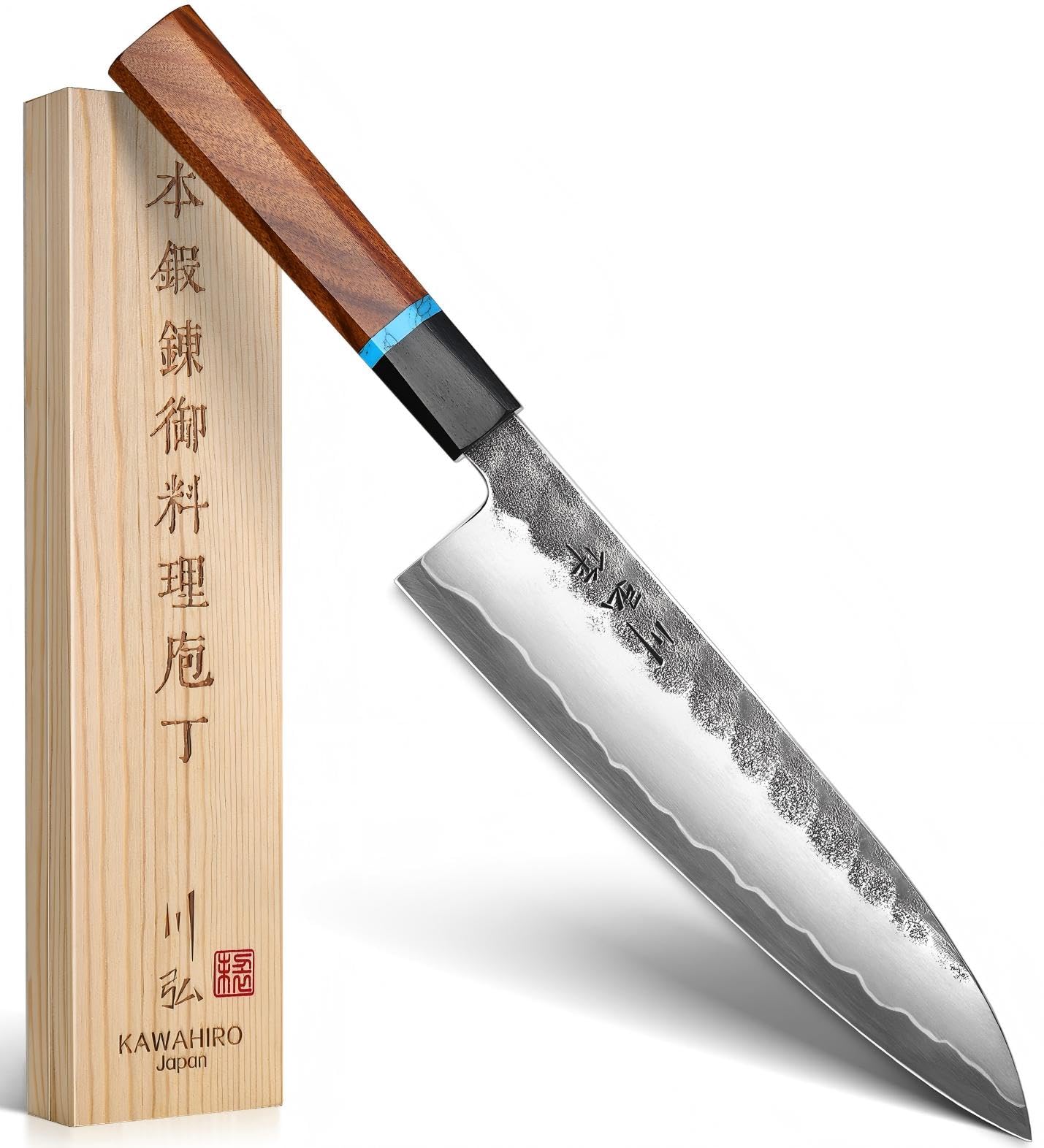
The KAWAHIRO Gyuto uses a 3-layer composite construction with a Japanese VG10 stainless steel core sandwiched between outer layers for corrosion resistance. The black forge finish gives the blade a dark, muted appearance that contrasts sharply with the vibrant handle materials — ruby wood, turquoise, and ebony. The 8.24-inch blade is hand-polished and features the natural layered pattern of the three-steel construction, making each knife unique.
The handle is an octagonal traditional Japanese shape, which naturally positions your hand for a pinch grip. The combination of dense ebony and lighter ruby wood creates a balanced weight distribution that feels lively in hand. The included wooden storage case, certificate of authenticity, and wipe cloth make this a complete gift package. The VG10 core at approximately 60 HRC provides reliable edge retention for daily home cooking.
This knife is best suited for cooks who value presentation as much as performance. The artistic handle and premium packaging elevate the unboxing experience, while the VG10 core ensures the blade performs seriously. It is not dishwasher safe — hand washing and drying immediately after use will preserve both the blade finish and the handle materials.
Why it’s great
- Striking handle combines ruby wood, turquoise, and ebony
- Comes with a premium wooden gift case and certificate
- VG10 core with three-layer construction offers solid performance
Good to know
- Black forge finish may show scratches over time
- Handle aesthetics may not suit minimalists
5. Mac Knife Chef Series Hollow Edge Chef’s Knife

The Mac Chef Series knife has been a professional mainstay for decades, and for good reason. It uses original Molybdenum steel — a high-carbon alloy that sharpens easily and holds a functional edge through a busy shift. The blade is only 2mm thick, making it one of the thinnest knives in this comparison, which translates to very low cutting resistance. The hollow edge (Granton-style) creates air pockets between the blade and the food, significantly reducing sticking on dense ingredients like potatoes and carrots.
The Pakka wood handle is a composite of layered wood veneers impregnated with resin, offering the warmth of wood with better moisture resistance than natural hardwood. It is a Western-style handle with a partial tang, giving the knife a lighter feel at 9.1 ounces. The 8-inch blade is stamped from sheet steel rather than forged, but Mac’s heat treatment and quality control are consistent enough that chefs regularly choose it over forged alternatives.
This knife is the practical choice for cooks who want a thin, nimble blade that resists sticking. It is not as hard as VG10 steel, so it will need more frequent honing, but it is also much easier to sharpen on a whetstone. Hand washing is recommended, and the Pakka wood handle wears well with proper care.
Why it’s great
- Hollow edge effectively prevents food from sticking
- Thin 2mm blade provides minimal cutting resistance
- Molybdenum steel is easy to sharpen and maintain
Good to know
- Stamped construction rather than forged
- Partial tang design alters the balance point
6. KYOKU Shogun Series VG10 Damascus Chef Knife

The KYOKU Shogun Series brings a genuine VG10 core wrapped in 67 layers of Damascus steel at a price point that undercuts most competitors. The blade is sharpened using the traditional three-step Honbazuke method to an 8 to 12 degree edge, which is exceptionally acute for an entry-level knife. The 58-60 HRC hardness rating is on the lower end of the VG10 range, but this actually makes the blade less brittle and more forgiving for home cooks who are still developing their knife technique.
The handle is made from G10 — a fiberglass-based laminate that is resistant to heat, moisture, and corrosion. It features a signature mosaic pin and is designed for ergonomic weight distribution. The included sheath and storage case provide safe storage options that many knives at this level omit. At 1.39 pounds, this is the heaviest knife in the comparison, which may reduce nimbleness but adds reassuring heft for chopping through denser ingredients.
This knife is the best entry point for cooks who want Damascus aesthetics and a VG10 core without committing to a premium price. The included accessories add value, and the slightly softer HRC means less risk of chipping during learning curve mistakes.
Why it’s great
- Genuine VG10 core with 67-layer Damascus cladding
- Includes sheath and storage case for safe handling
- G10 handle is highly durable and moisture-resistant
Good to know
- Heavier than most Japanese chef knives
- Lower HRC means faster edge wear over time
7. HOSHANHO 8 Inch Japanese Gyuto Chef Knife

The HOSHANHO Gyuto uses a 10Cr15CoMoV high-carbon steel core — an alloy similar in performance to VG10 — clad in 9 total layers of steel. The core is harder than standard German stainless steel and provides solid edge retention for the price. The blade is hand-polished to a 12-15 degree edge, which is a practical angle that balances sharpness with durability for everyday home cooking tasks like slicing chicken, dicing onions, and mincing garlic.
The handle is a traditional Japanese octagonal shape made from imported rosewood with two copper wire inlays that add visual detail. Octagonal handles naturally guide the hand into a pinch grip, which reduces wrist strain during long prep sessions. The 8.11-inch blade length paired with a 6.1-inch handle creates a ratio that centers the balance point near the handle, making the knife feel lighter than its actual weight of 221 grams (approximately 7.8 ounces).
This is the most affordable knife in the comparison that still offers a forged, layered construction and a traditional handle shape. The 60-day hand-forging process is a genuine craftsmanship claim, and the hammer pattern on the blade is functionally decorative. It is best for home cooks who want an authentic Japanese handle and layered steel without spending beyond a budget-friendly threshold.
Why it’s great
- Traditional rosewood octagonal handle encourages proper pinch grip
- 9-layer construction with high-carbon core offers good edge retention
- Very lightweight at 221 grams for nimble handling
Good to know
- No storage sheath or case included
- 10Cr15CoMoV steel is less documented than standard VG10
FAQ
Is a Japanese chef knife with a VG10 core significantly better than German stainless steel?
How often should I sharpen a Japanese Gyuto knife at home?
Can I use a Japanese chef knife to cut through chicken bones or hard squash?
Final Thoughts: The Verdict
For most users, the best japanese chef knife winner is the Made In 8″ Japanese Damascus Steel Gyuto because it combines a proven VG10 core, 66-layer Damascus construction, and a well-balanced full-tang handle at a price that sits comfortably between entry-level and enthusiast tiers. If you want the most impressive edge performance and are willing to maintain a delicate blade, grab the Miyabi Birchwood SG2. And for a budget-friendly entry into traditional Japanese handles and layered steel, the HOSHANHO 10Cr15CoMoV Gyuto delivers surprising value without sacrificing the core design philosophy of a genuine Japanese chef knife.