Roasting your own green beans shifts your morning ritual from routine to revelation. The smell of first crack, the hiss of chaff, the sight of beans turning from pale green to deep amber — this is the real coffee experience. But buying the wrong roaster leaves you with uneven batches, burnt beans, and a machine that gathers dust after the first week.
I’m Mohammad Maruf — the founder and writer behind AirfryerBite. I’ve spent countless hours analyzing home roaster hardware, studying drum heat transfer, and comparing batch uniformity across gas, electric, and fluid bed designs to help you make a smart, confident purchase.
Whether you are a total novice or a seasoned home roaster, understanding the trade-offs between capacity, heat control, and smoke management is the core of picking the right coffee bean roaster for your counter.
How To Choose The Best Coffee Bean Roaster
Home coffee roasters fall into two main camps: drum roasters (gas or electric) and fluid-bed air roasters. Your choice depends on how much control you want, how much smoke your kitchen can handle, and how many beans you need per batch. These are the four specs that separate a smart buy from a regret.
Batch Size and Drum Material
If you drink two cups a day, a roaster with a 100–200g capacity is enough. A 400–500g drum serves a heavy-use household or small gatherings. Drum material matters: quartz glass lets you watch the color change directly, while stainless steel offers better durability and heat retention. Avoid carbon steel drums — they rust faster and transfer heat unevenly.
Heat Source and Control Modes
Gas burners give you instant temperature response but require more attention to avoid scorching. Electric roasters with built-in thermocouples provide more consistent heat across the batch. Look for manual, assisted, and automatic modes: beginners benefit from auto profiles, but the ability to override fan speed and power in manual mode is what allows you to develop a signature roast.
Smoke Management
Roasting produces smoke, especially past first crack. An integrated smoke filter works well for light roasts in a well-ventilated kitchen. For medium-dark roasts, you will need a roaster that includes exhaust pipes to vent smoke outdoors. Do not underestimate this — unvented smoke can trigger smoke alarms and make the kitchen unusable.
Cooling and Chaff Collection
After the roast, beans must cool quickly or they continue cooking internally, ruining the flavor. A separate cooling tray with a high-speed fan is the gold standard. Chaff collection also matters: built-in chaff collectors reduce dust inside the drum, and easy-access drawers make cleanup faster than models that scatter silverskin all over the counter.
Quick Comparison
On smaller screens, swipe sideways to see the full table.
| Model | Category | Best For | Key Spec | Amazon |
|---|---|---|---|---|
| Fresh Roast SR800 | Fluid Bed | Fast, small-batch roasting | 226g per batch | Amazon |
| MAGO MAGA Roma Pro | Hot Air | Smart home roasting | 300g capacity | Amazon |
| Precision PKF-500 | Electric Drum | Three-mode flexibility | 500g (1 lb) capacity | Amazon |
| NIASIA PKF-500g | Electric Drum | Dual smoke exhaust | 500g capacity | Amazon |
| Sandbox Smart R1 | Direct Fire | App-based precision | 150g batch | Amazon |
| DYVEE KAKA-G400 | Gas Drum | Transparent glass drum | 300g optimum batch | Amazon |
| ICZW JT-3A | Gas Drum | Large-batch roasting | 14.5L capacity | Amazon |
| Terra Kaffe Demi | Espresso Machine | All-in-one brewing | Integrated burr grinder | Amazon |
In‑Depth Reviews
1. Fresh Roast SR800
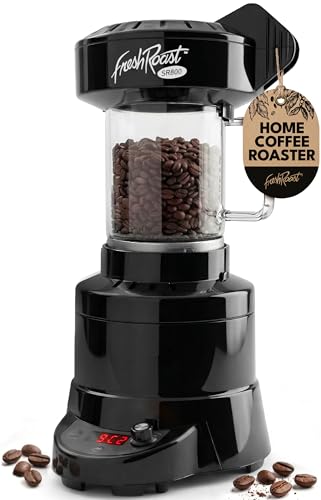
The Fresh Roast SR800 uses a fluid-bed air system that suspends beans in a hot air stream, eliminating the risk of scorching that drum roasters can introduce. With nine power levels and variable fan speed, you can manipulate the roast curve from a gentle drying phase through first crack and into second crack with fine adjustments. The digital display shows real-time bean temperature, which is critical for repeatable results.
Roast time runs about six to ten minutes per batch, and the 226-gram capacity yields enough beans for 14 to 28 cups of coffee. The clear plastic chamber lets you watch the color transition — useful when you are training your ear to identify first crack by sound. The built-in chaff collector catches most silverskin, though some fine dust escapes through the cooling vents.
This is a USA-based company with responsive customer support. The design is straightforward and requires no gas hookup or external venting for light-medium roasts. For beginners who want a low-smoke, repeatable way to start roasting immediately, this is the most accessible entry point in the mid-range category.
Why it’s great
- Fast six-minute roast cycle preserves bean freshness
- Nine power settings give granular heat control
- No gas tank or outdoor setup needed
Good to know
- Maximum batch size is limited to 8 oz
- Dark roast smoke may still trigger nearby smoke detectors
2. MAGO MAGA Roma Pro
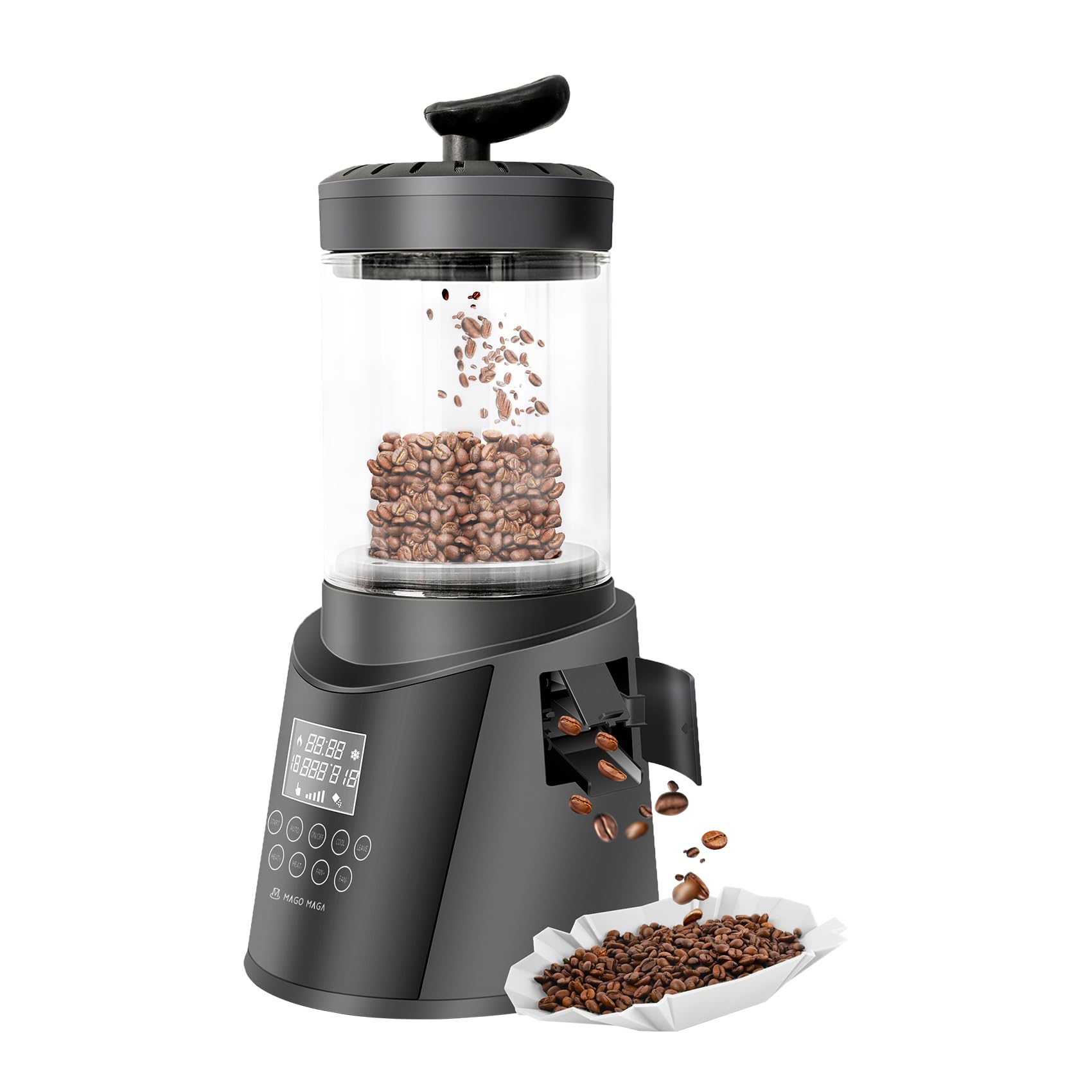
The Roma Pro merges a smart digital interface with a classic hot-air roasting design, winning a 2025 SCA Best New Product Award. The display shows elapsed time and bean temperature in Celsius or Fahrenheit, and the machine offers both auto and manual modes. Auto mode uses a pre-set temperature curve that works well for most standard green beans, while manual mode gives you full control over heat and airflow.
The 300-gram batch size suits daily home use. A double-layer glass window lets you monitor color changes without opening the chamber and losing heat. The ultra-low smoke feature relies on an efficient chaff collector and recirculating airflow, which keeps the process manageable indoors. After the roast completes, the auto-cooling function drops bean temperature quickly, locking in the flavor profile you developed.
CE and ETL certifications indicate the electrical components meet safety standards. The version 1.5 upgrade improved the bean bin door switch, making operation smoother. This is not a coffee maker — it roasts green beans only. For home enthusiasts who want a modern, tactile roasting experience with a clear window into the process, the Roma Pro delivers.
Why it’s great
- SCA award-winning design with proven reliability
- Double-layer glass window for real-time bean viewing
- Auto-cooling preserves roast profile instantly
Good to know
- Decaf beans require manual mode for best results
- Not suitable for commercial or high-volume use
3. Precision PKF-500 (1 lb Electric Roaster)
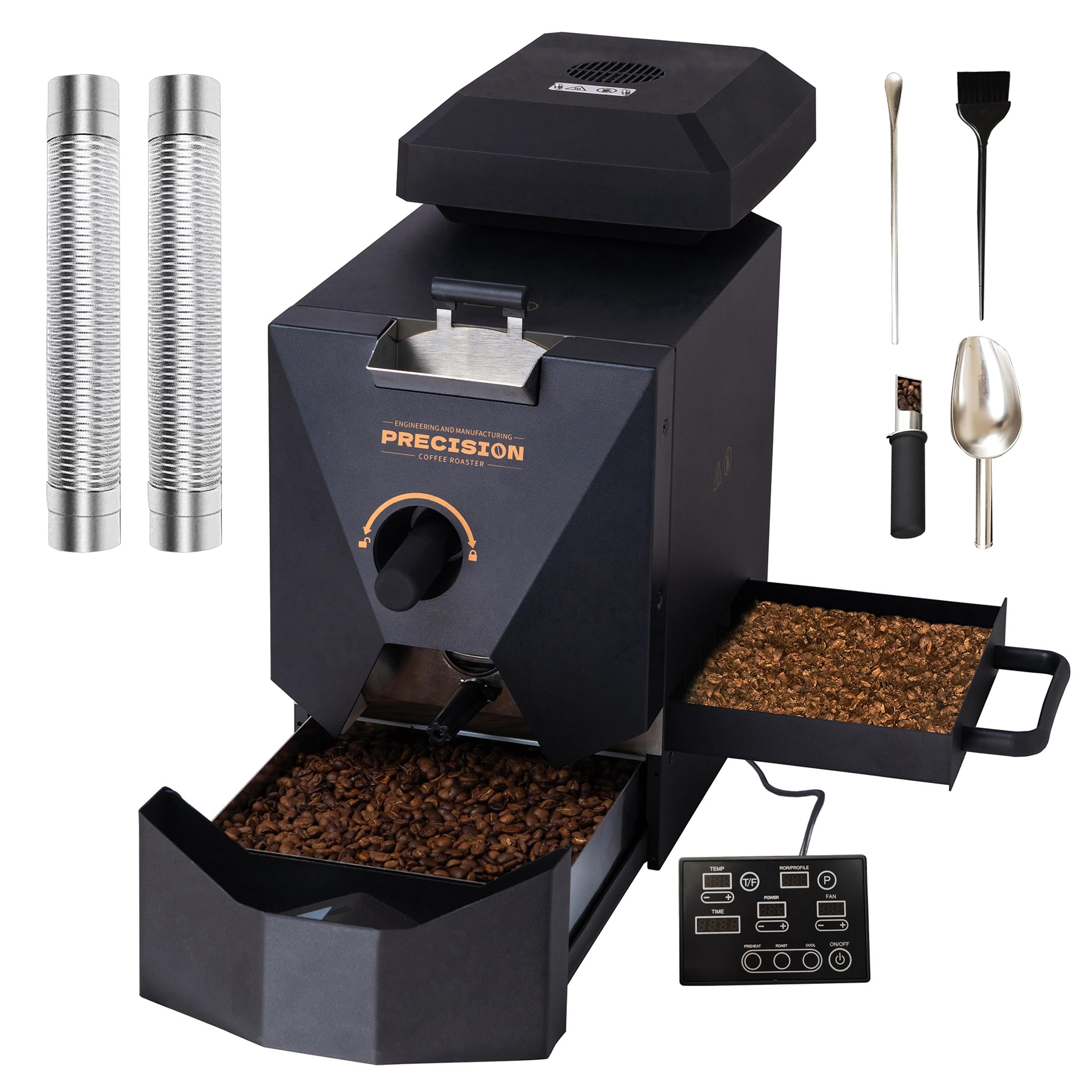
The Precision PKF-500 offers three distinct operating modes — automatic, assisted, and manual — which makes it a flexible choice as your skills grow. Automatic mode uses pre-programmed curves for hands-off roasting. Assisted mode lets you decide when to drop the beans while the machine controls temperature rise and airflow. Manual mode hands over every variable: power, fan speed, and roast duration.
The one-pound capacity is enough for a family that drinks coffee daily. An observation window and sample spoon allow you to check bean color and draw samples mid-roast without opening the drum. The included smoke filter handles light roasts well, and for medium-dark roasts, two chimney tubes can be attached to vent smoke outdoors. The chaff collector gathers silverskin efficiently, keeping the drum clean.
The touchscreen interface is responsive and logically laid out. At 22 pounds, this is a heavier machine, so plan a permanent spot on your counter. It is not designed for commercial use, but the build quality suggests it can handle frequent weekly roasting sessions over several years.
Why it’s great
- Three operating modes suit novice to expert skill levels
- Sample spoon allows mid-roast bean inspection
- Smoke filter plus vent tubes manage all roast levels
Good to know
- Heavy build requires dedicated counter space
- Not intended for commercial or high-frequency daily use
4. NIASIA PKF-500g

The NIASIA PKF-500g is built around a stainless steel drum that holds up to 500 grams of green beans, with a recommended sweet spot of 350 to 400 grams per batch. The machine comes with a smoke purifier for light roasts and two aluminum smoke pipes for medium-dark roasts, giving you flexibility depending on your roast level. The automatic mode includes nine pre-loaded roasting profiles covering light, medium, dark, sun-dried, washed, and honey-processed beans.
A high-speed cooling fan and separate cooling tray cool beans rapidly after the roast stops, preventing carry-over cooking. The intelligent temperature probe and controller maintain consistent heat throughout the cycle. The manual mode requires a minimum airflow setting of 60, and you must raise airflow to 90-100 at first crack — the manual provides clear guidance for first-time users.
Note that the drum can jam if you use defective or unevenly sized beans, so sorting green beans before roasting is essential. The carbon steel exterior is less premium than stainless steel, but the internal drum and key components are built to last. This is a capable machine for home users who want to roast across multiple profiles without spending at the top of the market.
Why it’s great
- Nine automatic profiles cover all common roast levels
- Separate cooling tray with high-speed fan locks in flavor
- Dual exhaust system handles light, medium, and dark roasts
Good to know
- Defective beans can jam the drum — pre-sorting needed
- Carbon steel exterior is less durable than stainless
5. Sandbox Smart R1

The Sandbox Smart R1 is a direct-fire electric roaster designed around app-based control. The Sandbox Smart Roaster app guides you through each roast, saves your history, and gives you access to 16 preloaded roasting curves. You can also create custom profiles and share recipes with the community. For advanced users, manual mode adjusts power and fan speed independently.
Batch size is 100 to 150 grams — enough for about seven cups of coffee per roast. The 15-minute cycle is fast, and the direct-fire design means beans are closer to the heat source, giving a quick development phase. The silverskin drawer collects chaff for easy cleanup. The separate cooling tray ensures beans stop roasting immediately after the cycle ends.
This roaster includes a one-year warranty from Sandbox Smart. It is compact enough to fit under cabinets, and the app connectivity makes repeatable roasting simple once you save a profile you like. The trade-off is the small batch size; heavy households will need to run multiple batches back to back. For the single-batch enthusiast who values precision, this is a compelling option.
Why it’s great
- App-based control with auto-saved roast history
- 16 preloaded curves plus custom profile creation
- Compact footprint fits on small countertops
Good to know
- Small batch size requires multiple runs for heavy use
- App dependency may limit operation without a smartphone
6. DYVEE KAKA-G400

The DYVEE KAKA-G400 uses a quartz glass drum that makes the entire roasting process visible. You can watch green beans turn yellow, enter first crack, and darken to your desired level without opening the chamber. The 304 stainless steel frame and base provide a stable platform, while the wooden handle stays cool during operation. The recommended batch size is 200 to 300 grams, with a maximum of 400 grams.
A 12-volt low-voltage motor powers the drum rotation, which is safer than higher-voltage designs. The gas burner provides direct heat, and adjusting the flame gives you instant temperature response. The included funnel and power adapter get you set up quickly. This machine can also roast peanuts and other nuts, adding versatility beyond coffee.
Weighing 17 pounds, it is stable on the counter. The trade-off is that gas roasting requires attention — you cannot set a profile and walk away. Smoke management depends on your ventilation; there is no built-in filter. For purists who want to see every stage of the roast and enjoy the tactile control of a gas flame, the G400 is a strong mid-range choice.
Why it’s great
- Quartz glass drum offers full visual transparency
- Gas burner provides instant heat response
- Versatile for roasting nuts as well as coffee
Good to know
- No built-in smoke filter — requires good ventilation
- Gas flame demands active monitoring during roasting
7. ICZW JT-3A (14.5L Drum)

The ICZW JT-3A is a 14.5-liter drum roaster designed for large batches — roughly 3.5 to 4.0 kilograms of beans per cycle. The stainless steel drum includes cooling holes and double baffles that ensure beans rotate uniformly for even heat distribution. The external motor is easy to maintain, and the included thermometer lets you track temperature throughout the roast.
Place the roaster on a gas stove — it heats directly via the burner — and adjust the speed based on the bean type. This design works for coffee beans, peanuts, soybeans, and other materials larger than 2mm in diameter. At just 7 pounds, it is significantly lighter than drum roasters with built-in motors, but it requires an external stove to operate.
The price point is entry-level for such a large capacity, but remember that you need a gas stove and good ventilation. There is no automated temperature curve, no digital display, and no built-in cooling system. This is a hands-on tool for users who want maximum volume per batch and are comfortable managing the roast manually from start to finish.
Why it’s great
- Massive 14.5L capacity for large batch roasting
- Lightweight design for a drum roaster
- Included thermometer offers basic temperature tracking
Good to know
- Requires a gas stove — no standalone electric operation
- No automated profiles or digital controls
8. Terra Kaffe Demi
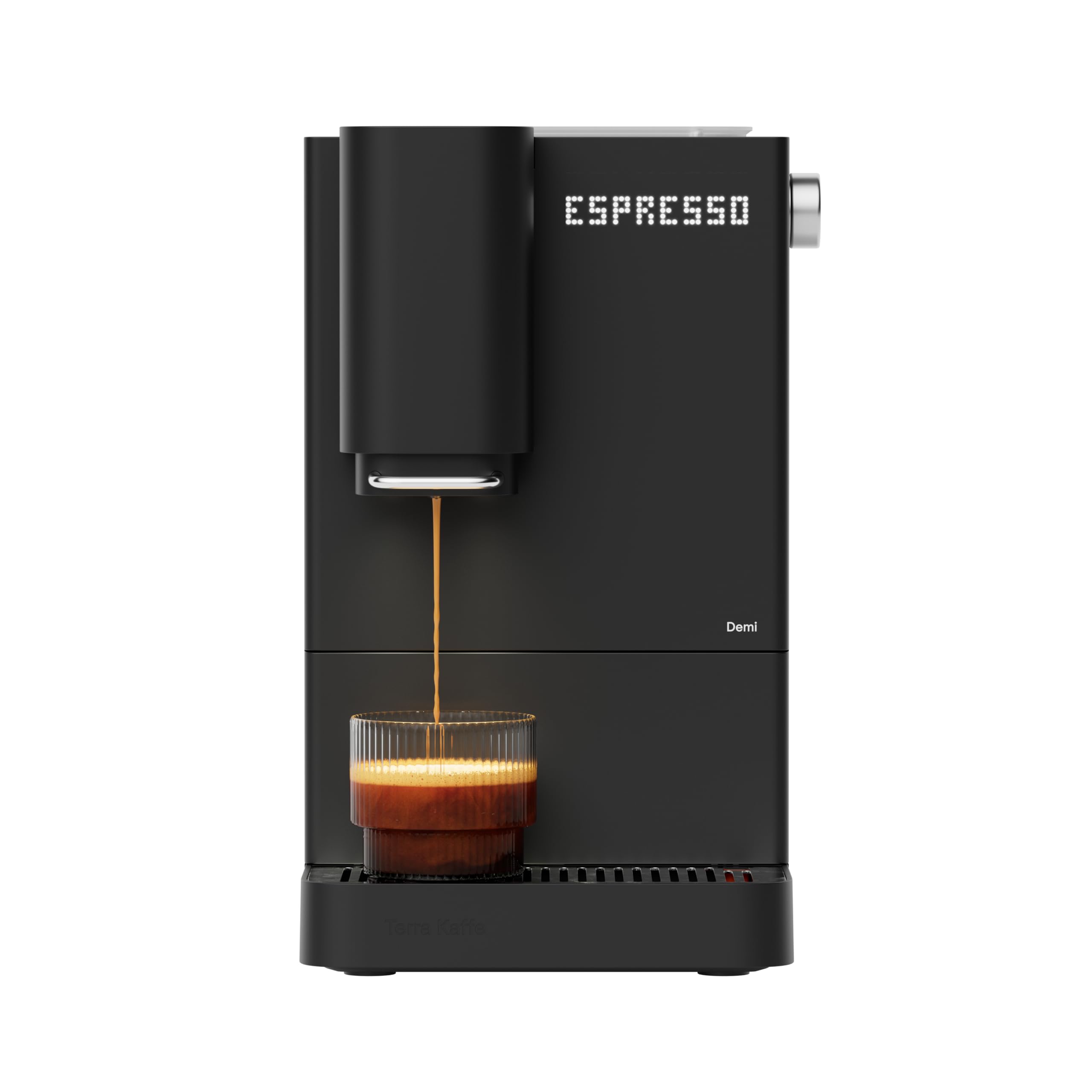
The Terra Kaffe Demi is a fully automatic espresso machine with an integrated precision conical burr grinder, designed for users who want freshly ground coffee without a separate grinder and roaster setup. The 7.5-inch-wide footprint fits into tight kitchens and office break rooms. It produces espresso, lungo, Americano, and drip-style coffee at the touch of a button.
The stainless steel dial lets you adjust brew strength, water temperature, and drink volume. The self-cleaning system and front-loading drip tray make daily maintenance simple. The 37.2-fluid-ounce water tank is generous for a compact machine. The slate matte finish looks clean on any countertop.
This is not a coffee bean roaster — it is an espresso machine that grinds whole beans and brews immediately. If you want to roast your own green beans, you would still need one of the dedicated roasters above. The Demi is listed here for readers who want the complete bean-to-cup experience without a separate roasting step. It is the most convenient option for those who prioritize speed and ease over the hands-on craft of roasting.
Why it’s great
- Ultra-compact design with integrated burr grinder
- Versatile brewing options from espresso to drip-style
- Self-cleaning system reduces daily maintenance
Good to know
- Not a dedicated roaster — does not process green beans
- Requires pre-roasted whole beans for operation
FAQ
How much green coffee should I buy for a month of daily drinking?
Can I use a fluid-bed air roaster for dark roasts without setting off smoke alarms?
Why do some roasters recommend sorting beans before roasting?
Final Thoughts: The Verdict
For most users, the coffee bean roaster winner is the Fresh Roast SR800 because it delivers fast, repeatable fluid-bed roasting with granular heat and fan control at a mid-range price. If you want a smart, app-connected roasting experience with community-recipe support, grab the Sandbox Smart R1. And for large-batch roasting on a gas stove, nothing beats the capacity of the ICZW JT-3A.