That sour, rotting smell coming from the kitchen bin every time you scrape a plate is a warning sign. It means your food scraps are decomposing anaerobically, releasing methane and attracting fruit flies right next to your prep space. A proper compost machine stops that cycle, turning wet waste into dry, nutrient-rich material without the mess, the smell, or the guilt of sending organic matter to a landfill.
I’m Mohammad Maruf — the founder and writer behind AirfryerBite. I’ve spent years dissecting the hardware that sits on your countertop or in your backyard, from electric dehydration cycles and microbial fermentation tanks to tumbling aeration systems, all to find which machines actually deliver on their claims.
This guide breaks down every spec and real-world detail you need to confidently pick the right compost machine for your home, whether you want a simple countertop appliance, a high-capacity tumbler, or a premium microbial unit that handles two pounds of scraps daily without a single odor.
How To Choose The Best Compost Machine
Kitchen compost machines fall into two fundamentally different categories: electric dehydration units that grind, heat, and dry scraps into a powder, and outdoor tumblers or microbial units that rely on biology and aeration to break down waste over days or weeks. The right choice depends entirely on where you plan to use it, how much waste your household produces, and what you want to do with the final material.
Capacity — Daily Volume vs. Batch Size
For countertop electric machines, capacity is measured in liters (2.5L to 5L is standard). A 2.5L unit handles daily scraps for one or two people but requires emptying every cycle. For outdoor tumblers, capacity is measured in gallons (37 to 45 gallons is common), which lets you accumulate weeks of material before processing a full batch. Match the capacity to your household’s average weekly food waste volume to avoid overloading or underutilizing the machine.
Processing Technology — Dehydration vs. Microbial
Electric dehydration machines use a heating element and grinding blades to turn food scraps into a dry, coffee-ground-like material in 4 to 8 hours. The output is safe to use as a soil amendment but is not biologically active compost. Microbial machines like the Reencle Prime use a starter culture that actively digests waste, producing true compost with beneficial bacteria. The microbial route takes longer per batch but generates richer material and consumes far less electricity per cycle.
Odor Control — Filtration Depth Matters
Every electric compost machine relies on activated carbon filters to trap volatile organic compounds released during heating and grinding. Single-layer filters provide basic odor absorption for 3 to 6 months. Three-layer filter systems, combined with sealed gaskets and internal fans, maintain a neutral kitchen environment even during a full cycle. For outdoor tumblers, aeration holes and dust-sealed doors prevent odors from attracting pests while allowing airflow for aerobic decomposition.
Quick Comparison
On smaller screens, swipe sideways to see the full table.
| Model | Category | Best For | Key Spec | Amazon |
|---|---|---|---|---|
| Reencle Prime | Microbial | True compost, daily use | 14L capacity, 28 dB noise | Amazon |
| Food Cycler Eco 5 | Electric Dehydrator | Large countertop batches | 5L bucket, Vortech grinding | Amazon |
| Ouaken 4L Electric Composter | Electric Dehydrator | Family of 4, auto-clean | 4L capacity, 3 cycle modes | Amazon |
| Airthereal Revive R500-V | Electric Dehydrator | Viewing window, 2-5 hr cycles | 2.5L, SHARKSDEN Tri-Blade | Amazon |
| Airthereal Revive R500 | Electric Dehydrator | Entry-level electric, 4hr runs | 2.5L, cast aluminum bucket | Amazon |
| TOPZEE Electric Composter | Electric Dehydrator | Compact countertop, low noise | 3L, under 40 dB, auto-clean | Amazon |
| Marcytop Dual Chamber Tumbler | Outdoor Tumbler | Large yard, batch composting | 45 gal, powder-coated steel | Amazon |
| FCMP Outdoor HOTFROG Tumbler | Outdoor Tumbler | No-assembly, mobile unit | 37 gal, UV-inhibited PE | Amazon |
| Compost Genie Kitchen Bin | Passive Storage | Odorless scrap collection | 3.6 gal, hands-free foot pedal | Amazon |
In‑Depth Reviews
1. Reencle Prime Electric Composter
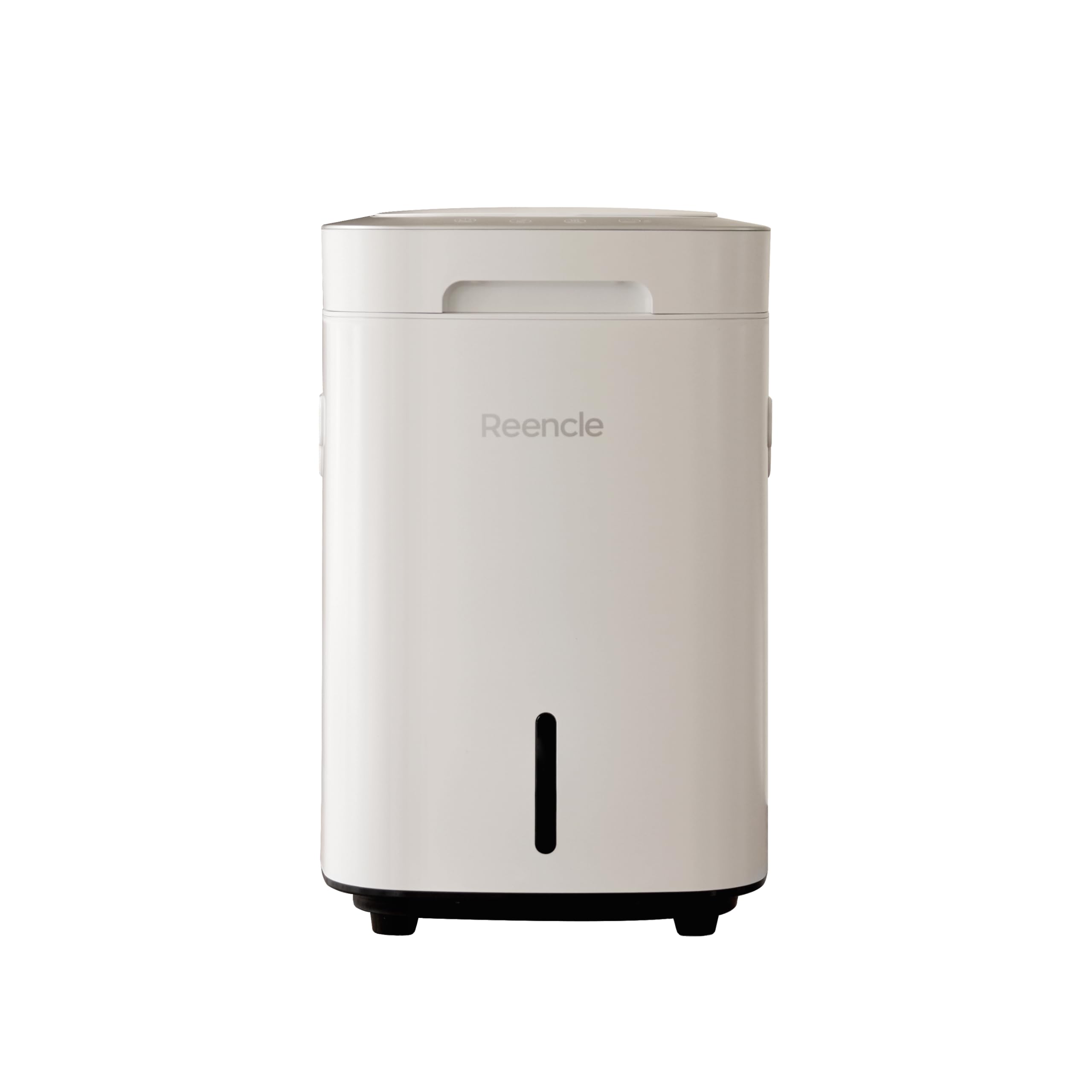
The Reencle Prime is the only machine on this list that uses a proprietary aerobic microbial culture to break down food scraps into genuine compost rather than dehydrated powder. Its 14-liter internal capacity is massive for a countertop unit, processing up to 2.2 pounds of waste per day without requiring you to empty it after every cycle. The three-layer carbon filter system and sealed gasket keep the kitchen odor-free even when the machine is actively digesting meat scraps and citrus peels.
Whisper-quiet operation at 28 decibels means you can run it overnight without disturbance, and the cycle time ranges from 2 to 24 hours depending on the volume and type of waste. The included starter pack contains the microbial culture, so you are ready to compost immediately out of the box. The output is dark, crumbly, biologically active soil that smells like forest floor, not a drying rack filled with dehydrated kitchen waste.
Long-term cost is lower than electric dehydrators because the Reencle does not rely on high-wattage heating elements for every cycle. The carbon filters last several months, and the microbes self-regulate as long as you add waste regularly. If you want real compost that improves soil structure rather than just ground-up dried scraps, this is the machine that delivers.
Why it’s great
- Produces genuine aerobic compost, not dehydrated powder
- 14L capacity handles a family’s daily waste without frequent emptying
- Near-silent 28 dB operation allows overnight cycles
- Three-layer carbon filtration eliminates odors during active digestion
Good to know
- Premium price reflects the microbial technology and build quality
- Requires regular waste additions to keep the microbe colony active
- Initial batch takes up to 24 hours as the culture establishes
2. Food Cycler Eco 5
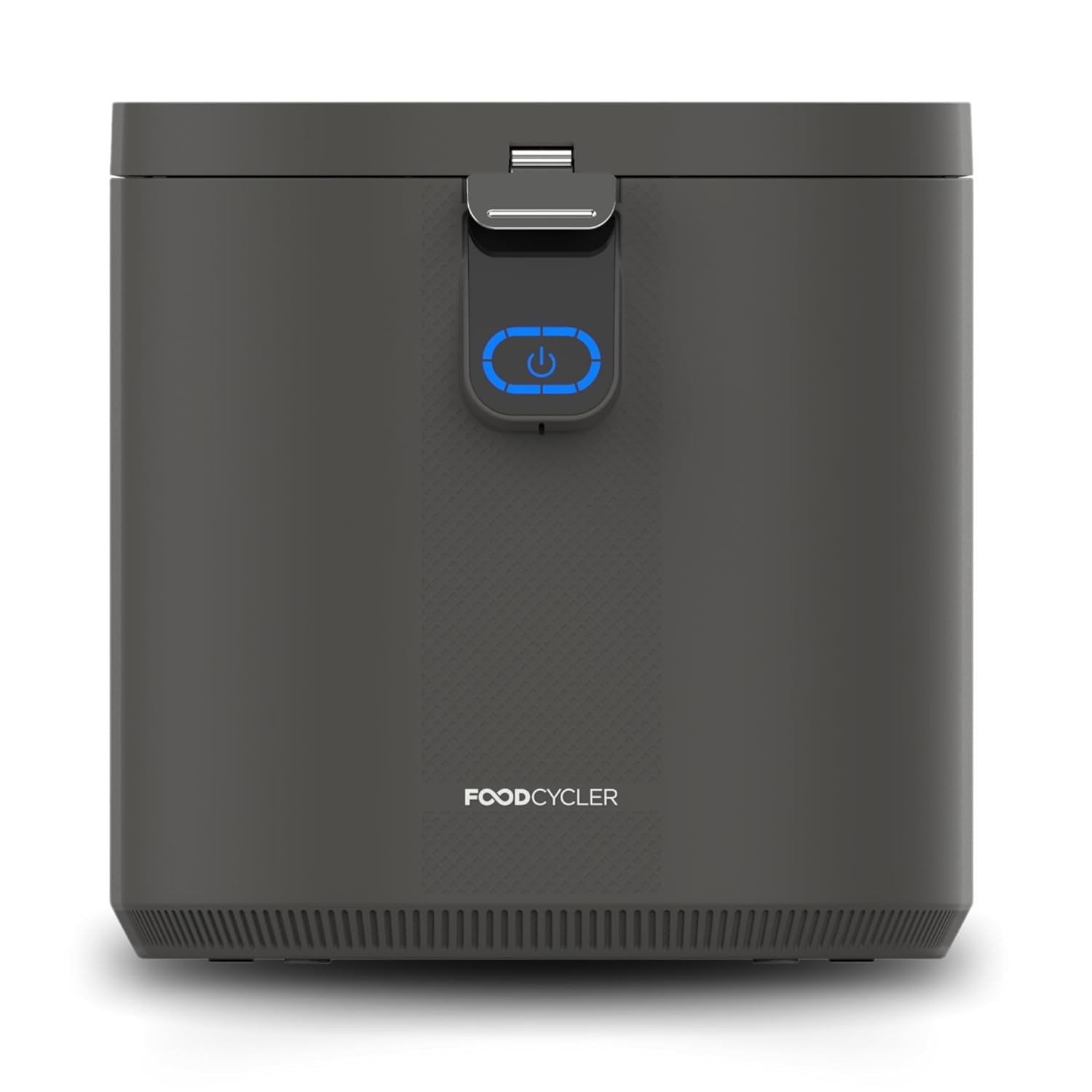
With a 5-liter bucket, the Food Cycler Eco 5 offers the largest capacity among countertop electric dehydrators in this guide. The proprietary Vortech grinding system handles fibrous material, pits, and small bones that jam standard blade designs, reducing waste volume by up to 90 percent per cycle. The refillable carbon filter sits in a dedicated housing and neutralizes odors during the 6- to 8-hour drying cycle.
Users consistently report that the finished material is dry and fine enough to mix directly into garden soil or potted plants without attracting pests. The machine runs quietly enough to place on a kitchen counter without disturbing conversation, and the one-button interface means no menu scrolling or mode confusion. The 3-year limited warranty adds peace of mind for a machine that processes daily waste.
The larger bucket does come with a taller footprint, so measure your counter depth before purchasing. The Eco 5 delivers consistent, dry output batch after batch, making it a solid choice for families that generate a lot of kitchen scraps and want a set-it-and-forget-it electric solution.
Why it’s great
- 5L bucket is the largest among electric dehydrators in this roundup
- Vortech grinding breaks down pits, peels, and small bones efficiently
- Three-year limited warranty covers the motor and electronics
- Quiet operation and straightforward one-button control
Good to know
- Taller design may not fit under standard wall cabinets
- Cycle time of 6-8 hours requires some planning
- Output is dehydrated powder, not biologically active compost
3. Ouaken 4L Electric Composter

The Ouaken 4L Electric Composter fills the middle ground between compact 2.5L units and the larger Eco 5, making it ideal for a family of three to four. Its 4-liter aluminum alloy bucket supports three distinct modes: Crush for quick volume reduction, Ferment for higher-quality compost output, and Clean for a one-button self-cleaning cycle. The transparent lid lets you monitor the internal process without opening the seal and releasing heat or moisture.
The low-speed, high-torque blade design handles tough fibrous scraps without stalling, and the machine operates below 40 decibels, so you can run it in an open-plan kitchen without annoyance. The carbon filter lasts up to five months before needing replacement, reducing long-term consumable costs. The dishwasher-safe bucket simplifies post-cycle cleanup significantly compared to fixed-basin designs.
Ouaken advises emptying the bucket after each cycle to prevent clumping, which is a minor extra step but ensures consistent performance. The Ferment mode is a genuine differentiator for a machine at this tier, producing material that is more nutrient-dense than straight dehydrated powder. The compact footprint suits smaller countertops while still offering enough capacity for daily use.
Why it’s great
- Three operating modes give control over output quality and speed
- Dishwasher-safe bucket makes daily maintenance easy
- Transparent lid allows visual monitoring without opening the seal
- Low noise level stays under 40 dB during fermentation cycles
Good to know
- Bucket must be emptied after each cycle to prevent clumping
- Ferment mode takes longer than Crush mode for finished output
- Carbon filter replacement interval is approximately five months
4. Airthereal Revive R500-V

The Airthereal Revive R500-V is identical in internal mechanics to the standard R500 but adds a tempered glass viewing window that lets you watch the SHARKSDEN Tri-Blade pulverize food scraps in real time. The visual feedback is surprisingly useful — you can see when material has been fully reduced and decide whether to run a shorter or longer cycle. The trident blade geometry with serrated edges grinds from multiple angles, reducing the chance of unprocessed chunks.
The 2.5-liter cast aluminum bucket is dishwasher safe and heats evenly during the 2- to 5-hour drying cycle. Biodegradable activated carbon filters handle odor control without adding plastic waste to the landfill. The 3-year warranty (1.5-year manufacturer plus 1.5-year extension) is generous for a machine at this level and signals confidence in the motor and heating assembly.
Capacity is the main limitation here — 2.5 liters is suitable for one to two people who empty daily. The glass cover may get clouded over time from mineral buildup if you live in a hard-water area, though a vinegar wipe restores clarity. For those who enjoy the process of composting and want to see the transformation happen, the R500-V adds an engaging layer that blind machines lack.
Why it’s great
- Tempered glass cover provides real-time visual feedback of the grinding cycle
- SHARKSDEN Tri-Blade processes material from multiple directions
- Cast aluminum bucket is dishwasher safe and distributes heat evenly
- Extended 3-year warranty coverage for long-term ownership
Good to know
- 2.5L capacity requires daily emptying for more than two people
- Glass may show mineral deposits over time in hard-water areas
- Biodegradable filters still need periodic replacement every 3-6 months
5. Airthereal Revive R500

The Airthereal Revive R500 is the baseline electric dehydration machine that sets the standard for this subcategory. Its 2.5-liter cast aluminum bucket accepts a full day’s scraps for a couple, and the SHARKSDEN Trinity Blade — a three-direction grinding assembly — pulverizes material into a fine, dry powder within 4 hours. The one-button operation means there is no mode confusion, just press start and walk away.
The biodegradable carbon filter traps odors between cycles, and the bucket’s aluminum construction resists warping and staining far better than plastic alternatives. At 16.8 pounds, the R500 has a solid, anchored feel on the countertop that lighter budget machines lack. The 1-year manufacturer warranty is standard for this tier, and replacement carbon filters are widely available and affordable.
This machine is best for households that produce modest daily waste and want the fastest possible turnaround from scrap to dry powder. It does not produce biologically active compost, but the volume reduction is dramatic, and the final material can be used as a soil amendment or simply disposed of without the smell factor. For a budget-friendly entry point into electric composting, the R500 delivers reliable, repeatable results.
Why it’s great
- Reliable 4-hour cycle produces consistently dry, fine powder
- Cast aluminum bucket resists staining and is dishwasher safe
- One-button operation requires no cycle selection or menu navigation
- Solid 16.8-pound build stays planted on the counter during grinding
Good to know
- 2.5L capacity limits it to one or two people per cycle
- 1-year warranty is shorter than some competitors
- Output is dehydrated powder, not biologically active compost
6. TOPZEE Electric Composter
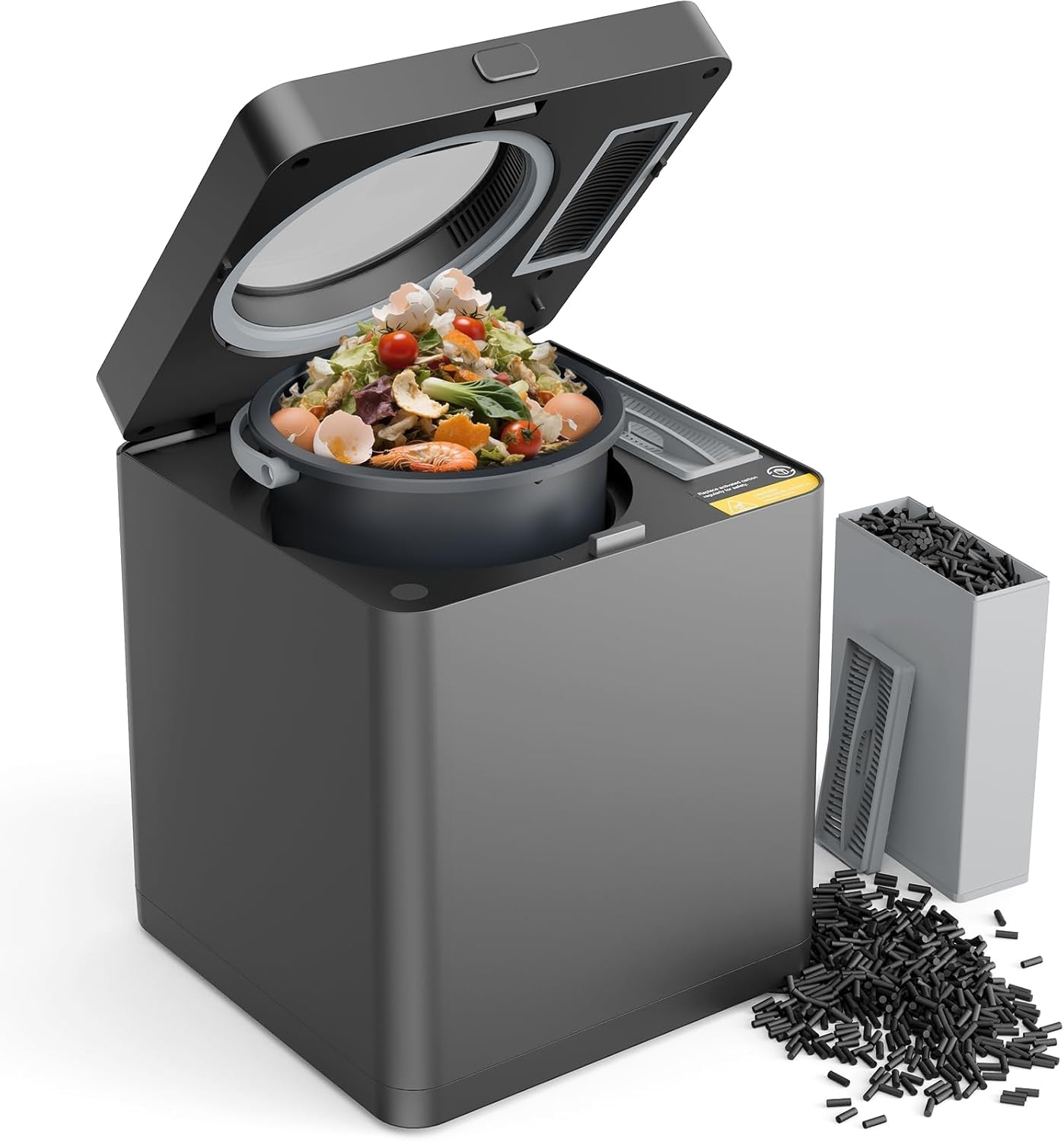
The TOPZEE Electric Composter packs a 3-liter bucket into a 9.05-inch square footprint, making it one of the most counter-friendly machines on this list. The internal system offers two modes: fast mode at 4 hours and standard mode at 6 hours, both controlled by a smart temperature and humidity sensor that adjusts the cycle to the moisture content of the load. The one-button automatic cleaning cycle uses internal heat to dry out residue, reducing the need for manual scrubbing.
Noise output stays below 40 decibels, and the machine draws only 0.51 kWh per cycle, making it energy-efficient enough to run nightly without a noticeable bump in your electric bill. The activated charcoal filter is a large-capacity unit that absorbs odors effectively for 3 to 6 months. The non-stick coating on the bucket prevents food from baking onto the surface during the high-temperature drying phase.
The 3-liter capacity is a sweet spot for small families or individuals who cook at home daily. The fast mode is genuinely fast for a dehydrator — 4 hours from wet scraps to dry powder. The auto-clean feature is convenient, though the non-stick coating requires care with metal utensils to avoid scratching. For a compact machine that balances speed, efficiency, and low noise, the TOPZEE is a strong mid-range contender.
Why it’s great
- 3L capacity in a compact 9-inch square footprint
- Smart sensor adjusts cycle to moisture content for consistent results
- Auto-cleaning cycle reduces manual maintenance work
- Low energy draw at 0.51 kWh per cycle
Good to know
- Non-stick coating can be scratched by metal utensils
- Carbon filter replacement needed every 3-6 months
- Not designed for large volumes of bones or hard pits
7. Marcytop Dual Chamber Tumbler

The Marcytop Dual Chamber Tumbler splits its 45-gallon capacity into two 22.5-gallon compartments, allowing you to fill one chamber while the other completes its composting cycle. This batch-system approach is the gold standard for outdoor composting because you never interrupt an active batch to add fresh scraps. The aeration holes and internal deep fins break up clumps and mix oxygen into the pile as you rotate the barrel, speeding up decomposition significantly compared to stationary bins.
The frame uses powder-coated steel that resists rust even in humid climates, and the polypropylene chambers are UV-inhibited to prevent sun damage. Assembly takes about 30 minutes with the buckle-and-screw system. User reviews highlight that the tumbler remains stable during rotation and has not cracked or warped after a year of continuous use. The orange door and hexagonal shape make it visually distinct in the yard.
Rotating the barrel requires some physical effort once the chambers are full of wet material, though the geometry of the deep fins acts as leverage. The large openings and removable doors make it easy to add kitchen scraps layered with brown material like dried leaves. This is an excellent choice for gardeners who generate yard waste alongside kitchen waste and want a reliable, large-volume system.
Why it’s great
- Dual 22.5-gallon chambers allow continuous filling and composting simultaneously
- Powder-coated steel frame resists rust in humid outdoor environments
- Aeration holes and deep fins improve oxygen circulation and break up clumps
- Stable base stays planted during rotation even when fully loaded
Good to know
- Requires physical effort to rotate when chambers are full of wet waste
- Assembly takes about 30 minutes with the included instructions
- Outdoor placement needed — not suitable for indoor or balcony use
8. FCMP Outdoor HOTFROG Tumbler

The FCMP Outdoor HOTFROG Rolling Single Chamber Tumbler is the easiest outdoor compost machine to get started with because it arrives fully assembled — open the box, roll it into your yard, and start adding scraps immediately. The 37-gallon capacity is large enough for a family that cooks and gardens, and the rolling base lets you move the composter to where the compost is needed rather than hauling buckets of material across the yard.
The deep fins on the polyethylene barrel body serve as ergonomic handholds and break up clumps during rotation. Aeration holes run the length of the drum to maintain aerobic conditions. In hot, sunny weather with a proper brown-to-green ratio, finished compost can be ready in as little as two weeks. The BPA-free, UV-inhibited recycled polyethylene withstands years of sun exposure without becoming brittle.
The single-chamber design means you cannot add fresh scraps to a batch that is actively maturing, which may slow throughput for heavy generators. The rolling mechanism works well on grass or packed dirt but may be less stable on uneven gravel. For the set-it-and-forget-it crowd who want the lowest possible friction entry into outdoor composting, the HOTFROG is a fantastic pick.
Why it’s great
- Arrives fully assembled — no tools or setup time required
- Rolling base allows easy relocation to different garden areas
- UV-inhibited polyethylene resists sun damage and cracking
- Deep fins provide ergonomic handholds and break up compost clumps
Good to know
- Single chamber means you can’t add fresh waste mid-batch
- Rolling stability decreases on loose or uneven ground surfaces
- 40-50 rotations every 2-3 days needed for optimal aeration
9. Compost Genie Kitchen Bin

The Compost Genie is not a machine that transforms waste into compost — it is a passive storage bin designed to hold kitchen scraps until you transfer them to an outdoor pile or municipal collection. Its 3.6-gallon capacity is larger than most countertop pails, and the hands-free foot pedal makes it easy to deposit scraps while your hands are full of peels and packaging. The proprietary ventilation system circulates air through a built-in carbon filter to minimize odors between transfers.
The bin comes with eight compostable bags that conform to ASTM D6400 standards and hook into place so they do not slip during heavy use. The removable catch-all tray at the bottom catches any liquid drips from wet scraps, preventing sludge from pooling at the base of the bin. The stainless steel construction resists staining and odors far better than plastic bins, and the 23.5-inch height means you do not have to bend down to use it.
This is an essential companion for anyone who uses an outdoor tumbler or municipal compost service. The carbon filter needs replacement every 3 to 6 months depending on usage, and the bin does not process or break down waste — it simply stores it odor-free until you transport it. For its purpose as a clean, convenient intermediary between your kitchen and your compost system, the Compost Genie excels.
Why it’s great
- Foot pedal allows hands-free operation while handling messy scraps
- Carbon filter and ventilation system keep odors contained between transfers
- Stainless steel build resists staining and retains no residual smells
- Catch-all tray prevents liquid pooling at the bottom of the bin
Good to know
- Does not compost or break down waste — storage only
- Carbon filter requires periodic replacement for odor control
- Compostable bags are narrow-specific; standard bags may not fit
FAQ
Can I put meat, dairy, or bones in an electric compost machine?
How often do I need to replace the carbon filter in an electric composter?
What is the difference between dehydrated powder from an electric composter and real compost?
Can I use an outdoor tumbler on a balcony or apartment patio?
Final Thoughts: The Verdict
For most users, the compost machine winner is the Reencle Prime because it produces genuine, biologically active compost from a countertop unit with near-silent operation and robust odor filtration. If you want a large-batch electric dehydrator with the biggest bucket capacity, grab the Food Cycler Eco 5. And for a no-assembly outdoor tumbler that handles yard waste alongside kitchen scraps, nothing beats the ease of the FCMP Outdoor HOTFROG.