A petty knife bridges the gap between a bulky chef’s knife and a tiny paring knife, making it the most versatile blade for precise work like trimming herbs, slicing fruit, or deveining shrimp. The right edge geometry and steel composition determine whether your cuts glide or crush delicate ingredients.
I’m Mohammad Maruf — the founder and writer behind AirfryerBite. I’ve spent years analyzing blade metallurgy, handle ergonomics, and heat-treatment processes to identify which kitchen knives deliver real cutting performance for home cooks.
This guide compares seven distinct options to help you find the sharpest, most durable japanese petty knife for your kitchen prep routine.
How To Choose The Best Japanese Petty Knife
Japanese petty knives offer a compact blade usually between 4.5 and 6 inches, designed for accurate slicing, paring, and trimming. Choosing the right one means balancing steel type, handle comfort, and blade construction against your cooking habits.
Steel Composition and Hardness
The core steel dictates how long the edge stays sharp and how easily it can be honed. High-carbon stainless steels like VG10, AUS-10V, and 9Cr18MoV typically reach a Rockwell hardness of HRC 58–62. Harder steel above HRC 60 holds an edge longer but becomes more brittle and prone to chipping if used on bones or frozen foods. Softer steel around HRC 58 is tougher and easier to sharpen but requires more frequent honing.
Blade Length and Profile
A 5 to 6-inch blade works best as a go-to utility size for both board work and hand-held cutting. Shorter blades under 5 inches feel nimble for peeling and coring but lack the edge length for efficient slicing of larger produce. The blade profile—whether it has a straight edge or a slight belly—determines how smoothly it rocks on a cutting board.
Handle Material and Ergonomics
Traditional handles use rosewood or magnolia, often with an octagonal shape for a secure pinch grip. Western-style handles with full tangs and rivets offer a heavier, more balanced feel. Synthetic materials like pakkawood or G-10 resist moisture and temperature changes better than natural wood, reducing the risk of cracking over time.
Quick Comparison
On smaller screens, swipe sideways to see the full table.
| Model | Category | Best For | Key Spec | Amazon |
|---|---|---|---|---|
| Yoshihiro VG10 Damascus | Premium | Detail-oriented home cooks | VG10 core, 16-layer Damascus, HRC 60 | Amazon |
| Dalstrong Shogun Petty | Premium | Professional edge retention | AUS-10V steel, 67-layer Damascus, HRC 62 | Amazon |
| WÜSTHOF Classic 5″ | Mid-Range | Broad utility cutting tasks | German stainless steel, forged full tang | Amazon |
| TOJIRO FU-802 Petty | Mid-Range | Budget-conscious precision cutters | Cobalt alloy steel core, 150mm blade | Amazon |
| HOSHANHO 6″ Utility | Mid-Range | Lightweight all-day prep | 10Cr15CoMoV steel, 15° edge angle | Amazon |
| Kai Wasabi Black Utility | Entry Level | Value seekers needing versatility | Daido 1K6 high-carbon stainless steel | Amazon |
| MITSUMOTO SAKARI 5.5″ Paring | Entry Level | Hand-held paring and peeling | 9Cr18MoV steel, 3-layer forged, HRC 60 | Amazon |
In‑Depth Reviews
1. Yoshihiro VG10 16 Layer Hammered Damascus Stainless Steel Petty Utility Knife (5.3″)

The Yoshihiro petty knife uses a VG10 stainless steel core wrapped in 16 layers of Damascus steel, delivering a sharp edge that resists corrosion without sacrificing hardness. At HRC 60, the blade holds its cutting geometry through extended prep sessions on soft vegetables and boneless proteins. The hammered surface reduces food drag, so sliced tomatoes and citrus release cleanly from the blade face.
The Western-style mahogany handle runs the full tang, providing balanced weight distribution that suits both pinch and hammer grips. The 5.3-inch blade length sits in the sweet spot between a classic petty and a smaller paring knife, making it effective for slicing cucumbers on the board and trimming green beans in hand. Each knife is handcrafted in Japan by master artisans, so subtle variations in the Damascus pattern give it a unique look.
This knife does not include a protective saya, so you must store it in a blade guard or magnetic strip. The VG10 core requires water-whetstone sharpening rather than pull-through sharpeners to maintain the edge geometry. For cooks who want a premium Japanese steel petty at a reasonable investment, this Yoshihiro delivers top-tier performance.
Why it’s great
- Damascus layering with VG10 core for lasting sharpness
- Hammered finish minimizes food sticking
- Full tang Western handle balances beautifully
Good to know
- No saya or sheath included
- Requires water whetstone for sharpening
2. DALSTRONG Utility Knife – Shogun Series Petty – Damascus – Japanese AUS-10V – 6″

The Dalstrong Shogun petty knife pushes edge performance with an AUS-10V Japanese super steel core hardened to HRC 62, sandwiched between 67 layers of high-carbon stainless steel. The hand-finished edge is sharpened to 8–12 degrees per side using the Honbazuke method, resulting in a scalpel-like slice that glides through pepper skins and boneless chicken thighs with minimal resistance. Nitrogen cooling during production enhances flexibility and corrosion resistance.
The military-grade G-10 handle is fully polished and ergonomically contoured to promote a natural pinch grip during extended use. A precision-fit polymer saya sheath protects the blade during storage. The 6-inch blade length gives you more cutting surface than a standard 5-inch petty, which helps when dicing larger produce like bell peppers or sweet potatoes.
Cooks who prefer German knife toughness but want Japanese steel geometry will appreciate the Dalstrong balance between hardness and impact resistance. The 67-layer Damascus pattern is purely aesthetic but adds visual appeal. At this premium tier, the included saya and lifetime warranty add tangible value for serious home cooks.
Why it’s great
- Ultra-hard AUS-10V core at HRC 62 holds edge exceptionally long
- Included polymer saya for safe storage
- Ergonomic G-10 handle resists moisture
Good to know
- Heavier than traditional Japanese handles
- Requires careful honing to avoid micro-chipping
3. WÜSTHOF Classic 5″ Utility Knife
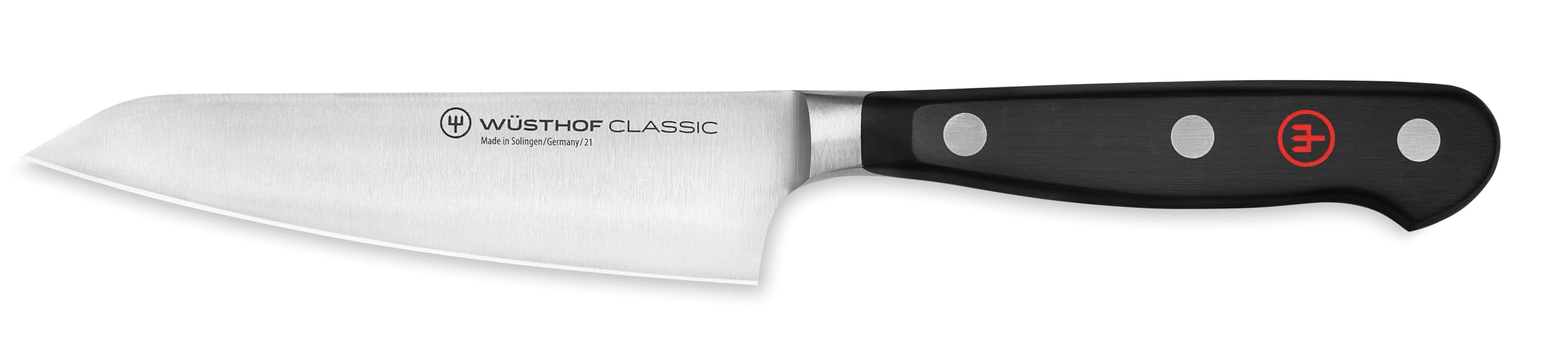
WÜSTHOF’s Classic series brings German engineering to the utility knife category with a precision-forged stainless steel blade that balances edge retention with easy resharpening. The 4.72-inch blade has a uniquely curved straight edge designed for both low rock cuts on a board and close hand work. This knife is slightly shorter than a typical petty but offers exceptional agility for tasks like coring apples or slicing mushrooms.
The full tang, triple-riveted synthetic handle feels solid and secure even when wet, and the 10-inch overall length provides enough reach for most prep work. Customer reviews consistently note that this knife holds its factory edge longer than expected, and it sharpens well on a honing steel or whetstone. The WÜSTHOF name carries a limited lifetime warranty from their Solingen factory.
This knife does not qualify as a traditional Japanese petty due to its thicker blade stock and heavier weight, but it performs the same role with more durability. Cooks who sometimes cut near bones or hard squash will appreciate the extra toughness. The smaller handle may feel restrictive for users with larger hands.
Why it’s great
- German steel resists chipping better than high-hardness Japanese blades
- Triple-riveted handle offers secure grip
- Lifetime warranty from established brand
Good to know
- Heavier and thicker than true Japanese petty knives
- Handle may be small for larger hands
4. TOJIRO Co, Ltd. Fujita Toru Pro DP Knife with Petit Knife 150 mm FU-802

Tojiro’s FU-802 petit knife uses a cobalt alloy steel core surrounded by 13-chrome stainless steel, creating a blade that resists staining while maintaining a hard cutting edge. The 150mm blade length (roughly 5.9 inches) makes it one of the longer options in this comparison, which helps when slicing larger fruits like mangoes or melons. The serrated edge provides additional cutting aggression for tomatoes and citrus with tough skins.
This knife is entirely made in Japan and is ambidextrous, suitable for both right and left-handed users. The stainless steel handle is seamless and easy to clean, though it lacks the warmth and grip texture of wood or synthetic handles. Because the handle is fully stainless, this knife is dishwasher safe, which is rare for a Japanese petty knife and a practical convenience for busy households.
The Tojiro FU-802 feels lighter than its size suggests, making it effective for rapid slicing tasks without wrist fatigue. The serrated edge, however, requires specialized sharpening equipment compared to plain-edge blades. This petty knife works best for cooks who want a durable, low-maintenance blade that cuts through tough-skinned produce cleanly.
Why it’s great
- Dishwasher safe stainless steel handle
- Cobalt alloy core offers good edge retention
- Serrated edge slices tomatoes and citrus cleanly
Good to know
- Serrated edge requires diamond rod or professional sharpening
- Metal handle can feel slippery when wet
5. HOSHANHO 6 Inch Kitchen Knife, Ultra Sharp Japanese High Carbon Stainless Steel Chef Knife

The HOSHANHO 6-inch utility knife features a 10Cr15CoMoV stainless steel core, triple-stacked to balance hardness with corrosion resistance. At HRC 60, the blade is hand-sharpened to 15 degrees per side, producing a fine edge suitable for precise slicing, mincing, and chopping. The 6-inch blade provides the longest cutting surface in this comparison, making it a viable alternative to a chef’s knife for smaller hands.
The pakkawood handle resists heat, cold, and moisture better than untreated wood, and the integrated ridge provides a comfortable grip for extended prep sessions. The frosted blade finish paired with the visible wood grain creates an attractive aesthetic that works as a gift for cooking enthusiasts. The knife weighs only 4 ounces, which reduces wrist strain during repetitive cutting tasks.
This knife lacks a bolster, so the edge runs close to the handle, allowing full use of the blade length. The pakkawood handle requires hand washing and periodic oiling to maintain its luster. For home cooks who want a longer petty blade with a traditional Japanese feel at a mid-range price, the HOSHANHO delivers solid performance.
Why it’s great
- 6-inch blade length offers maximum utility in a compact form
- Lightweight at 4 ounces reduces fatigue
- Pakkawood handle is durable and attractive
Good to know
- No sheath or storage case included
- Requires hand washing and occasional handle oiling
6. Kai Wasabi Black Utility Knife, 6-Inch

The Kai Wasabi Black utility knife brings traditional Japanese styling to an affordable price point using Daido 1K6 high-carbon stainless steel. The bead-blasted blade finish reduces glare and hides minor scratches from regular use. The 6-inch blade length matches the longest options in this guide, providing ample cutting surface for slicing sandwiches, cheese, and vegetables.
The polypropylene handle is sturdy and clean, though it lacks the warmth of wood or the texture of G-10. The handle shape is relatively straight, which works fine for a pinch grip but may not suit users who prefer a contoured feel. The knife is made in Japan and carries a limited lifetime warranty, which is uncommon for entry-level Japanese knives.
This knife uses a stamped rather than forged construction, which reduces overall weight and cost but also means the blade is thinner and may require more frequent sharpening. The edge arrives sharp from the factory but benefits from a few passes on a honing steel to maintain performance. It is a practical, budget-friendly option for cooks who want a Japanese-style utility knife without investing in premium steel.
Why it’s great
- Affordable entry into Japanese utility knives
- Bead-blasted finish hides wear well
- Limited lifetime warranty included
Good to know
- Stamped construction is less durable than forged blades
- Polypropylene handle lacks ergonomic contouring
7. MITSUMOTO SAKARI 5.5 inch Japanese Paring Knife

The MITSUMOTO SAKARI paring knife uses 9Cr18MoV high-carbon steel forged into three layers with a Rockwell hardness of HRC 60. The 5.5-inch blade is designed for hand-held tasks like coring strawberries, deveining shrimp, and making decorative cuts, but it also works on a board for shallots, garlic cloves, and mushrooms. The vacuum-hardening process improves flexibility while maintaining a fine edge.
The octagonal rosewood handle provides natural moisture resistance and fits ergonomically in the hand, reducing fatigue during prolonged peeling. The knife comes with a sandalwood storage case that protects the blade and organizes your countertop. For the price, the included case adds significant value compared to other entry-level options that ship in plain packaging.
This knife is strictly a paring tool and may feel short for general slicing tasks on a cutting board. The high-carbon steel requires immediate hand drying after use to prevent discoloration. For cooks who prioritize a compact, nimble blade for precision work and want a beautiful storage case, the MITSUMOTO SAKARI is a strong entry-level pick.
Why it’s great
- Sandalwood case included for organized storage
- Octagonal rosewood handle provides secure wet grip
- Vacuum-hardened 9Cr18MoV steel holds sharp edge
Good to know
- Shorter blade is best for hand-held paring, not board slicing
- High-carbon steel requires immediate drying
FAQ
What is the ideal blade length for a Japanese petty knife?
Can I use a Japanese petty knife on bones or frozen food?
How do I sharpen a Damascus steel petty knife?
Final Thoughts: The Verdict
For most users, the japanese petty knife winner is the Yoshihiro VG10 Damascus because it combines a premium VG10 core with beautiful hammered Damascus construction at a mid-range price. If you want maximum edge retention and a modern handle, grab the Dalstrong Shogun. And for a durable, easy-to-maintain everyday blade, nothing beats the WÜSTHOF Classic.