A dull blade tears the delicate flesh of raw fish, ruining the texture and turning premium cuts into a mushy mess. The right yanagiba knife glides through a fillet in a single, clean stroke, preserving the integrity of every slice. Choosing one from the crowded market is the difference between a masterful plate and a frustrating kitchen session.
I’m Mohammad Maruf — the founder and writer behind AirfryerBite. I spend my days analyzing the metallurgy, edge geometry, and construction methods that define true cutlery performance for specialized kitchen tasks.
This guide breaks down the Blade Material, single-bevel edge design, and Rockwell Hardness ratings you need to know to find the knife for sashimi that delivers restaurant-quality slices at home.
How To Choose The Best Knife For Sashimi
A true sashimi knife, or yanagiba, is defined by its long, narrow blade and single-bevel grind. These features are not decorative; they reduce friction and cell damage, keeping the fish’s texture intact. Here are the three critical factors to evaluate before buying.
Steel Type and Hardness (HRC)
The steel determines how long the edge stays sharp and how easily it can be honed. High-carbon stainless steels like VG-10 offer good corrosion resistance and a hardness around HRC 58-60. Traditionalists prefer White Steel (Shirogami) with HRC 62-63 for superior sharpness but must accept that it will rust if not dried immediately. For most enthusiasts, a mid-range high-carbon stainless steel provides the best balance of performance and maintenance.
Single Bevel vs. Double Bevel
A traditional yanagiba uses a single-bevel edge (sharpened only on one side). This design allows an incredibly acute angle, often 12-15 degrees, which slices through protein with minimal resistance. A double-bevel knife is easier for left-handed users to find and requires less technique, but it will always create more friction. If you want the purest sashimi experience and are willing to practice, go single bevel.
Blade Length and Handle Comfort
Sashimi knives typically range from 9.4 to 11.8 inches. A longer blade allows you to cut through a wide fillet in a single pull, which is essential for clean slices. The handle should provide a secure, balanced grip. Traditional octagonal or D-shaped (Wa-style) handles in magnolia or rosewood offer excellent control and reduce wrist fatigue during extended prep sessions.
Quick Comparison
On smaller screens, swipe sideways to see the full table.
| Model | Category | Best For | Key Spec | Amazon |
|---|---|---|---|---|
| Yoshihiro 10.5″ (Magnolia) | Premium | Traditional purists | HRC 62-63 White Steel | Amazon |
| Global G-11R | Premium | Low-maintenance modernists | Seamless stainless steel | Amazon |
| Yoshihiro 11.8″ (Rosewood) | Premium | Large fillet slicing | 300mm White Steel #2 | Amazon |
| Masahiro 10613 | Mid-Range | Reliable daily driver | MBS-26 stainless steel | Amazon |
| MITSUMOTO SAKARI 11″ | Mid-Range | Entry-level single bevel | Tungsten alloy steel | Amazon |
| KEEMAKE 10.5″ | Value | Budget-conscious buyers | VG-10 steel core | Amazon |
| HOSHANHO 10″ | Value | Starter sashimi knife | 10Cr15CoMoV super steel | Amazon |
In‑Depth Reviews
1. Yoshihiro Shiroko High Carbon Steel Kasumi Yanagi Magnolia Handle (10.5″)
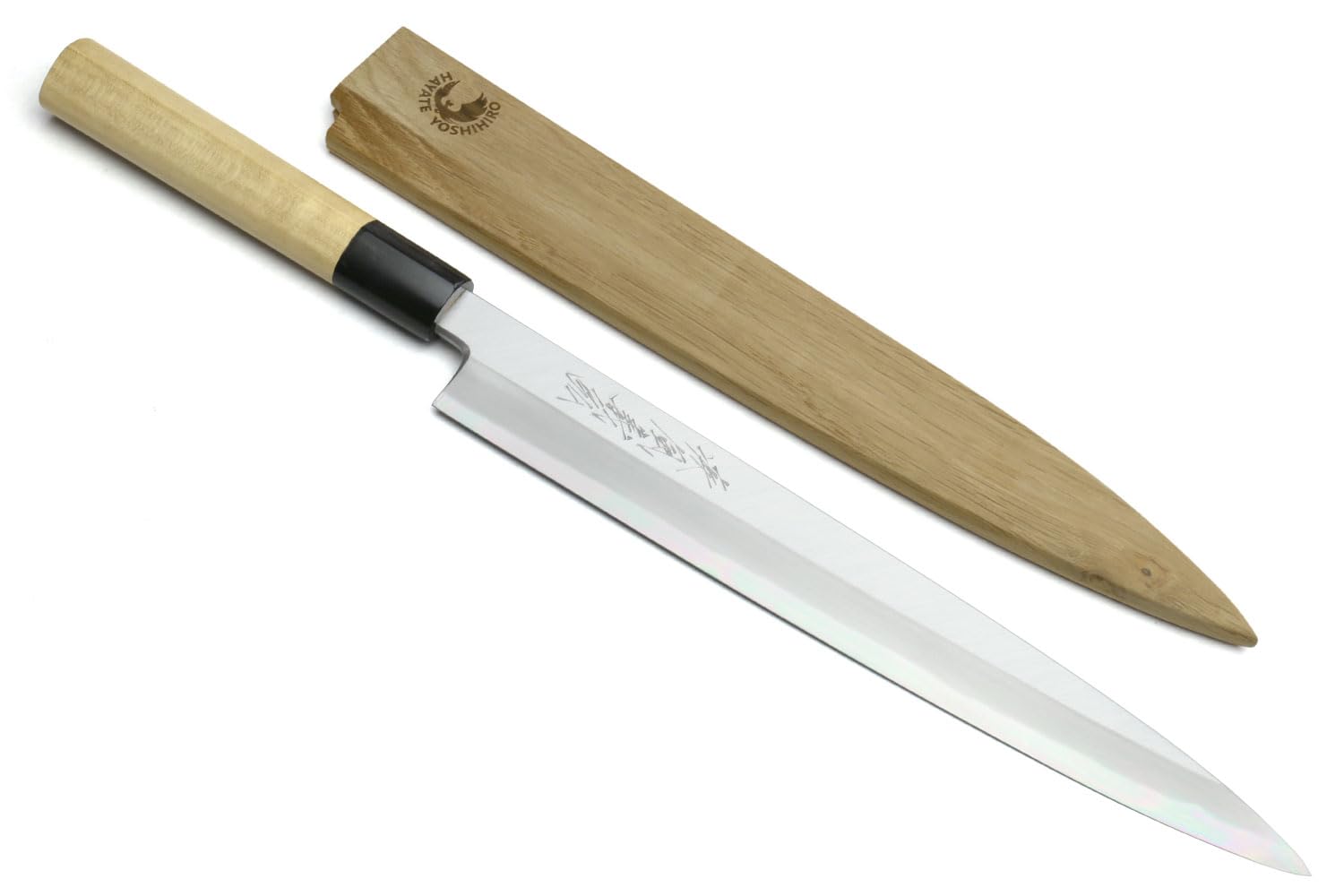
This Yoshihiro yanagiba hits the sweet spot for serious home chefs. The White Steel #2 core, forged with iron to create the traditional Kasumi mist pattern, reaches a Rockwell hardness of 62-63. That hard edge allows for an incredibly acute grind, which translates to effortless, clean cuts through tuna and salmon without crushing the cells.
The traditional Wa-style D-shaped magnolia handle is lightweight and ergonomic, promoting a fatigue-free grip during long prep sessions. It comes with a protective magnolia Saya sheath, keeping the blade safe when stored. The single-bevel design with a concave Urasuki grind on the back side minimizes sticking and drag.
Owners consistently praise the out-of-box sharpness and note that it holds the edge well for a carbon steel knife. The main trade-off is maintenance — White Steel will oxidize quickly if left wet, so immediate hand drying and occasional oiling are mandatory. This knife rewards users who respect traditional Japanese steel care.
Why it’s great
- Superb HRC 62-63 edge retention for clean slices
- Lightweight magnolia handle reduces fatigue
- Includes traditional Saya sheath for protection
Good to know
- Carbon steel requires diligent drying and oiling
- Not stainless; can rust if left wet
2. Global 10 Inch Right-Handed Yanagi Sashimi Knife G-11R

The Global G-11R is a modern take on the yanagiba, built from a single piece of high-quality stainless steel. This seamless construction eliminates any risk of handle loosening or bacteria buildup, making it one of the most hygienic options on the list. It is stamped from CROMOVA 18 stainless steel, which offers excellent corrosion resistance and a razor-sharp edge that stays sharp longer than standard stainless.
At 10 inches, the blade is long enough for broad fillets, and the hollow-ground edge reduces drag. The signature weighted handle and dimpled pattern provide a secure grip even when wet. It is perfectly balanced, with the center of gravity right at the bolster for precise control.
Because it is fully stainless, the G-11R is far more forgiving than carbon steel alternatives — no need to oil it or worry about immediate rust. The trade-off is a slightly lower maximum sharpness compared to high-carbon White Steel, but for a low-maintenance daily driver, this is the top contender. Right-handed users only due to the single-bevel grind.
Why it’s great
- Seamless stainless build is ultra-hygienic
- Requires minimal maintenance; no rust worry
- Iconic Global balance and grip design
Good to know
- Right-handed single-bevel only
- Cannot achieve the extreme edge of HRC 62+ steel
3. Yoshihiro Shiroko High Carbon Steel Kasumi Yanagi Rosewood Handle (11.8″)
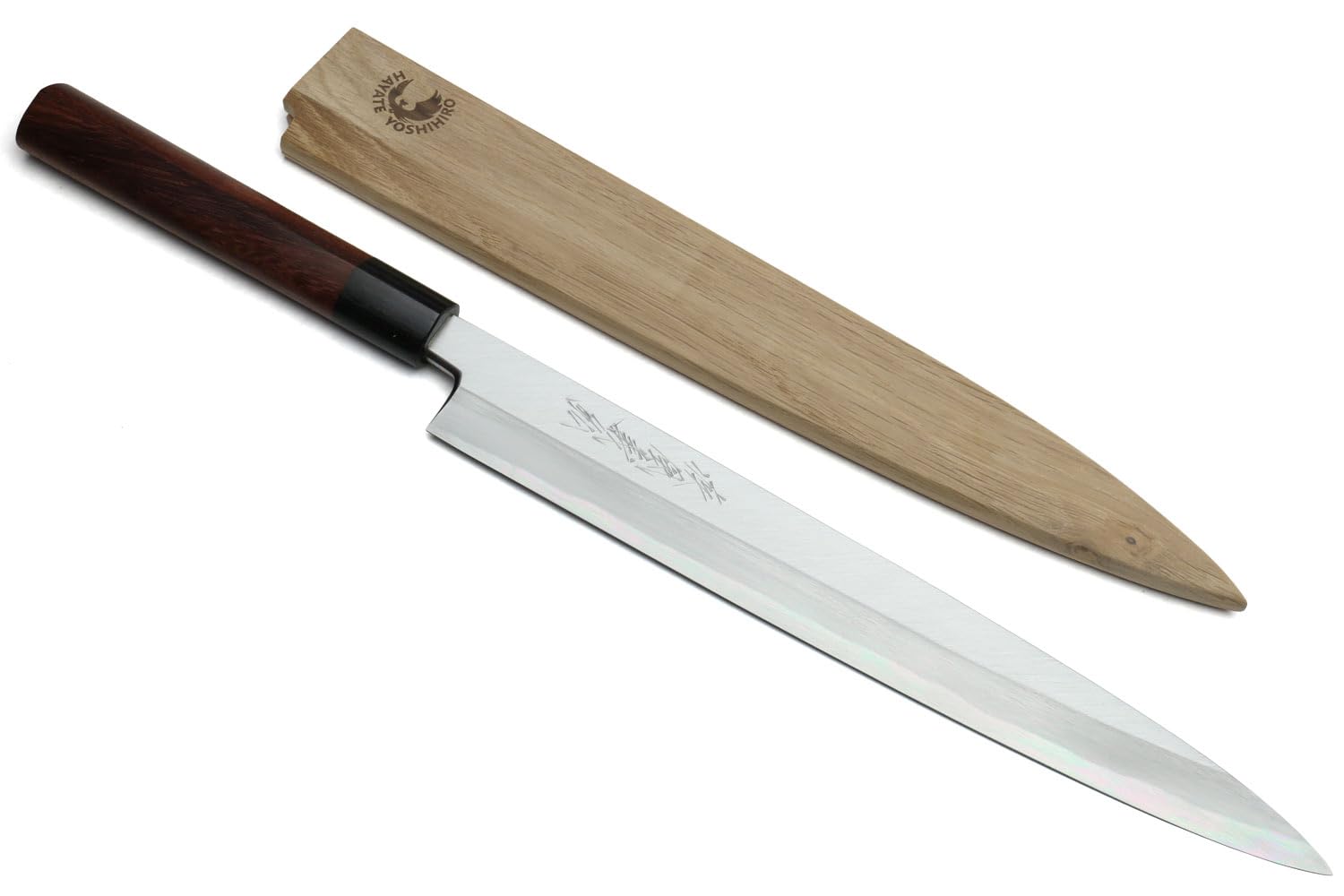
For users who regularly slice large tuna loins or whole salmon sides, the extra 1.3 inches of blade length on this Yoshihiro 300mm model makes a tangible difference. A longer blade allows a single, uninterrupted pull cut from heel to tip, which is the defining technique for perfect sashimi. It shares the same White Steel #2 core and Kasumi forge construction as the 10.5-inch version.
The rosewood handle offers a denser, slightly heavier feel compared to the magnolia option, which some chefs prefer for counterbalancing the longer blade. The traditional D-shape locks the knife into your hand, preventing rotation during the pull stroke. As with all high-carbon steel yanagibas, the edge sharpness is exceptional right out of the box.
Fit and finish are hand-finished, meaning each knife has subtle individual character. The included Saya sheath is sized for the 11.8-inch blade. Long-term owners stress that the extra length demands consistent sharpening technique to maintain the edge geometry across the whole blade. This is a specialist tool for dedicated sashimi prep.
Why it’s great
- 300mm blade handles large fillets in one stroke
- Dense rosewood handle provides excellent balance
- Hand-forged Kasumi construction with HRC 62-63
Good to know
- Requires careful maintenance to prevent rust
- Long blade needs practiced sharpening skills
4. Masahiro 10613 Stainless Steel Japanese Knife (9.4″)

Masahiro is a respected Japanese manufacturer based in Seki City, and this 9.4-inch yanagiba represents a reliable middle ground between budget options and high-end collectibles. The blade uses MBS-26 stainless steel, a proprietary alloy from Masahiro that balances easy sharpening with decent corrosion resistance. It is a single-bevel knife, making it suitable for right-handed users seeking traditional cutting action.
The laminated reinforced wood handle is sturdy and comfortable, with a classic octagonal profile that helps with grip orientation. At 0.53 pounds, it feels solid but not heavy, allowing controlled slicing motions without tiring the wrist. The 240mm blade length is manageable for smaller kitchens while still providing enough reach for standard sashimi cuts.
Customers note that the Masahiro comes reasonably sharp but benefits from a quick session on a whetstone to reach its full potential. This is a workhorse knife that doesn’t demand the ritualistic care of carbon steel. It is a great choice for the home cook who wants a true yanagiba without the high maintenance.
Why it’s great
- Stainless MBS-26 steel resists rust
- Traditional octagonal handle for secure grip
- Trusted Japanese brand with solid build quality
Good to know
- 9.4″ blade is shorter than most yanagibas
- Benefits from initial sharpening before use
5. MITSUMOTO SAKARI 11 Inch Sashimi Knife

MITSUMOTO SAKARI carves its own path by using a tungsten alloy for the blade core, a departure from the more common VG-10 or White Steel. Tungsten alloy is extremely hard and holds a razor edge for a very long time, making this an intriguing option for those who hate frequent sharpening. It features a traditional 15-degree single-bevel edge for low-friction cuts.
The handle is made from rare Manchurian ash wood, finished with a smooth, natural feel that provides a secure grip even when wet. At 11 inches, the blade length is generous, and the textured blade surface is designed to help release food slices. The oval-shaped handle contours nicely to the palm, promoting comfort during extended use.
Because the steel type is less common, finding sharpening stones or services optimized for tungsten alloy may be more difficult than for standard high-carbon steels. The knife is also not dishwasher safe, and immediate hand drying is recommended. It is a solid mid-range entry point for someone wanting to try a single-bevel knife with a durable edge.
Why it’s great
- Tungsten alloy core offers impressive edge longevity
- 11-inch blade handles large cuts with ease
- Natural ash wood handle is comfortable and grippy
Good to know
- Tungsten alloy is harder to sharpen at home
- Not dishwasher safe; requires hand wash only
6. KEEMAKE Sashimi Knife Japanese 10.5 Inch

KEEMAKE offers an entry-level yanagiba that uses a VG-10 high-carbon stainless steel core, a material typically found on knives costing significantly more. VG-10 is known for its fine grain structure and ability to take a very sharp edge, with a hardness rating of HRC 58+. The blade is hand-sharpened to a 12-15 degree angle on a single bevel, promising good performance out of the box.
The handle is constructed from natural rosewood, which feels smooth and substantial in the hand. It provides a seamless transition from the blade tang, offering decent balance for its price tier. The 10.5-inch blade length is a standard, versatile size for most sashimi applications.
Customer feedback is positive, with many noting the knife’s sharpness and balance when cutting through rolls and fillets. Some users found the edge needed a touch up on a honing rod after heavy use, which is typical for this category. Overall, it is a compelling value proposition for anyone entering the world of single-bevel slicing.
Why it’s great
- VG-10 steel core is a premium material at this price
- Rosewood handle provides a classic look and feel
- Sharp out of the box for immediate use
Good to know
- Some users report needing to touch up the edge
- Fit and finish may not match higher-end brands
7. HOSHANHO Sushi Knife Japanese Sashimi 10 Inch

The HOSHANHO yanagiba is forged from 10Cr15CoMoV super steel, a high-carbon alloy that includes cobalt and molybdenum for enhanced hardness and wear resistance. It reaches a Rockwell hardness of HRC 60±2, placing it in the same league as many mid-range options. The double-bevel design makes it more forgiving for beginners who are not yet comfortable with a single-bevel technique.
The octagonal handle combines G10 with rosewood, creating a durable and moisture-resistant grip. G10 is a high-pressure fiberglass laminate that is extremely tough, adding to the knife’s longevity. The blade features an 8-layer Damascus-style cladding over the super steel core, which looks striking and helps prevent food from sticking.
Users consistently praise the sharpness and aesthetic appeal. It is lighter than some of the traditional wood-handled options, which can be an advantage for precise work. As a double-bevel knife, it is easier to maintain with standard sharpening tools, making it an excellent gateway knife for those new to Japanese cutlery.
Why it’s great
- Double-bevel edge is easier to sharpen and use
- HRC 60+ super steel offers excellent edge retention
- Durable G10 and rosewood handle resists moisture
Good to know
- Not a traditional single-bevel yanagiba
- Lightweight feel may not suit all chefs
FAQ
Do I need a single-bevel knife for sashimi?
What blade length is best for a home sashimi knife?
Can I use a whetstone on a VG-10 sashimi knife?
Final Thoughts: The Verdict
For most users, the knife for sashimi winner is the Yoshihiro 10.5″ Magnolia Handle because it combines traditional White Steel hardness with an authentic single-bevel grind at a price that rewards dedicated home chefs. If you want a low-maintenance, stainless steel blade that won’t rust, grab the Global G-11R. And for your first sashimi knife on a budget, nothing beats the sharpness and forgiving double-bevel of the HOSHANHO 10″.