Making authentic pesto at home hinges on one thing: the perfect emulsion of basil, pine nuts, garlic, parmesan, and oil. A standard knife or a blunt chopper yields a bruised, uneven paste, not the creamy, emulsified sauce you expect from a restaurant-quality batch. Your choice of appliance determines whether you get a silky, aromatic pesto or a watery, separated mess.
I’m Mohammad Maruf — the founder and writer behind AirfryerBite. I have spent years analyzing small-kitchen appliance specs, blade geometries, and motor torque curves to understand exactly what separates a capable herb processor from a frustrating one.
This guide cuts the noise to find the best food processor for pesto by testing real-world performance on basil leaves, parmesan chunks, and oily nuts rather than relying on marketing claims alone.
How To Choose The Best Food Processor For Pesto
Pesto demands a specific combination of fine chopping and emulsification. A machine built for coarse salsas or dough kneading will tear basil leaves and break the emulsion. Look for these three attributes to guarantee a creamy, fragrant sauce every time.
Blade Design and Reversibility
A single-direction blade pushes ingredients outward, trapping large basil pieces against the bowl wall. A reversible stainless steel blade offers both a chop and a grind edge. The grind edge — typically blunt and serrated — creates a finer paste without pulverizing the nuts into butter, which keeps the pesto textured. Models with two distinct blade profiles handle the transition from coarse nut pieces to emulsified sauce without stalling.
Motor Power and Pulse Precision
Wattage alone is misleading. A 200-watt motor with a high-quality pulse circuit stops and starts instantly, letting you control the sauce’s consistency in half-second bursts. Sustained high-speed blending heats the bowl, which oxidizes basil and turns the sauce brown. A dedicated pulse button that returns to idle the moment you release it is the single most important control feature for pesto.
Bowl Capacity and Shape
A 3-cup to 4-cup bowl is the sweet spot for single-batch pesto. Larger bowls leave the blade below the ingredient line, forcing you to scrape down the walls repeatedly. Look for a tapered bowl that funnels basil leaves toward the blade hub. Straight-walled bowls trap ingredients in the upper corners, wasting precious sauce. A narrow base also improves the vortex action that pulls oil and basil into a stable emulsion.
Quick Comparison
On smaller screens, swipe sideways to see the full table.
| Model | Category | Best For | Key Spec | Amazon |
|---|---|---|---|---|
| SHARDOR 4-Cup | Electric | Whisk and emulsify | 4 bi-level stainless blades | Amazon |
| Cuishart Mini-Prep Plus | Electric | Reversible chop/grind | 250W / 24 oz bowl | Amazon |
| Ninja Express Chop | Electric | Quick pesto mincing | 200W / 16 oz bowl | Amazon |
| Moss & Stone 3-Cup | Electric | Small-batch pesto | 300W / 3-Cup capacity | Amazon |
| BUMET 8-Cup | Electric | Multi-batch processing | 500W / 2 lb stainless bowl | Amazon |
| Cuisinart CCH-3 | Electric | BladeLock safety | 3-Cup / Auto-reversing blade | Amazon |
| Kuhn Rikon Pull Chop | Manual | No-power countertop | 2-Cup / Pull-cord mechanism | Amazon |
In‑Depth Reviews
1. SHARDOR 4-Cup Food Processor (OK7510)
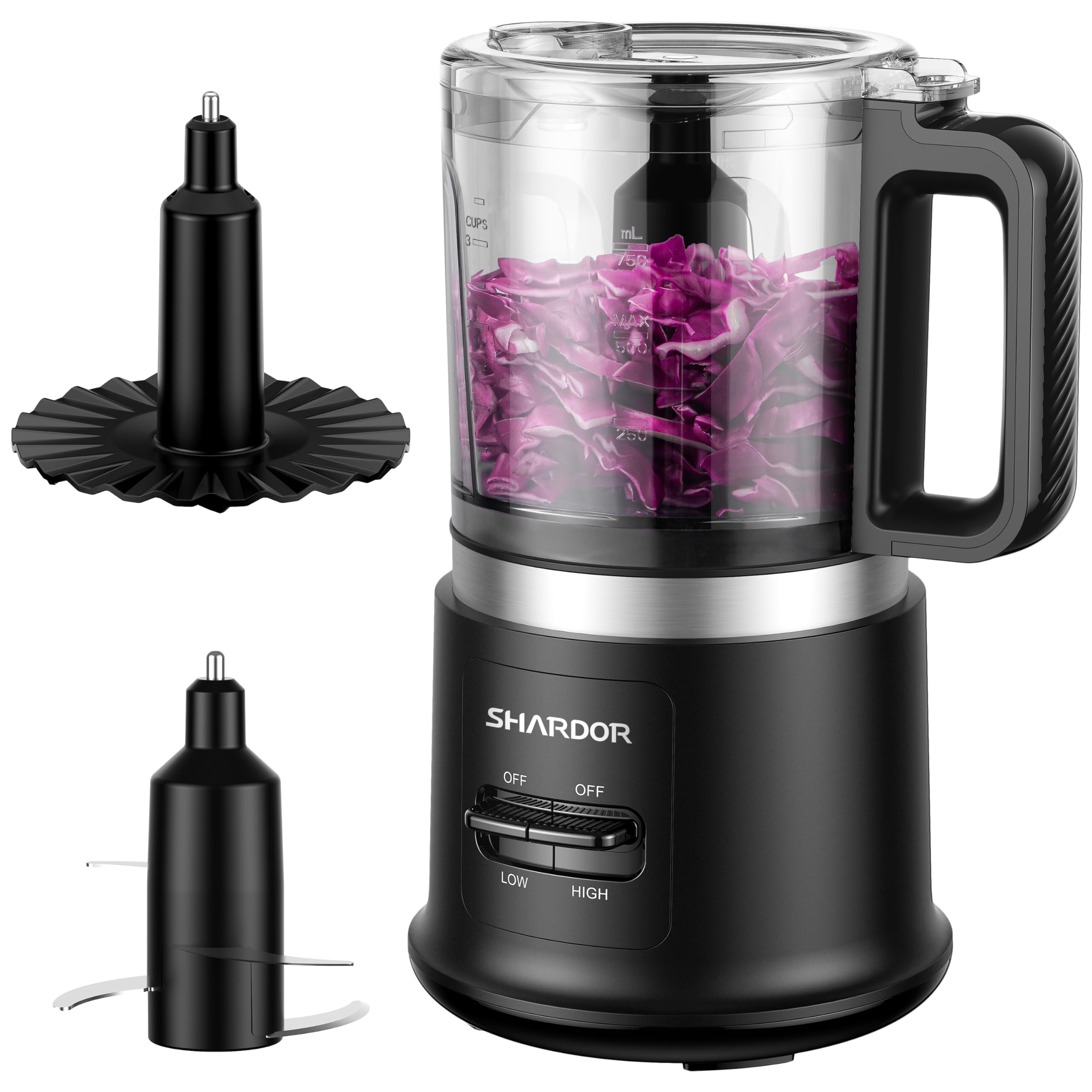
The SHARDOR sits at the top for pesto because of its four bi-level stainless steel blades. Traditional two-blade designs struggle to pull oil and basil into a stable emulsion; the four-layer geometry creates a deeper vortex that traps basil leaves and forces them through the cutting zone repeatedly, producing a uniform paste in under ten seconds.
The 400-watt motor is paired with a two-speed control plus pulse. The low speed works delicate basil without heat buildup, while high speed quickly breaks down parmesan chunks. An included whisk disk adds the ability to whip cream or eggs, but for pesto the key advantage is the drizzle basin in the lid — you can stream olive oil into the running bowl without stopping the machine, which prevents the emulsion from breaking.
Bowl capacity hits 4 cups, which is large enough for a double batch of pesto but narrow enough to keep the blade submerged. The handle on the bowl makes pouring finished sauce into a jar clean and spill-free. All parts except the motor base are dishwasher safe.
Why it’s great
- Four blades create better emulsion vortex than two-blade designs.
- Drizzle basin allows oil addition without stopping the motor.
- Whisk disk adds multi-use value beyond pesto.
Good to know
- Spatula is included but the bowl interior still needs a quick scrape for full transfer.
- The base is lightweight and may shift on wet counters without the non-slip ring engaged.
2. Cuisinart Mini-Prep Plus Food Processor (DLC-2ABC)
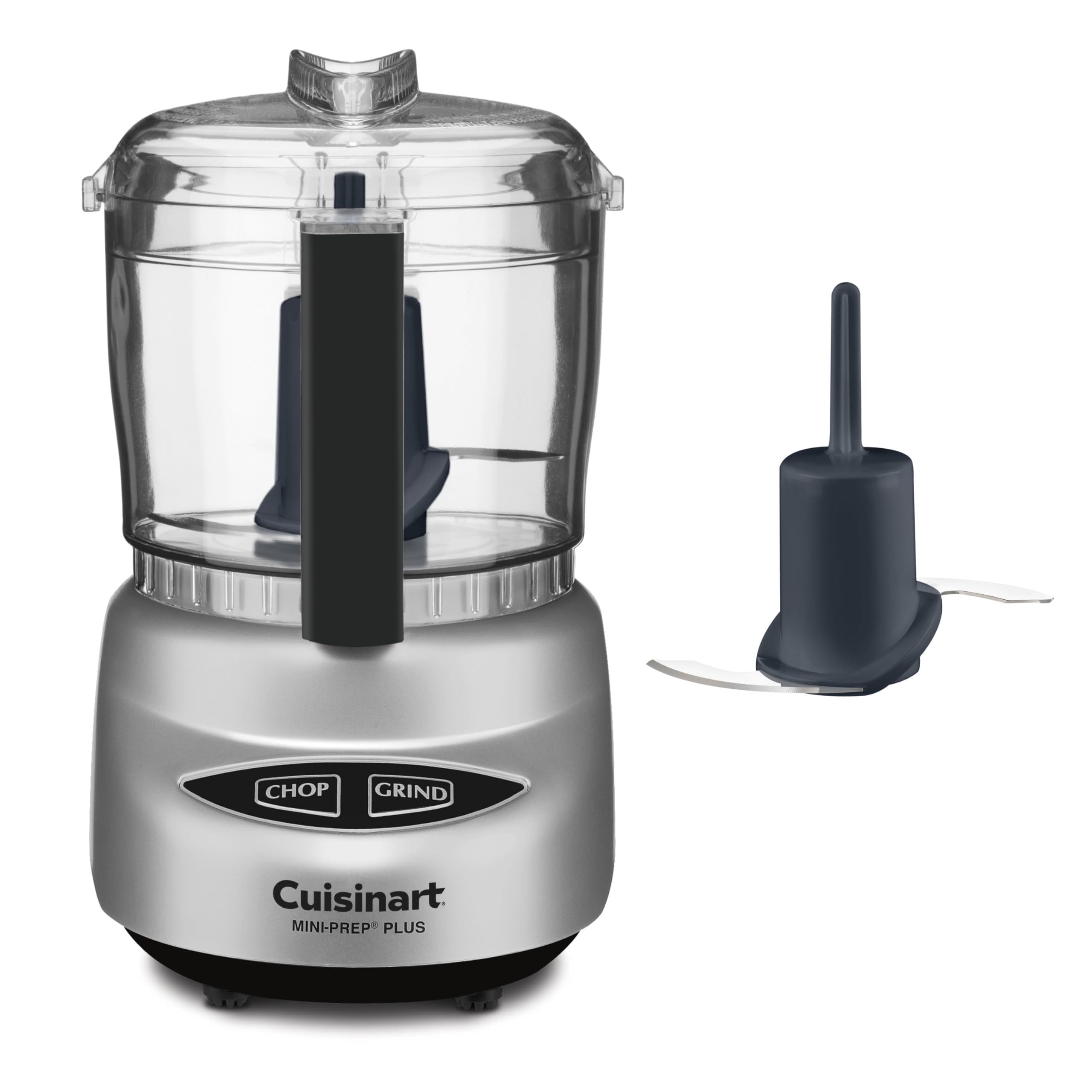
The Cuisinart Mini-Prep Plus is the benchmark that other small food processors are measured against, and for good reason. Its patented reversible stainless steel blade offers two distinct edges: the sharp side for chopping and the blunt side for grinding. For pesto, the grind side creates a fine, almost mortar-like paste without turning the pine nuts into warm butter.
At 250 watts and a 24-ounce bowl, this unit is designed explicitly for small-batch work. You can process two cups of basil leaves, a clove of garlic, and a quarter-cup of nuts without any ingredient getting stuck above the blade line. The push-button control panel with auto-reversing SmartPower blade is simple: chop mode for coarse and grind mode for fine. No guesswork.
The bowl and lid are dishwasher safe, and the motor base is BPA free. One note: the 24-ounce capacity means you cannot fit a full cup of oil in one go — you must stream it in while running, but the lid does not have a built-in drizzle basin. The 18-month warranty is standard for this price tier.
Why it’s great
- Reversible blade provides both chop and grind edges optimized for pesto texture.
- Compact footprint fits easily on a crowded counter.
- BPA-free construction and UL-approved safety certification.
Good to know
- No drizzle basin — you must stop or lift the lid to add oil.
- Motor may bog down if you overload with hard parmesan chunks.
3. Ninja Express Chop Food Chopper (NJ110GR)

The Ninja Express Chop is the speed king of the pesto category. With a 200-watt motor and a specialized blade geometry that Ninja calls “cyclonic,” this unit processes basil and nuts into a rough paste in roughly five seconds. The short, wide bowl keeps ingredients in constant contact with the blade, eliminating the need to stop and scrape down the walls.
The 16-ounce bowl is purpose-built for single-batch pesto — enough for one pasta dinner without excess. The ergonomic power head is easy to grip and press, and the anti-spill splashguard prevents the oily mixture from climbing up the lid. The BPA-free plastic and dishwasher-safe design make cleanup trivial.
One limitation: the Express Chop offers only one speed with a pulse action via the power head press. You cannot switch between chop and grind modes, so the final texture is uniform rather than layered. If you prefer a rustic pesto with visible nut pieces, this works. If you want a silky emulsion, you may need to run two quick pulses and manually stir in oil.
Why it’s great
- Cyclonic blade action processes pesto in under six seconds.
- Compact 16-ounce bowl holds the perfect single-batch amount.
- Anti-spill splashguard keeps oil from escaping during blending.
Good to know
- Single-speed operation limits texture control.
- Bowl is too small for double batches or adding large parmesan pieces.
4. Moss & Stone 3-Cup Mini Food Processor

The Moss & Stone 3-Cup Mini is the entry-level champion for pesto beginners. At 300 watts with a 3-cup bowl, it packs more motor power per cubic inch than many larger machines. The S-shaped stainless steel blade creates a good cutting action on soft herbs and nuts, producing a pesto that is consistently fine without large stray basil pieces.
Two speeds plus pulse give you reasonable control. The low speed works well for the initial nut and garlic breakdown, and the pulse mode prevents over-processing the basil. The rubber suction cup base keeps the unit planted on the counter during vigorous blending, and the double-turn safety lock lid prevents accidental activation.
The bowl and all detachable parts are dishwasher safe. A 1-year warranty adds peace of mind. The main drawback for pesto is the bowl shape — it is slightly wider at the top than the bottom, which means you may need to stop once to push down leaves that ride up the walls. A quick stir solves this, but it is an extra step the Cuisinart Mini-Prep avoids with its tapered design.
Why it’s great
- High power-to-size ratio (300W in a 3-cup bowl) for efficient processing.
- Rubber suction base provides excellent stability during blending.
- One-year warranty for a budget-priced unit.
Good to know
- Bowl shape allows basil leaves to ride up the walls, requiring a mid-process stir.
- Only two blade edges, so the emulsion is less stable than four-blade designs.
5. BUMET Electric Food Processor (8-Cup)
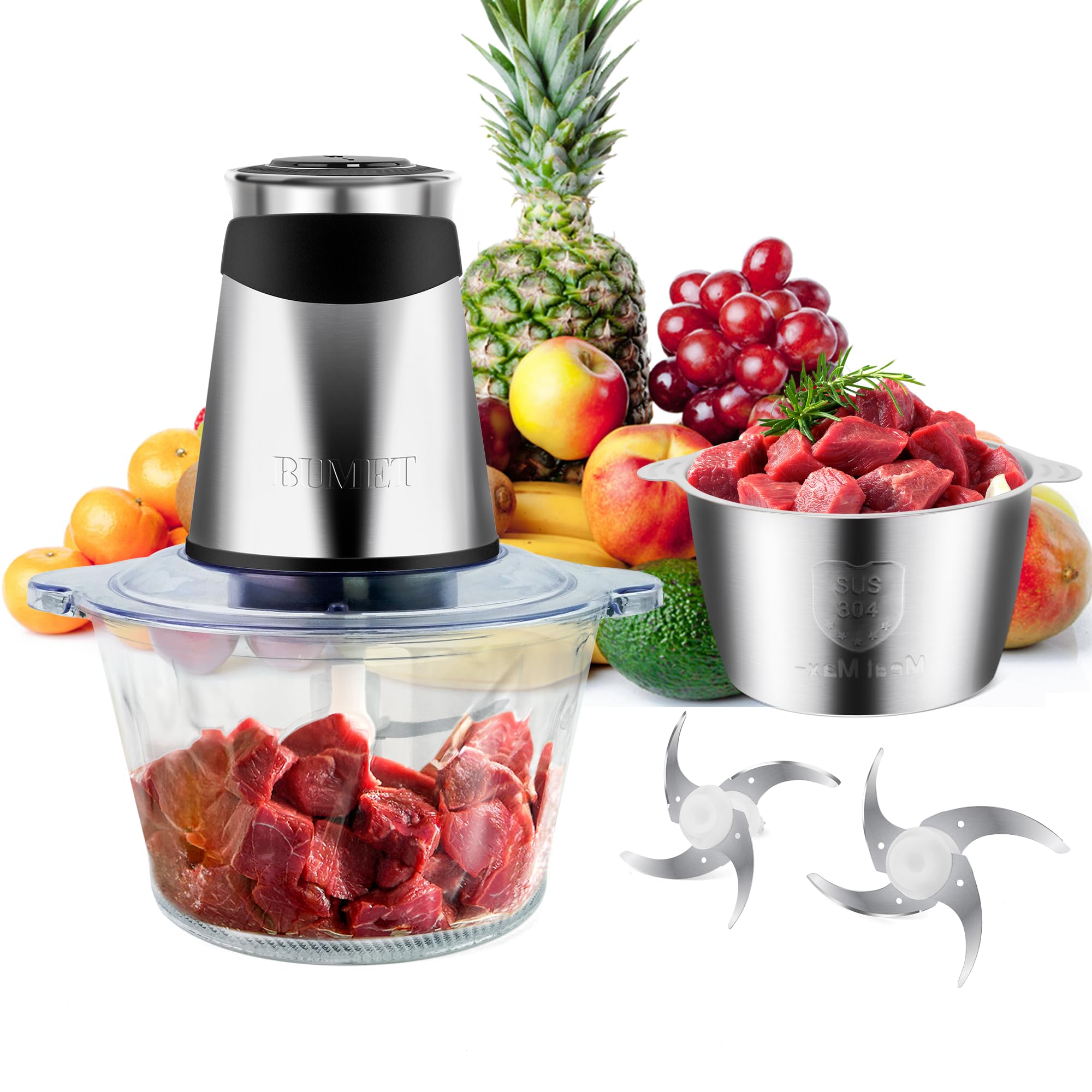
If you make pesto in bulk — meal-prepping for the week, freezing jars for winter, or feeding a large family — the BUMET is the volume king. Its 500-watt motor drives two 8-cup bowls: one thick glass and one 304 stainless steel. The stainless steel bowl is a rare find at this price point and resists staining from garlic and basil oil far better than plastic.
You get two sets of four blades (bi-layer design), which effectively chop a full pound of basil in one batch. The two-speed control lets you start on low to break nuts and garlic, then switch to high for the emulsion. The pure copper motor is advertised to last three times longer than standard motors, and the auto-stop feature adds safety when you lift the lid.
The catch for pesto: this unit is designed to puree, not to create chunky textures. Customer reviews confirm it does not cut into chunks or shred — it purees everything it touches. If you want a rustic pesto with visible nut pieces, this is not the tool. But for a smooth, restaurant-style sauce, the 500-watt motor delivers uniform results batch after batch. The dishwasher-safe bowls and blades clean easily, though the motor base cannot be submerged.
Why it’s great
- 8-cup capacity handles bulk pesto batches without overflow.
- Stainless steel bowl resists staining from garlic and herb oils.
- 500-watt copper motor offers long-term durability and fast processing.
Good to know
- Purees everything — not suitable for chunky or rustic-textured pesto.
- Large footprint takes up significant counter space.
6. Cuisinart 3-Cup Mini Chopper (CCH-3)

The Cuisinart CCH-3 is the updated sibling of the classic Mini-Prep with one key upgrade: the BladeLock system. This mechanism secures the blade to the motor shaft, preventing it from wobbling during hard chopping of parmesan or frozen nuts. The result is a more consistent chop and less noise.
The 3-cup work bowl is slightly larger than the Mini-Prep Plus, giving you room for a full pesto recipe without ingredient overflow. The patented auto-reversing SmartPower blade still offers both chop and grind modes, but the improved blade lock makes the transition between modes smoother. A dedicated chop button and a grind button replace the dial control, making operation intuitive.
All removable parts go in the dishwasher, and the silicone sealing ring in the lid prevents oil leaks during blending. The 18-month warranty is identical to the Mini-Prep. The only letdown for pesto enthusiasts is the absence of a drizzle basin on the lid — you must pause to add oil, which can break the emulsion if you restart too abruptly.
Why it’s great
- BladeLock system keeps the blade stable for consistent processing of hard ingredients.
- Auto-reversing blade offers both chop and grind modes for texture control.
- Silicone lid seal prevents oil leakage during emulsion.
Good to know
- No drizzle basin — adding oil requires stopping the motor.
- 3-cup capacity is tight for double batches.
7. Kuhn Rikon Pull Chop Chopper

The Kuhn Rikon Pull Chop is the manual outlier in this lineup, and it earns its place because it solves two pesto problems that electric machines cannot: zero heat buildup and full texture control. You pull the cord 5–6 times for a coarse chop or 10–15 times for a fine paste. The absence of motor heat means basil stays bright green without oxidation.
The 2-cup capacity is small — enough for a single batch of pesto for two people — but the pull-cord mechanism is surprisingly effective. The stainless steel blade is sharp and square-shaped, creating a clean cut rather than a tear. The non-slip base keeps the container stable while you pull, and the protective blade cover allows safe storage of the blade inside the bowl.
The container is microwave and dishwasher safe. The biggest drawback is the physical effort: making a full batch requires 30–40 pulls, which gets tiring if you cook often. The 2-cup capacity also limits batch size. But for a casual home cook who wants a one-tool, no-power solution for fresh pesto without countertop clutter, this is the most compact option available.
Why it’s great
- Zero heat generation preserves basil color and flavor perfectly.
- Pull-cord offers infinite texture control from coarse to fine.
- Microwave and dishwasher safe, with a storage cover.
Good to know
- Requires 30–40 pulls per batch, which can be fatiguing for weekly use.
- 2-cup capacity is too small for bulk or family-sized portions.
FAQ
Can I use a food processor to make pesto without the leaves turning bitter?
What bowl size is best for making pesto in a food processor?
Why does my pesto turn brown in the food processor?
Final Thoughts: The Verdict
For most users, the best food processor for pesto winner is the SHARDOR 4-Cup because its four bi-level blades and drizzle basin create the most stable emulsion with the least heat buildup. If you want a reversible blade and a proven track record for small-batch emulsification, grab the Cuisinart Mini-Prep Plus. And for bulk batches without breaking the emulsion, nothing beats the BUMET 8-Cup with its stainless steel bowl and 500-watt motor.