A high-end coffee maker isn’t just about pushing a button for hot water over grounds. It’s about precise water temperature control within a single degree, a calibrated bloom cycle to release aromatic oils before full extraction, and a burr grinder that delivers uniform particle size instead of the uneven dust and chunks that cause bitter and sour flavors in the same cup. The difference between a machine and a premium model is the difference between drinking black liquid and actually tasting the origin notes of the bean.
I’m Mohammad Maruf — the founder and writer behind AirfryerBite. Over the last decade, I’ve analyzed the thermal stability curves, pump pressure ratings, and extraction efficiency data of over three hundred coffee machines to separate genuine engineering from marketing shells.
This article breaks down the specific hardware decisions — burr geometry, brew water path temperature delta, carafe heat retention rates, and the real-world meaning of certifications like SCA (Specialty Coffee Association) Gold Cup — that define the best high-end coffee maker for your morning ritual.
How To Choose The Best High-End Coffee Maker
The premium coffee machine market spans from advanced drip brewers with SCA certification to super-automatic espresso machines that grind, tamp, and steam with one touch. To find the right machine, focus on four decision axes that define the entire category.
Brew Technology: The Triple Constraint of Temperature, Time, and Pressure
In the high-end segment, temperature stability is non-negotiable. Look for PID (Proportional-Integral-Derivative) controllers that maintain water temperature within a two-degree Fahrenheit window throughout the entire extraction. Without PID, the water temperature can swing by ten degrees or more as the heating element cycles on and off, causing under-extracted sourness in some sips and over-extracted bitterness in others. For espresso machines, a 15-bar Italian pump is standard, but the critical spec is the pre-infusion capability — low-pressure water applied for a few seconds before full pressure expands the coffee bed evenly, preventing channeling.
The Grinder: Where the Flavor Is Won or Lost
An integrated grinder in a premium machine should be a conical burr grinder, not a blade grinder. Conical burrs produce a narrow particle size distribution because the coffee travels through a single path between the inner and outer burr, reducing the amount of fine dust and large boulders that ruin extraction uniformity. Grind settings should offer at least eight discrete steps for drip machines and twenty-five or more for espresso-focused machines. For those planning to pair a separate precision grinder, a machine without a built-in grinder can offer a cleaner brew path and faster cleanup — but you lose the all-in-one convenience.
Carafe Material: Thermal vs. Glass vs. Stainless Steel
A thermal carafe (double-walled stainless steel) is the gold standard for high-end coffee makers. It keeps the brew hot for two hours or more without applying direct heat, eliminating the burned, bitter flavor that develops when a glass carafe sits on a hot plate for more than 30 minutes. Some premium thermal carafes use a vacuum-sealed design with a narrow neck to minimize heat loss. Glass carafes are easier to see and pour, but they require a hot plate underneath — and that hot plate will continue cooking the coffee, degrading flavor within the first hour.
Certifications and Standards: SCA Gold Cup Grade
The Specialty Coffee Association (SCA) Gold Cup standard specifies that brewed coffee should achieve 18-22% extraction yield and a water temperature of 197-204 degrees Fahrenheit at the coffee bed. Machines that carry SCA certification have been independently verified to hit these targets batch after batch. If you see “SCA Certified” on a coffee maker, it means the manufacturer submitted the machine for third-party testing and it passed the brewing temperature, contact time, and total dissolved solids benchmarks. Machines without this certification may still produce excellent coffee, but you have no independent guarantee of precision.
Quick Comparison
On smaller screens, swipe sideways to see the full table.
| Model | Category | Best For | Key Spec | Amazon |
|---|---|---|---|---|
| Technivorm Moccamaster 79212 | Drip Brewer | SCA-certified batch brew | 40.76 oz / 9-cup thermal carafe | Amazon |
| Fellow Aiden Precision | Precision Drip | Temp control & bloom cycle | 1.5 L thermal carafe | Amazon |
| BUNN VP17-1SS Pourover | Commercial Pourover | High-volume office brewing | 3.8 gallons per hour draw rate | Amazon |
| De’Longhi La Specialista Arte Evo | Semi-Auto Espresso | Built-in grinder & cold brew | 15 bar Italian pump; 8 grind settings | Amazon |
| xBloom Studio | Precision Pour Over | Recipe-guided pour over | 32 oz capacity; 3 automation modes | Amazon |
| Breville Barista Express BES870XL | Semi-Auto Espresso | All-in-one espresso on a mid budget | Integrated conical burr; 1600 watts | Amazon |
| Ninja Luxe Café Pro ES701 | Multi-Style All-in-One | Espresso, drip & cold brew versatility | 4 machines in one; 25 grind settings | Amazon |
| Breville Barista Touch BES880BSS | Semi-Auto Espresso | Touchscreen-guided espresso | 3-second ThermoJet heat-up; PID | Amazon |
| De’Longhi Magnifica Evo Next | Super-Auto Espresso | One-touch full automation | 13 one-touch recipes; 13 grind settings | Amazon |
In‑Depth Reviews
1. Technivorm Moccamaster 79212 KBTS Coffee Brewer

The Technivorm Moccamaster is the reference standard for SCA-certified drip coffee makers. Its copper boiling element heats water to the 197-204 degree Fahrenheit brew window instantly and holds it there through the entire extraction cycle, which is exactly what the Gold Cup protocol demands. The 9-hole outlet arm distributes water evenly across the coffee bed rather than dumping it in one spot, eliminating the channeling that causes under-extraction in lesser machines.
The thermal carafe on this model is a double-walled stainless steel vessel that keeps the full 40-ounce batch hot for over two hours without a hot plate. That means no burned flavor developing after the first hour, which is the main failure mode of glass carafe machines. The brew basket uses a manual drip-stop lever, so you can pause mid-brew to pour a cup without flooding the counter.
Build quality is all aluminum and stainless steel — no plastic in the water path, which matters for both flavor purity and long-term durability. The only trade-off is the lack of programmability: no digital timer, no auto-start, no bloom cycle. It’s purely mechanical, purely manual, and purely focused on hitting the SCA extraction targets every time.
Why it’s great
- SCA Gold Cup certified for verified extraction performance
- All-metal brew path with zero water-contact plastic
- Thermal carafe keeps coffee hot for hours without scorching
Good to know
- No programmable timer or auto-shutoff scheduling
- No integrated grinder — requires separate grinder purchase
- Brew basket is not dishwasher safe — hand wash only
2. Fellow Aiden Precision Drip Coffee Maker
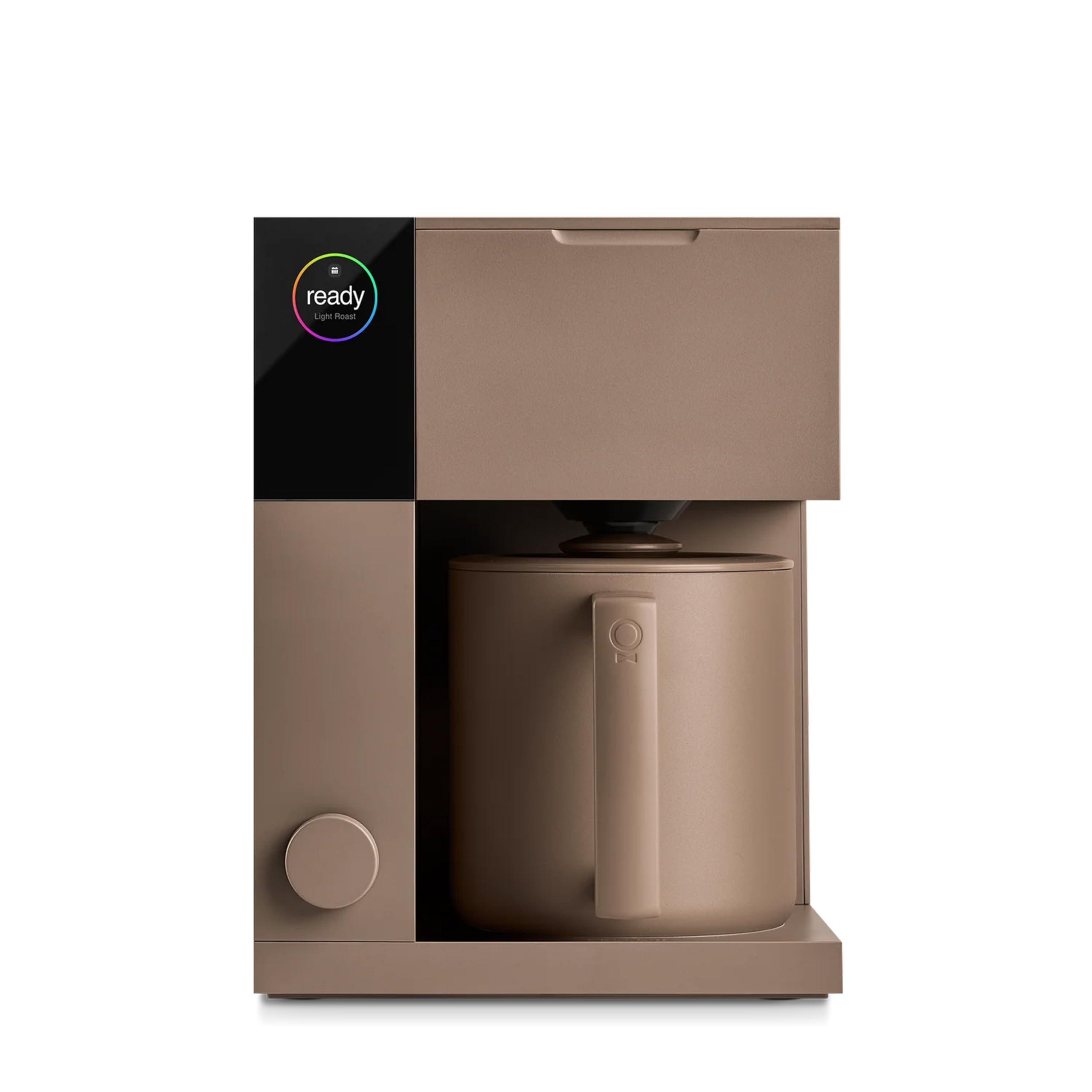
The Fellow Aiden is built around a PID controller that lets you dial water temperature from 195 to 207 degrees Fahrenheit in one-degree increments — essential for adjusting extraction to match roast level. Light roasts need higher temperatures near 205 to extract fully; dark roasts need lower temperatures around 197 to avoid pulling out bitter compounds. The Aiden also executes a dedicated bloom cycle: it pulses a small amount of hot water onto the grounds, waits 30 seconds for the CO₂ to release, then completes the full pour.
Interchangeable baskets for single-serve and full 10-cup batch brewing mean you don’t waste grounds when making a single mug. The water reservoir detaches for refilling at the sink, which is a thoughtful ergonomic detail. The thermal carafe uses a proprietary silicone seal to prevent steam damage to cabinets above the machine, a small detail that signals intentional design.
The Aiden’s schedule system lets you set a wake-up time, and the machine calculates the optimal start time so the brew finishes exactly when you want it — not when you start it. The trade-off is that it only uses paper filters, which means ongoing consumable cost and a slightly different mouthfeel compared to a reusable mesh filter.
Why it’s great
- PID temperature control with one-degree precision
- Dedicated bloom cycle for proper gas release
- Interchangeable baskets for single-cup and batch brewing
Good to know
- Paper filter only — ongoing consumable purchase required
- Water tank components not dishwasher safe
- No built-in grinder
3. BUNN 13300.0001 VP17-1SS Pourover Coffee Brewer

The BUNN VP17-1SS is a commercial pourover machine adapted for heavy home or office use. Instead of a water reservoir that slowly heats the water during the brew cycle, this machine keeps 68 ounces of water stored in a hot tank at 200 degrees Fahrenheit around the clock. When you pour in fresh water, it instantly displaces the hot water through the spray head, producing a full pot in about three and a half minutes — no wait, no heating delay.
The interior plumbing is all copper and brass, with a stainless steel exterior that resists kitchen corrosion.
The only real drawback is the constant energy draw — the hot water tank pulls power all day to maintain 200 degrees. Owners report twenty-year lifespans with zero maintenance, which makes the upfront cost nearly invisible when amortized over two decades of daily use.
Why it’s great
- Brews a full pot in under 4 minutes with zero delay
- All-copper internal plumbing, stainless steel exterior
- Proven 20+ year service life in real home use
Good to know
- Constant idle power draw to maintain hot water tank
- Glass carafe on hot plate can scorch coffee after 1 hour
- Very large footprint — 18.8 inches deep, 24 pounds
4. De’Longhi La Specialista Arte Evo

The Arte Evo packs a conical burr grinder with eight discrete settings, a 15-bar Italian pump with active temperature control, and a commercial-style steam wand into a chassis that fits under standard upper cabinets. The grinder doses directly into the portafilter, which eliminates the messy transfer step that causes grounds to scatter. The tamper is built into the dosing cradle, so you press down once and the coffee is compressed to the correct depth before extraction begins.
What sets this machine apart from other semi-automatic espresso machines in its segment is the patented Cold Extraction Technology. By pumping water at a lower temperature and a carefully regulated pressure, the Arte Evo produces a cold brew concentrate in under five minutes instead of the traditional 12-24 hour steep. The iced coffee results are smooth without the bitterness that hot-brewed-and-chilled methods produce.
The steam wand uses a commercial-style tip that delivers the correct steam pressure for texturing microfoam suitable for latte art. The Active Temperature Control system offers three infusion temperature settings — low, medium, high — letting you adjust for light, medium, or dark roast beans. The water tank is side-mounted and removable, making refilling easy even if the machine sits under a cabinet.
Why it’s great
- Integrated conical burr grinder with mess-free dosing cradle
- Cold brew concentrate in under 5 minutes via Cold Extraction
- Three PID-controlled infusion temperatures for roast matching
Good to know
- Eight grind settings are limited compared to dedicated grinders
- Steam wand requires manual purging and wiping after each use
- Drip tray fills quickly when backflushing for cleaning
5. xBloom Studio Coffee Machine
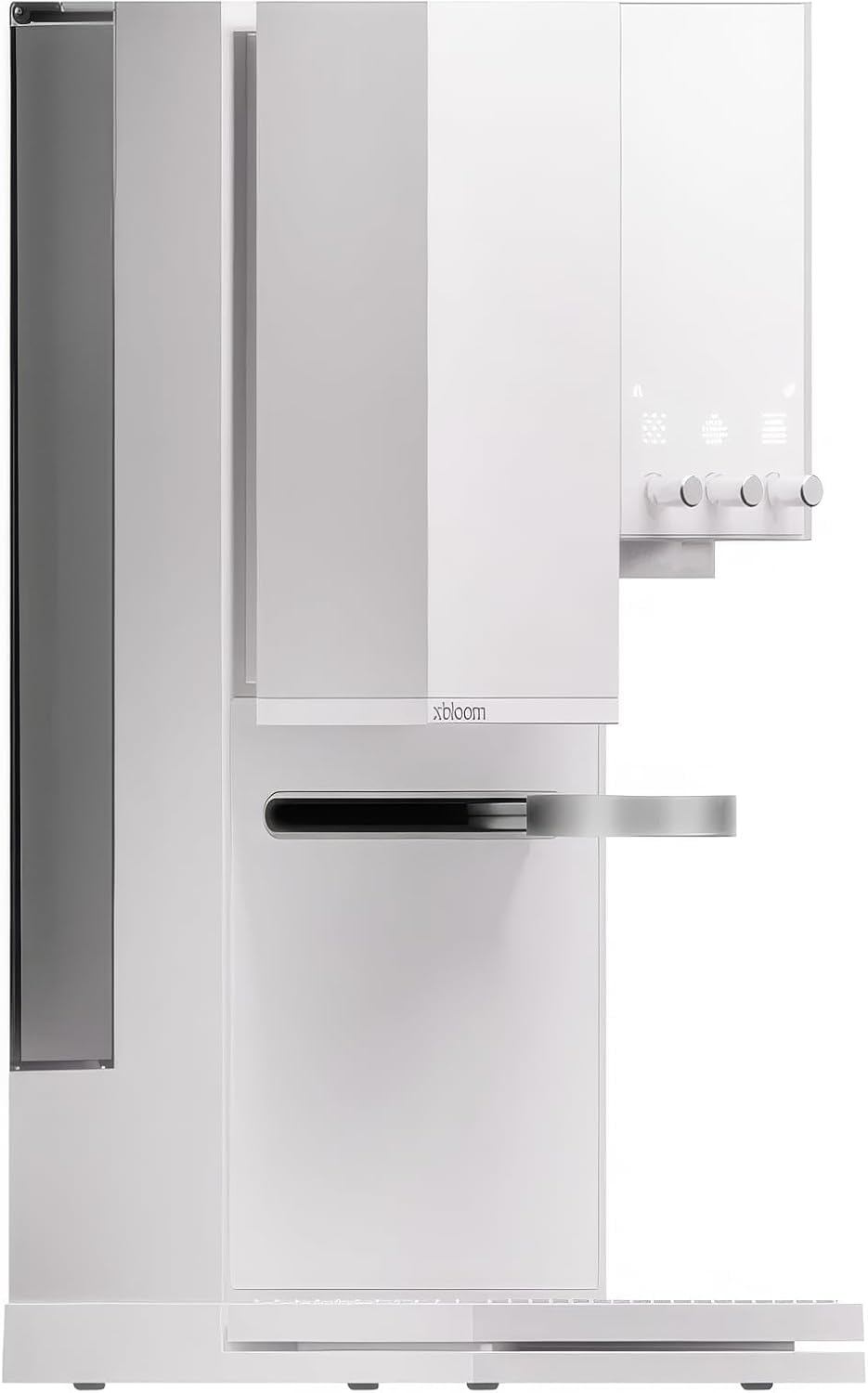
The xBloom Studio is a pour-over machine that reimagines the category by offering three distinct automation levels. Autopilot mode reads a recipe card from a compostable xPod (which contains whole beans and a built-in filter), grinds the beans, and executes the entire pour-over sequence — temperature, water flow rate, pulse timing — without any user input. Copilot mode guides you step by step, letting you control the pour while the machine times and measures. Free Solo mode unlocks full manual control over every parameter including grind size, water temperature, and flow rate in real time.
The machine uses an Omni Dripper 2 with a Hyperflow bottom that allows faster drainage than standard pour-over cones, reducing the chance of bitter over-extraction from stalled flow. The built-in grinder includes an anti-static ionizer and a magnetic dosing cup that sweeps cleanly, preventing grounds from scattering across the counter. The LED matrix display shows real-time brew progress, and the physical control knobs let you adjust parameters without navigating a touchscreen.
The xPod system is the catch: you buy proprietary pods that contain whole beans and a filter, which locks you into xBloom’s coffee supply chain if you want the full automated experience. However, you can also use your own beans and paper filters in the included Omni Dripper 2, bypassing the pod system entirely. The app integration allows you to save and share custom brewing recipes, creating a community-driven recipe library.
Why it’s great
- Three automation modes from full auto to full manual control
- Real-time parameter adjustment during brew via physical knobs
- Compostable xPod system with whole beans reduces waste
Good to know
- xPod system is proprietary — restricts bean sourcing for auto mode
- Requires smartphone app for full recipe customization
- Single-cup pours only — no batch brew capability
6. Breville Barista Express Espresso Machine BES870XL
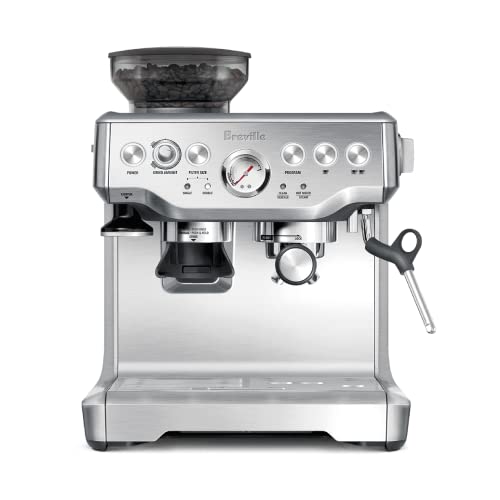
The Barista Express is the most referenced all-in-one espresso machine in this category for a reason: it combines a 1600-watt thermocoil heating system with a 54mm portafilter, a conical burr grinder with 25 grind settings, and a PID controller that holds water temperature within one degree Fahrenheit of the target. The low-pressure pre-infusion ramps up gradually over several seconds, expanding the coffee puck evenly before full 15-bar pressure hits, which prevents the channeling that produces sour espresso.
The integrated grinder doses directly into the portafilter cradle, and the included Razor Dose Trimming Tool lets you scrape off excess grounds for a consistent headspace — a detail borrowed from commercial espresso machines. The steam wand is a manual single-hole tip that produces microfoam suitable for latte art, but it requires a steady hand and some practice to produce consistent results. The water tank holds 67 ounces and is rear-accessible, which means you need clearance behind the machine or you have to slide it out for refills.
The 54mm portafilter is not the commercial 58mm standard, which means accessories like tampers and distributor tools are less interchangeable. But the overall build quality — stainless steel body, brass boiler, aluminum grinder burrs — justifies the price for anyone who wants espresso from bean to cup in under a minute without a separate grinder.
Why it’s great
- Integrated 25-setting conical burr grinder with on-demand dosing
- PID temperature control for stable extraction across multiple shots
- Low-pressure pre-infusion for even puck saturation
Good to know
- 54mm portafilter limits third-party accessory compatibility
- Grinder retention leaves 2-3 grams of stale grounds in the chute
- Steam wand requires manual technique for consistent microfoam
7. Ninja Luxe Café Pro Series ES701

The Ninja Luxe Café Pro aims to replace an espresso machine, a drip coffee maker, a cold brew system, and a hot water dispenser with one footprint. The integrated conical burr grinder offers 25 grind settings, and the built-in scale enables weight-based dosing — it measures the actual grams of coffee dispensed instead of relying on a timed grind, which eliminates the inconsistency that happens as bean hopper levels change. The Barista Assist Technology monitors each brew and adjusts the grind size recommendation for the next batch based on the previous shot’s flow rate, effectively dialing you in over time.
The Dual Froth System Pro combines a steam wand with a whisking mechanism that spins inside the milk jug, automatically producing microfoam for both dairy and plant-based milks without requiring manual steaming skill. Five froth presets cover steamed milk, thin froth, thick froth, extra-thick froth, and cold foam — enough variety to cover latte, cappuccino, flat white, and iced drinks. The integrated tamper is a lever mechanism that presses the puck flush with zero effort and no grounds overflowing the basket rim.
The independent hot water system dispenses water at the correct temperature for Americanos, tea, and hot chocolate without running a brewing cycle. The machine also supports cold-pressed espresso, which uses lower temperature and pressure over a longer extraction to produce a concentrate that works well in espresso martinis. The drip coffee mode offers classic, rich, and over-ice brew styles across six to eighteen ounce serving sizes, which is unusual flexibility for a machine that also pulls espresso shots.
Why it’s great
- Weight-based dosing with built-in scale for grind consistency
- Dual Froth System handles dairy and plant milks automatically
- Integrated lever tamper eliminates messy tamping step
Good to know
- Large footprint — 27 pounds, 14.8 inches tall
- Calibration required when switching between very different roast levels
- Some owners report plastic water tank picks up odors over time
8. Breville Barista Touch Espresso Machine BES880BSS

The Barista Touch uses Breville’s ThermoJet heating system, which reaches the extraction temperature in three seconds — not three minutes. That changes the morning workflow because you don’t have to wait for the machine to warm up before pulling your first shot. The integrated conical burr grinder doses by weight using a built-in scale, and the grind size, dose amount, and extraction time are all displayed on the 5-inch touchscreen that walks you through each step.
The automatic steam wand takes over milk texturing entirely: you set the temperature and texture level on the touchscreen, insert the wand into the milk, and it stops automatically when the target temperature is reached. The PID controller maintains water temperature within one degree throughout the extraction, and the low-pressure pre-infusion ramp ensures even puck saturation. The machine stores up to eight personalized drink profiles, so each household member can save their preferred grind setting, shot volume, milk temperature, and froth texture.
The included accessories — 54mm portafilter, Razor trimming tool, stainless steel milk jug, ClaroSwiss water filter — cover everything needed for standard espresso drinks. The two-year warranty is longer than the standard one-year term on most espresso machines. The 67-ounce water tank is still rear-mounted, which requires pulling the machine forward for refills, but the drip tray has a “full” indicator that pops up to remind you to empty it before it overflows.
Why it’s great
- Three-second ThermoJet heat-up — no morning warmup wait
- Automatic milk steaming with adjustable temperature and texture
- Up to 8 saved personal drink profiles for multi-user households
Good to know
- Defect rate appears higher than Breville’s mechanical models
- Touchscreen can be slow to register inputs when wet
- Steam wand auto-purge still requires manual tip wipe
9. De’Longhi Magnifica Evo Next

The Magnifica Evo Next is a super-automatic espresso machine — you fill the bean hopper, fill the water tank, and select a drink from the 2.4-inch TFT color display. The machine grinds, doses, tamps, extracts, and discards the puck automatically. The LatteCrema Hot System textures milk inside a separate carafe using a dedicated steam circuit, producing microfoam that rivals manual steaming for density and consistency. It works with oat, almond, and soy milks as well as dairy.
Thirteen one-touch recipes cover the full espresso menu: Espresso, Long, Americano, Latte Macchiato, Cappuccino, Espresso Macchiato, Coffee, Flat White, and more. Three user profiles let each person save preferred drink size (four size options) and intensity (five levels). The conical burr grinder adjusts across 13 settings, and the My Coffee function lets you fine-tune the extraction parameters for each recipe beyond the default presets.
The cleaning cycle is straightforward: a prompt on the screen tells you when to run the rinse cycle, and the brew group is removable for rinsing under the tap. The water tank is 60 ounces and front-accessible, which means you don’t have to slide the machine out to refill it. The main trade-off for this level of automation is that you give up the hands-on control that defines semi-automatic machines — you can’t manually control the pre-infusion duration or steam wand angle, because the machine handles all of that internally.
Why it’s great
- Full bean-to-cup automation with 13 one-touch drink recipes
- LatteCrema Hot System textures dairy and plant milks equally well
- Three user profiles with adjustable size and intensity for each
Good to know
- No manual pre-infusion or steaming control for advanced users
- Plastic brew group components require periodic replacement
- Higher long-term maintenance cost than semi-automatic machines
FAQ
Is a high-end coffee maker worth the investment compared to a mid-range machine?
What does SCA certification actually mean for a coffee maker?
How much difference does a thermal carafe make compared to a glass carafe on a hot plate?
Do I need a separate grinder even if the coffee maker has a built-in one?
How often should I descale a high-end coffee maker?
Final Thoughts: The Verdict
For most users, the high-end coffee maker winner is the Technivorm Moccamaster 79212 KBTS because it delivers SCA-certified extraction with a zero-plastic water path and a thermal carafe that preserves flavor for hours — no unnecessary complexity, just consistently excellent batch brew. If you want precise temperature control with a dedicated bloom cycle for lighter roasts, grab the Fellow Aiden Precision. And for those who want a single machine that pulls espresso, brews drip coffee, and produces cold brew without separate appliances, the Ninja Luxe Café Pro ES701 offers the widest functionality in one footprint.