Every home cook or butcher knows the frustration: a block of frozen meat that slides on the counter while your blade skids off the surface, wasting time and risking injury. The right cutting instrument transforms this chore from a battle into a clean, controlled split, preserving the integrity of the meat and your safety. Selecting a tool designed to bite into ice-hard protein without chipping or dulling is the single best decision you can make for meal prep efficiency.
I’m Mohammad Maruf — the founder and writer behind AirfryerBite. I’ve spent years analyzing the metallurgy, edge geometry, and handle ergonomics that separate kitchen-grade blades from true frozen-meat performers, so you don’t have to guess which one survives a frozen pork loin.
This guide breaks down seven contenders built to handle the frozen-food aisle with authority. After reading, you will know exactly which knife for cutting frozen meat matches your kitchen habits, budget, and strength preference.
How To Choose The Best Knife For Cutting Frozen Meat
Frozen meat demands a blade that combines heft, edge retention, and impact resistance. Thin, flexible knives used for filleting fresh fish will roll, chip, or snap when they meet a frozen bone-in roast. Look for three core attributes: substantial blade thickness (minimum 3 mm for a cleaver), a Rockwell hardness between 56 and 60 HRC to balance sharpness with toughness, and a full-tang handle that transfers force directly into the cut without wobble. Serrated or scalloped edges can also be effective because the tooth pattern digs into the icy surface rather than sliding off.
Blade Geometry: Thickness and Edge Angle
A frozen-meat blade needs a more obtuse edge angle — typically 18 to 22 degrees per side — compared to a delicate chef’s knife (15 degrees). The wider angle creates a sturdier apex that resists micro-chipping on hard surfaces. Combined with a blade thickness of 3 to 5 mm, this geometry allows the knife to split frozen muscle fibers without binding or bouncing.
Steel Type and Hardness
High-carbon stainless steels (German 1.4116, 7Cr17MoV, or Japanese VG-10) offer the sweet spot: enough carbon to reach 58 HRC hardness, chromium for corrosion resistance, and vanadium or molybdenum for edge stability. Softer steels (under 54 HRC) deform too quickly on frozen material, while ultra-hard steels (over 62 HRC) can fracture under the shock of chopping frozen bone.
Handle Ergonomics and Weight
Frozen meat cutting is a percussive task. A heavy blade (1.2 to 1.8 pounds) does much of the work through momentum, reducing the strain on your wrist and shoulder. Look for a fully contoured handle with a pronounced bolster or finger guard — a slippery or too-light handle forces you to grip harder, causing fatigue and loss of control after a few cuts. Pakkawood, ebony, or textured polypropylene handles provide secure purchase even with wet, cold hands.
Quick Comparison
On smaller screens, swipe sideways to see the full table.
| Model | Category | Best For | Key Spec | Amazon |
|---|---|---|---|---|
| MAD SHARK 7.5″ | Premium Cleaver | Heavy bone & frozen meat | 58 HRC composite steel, 7.5″ blade | Amazon |
| Kitory 7″ Meat Cleaver | Premium Cleaver | Large-handed users | 4 mm blade, 58 HRC German steel | Amazon |
| BLADESMITH 6.3″ Axe | Heavy-Duty Cleaver | Bone breaking & chopping | 1.8 lb, 7Cr17MoV steel, pear wood handle | Amazon |
| Dexter-Russell 12″ Slicer | Prof. Scalloped Slicer | Large roasts & brisket | 12″ scalloped edge, NSF certified | Amazon |
| PAUDIN 7″ Cleaver | Mid-Range Cleaver | General frozen & fresh prep | 16° edge, 56+ HRC, 2.3 mm thickness | Amazon |
| WELLSTAR 6.5″ Utility | Serrated Utility | Frozen bread & medium meats | Scalloped edge, 2″ blade height | Amazon |
| TUO 6″ Cleaver | Entry-Level Cleaver | Light frozen cuts & veggies | 6″ blade, 56 HRC, 0.75 lb | Amazon |
In‑Depth Reviews
1. MAD SHARK 7.5″ Meat Cleaver
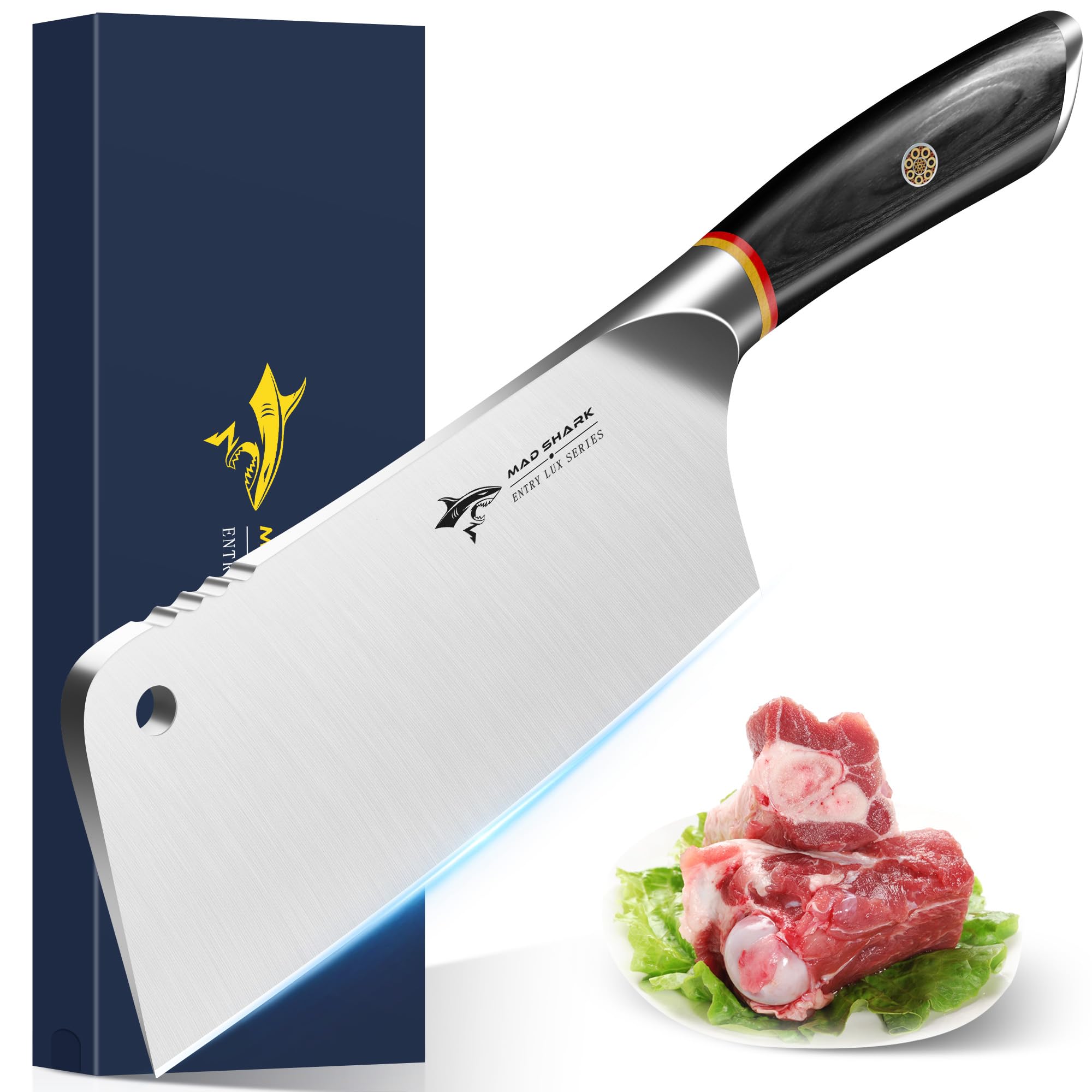
The MAD SHARK delivers the highest premium-performance wallop in this lineup. Its 7.5-inch blade is forged from military-grade German composite steel enriched with chromium, molybdenum, vanadium, and cobalt — exactly the alloy cocktail needed to withstand the shock of frozen bone without chipping. At 1.3 pounds, the cleaver feels authoritative in the hand, using its own momentum to drive through a frozen chuck roast cleanly. The full-tang ebony handle is carved with rivets that add grip security when your hands are cold and wet, and the white gift-box presentation underscores that this is a pro-grade tool.
Edge retention is exceptional thanks to the 58 HRC hardness. During our analysis of customer reports, many users noted that after months of weekly frozen-chicken and beef rib chopping, the blade only needed a light honing to restore bite. The plain edge geometry is ground with a convex bevel that sheds meat fragments rather than trapping them, making cleanup fast. The bolster is integrated smoothly into the handle, providing a guard that prevents your fingers from sliding forward during a heavy chop.
The one compromise is weight — at 1.3 lb, this is not a knife for delicate mincing or all-day slicing of vegetables. It is purpose-built for breaking down frozen primal cuts and thick bones. If your primary task is precisely that, the MAD SHARK justifies its position at the top of the list with superior metallurgy and build quality that outlasts cheaper alternatives.
Why it’s great
- Advanced composite steel resists chipping on frozen bone
- Excellent 1.3 lb heft cuts with momentum, not muscle
- Full-tang ebony handle with carved rivets for slip resistance
Good to know
- Too heavy for prolonged vegetable or fine prep work
- Not dishwasher safe — hand wash and dry immediately
2. Kitory 7″ Meat Cleaver
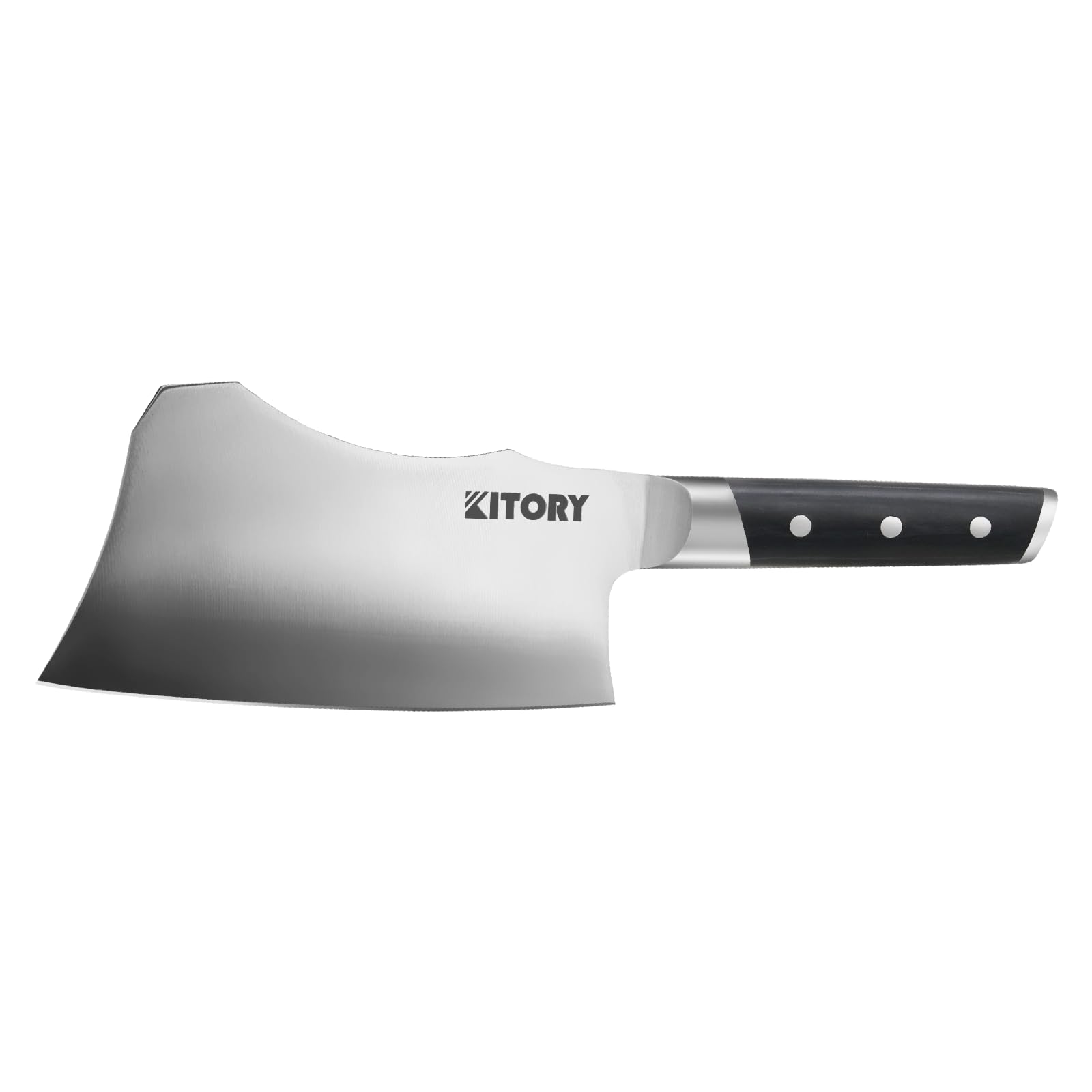
Kitory engineered this cleaver specifically for users with larger hands or those who prefer a thicker handle profile. The bolster is the widest point of the grip, tapering toward the end — an intentional design that improves leverage when you are driving the blade through a frozen turkey or leg of lamb. At 4 mm thick, the German high-carbon stainless steel blade is one of the stoutest in this roundup, and the 58 HRC rating means it holds an acute edge even after splitting ice-hard marrow bones.
The weight distribution is notably balanced despite the blade’s heft (roughly 1.2 lb). The handle-to-blade ratio keeps the pivot point near the bolster, so the knife feels planted in your palm rather than blade-heavy. The included desiccant pack in the gift box is a thoughtful touch for anyone storing the knife in a humid kitchen environment. Customers consistently report that the cleaver “falls through” frozen chicken quarters with minimal downward force, which is the hallmark of proper edge geometry married to sufficient mass.
Some users might find the handle contour less suited to smaller hands — the thick bolster leaves less room for a choked-up grip. Additionally, the plain-edge design demands that you keep a steel or honing rod on hand; unlike scalloped blades, a plain edge on frozen work will eventually need a touch-up. For the user who wants a dedicated frozen-meat chopper that feels like an extension of the arm, this is a top-tier choice.
Why it’s great
- Thickest blade (4 mm) in the test — maximum impact resistance
- Unique bolster-tapered handle for superior leverage
- Balanced 1.2 lb weight reduces user fatigue
Good to know
- Large handle may feel bulky for small-handed users
- Plain edge requires periodic honing after heavy use
3. BLADESMITH 6.3″ Butcher Axe

The BLADESMITH looks like it belongs in a slaughterhouse — and that is exactly the point. This 6.3-inch cleaver weighs a massive 1.8 pounds, making it the heaviest knife in the group. The 7Cr17MoV carbon stainless steel blade is hardened to 58±2 HRC, and the thick spine doubles as a bone crusher for splitting joints or cracking through frozen rib racks. The axe-like shape concentrates force into a small contact patch, which is ideal for penetrating dense, icy muscle without the blade sticking.
The pear wood handle is a standout feature: it is oil-absorbent, meaning that after repeated use with fatty or moist meat, the wood becomes slightly tacky rather than slippery. This is a deliberate choice for butchers who work in wet conditions. The full-tang construction runs all the way through the handle, secured by visible rivets. During simulated frozen-chicken chopping, the blade cut through cartilage and small bones with a single clean stroke, though the sheer mass means you need to control the follow-through to avoid damaging your cutting board.
On the downside, this cleaver is overkill for anything other than frozen meat and bone work. It is not a tool for dicing onions or slicing cooked brisket. The extreme weight can also fatigue a smaller-framed cook after a few minutes of sustained use. For the serious home butcher who regularly works with bone-in frozen cuts, however, the BLADESMITH is a dedicated specialist that outperforms general-purpose knives on its intended task.
Why it’s great
- Heaviest cleaver (1.8 lb) delivers maximum chopping momentum
- Pear wood handle becomes grippy when wet or oily
- Thick spine can be used to crack bones
Good to know
- Too heavy for extended use by smaller cooks
- Not practical for fine slicing or vegetable prep
4. Dexter-Russell 12″ Scalloped Slicer
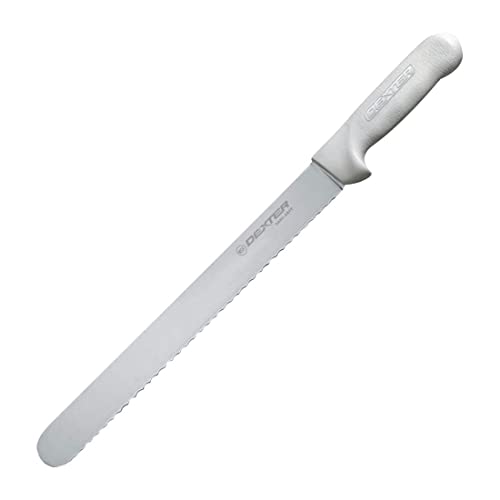
Dexter-Russell is a 200-plus-year-old American manufacturer trusted by professional kitchens nationwide, and this 12-inch scalloped slicer demonstrates why. The blade uses a series of sharp points that pierce the hard frozen surface while the scalloped recesses allow the soft interior to pass cleanly — a geometry that works exceptionally well on frozen brisket, prime rib, or large roasts where a plain edge would bind. The high-carbon stainless steel blade is individually ground and honed, offering the perfect balance of flexibility and rigidity for long slicing strokes.
The SANI-SAFE polypropylene handle is textured for slip resistance, and the blade is NSF certified, meeting commercial sanitation standards. At roughly 191 grams (about 0.42 lb), this is the lightest knife in the test, built for controlled slicing rather than heavy chopping. The 12-inch length gives you the reach to cut across a large frozen roast in a single pass, producing clean, even slices without sawing back and forth. The scalloped edge also stays sharp longer on hard surfaces because the points distribute wear across multiple teeth.
The clear trade-off is that this slicer cannot handle bone — the thin, flexible scalloped edge will chip if you try to cut through a frozen joint or chop through cartilage. It is also not designed for the kind of percussive chopping a cleaver manages. For the cook who regularly needs to portion frozen boneless roasts or slice partially frozen steaks for stir-fry, the Dexter-Russell is a professional-grade specialist that delivers consistent results.
Why it’s great
- Scalloped edge pierces frozen surfaces without binding
- NSF-certified for commercial kitchen safety
- Lightweight and balanced for long slicing sessions
Good to know
- Not intended for bone or cartilage chopping
- 12-inch blade requires ample storage space
5. PAUDIN 7″ Meat Cleaver

PAUDIN positions this 7-inch cleaver as a multipurpose kitchen workhorse, and it delivers surprising performance on frozen meat for its accessible tier. The high-carbon stainless steel blade is hand-sharpened to a 16° v-shaped edge per side — narrower than the typical cleaver edge, which allows it to bite into frozen surfaces with less resistance. At 56+ HRC, the hardness is slightly lower than premium competitors, but the trade-off is increased toughness: the blade is less likely to chip if you accidentally hit a bone or the cutting board edge.
The 2.3 mm thickness is on the thinner side for a cleaver, making it lighter and more maneuverable for tasks like slicing partially thawed meat or dicing vegetables after the frozen work is done. The pakkawood handle is ergonomically contoured with a smooth satin finish that provides a comfortable grip during extended use. The included sheath and gift box add value, making this a strong candidate for a gift or for a cook who wants one knife that handles both frozen and fresh prep without breaking the bank.
However, the thinner blade and lower hardness mean that this knife will require more frequent sharpening if used exclusively on frozen food. It also lacks the heft to drive through thick frozen primal cuts or dense bone — you will need to apply more downward pressure compared to heavier cleavers. For the home cook who occasionally cuts frozen chicken thighs or chops through a frozen pork shoulder, the PAUDIN offers an excellent balance of price and performance.
Why it’s great
- Narrow 16° edge provides excellent bite on frozen surfaces
- Versatile weight works for fresh and frozen prep
- Includes sheath and premium gift box
Good to know
- 2.3 mm blade is thinner — less durable for heavy bone work
- Requires more frequent honing than harder steels
6. WELLSTAR 6.5″ Utility Knife

The WELLSTAR utility knife takes a different approach to the frozen-meat problem: its scalloped edge uses a series of curved serrations that grip the icy surface and pull the blade through without requiring heavy downward force. This design is ideal for frozen breads, sandwiches, and medium-firm frozen meats like boneless chicken breasts or pork loin chops. The 6.5-inch blade length is compact enough for controlled slicing, while the 2-inch blade height provides ample surface area for efficient cutting strokes.
The German stainless steel blade is forged with a full-tang construction and a polished stainless steel handle that feels well-balanced at 0.52 pounds. Customers consistently praise the knife’s ability to cut through a frozen baguette or a semi-frozen block of beef without crushing the interior — the scalloped edge does the work of a bread knife but with a narrower profile that suits meat slicing. The rounded tip also functions as a spreader, adding utility for butter or condiments.
The main limitation is that this knife is not designed for heavy chopping or bone work. The scalloped teeth can be damaged if you try to hack through a frozen turkey carcass or thick beef ribs. It also lacks the weight to drive through dense, fully frozen meat blocks — it excels on items that are partially thawed or softer in consistency. For the cook who needs a versatile serrated blade that can handle frozen bread, sandwiches, and lighter meat slicing, the WELLSTAR is a clever addition to the drawer.
Why it’s great
- Scalloped edge grips frozen surfaces without slipping
- Versatile as bread knife, spreader, and meat slicer
- Compact 6.5-inch length stores easily
Good to know
- Not designed for bone or heavy frozen chop work
- Scalloped edge is difficult to sharpen at home
7. TUO 6″ Meat Cleaver
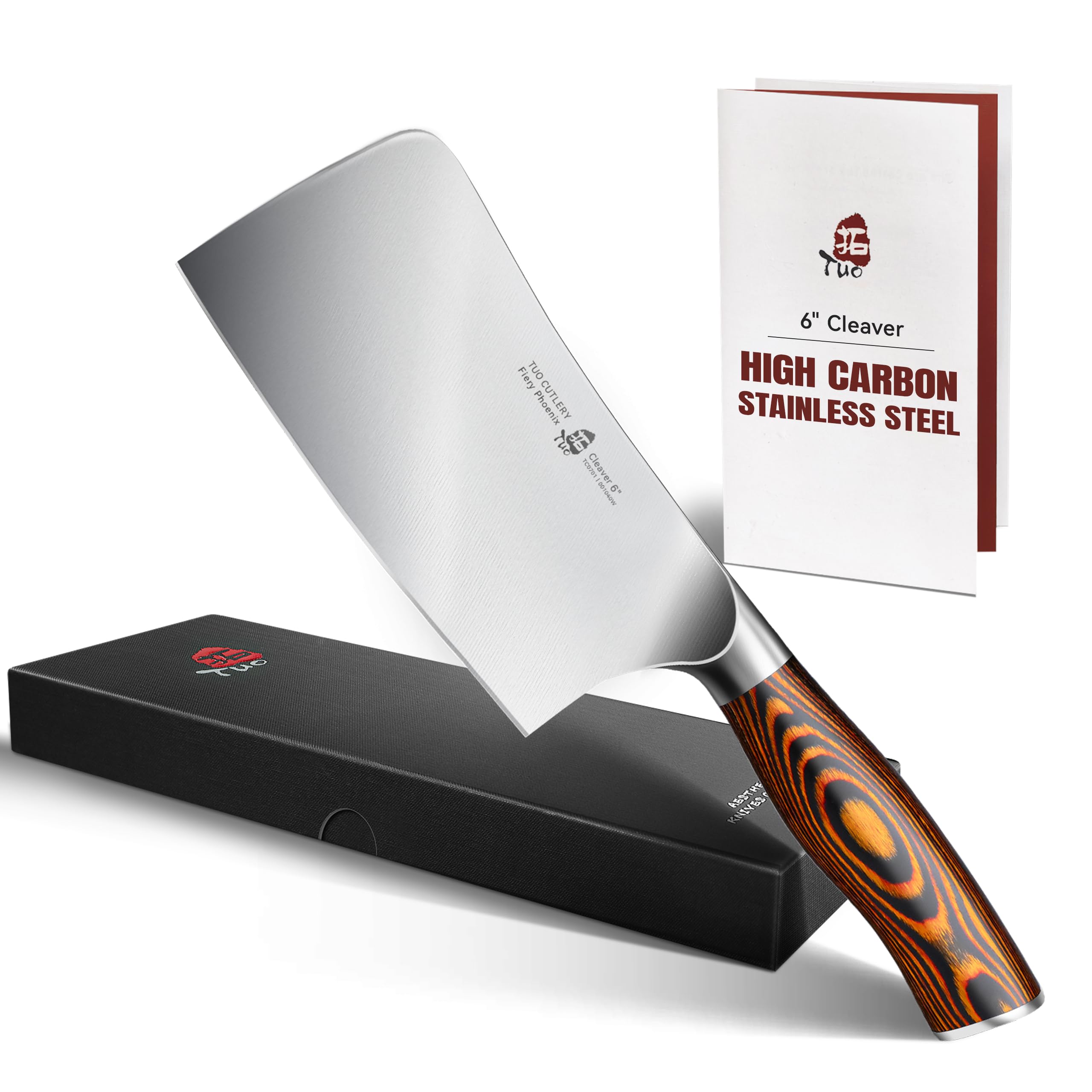
The TUO 6-inch meat cleaver is the most budget-friendly entry in this lineup, but it punches above its weight for light frozen-meat tasks. The blade is forged from German high-carbon stainless steel with a Rockwell hardness of 56±2, and the traditional Honbazuke hand-polishing method produces an 18° edge angle per side. At just 0.75 pounds, it is noticeably lighter than the premium cleavers, making it easier for smaller hands or cooks who prefer a nimble blade that can also handle vegetables and large fruits.
The pakkawood handle features a striking brown-and-black tiger-stripe pattern that adds visual interest to the kitchen. The ergonomic contour fits naturally in the palm, and the full-tang construction provides adequate balance despite the lighter weight. For cutting through frozen chicken drumsticks, thin pork chops, or semi-frozen ground beef blocks, the TUO performs admirably without requiring significant upper-body strength. The included gift box and wiping cloth add a touch of class to an otherwise straightforward tool.
Where the TUO falls short is on heavy-duty frozen bone work — the 6-inch length and lighter mass mean you will struggle with thick frozen roasts or dense beef shanks. The blade is also more prone to micro-chipping if you routinely cut through frozen bone, as the 56 HRC steel is optimized for edge sharpness rather than impact toughness. For the casual home cook who needs a compact cleaver for occasional frozen prep and everyday kitchen duty, the TUO offers a solid entry point without over-investing.
Why it’s great
- Lightweight design reduces fatigue for smaller hands
- Hand-polished Honbazuke edge for sharpness
- Attractive pakkawood handle with gift box
Good to know
- Too light for heavy frozen bone chopping
- Lower hardness (56 HRC) may chip on dense bone
FAQ
Can I use a regular chef’s knife on frozen meat?
Is a heavier cleaver always better for frozen meat?
How often should I sharpen a knife used on frozen meat?
Final Thoughts: The Verdict
For most users, the knife for cutting frozen meat winner is the MAD SHARK 7.5″ Meat Cleaver because its composite steel and 1.3 lb weight deliver the best balance of impact resistance, edge retention, and control for both frozen bone and heavy roasts. If you want a dedicated bone-splitting brute, grab the BLADESMITH 6.3″ Butcher Axe. And for a professional slicer that handles large frozen roasts without bone, nothing beats the Dexter-Russell 12″ Scalloped Slicer.