A good pasta roller is a gateway to fresh, restaurant-quality noodles, but manual cranking turns a relaxing kitchen project into an arm workout. An electric motor removes that friction entirely, letting you focus on the dough instead of the labor. The right machine transforms a Sunday afternoon pasta session from a chore into pure satisfaction.
I’m Mohammad Maruf — the founder and writer behind AirfryerBite. I’ve spent years analyzing appliance specs, motor torque ratings, and build materials so you don’t have to guess which electric roller will hold up to weekly use.
Whether you need a simple attachment for your stand mixer or a standalone machine with dedicated power, finding the best electric pasta roller means matching motor strength to your batch size and kitchen workflow.
How To Choose The Best Electric Pasta Roller
Electric pasta rollers fall into two camps: attachments that borrow power from your stand mixer, and self-contained units with their own motor. The best choice hinges on your existing equipment, batch size, and tolerance for countertop clutter.
Motor Type and Power Source
Stand-mixer attachments use the mixer’s motor hub, which is usually strong enough for moderate dough batches. Self-contained electric rollers have dedicated motors measured in watts (typically 110W to 700W). Higher wattage means faster rolling and the ability to handle stiffer doughs without stalling. If you make pasta weekly, a dedicated motor is worth the premium.
Thickness Settings and Roller Width
Most electric rollers offer between 7 and 8 adjustable thickness settings, ranging from roughly 0.2 mm to 3 mm. The finest settings produce delicate angel hair sheets, while thicker ones handle lasagna or ravioli bases. A wider roller, around 5.5 to 6 inches, lets you roll larger sheets in fewer passes, which matters for lasagna or filled pasta.
Build Materials and Longevity
Roller drums and cutters should be stainless steel or chromed steel — these resist dough residue and won’t corrode after repeated flour exposure. Aluminum rollers are lightweight but can oxidize over time. The housing on attachment models is often high-impact plastic; while functional, it won’t match the stability of a full-metal body on premium units.
Quick Comparison
On smaller screens, swipe sideways to see the full table.
| Model | Category | Best For | Key Spec | Amazon |
|---|---|---|---|---|
| GVODE 3-in-1 | Standalone | Dedicated motor power | 700W max motor | Amazon |
| MARCATO Pastadrive | Standalone | Italian build quality | 110W motor | Amazon |
| Philips 7000 HR2660 | Standalone | All-in-one extrusion | 150W, 8 discs | Amazon |
| RAFBAR 3-in-1 | Attachment | Mixer attachment value | 8 thickness settings | Amazon |
| NEWSETS 3-in-1 | Attachment | Budget-friendly entry | 8 thickness settings | Amazon |
| HOZODO 3-in-1 | Attachment | Stainless roller durability | 8 thickness settings | Amazon |
| Shule Electric | Standalone | Two-speed versatility | 2 speeds + hand crank | Amazon |
In‑Depth Reviews
1. GVODE Electric Pasta Maker – 3-in-1
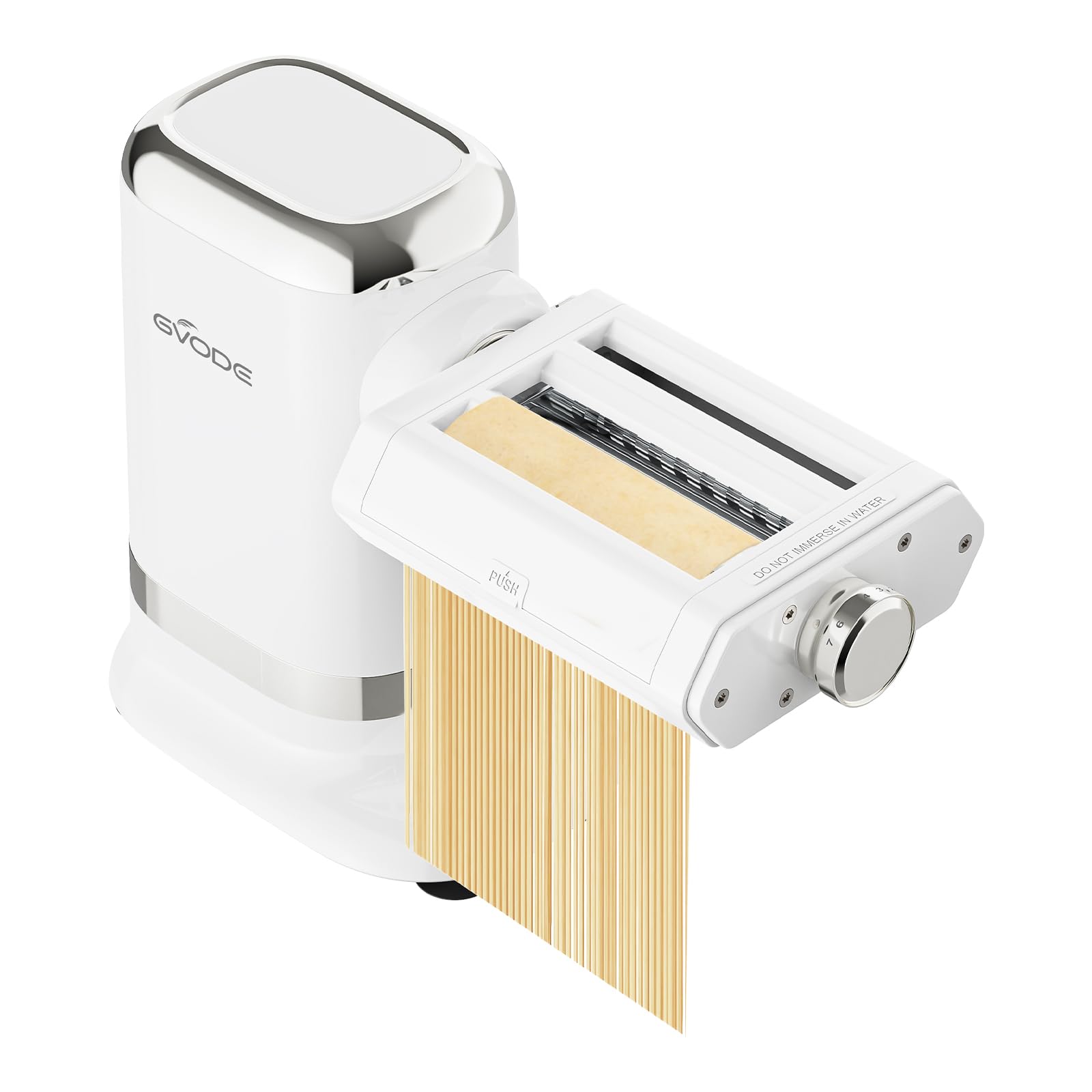
The GVODE 3-in-1 stands out because of its robust 700-watt motor — far more powerful than typical budget units. It drives the roller and cutters at a speed that can process several batches of egg noodles or fettuccine in under 20 minutes, based on real user reports. The motor housing is made of high-impact plastic, but the roller drums and cutting blades are stainless steel, giving you corrosion resistance where it matters most. Eight thickness settings range from 0.4 mm to 2 mm, covering everything from delicate pasta to thicker lasagna sheets.
Unlike simple stand-mixer attachments, this self-contained unit frees up your mixer for other tasks. It includes interchangeable cutters for spaghetti and fettuccine, plus a dedicated cleaning brush. The attachment and detachment process is quick, so you can store it easily after use. User feedback highlights how the speed, while fast, can take a batch or two to control — the lowest speed is still fairly brisk, so you need to guide the dough sheet steadily into the cutters.
Overall, the GVODE is the best balance of motor strength, speed, and output capacity for the home cook who wants a dedicated pasta roller instead of an add-on. If you’re ready to move past manual labor and want a standalone machine that won’t stall on stiff dough, this is your pick.
Why it’s great
- Powerful 700W motor handles stiff dough without stalling
- 8 precise thickness settings for versatile pasta styles
- Stainless steel cutters resist rust and dough buildup
Good to know
- Motor speed is high even on the lowest setting
- Plastic body not as robust as full-metal alternatives
- Not dishwasher safe — requires brush cleaning only
2. MARCATO Pastadrive 110W Electric Pasta Machine

MARCATO is synonymous with Italian pasta-making heritage, and the Pastadrive brings that legacy into the electric realm. This unit is 100% designed and assembled in Italy, using a chrome-plated steel body that feels substantial on the countertop. The 110-watt motor is modest compared to the GVODE, but it is specifically tuned for the gears of the Atlas and Ampia manual machines — it essentially motorizes a classic hand-crank roller, preserving that familiar rolling action without the arm fatigue.
The roller drums are made of anodized aluminum, which is lightweight and naturally non-stick. The thickness adjuster offers continuous dial control from 0.5 mm to 2.5 mm, giving you fine-grained precision that stepped settings can’t match. It is compatible with MARCATO’s full line of accessories, including cutters for tagliolini and lasagna, and the motor mount attaches via a simple clamp mechanism. The build quality is excellent — the chrome finish resists fingerprints and dough residue, and the gears run quietly.
The trade-off is speed. The Pastadrive is not a high-output machine; it rolls at a measured pace that is ideal for careful dough handling but not for rapid multi-batch production. If you value craftsmanship, quiet operation, and the ability to expand your pasta shape options over time, the MARCATO is a long-term investment.
Why it’s great
- Italian-made chrome steel body for lasting durability
- Continuous thickness dial offers fine precision
- Quiet operation with smooth gear engagement
Good to know
- Motor is less powerful than budget alternatives
- Roller width is narrower than some competitors
- Premium pricing reflects brand and artisan build
3. Philips 7000 Series Pasta Maker (HR2660/03)

The Philips 7000 is a completely different approach — it’s an extrusion-based pasta maker, not a roller-and-cutter system. Instead of pressing dough between rollers, it uses ProExtrude technology and a 150-watt motor to push dough through one of eight included discs, creating shapes like spaghetti, penne, lasagna sheets, and fusilli. It also has a mixing function that can prep dough, cookies, or even pizza base, making it a multi-purpose appliance.
Capacity is a standout feature: the machine can produce enough pasta for up to eight servings in one batch. The dough hopper is large, and the mixing paddle is integrated into the extrusion chamber, so you don’t need a separate stand mixer. Cleanup is easier than with traditional rollers because most parts are dishwasher safe — simply let the residue dry and brush it off before running them through the dishwasher. The HomeID app provides step-by-step recipes, including gluten-free options.
The learning curve is real: users report needing 1-2 batches to dial in the right hydration ratio for consistent extrusion. The machine also takes 15-30 minutes per full batch, which is slower than roller-based systems for plain sheets. If you want a machine that makes multiple pasta shapes with minimal additional cost and you value dishwasher-safe convenience, the Philips is the most versatile unit here.
Why it’s great
- Produces 8 pasta shapes from a single machine
- Dishwasher-safe parts for simple cleanup
- Mixing function extends utility beyond pasta
Good to know
- Requires trial and error to dial in dough hydration
- Production speed is slower than dedicated rollers
- Large footprint on the countertop
4. RAFBAR 3-in-1 Pasta Attachment for KitchenAid
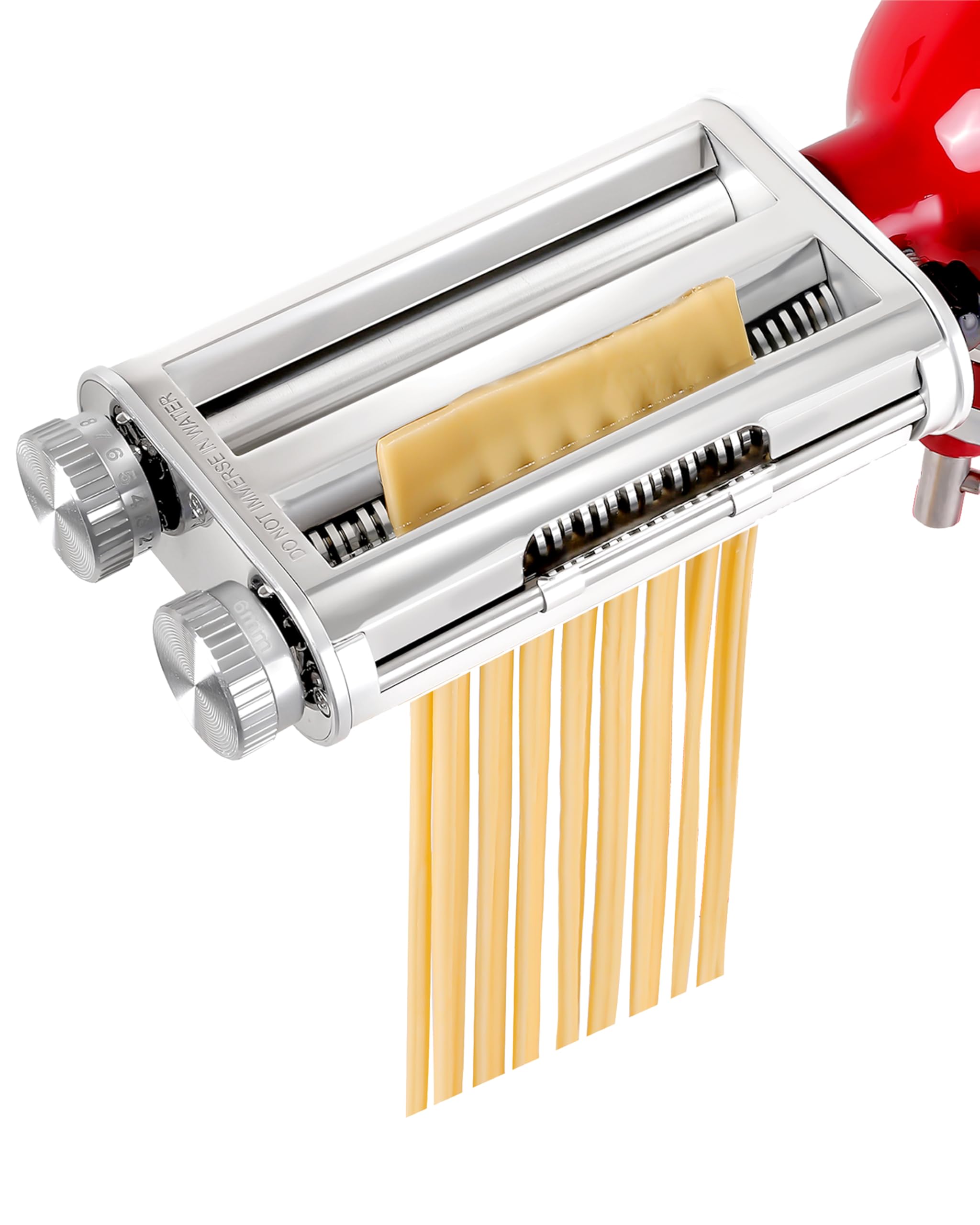
RAFBAR’s 3-in-1 attachment is built with a heavy-duty metal body and stainless steel internal gears, offering a sturdier feel than many budget attachments that rely on plastic housings. It clips onto the power hub of a KitchenAid stand mixer and provides a pasta roller plus two cutting blades — spaghetti (2 mm) and fettuccine (6 mm). Eight thickness settings let you roll sheets from paper-thin to a sturdy lasagna base, and the roller width is wide enough to handle standard dough sheets without excessive trimming.
Users consistently praise the stability of the metal construction; the attachment doesn’t wobble during operation. The stainless steel cutters produce clean, consistent noodles without tearing, even with slightly drier dough. Cleaning is straightforward: open the lid to remove loose dough, then use the included brush to sweep away residue. The manual explicitly advises against water immersion or dishwasher use, so plan for a dry-brush routine after each session.
This is the sweet spot for KitchenAid owners who want a reliable, mid-range attachment that won’t flex or rattle. The RAFBAR doesn’t have a dedicated motor, but the mixer hub provides ample torque for moderate dough batches. If you already own a powerful stand mixer, this attachment delivers near-professional results without occupying extra counter space.
Why it’s great
- Heavy-duty metal housing with stainless steel gears
- Wide roller for efficient sheet production
- Clean cutting without tearing dough
Good to know
- Requires a compatible KitchenAid mixer hub
- Not dishwasher safe — dry brush cleaning only
- Only includes spaghetti and fettuccine cutters
5. Shule Electric Pasta Maker Machine

Shule’s electric pasta maker is a hybrid machine: it includes a detachable motor that drives the rollers and cutters at two selectable speeds, but it also comes with a hand crank for backup. The main body is wrapped in stainless steel, while the rollers and cutters are anodized aluminum. The thickness dial offers 7 or 9 positions (depending on the version), ranging from 0.5 mm to 3 mm, giving you a wide spectrum for different pasta styles.
The motor operates at 110 volts and has two speed settings, but user reports indicate that the machine is quite loud during operation. The included accessories are generous: you get the motor unit, a mounting plate, table clamp, hand crank, and a cleaning brush. The hand crank option is a genuine fallback, not an afterthought — if the motor ever fails or you want manual control for delicate dough, you can still produce pasta.
The primary concern is durability. Multiple owners note that the motor can overheat during extended use, and the aluminum rollers may show wear over time. The noise level is also higher than most competitors. For the price, you get a versatile machine with both electric and manual operation, but it doesn’t match the refinement or longevity of premium units. It’s best suited for occasional use where budget is the main constraint.
Why it’s great
- Two-speed electric motor plus hand crank backup
- Wide thickness range from 0.5 mm to 3 mm
- Stainless steel body for external durability
Good to know
- Motor noise is loud during operation
- Aluminum rollers may show wear over time
- Motor can overheat with prolonged use
6. NEWSETS 3-in-1 Pasta Attachment for KitchenAid

The NEWSETS attachment is an entry-level 3-in-1 that includes a pasta roller, spaghetti cutter, and fettuccine cutter, plus a cleaning brush. It is designed to fit the power hub of KitchenAid stand mixers and uses stainless steel blades with a plastic outer shell. The eight thickness settings cover the standard range from 0.25 mm to 3 mm, which is sufficient for most home pasta projects. The unit weighs roughly 3.5 pounds, making it one of the lighter options on this list.
User reviews are overwhelmingly positive for the price point. Owners with decades of pasta-making experience note that it rolls dough thinner and faster than they can achieve by hand. The stainless steel cutters produce clean noodles, and the plastic housing keeps the unit cool during extended operation. The included cleaning brush is adequate for dry maintenance, though the manual explicitly states the unit is not dishwasher safe and should not be soaked in water.
The plastic construction is the main trade-off. While the gears and cutters are metal, the housing feels less premium than all-metal competitors. Over time, the plastic clips may loosen with repeated attachment and detachment. That said, for occasional users who already have a stand mixer, this is the most cost-effective way to get into electric pasta rolling.
Why it’s great
- Affordable entry point for KitchenAid owners
- Stainless steel blades cut cleanly
- Lightweight design for easy storage
Good to know
- Plastic housing feels less durable than metal builds
- Clips may loosen with frequent use
- Not dishwasher safe — hand brush only
7. HOZODO 3-in-1 Pasta Attachment for KitchenAid
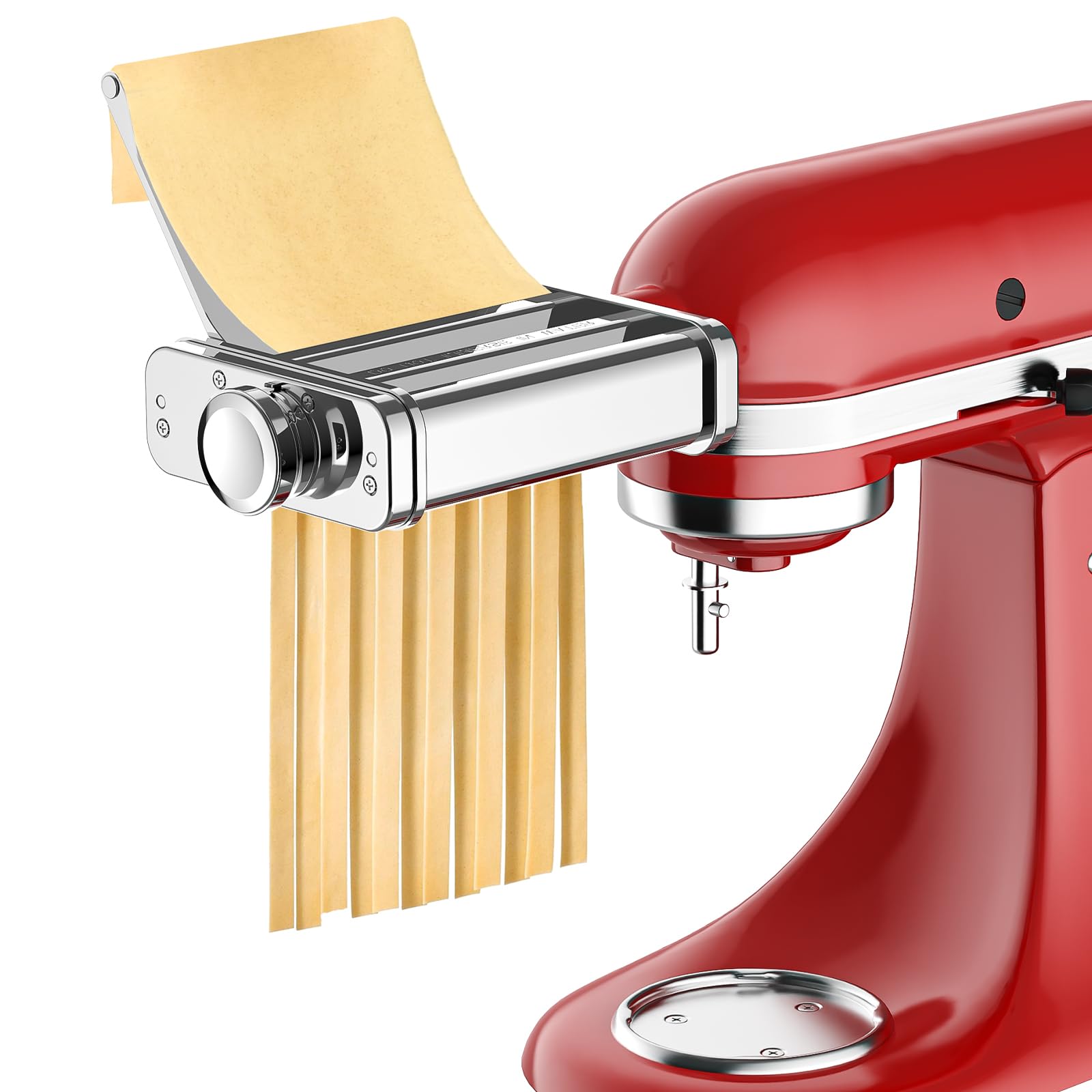
HOZODO’s attachment emphasizes a polished stainless steel construction that looks more refined than plastic-bodied alternatives. The roller and cutters are all stainless steel, providing a smooth, non-stick surface that resists dough sticking. A unique feature is the removable stainless steel baffle that sits in front of the cutters, which helps guide the dough sheet and prevents messes during feeding. The attachment offers 8 thickness settings and includes both spaghetti (1.5 mm) and fettuccine (3 mm) cutters.
The intelligent hands-free design is a genuine improvement — the baffle keeps fingers clear from the cutter entry point, making this safer for families or busy cooks. The stainless steel surface also makes cleaning easier; dough residue wipes off with a dry cloth or the included nylon brush.
This is a strong mid-range option for KitchenAid owners who prioritize a premium look and safer operation. The stainless steel body doesn’t dent or discolor like plastic, and the baffle design solves a common frustration with messy dough feed. The main limitation is that it still relies on your mixer’s motor, so it won’t outperform a dedicated electric roller for heavy-duty batches. For standard home use, though, it’s a refined upgrade over basic plastic attachments.
Why it’s great
- Full stainless steel body resists dough buildup
- Removable baffle improves safety and cleanliness
- Smooth, non-stick surface for easy cleaning
Good to know
- Requires a compatible KitchenAid stand mixer
- Not dishwasher safe — dry brush cleaning only
- Limited to spaghetti and fettuccine cutters
FAQ
Can I use an electric pasta roller with gluten-free dough?
How do I clean an electric pasta roller without damaging it?
What thickness setting should I use for different pasta types?
Final Thoughts: The Verdict
For most users, the best electric pasta roller winner is the GVODE 3-in-1 because its 700W motor offers the highest torque in a standalone unit, making it ideal for weekly pasta production without relying on a stand mixer. If you want Italian craftsmanship and quiet precision for delicate doughs, grab the MARCATO Pastadrive. And for a fully automatic extrusion machine that also mixes dough and makes eight different shapes, the Philips 7000 is in a class of its own.