A budget of fifty dollars forces a specific compromise: do you prioritize raw cutting performance, handle ergonomics, or edge retention? Most cooks assume a cheap knife must be dull or fragile, but the current market offers forged German steel, laminated Japanese blades, and ergonomic handles at prices that quietly challenge that assumption. The difference between a frustrating prep session and a clean, effortless chop often comes down to blade geometry and steel composition — specs you can nail without breaking the bank.
I’m Mohammad Maruf — the founder and writer behind AirfryerBite. I’ve spent years analyzing cutlery metallurgy, handle materials, and edge-angle data across hundreds of knives, separating marketing fluff from real engineering value.
This guide focuses on five models that deliver genuine performance within a strict ceiling. After weighing blade steel type, construction method, handle design, and real-world edge retention, I have identified the best chef knife under $50 for home cooks who refuse to accept mediocrity just because they are not spending triple digits.
How To Choose The Best Chef Knife Under $50
Staying under fifty dollars does not mean accepting a dull blade or a flimsy handle. The most important factors are steel composition, construction method, and handle ergonomics. Understanding these three variables lets you pick a knife that performs consistently for years without requiring frequent sharpening or causing hand fatigue.
Blade Steel: German vs Japanese vs High-Carbon Stainless
The steel determines how long the edge stays sharp and how easily it can be honed. German 1.4116 steel (found on the Babish and Victorinox models) offers excellent rust resistance and a tough edge that tolerates abuse but requires more frequent honing. Japanese-style high-carbon stainless steel, such as the 10Cr15CoMoV used by PAUDIN, reaches a higher hardness (62 HRC) and holds a fine edge longer, but is more brittle and demands careful handling. High-carbon steel without significant chromium (Mercer Millennia) sharpens easily but corrodes faster if left wet.
Construction: Forged vs Stamped
Forged blades are cut, heated, and hammered from a single piece of steel, creating a denser grain structure and a visible bolster that improves balance and durability. Stamped blades are punched from a rolled sheet of steel, which reduces production cost and weight but often sacrifices stiffness and balance. In the sub-$50 range, the Babish, PAUDIN, and Sunnecko are forged, while the Mercer and Victorinox are stamped. Forged knives generally offer better edge stability, but high-quality stamped knives like the Victorinox Fibrox Pro prove that a well-designed stamped blade can still outperform poorly made forged options.
Handle Material and Ergonomics
A handle that becomes slippery when wet or causes hot spots during long prep sessions will ruin the experience of an otherwise excellent blade. Santoprene (Mercer) provides a soft, shock-absorbing grip with textured finger points. Fibrox (Victorinox) is a thermoplastic elastomer that remains non-slip even when wet and is dishwasher-safe. ABS (Babish) is rigid and lightweight but offers less cushioning. Pakkawood (Sunnecko) and black wood (PAUDIN) deliver a traditional aesthetic and a warm feel, but require hand washing and occasional oiling to prevent cracking. Full-tang construction — where the steel extends through the entire handle — is essential for balance and leverage at any price point.
Quick Comparison
On smaller screens, swipe sideways to see the full table.
| Model | Category | Best For | Key Spec | Amazon |
|---|---|---|---|---|
| Victorinox Fibrox Pro | Stamped Blades | Professionals & high-volume prep | 8-inch, 1.4116 steel, 56 HRC | Amazon |
| Mercer Culinary Millennia | Stamped Blades | Value-focused cooks & beginners | 8-inch, Japanese steel, 7.35 oz | Amazon |
| Babish 8-Inch Chef Knife | Forged Blades | Home cooks wanting forged quality | 8-inch, German 1.4116, full-tang | Amazon |
| PAUDIN Chef Knife | Forged Blades | Max edge retention & hardness | 8-inch, 10Cr15CoMoV, 62 HRC | Amazon |
| Sunnecko 8-Inch Chef Knife | Forged Blades | Aesthetics, gift-giving & precision | 8-inch, Japanese steel, 12-15° edge | Amazon |
In‑Depth Reviews
1. Victorinox Fibrox Pro Chef’s Knife, 8 Inch
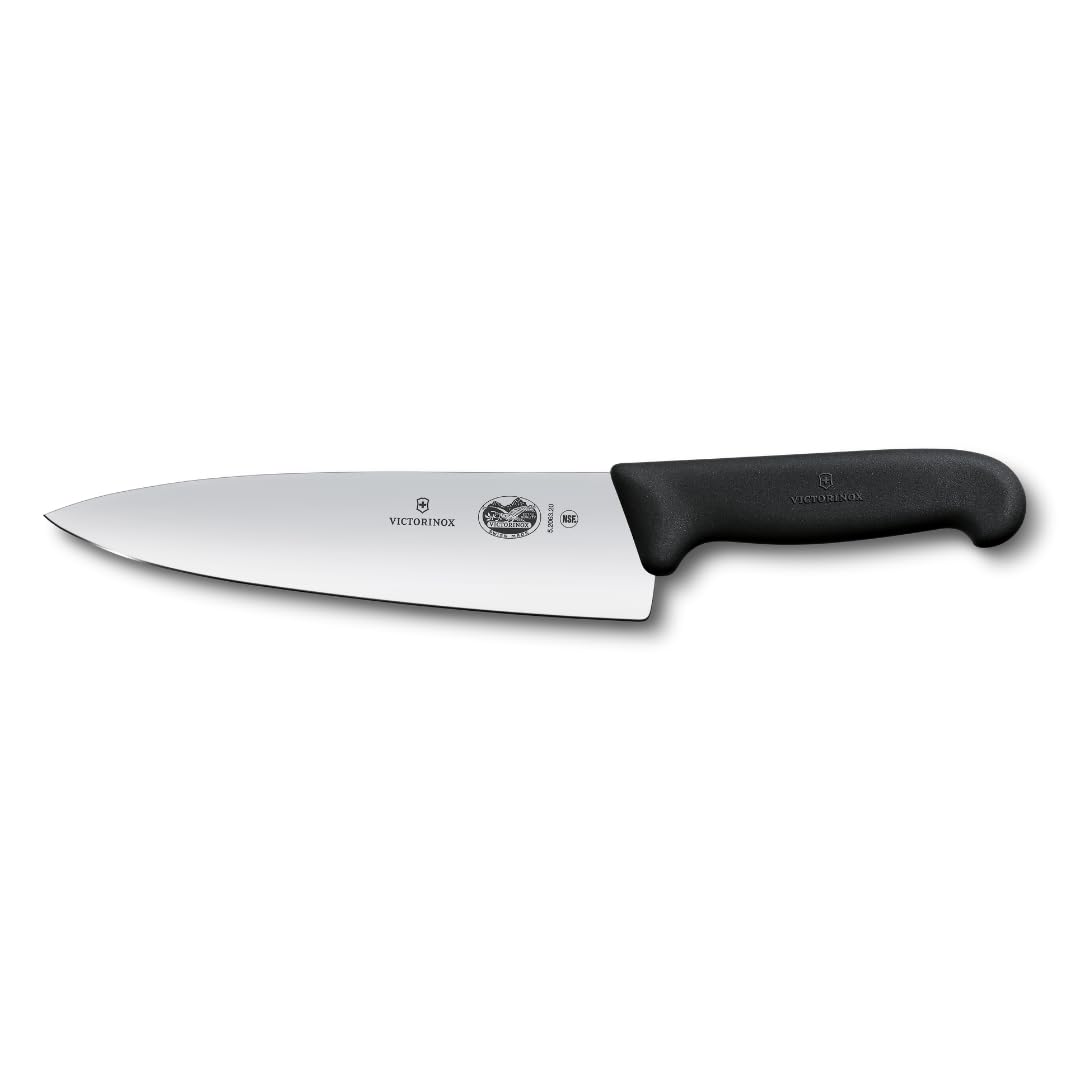
The Victorinox Fibrox Pro is the benchmark that all other sub-$50 chef knives are measured against. Its 8-inch blade uses Swiss-made 1.4116 stainless steel — the same alloy found in knives costing three times as much — laser-tested for a consistently sharp, tapered edge. The Fibrox handle is a thermoplastic elastomer that remains non-slip even when your hands are wet or greasy, and the knife is the only one in this group explicitly rated dishwasher-safe, though hand washing is still recommended to preserve the edge.
At roughly 5 ounces, the knife is lightweight but well-balanced, reducing wrist fatigue during long prep sessions. The stamped construction keeps the price low without compromising edge geometry; the blade is thin behind the edge, allowing it to glide through onions, tomatoes, and boneless proteins with minimal resistance. Professional kitchens have trusted this design for decades, and the lifetime warranty against defects in material and workmanship reinforces its reputation as a workhorse.
The trade-offs are subtle but real. The Fibrox handle, while functional, feels less premium than wood or full ABS handles, and the stamped construction means the blade lacks the heft and rigidity of a forged knife. But for pure cutting performance, edge retention, and ergonomic safety at this price, the Victorinox Fibrox Pro is the rational choice for anyone who cooks daily.
Why it’s great
- Laser-tested edge stays sharp out of the box and holds up well with regular honing
- Non-slip Fibrox handle is comfortable during extended prep and safe when wet
- Dishwasher-safe design and lifetime warranty add long-term value
Good to know
- Handle material feels utilitarian compared to wood or ABS alternatives
- Stamped blade lacks the forward weight of a forged knife for heavy chopping
2. Mercer Culinary M22608 Millennia Black Handle, 8-Inch
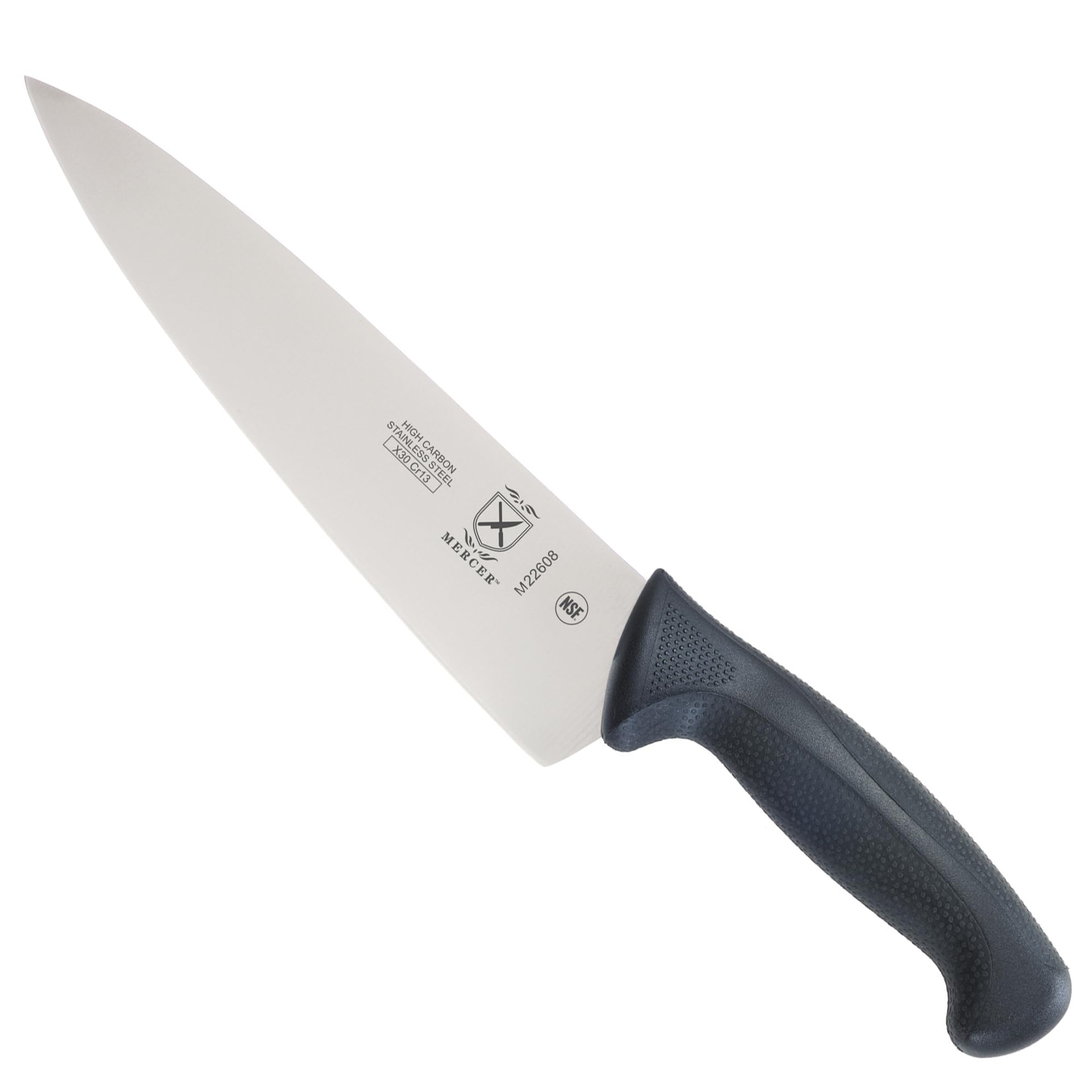
The Mercer Millennia is the knife that introduced countless culinary students to professional-grade performance without the tuition-level price tag. Its 8-inch blade is crafted from one-piece high-carbon Japanese steel — a stamped design that prioritizes easy edge maintenance and long-lasting sharpness. The Santoprene handle features textured finger points that provide a non-slip grip even when your hands are slick with oil or water, and the full tang offers excellent balance for a knife in its weight class.
At just 6.7 ounces, the Mercer is light enough for precise mincing and shredding cabbage but stiff enough to handle dicing onions and crushing garlic cloves with the flat of the blade. The edge comes sharp from the factory and responds well to a honing steel, meaning you can keep it in fighting shape without professional sharpening equipment. Cooks who prefer a soft, shock-absorbing handle will find the Santoprene more forgiving than rigid ABS or wood during marathon meal prep.
The primary compromise is in steel hardness. The Japanese high-carbon steel used here does not reach the hardness of the PAUDIN or Sunnecko blades, so it will require slightly more frequent honing to maintain peak sharpness. Additionally, the knife is not dishwasher safe, and the stamped construction will never match the heft of a forged blade. But for the price, the Mercer Millennia delivers a balance of sharpness, comfort, and durability that is hard to beat.
Why it’s great
- Textured Santoprene handle provides excellent grip and reduces hand fatigue
- One-piece Japanese steel offers easy edge maintenance for beginners
- Lightweight design makes it ideal for precise tasks like mincing herbs
Good to know
- Steel hardness is lower than premium options, requiring more frequent honing
- Stamped construction lacks the forward balance of forged blades
3. Babish 8-Inch Chef Knife – High-Carbon German 1.4116 Steel

The Babish 8-Inch Chef Knife enters the sub-$50 market with a forged German 1.4116 steel blade and a full-tang ABS handle, offering the balance and rigidity that stamped knives cannot replicate. Forged from a single piece of steel, then tempered, taper-ground, and polished, the blade delivers a frightening level of sharpness that cuts through bell peppers, sweet potatoes, and raw chicken with clean, predictable strokes. The full-tang construction ensures that weight is distributed evenly, giving the cook confident control during rock-chopping and slicing.
The ABS handle is rigid and smooth, with a slight contour that fits the palm naturally. It lacks the soft cushioning of Santoprene or Fibrox, but it provides a secure grip without absorbing moisture or odors. The knife weighs about 320 grams (11.3 ounces), giving it a substantial feel that inspires confidence when breaking down squash or halving cabbages. Cooks who appreciate the heft of a forged blade but cannot justify spending triple digits will find the Babish to be a compelling middle-ground.
The trade-off is that the ABS handle can feel slippery when hands are wet, and the blade requires careful hand washing — no dishwasher. Additionally, while the German steel is tough and resistant to chipping, it will dull faster than harder Japanese steels like the 62 HRC blade on the PAUDIN. But for versatility, balance, and the satisfaction of a forged construction, the Babish is a strong contender for the cook who wants professional feel without professional pricing.
Why it’s great
- Fully forged construction provides superior balance and blade stiffness
- German 1.4116 steel is tough, rust-resistant, and easy to sharpen
- Full-tang design offers excellent control during heavy chopping tasks
Good to know
- ABS handle can become slippery when wet, requiring a secure grip
- Not dishwasher safe; hand washing is required to protect the edge
4. PAUDIN Chef Knife, 8 Inch High Carbon Steel
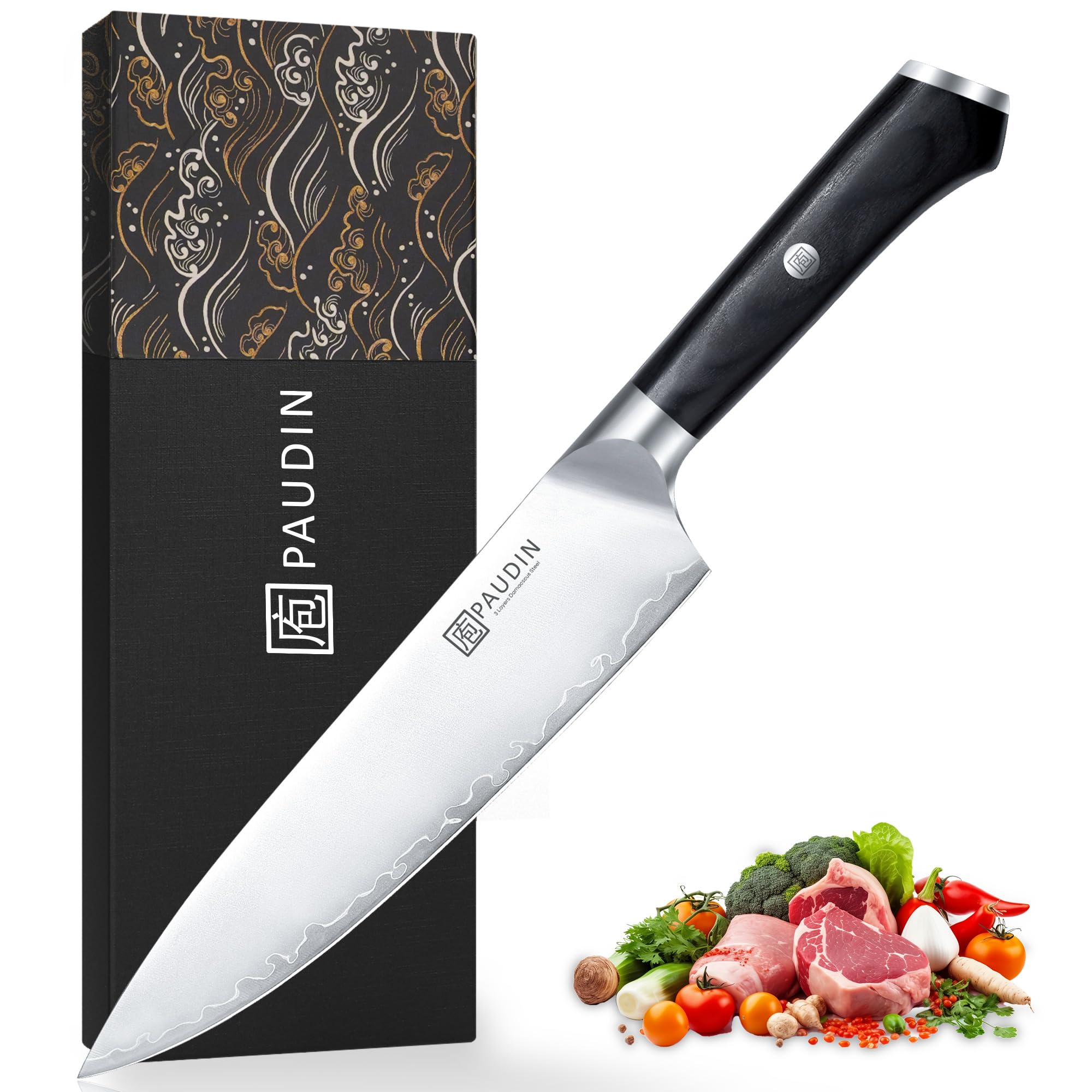
The PAUDIN Chef Knife brings a Japanese-style edge to the sub-$50 segment with its triple-layer laminated 10Cr15CoMoV steel, rated at 62 HRC — the hardest blade in this comparison. The 14-degree double-bevel edge is hand-sharpened to deliver clean, precise cuts that separate food without sticking, and the high hardness means the edge holds its sharpness significantly longer than German steel alternatives. Cooks who hate frequent honing will appreciate how long this knife stays razor-ready.
The full-tang design uses an ergonomic black wood handle secured by a stainless steel rivet, offering a traditional aesthetic and a balanced feel that reduces fatigue. The handle’s contoured shape fits the hand naturally, and the wood provides a warm, non-slip grip that improves with use as oils from your skin condition the surface. The blade itself is forged from three layers, with a harder core sandwiched between softer steel for a combination of edge stability and chip resistance.
The main consideration with a 62 HRC blade is brittleness. This knife should not be used to cut through bones, frozen food, or hard squash seeds, as the edge can chip under lateral stress. The wood handle also requires hand washing and occasional mineral oil treatment to prevent drying. But for someone who primarily preps vegetables, boneless meats, and fruits, the PAUDIN delivers a level of edge retention that is rare at this price point.
Why it’s great
- 62 HRC hardness rating provides industry-leading edge retention for its class
- Triple-layer laminated steel combines a hard core with tough outer layers
- Ergonomic wood handle offers a comfortable, traditional grip
Good to know
- High hardness makes the blade prone to chipping if used on bones or frozen items
- Wood handle requires hand washing and periodic oiling to maintain appearance
5. Sunnecko 8 Inch Chef Knife – Japanese Style, Pakkawood Handle

The Sunnecko 8-Inch Chef Knife is the visual standout of the group, featuring a stunning laser-etched pattern on the blade paired with an ergonomic Pakkawood handle. But the beauty is backed by substance: the blade is hand-sharpened to a 12-15 degree angle per side, making it one of the sharpest edges available at this price. The high-carbon stainless steel construction is forged for durability and rust resistance, and the included PVC sheath adds safety for storage or transport.
The Pakkawood handle is a composite of resin-impregnated wood layers, offering the warmth and aesthetics of natural wood with improved moisture resistance and dimensional stability. The steel bolster provides optimal balance and supports a pinch grip, giving the cook precise control for tasks like mincing garlic or slicing ripe tomatoes without crushing them. The knife’s all-purpose design handles about 90% of prep work, functioning as a vegetable knife, fruit slicer, and meat cutting tool in one package.
The edge angle, while incredibly sharp, is also the knife’s potential weakness. A 12-15 degree edge is more delicate than a standard 20-degree Western edge, meaning it will dull faster if abused on hard surfaces or cutting boards made of glass or stone. The Pakkawood handle also requires hand washing and cannot go in the dishwasher. For the cook who values razor-sharp performance and aesthetic appeal, and is willing to treat the knife with care, the Sunnecko delivers a premium feel for a mid-range investment.
Why it’s great
- 12-15 degree edge angle delivers exceptional out-of-the-box sharpness
- Pakkawood handle with steel bolster offers a premium, balanced feel
- Included PVC sheath and luxury gift box make it ideal for gifting
Good to know
- Thin edge angle is less durable and may require more frequent sharpening with hard use
- Pakkawood handle is not dishwasher safe and requires careful maintenance
FAQ
Is a forged chef knife always better than a stamped one under $50?
Can a chef knife under $50 cut through butternut squash or sweet potatoes?
How often should I sharpen a sub-$50 chef knife?
What is the best handle material for a chef knife under $50?
Final Thoughts: The Verdict
For most users, the best chef knife under $50 winner is the Victorinox Fibrox Pro because it delivers professional-grade cutting performance, a non-slip handle, and dishwasher-safe convenience at a price that leaves room for a honing steel and a cutting board. If you want forged construction and the satisfying heft of a full-tang blade, grab the Babish 8-Inch Chef Knife. And for maximum edge retention with a beautiful presentation, nothing beats the PAUDIN Chef Knife with its 62 HRC laminated steel.