A knife that cannot hold its edge transforms cooking into a chore. Handmade Japanese knives offer a different reality — blades forged by master artisans using centuries-old techniques that deliver a cutting experience Western factory knives simply cannot match. The difference is felt in the first slice through a ripe tomato: clean, effortless, with zero crushing.
I’m Mohammad Maruf — the founder and writer behind AirfryerBite. I’ve spent years analyzing blade geometry, steel compositions, and handle ergonomics across dozens of knife brands to identify what separates authentic handcrafted pieces from mass-produced imitations.
This guide cuts through the marketing noise to deliver data-backed recommendations on handmade japanese knives that justify their place in a serious kitchen, whether you are a home cook or a professional chef.
How To Choose The Best Handmade Japanese Knives
Selecting a handmade Japanese knife requires understanding five critical variables that determine performance, longevity, and value. Ignoring any one of these can lead to a disappointing purchase — here is what matters most.
Steel Core and Hardness Rating
The steel type defines how sharp the blade can get and how long it stays that way. VG10 stainless steel offers excellent edge retention with a hardness around 60-61 HRC, while high-carbon steels like 9CR18MOV push durability further. Harder steel (above 58 HRC) holds a finer edge but becomes more brittle — avoid twisting motions with these blades.
Blade Construction and Cladding
Handmade Damascus knives feature multiple layers of steel folded around a harder core. This 3-layer or 16-layer construction creates micro-serrations along the edge that improve slicing efficiency. The hammered (tsuchime) finish on some blades reduces food sticking by creating air pockets between the blade and the ingredient.
Handle Ergonomics and Material
Octagonal handles offer superior grip control during extended prep sessions. Pakkawood is durable and water-resistant, while rosewood and mahogany provide a warmer feel. Western-style handles with full tang construction offer better balance for those accustomed to European knife profiles.
Edge Angle and Geometry
Japanese knives typically sharpen to 15-16 degrees per side — significantly more acute than the 20-degree Western standard. This yields cleaner cuts but requires more careful honing. Hollow ground edges create food release channels, while plain edges offer the most versatile sharpening profile.
Quick Comparison
On smaller screens, swipe sideways to see the full table.
| Model | Category | Best For | Key Spec | Amazon |
|---|---|---|---|---|
| Shun Classic Santoku | Premium Santoku | Versatile daily slicing | VG-MAX core, 16° edge | Amazon |
| Yoshihiro VG10 Santoku | Mid-Range Damascus | Vegetable prep & fish | 16-layer Damascus, HRC 60 | Amazon |
| KAWAHIRO Gyuto | Value Gyuto | Meat & veggie slicing | VG10 core, 8.24″ blade | Amazon |
| Miyabi Koh Santoku | Entry-Level Premium | First Japanese knife | Katana edge, Pakkawood | Amazon |
| MITSUMOTO SAKARI Set | Full Set | Complete kitchen upgrade | 4-pc set, 9CR18MOV steel | Amazon |
| SENKEN Tsunami Set | Premium Set | Collection & display | 7-pc, 67-layer Damascus | Amazon |
| HOSHANHO 16-Piece Set | Complete Block Set | Family cooking & storage | 16-pc, 10Cr15CoMoV steel | Amazon |
In‑Depth Reviews
1. Shun Classic 7″ Hollow Ground Santoku Knife
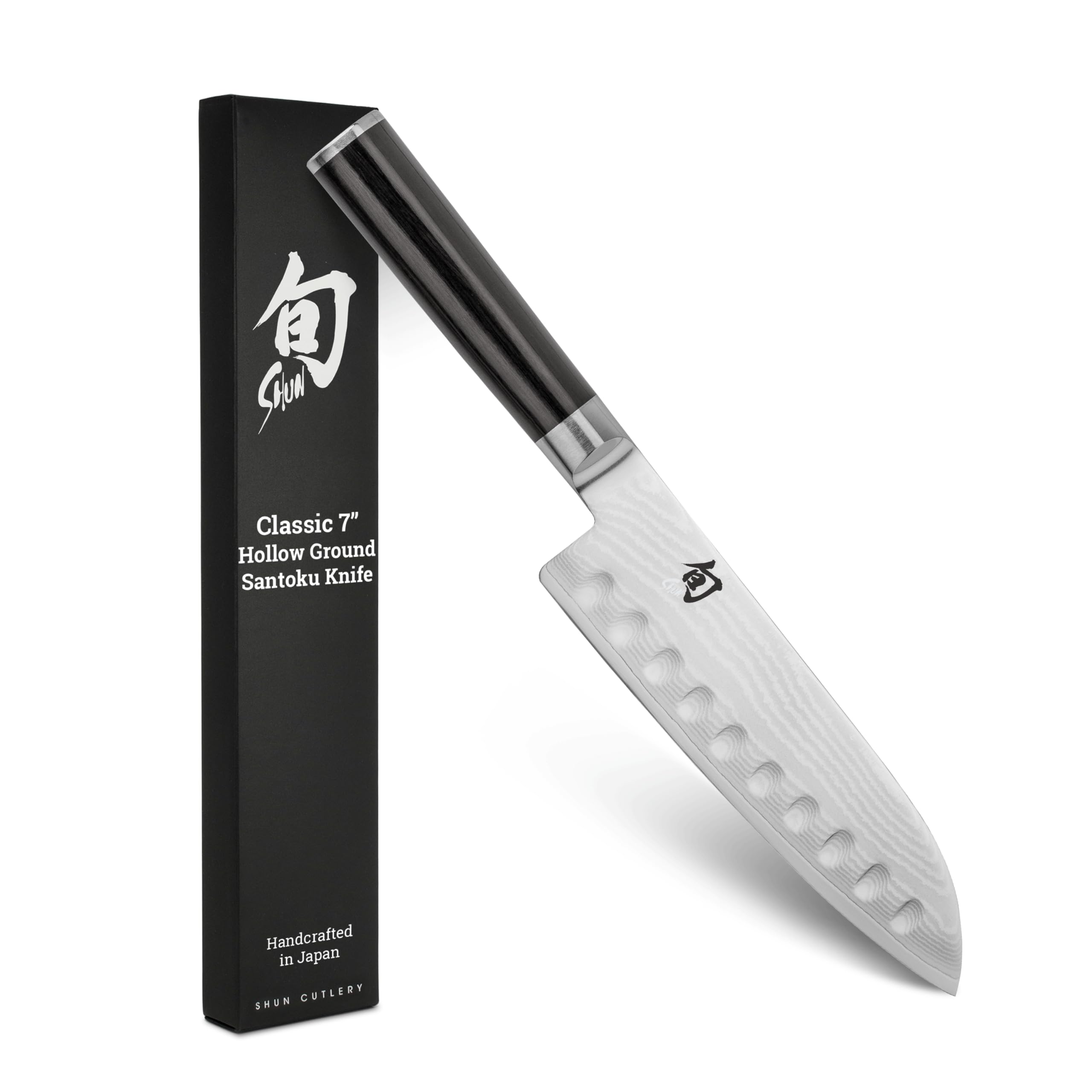
The Shun Classic Santoku represents the sweet spot where traditional Japanese craftsmanship meets modern metallurgy. The VG-MAX core — a proprietary steel formulation — delivers superior edge retention compared to standard VG10, while 68 layers of Damascus cladding on each side create the signature wavy pattern that reduces drag through dense ingredients. The 16-degree double-bevel edge cuts with surgical precision right out of the box.
The D-shaped Pakkawood handle fills the palm naturally, providing confident grip control during repetitive chopping tasks. At 7 inches, the blade length offers the versatility Shun is known for — equally comfortable dicing onions, slicing bell peppers, or portioning boneless chicken thighs. The hollow ground indentations along the blade face prevent food from sticking, which speeds up prep work considerably.
Shun supports each knife with a free sharpening service, which addresses the most common concern buyers have about maintaining a handcrafted blade. The knife arrives in an elegant gift box that confirms the premium nature of the purchase. For cooks who want one knife that handles 90% of kitchen tasks without compromise, this is the reference standard.
Why it’s great
- VG-MAX core outlasts standard VG10 in edge retention tests
- Hollow ground indentations eliminate food sticking
- Shun’s free sharpening service extends knife lifespan significantly
Good to know
- Not suitable for cutting through bones or frozen foods
- Hand washing required — dishwasher will damage the Pakkawood handle
2. Yoshihiro VG10 16 Layer Hammered Damascus Santoku

The Yoshihiro Hammered Damascus Santoku pairs a VG10 stainless steel core with 16 layers of Damascus cladding, resulting in a blade that balances hardness (HRC 60) with reasonable toughness for general kitchen use. The hammered (tsuchime) texture is not merely decorative — it creates micro-air pockets between the blade and sliced ingredients, reducing surface tension and preventing food from clinging to the steel during repetitive cuts.
The Western-style mahogany handle extends to a full tang, giving this knife a more familiar weight distribution for cooks transitioning from European knives. The blade’s 7-inch length makes it a true santoku — capable of slicing, dicing, and mincing with equal proficiency. Customers consistently praise the out-of-box sharpness, though some note that the factory edge benefits from a quick pass on a water stone to reach peak performance.
Yoshihiro’s production in Seki, Japan — a city with a 800-year knife-making heritage — adds authenticity that budget alternatives cannot replicate. The mahogany handle develops a patina over time, which many users consider an aesthetic advantage. This knife represents an excellent entry point for cooks who want handmade Damascus construction without the premium markup of flagship brands.
Why it’s great
- Hammered finish effectively reduces food sticking during prep
- Full tang Western handle offers familiar balance and control
- Proudly made in Seki, Japan with genuine artisan heritage
Good to know
- Factory edge may require honing before first serious use
- Mahogany handle needs occasional mineral oil treatment
3. KAWAHIRO Japanese Chef Knife 8 Inch VG10 Gyuto
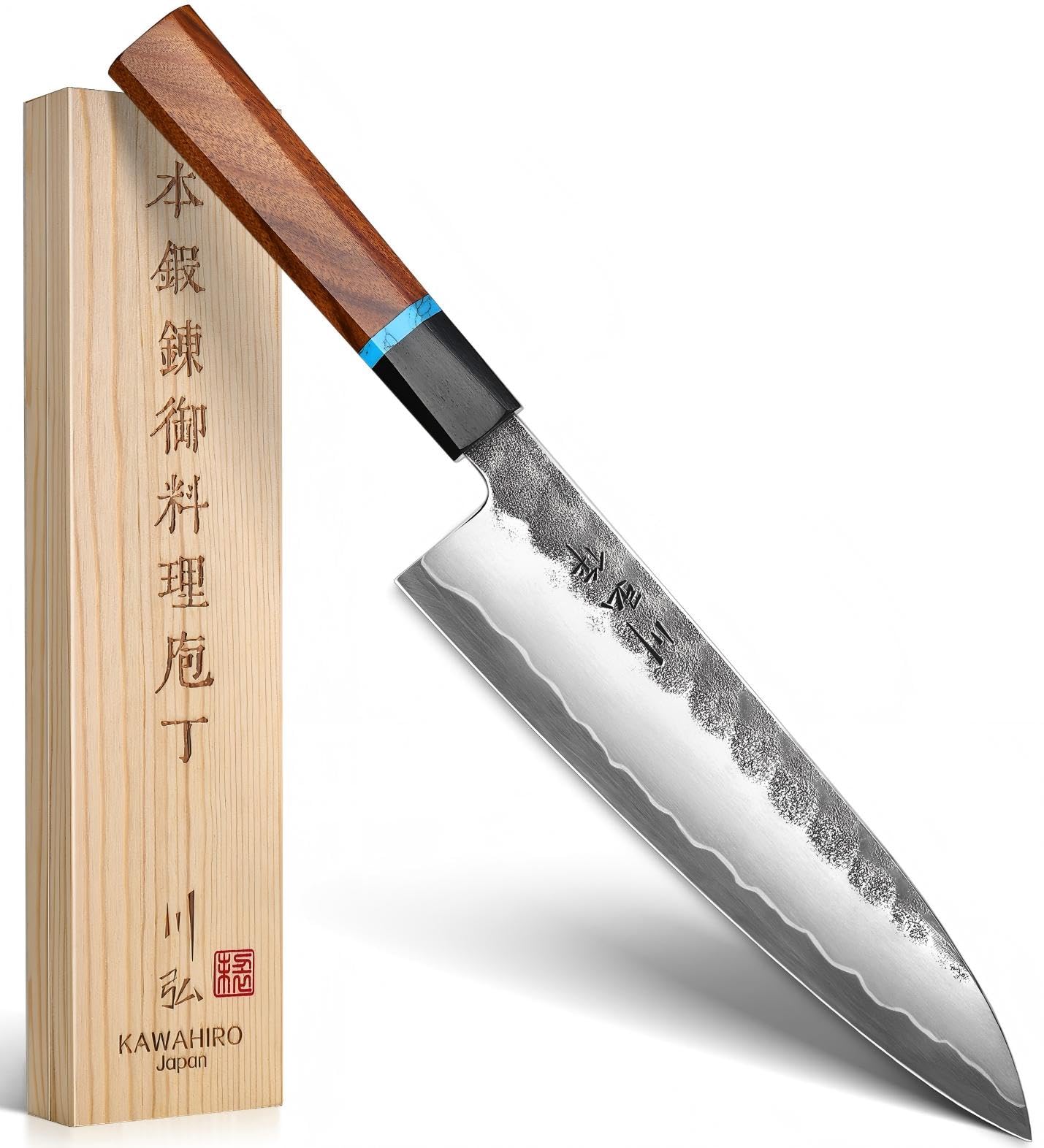
The KAWAHIRO Gyuto delivers a VG10 stainless steel core at a price point that undercuts most competitors by a meaningful margin. The 8.24-inch blade length provides extra reach for larger ingredients, making it particularly effective for slicing through dense squash or large cuts of meat. The black forged finish gives the blade a distinctive appearance while also providing a layer of oxidation resistance — a practical benefit for cooks who do not want to baby their knife.
The 3-layer composite construction sandwiches the hard VG10 core between softer outer layers, giving the blade both sharpness and impact resistance. This design reduces the risk of chipping — a common complaint with harder single-steel knives. The handle, crafted from premium ruby wood, turquoise, and ebony, offers a tactile experience that feels more luxurious than the price suggests.
KAWAHIRO includes a certificate of authenticity and a premium gift box, making this a strong candidate for gifting. The octagonal handle shape provides multiple grip positions, reducing fatigue during long prep sessions. For budget-conscious cooks who refuse to compromise on core steel quality, the KAWAHIRO Gyuto delivers genuine VG10 performance without the premium-label markup.
Why it’s great
- Genuine VG10 core at an aggressive price point
- 3-layer construction resists chipping better than monosteel blades
- Ruby wood and turquoise handle offers striking visual appeal
Good to know
- Black forged finish may show scratches over extended use
- Handle material is not waterproof — always dry thoroughly
4. Miyabi Koh Japanese Fine Edge Santoku Knife 7-Inch

The Miyabi Koh Santoku introduces the Katana edge concept — a hand-honed blade finished with a traditional Japanese sword-grinding technique that creates an exceptionally acute cutting angle. The result is a knife that requires less downward force to initiate cuts, reducing wrist strain during extended prep sessions. The 7-inch blade length hits the sweet spot for home cooks who want precision without intimidation.
The octagonal Pakkawood handle is another Miyabi hallmark — each facet provides a distinct tactile reference point, allowing the user to maintain consistent grip orientation without looking at the knife. Handcrafted in Seki, Japan, the Miyabi Koh carries the heritage of a brand that competes directly with Shun at the premium tier. The blade maintains its factory edge longer than typical mid-range options due to the proprietary FC-61 fine carbide steel.
Miyabi’s quality control includes individual blade inspection and hand-honing before packaging, which explains the consistent out-of-box sharpness reported by users. The knife arrives in a branded box suitable for display or gifting. For cooks who value edge geometry above all other factors, the Miyabi Koh’s Katana edge delivers measurable real-world advantages in precision cutting tasks.
Why it’s great
- Katana edge technique produces exceptionally low cutting resistance
- Octagonal handle provides superior grip orientation feedback
- FC-61 steel offers excellent edge retention for daily use
Good to know
- Premium pricing positions it above most mid-range competitors
- Requires water stone sharpening — pull-through sharpeners may damage edge
5. MITSUMOTO SAKARI Japanese Chef’s Knife Set 4 Pieces

The MITSUMOTO SAKARI set includes four essential knives — a Gyuto chef knife, a santoku, a utility knife, and a paring knife — housed in a professional sandalwood box that doubles as a storage solution. The blades use 9CR18MOV high-carbon steel, hardened to 58±2 HRC through precision quenching and vacuum cold nitrogen treatment. This steel composition offers higher corrosion resistance than traditional carbon steels while maintaining sufficient hardness for clean slicing.
The 45-day hand-forging process that MITSUMOTO SAKARI claims for each blade involves repeated hammering and heat treatment cycles to align the steel’s grain structure. The 2.5mm ultra-thin blade thickness reduces wedging through dense vegetables, keeping the cellular structure of ingredients intact. The rosewood octagonal handle is sourced from Southeast Asian summer sourwood, chosen for its natural oils that resist moisture absorption.
The set includes knife blade oil for maintenance, acknowledging that high-carbon steel requires more care than stainless alternatives. The sandalwood storage box provides a protective environment that prevents blade contact. For cooks building their first Japanese knife collection from scratch, this set offers four complementary blade profiles at a combined cost lower than buying individual knives from premium brands.
Why it’s great
- Four-piece set covers all fundamental cutting tasks
- 9CR18MOV steel balances hardness with rust resistance
- Sandalwood storage box protects blades and looks premium
Good to know
- High-carbon steel requires immediate drying after use
- Rosewood handle may darken with natural oil absorption over time
6. SENKEN 7-Piece Damascus Knife Set — Tsunami Collection

The SENKEN Tsunami Collection represents the high end of this roundup, featuring 67-layer Damascus steel folded around a VG10 core. The 15-degree edge angle is more acute than the 20-25 degree standard found on Western knives, producing noticeably cleaner cuts with less crushing force. The set includes seven knives: two chef’s knives, a cleaver, a bread knife, a utility knife, a santoku, and a paring knife — covering every conceivable kitchen cutting task.
The blue resin burl wood handle is the visual centerpiece of this collection. Each handle is unique due to the natural wood grain variation mixed with blue resin, creating a striking contrast against the Damascus pattern. The resin component adds structural stability that prevents the wood from cracking or warping over time, addressing a common failure point in all-wood handles. Each knife comes with a custom-fit sheath for drawer storage.
SENKEN advertises dishwasher-safe construction for these knives, though hand washing is still recommended to preserve the Damascus etch and handle finish. The included luxury gift box makes this set appropriate for milestone gifts. For cooks who want a complete knife collection that makes a visual statement while delivering professional-grade cutting performance, the Tsunami set delivers on both fronts.
Why it’s great
- 67-layer Damascus with VG10 core delivers exceptional edge stability
- Unique blue resin handles are visually distinctive and structurally stable
- Seven-piece set eliminates the need for future knife purchases
Good to know
- Premium price point may exceed casual cook budgets
- Damascus pattern may fade with aggressive sharpening over years
7. HOSHANHO 16-Piece Knife Set with Block

The HOSHANHO 16-piece set is the most comprehensive offering in this guide, including eight kitchen knives, six steak knives, kitchen shears, and a sharpening rod — all stored in a ventilated Pakkawood knife block. The blades use Japanese 10Cr15CoMoV stainless steel, hardened to 58 HRC through high-temperature forging. This steel composition includes cobalt and molybdenum for enhanced edge toughness and corrosion resistance.
The 15-degree edge angle on each knife matches the Japanese standard, providing clean cuts across all blade profiles — from the 8-inch chef’s knife to the 3.75-inch paring knife. The Pakkawood block features a ventilation design at the bottom that allows air circulation, preventing moisture buildup that could dull blades over time. The included sharpening rod enables easy touch-ups between full sharpening sessions.
The 8-inch bread knife features a serrated edge that cuts through crusty loaves without crushing the crumb structure, while the 7-inch fillet knife offers flexibility for deboning fish. The inclusion of six steak knives makes this set particularly suitable for households that entertain regularly. For cooks who want a complete knife solution rather than selecting individual pieces, the HOSHANHO set provides immediate kitchen readiness.
Why it’s great
- 16-piece set eliminates need to buy knives separately for years
- 10Cr15CoMoV steel offers premium corrosion resistance
- Ventilated block design prevents moisture-related edge damage
Good to know
- Steak knives may not match the handmade quality of the chef knives
- Block takes up significant counter space compared to individual sheaths
FAQ
Can I use a pull-through sharpener on handmade Japanese knives?
Is VG10 steel significantly better than German stainless steel for handmade knives?
Final Thoughts: The Verdict
For most users, the handmade japanese knives winner is the Shun Classic Santoku because it combines VG-MAX core durability with 68-layer Damascus cladding and Shun’s free sharpening service — a combination that delivers professional performance with long-term support. If you want a complete collection from the start, grab the SENKEN Tsunami Set. And for the best entry point into authentic Japanese steel without overspending, nothing beats the KAWAHIRO Gyuto.